29 October 2026
UGC Examples: Brands Using Creator Content Well in 2026

User-generated content (UGC) is content that people who do not work for a brand make about it. Unpaid UGC is posts that customers make and share, usually without a fee and often with a brand tag or hashtag. Paid UGC is content a brand commissions from creators, with agreed fees, deliverables and usage rights.
This list covers eight brands that show UGC in different ways. Each example names one type of post you can see on the brand's own Instagram, TikTok or website, explains why it works, and ends with a step you can copy. If you need the basics first, a quick guide to user-generated content explains where this content comes from.
Each brand also has a page in the brand library of creator content, where you can see creator posts about it. Check each account yourself before you copy an approach. Posts come and go, so a format that works today may not stay on the feed.
Unpaid and paid UGC: how the two kinds differ
Sort each of your UGC examples before you reuse it. Unpaid posts come from customers who chose to share. Paid posts come from creators working under an agreement that sets fees, deliverables, timelines and reuse rights.
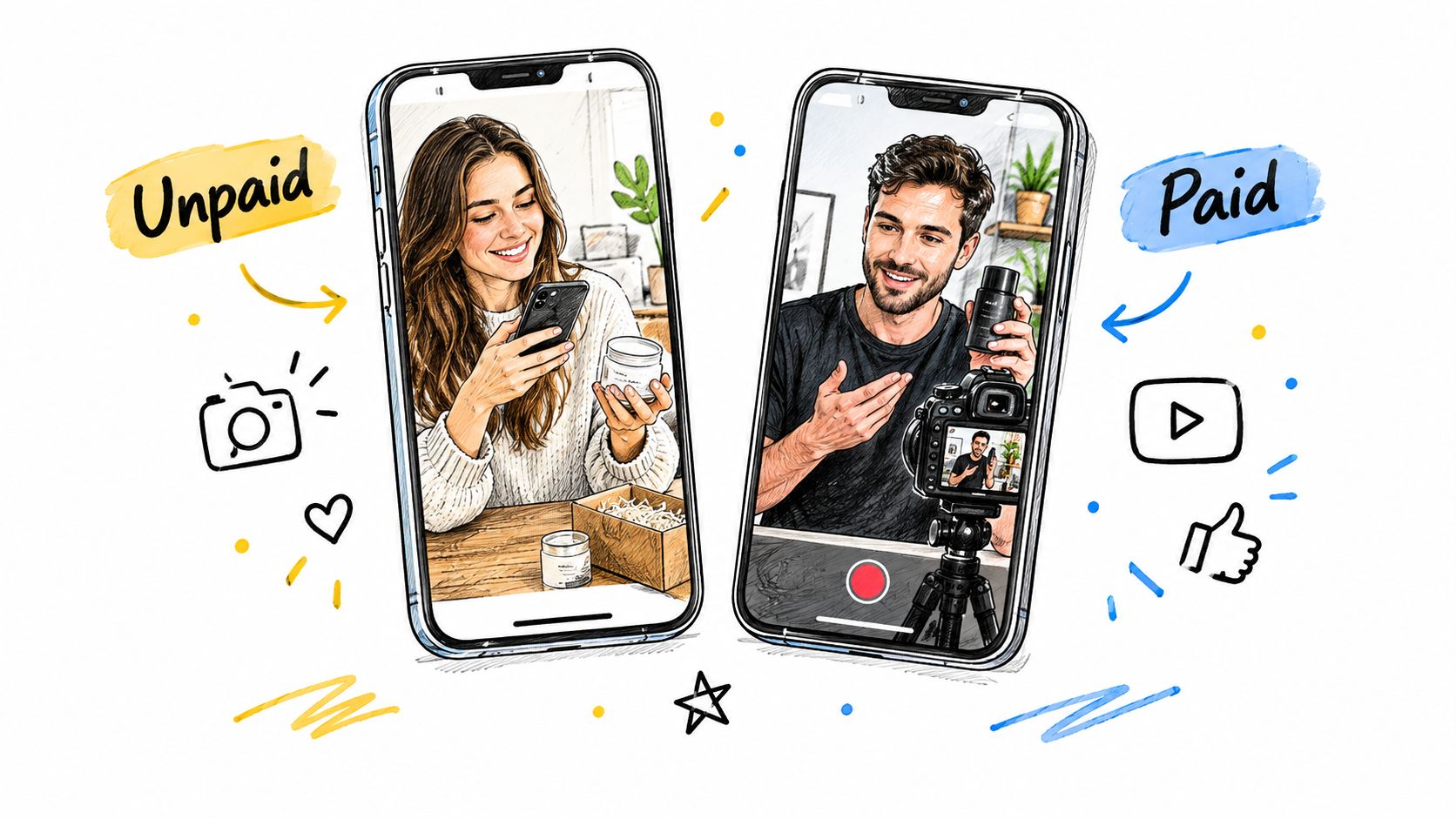
Each group needs different handling.
| Unpaid UGC | Paid UGC | |
|---|---|---|
| Who makes it | Customers | Creators under contract |
| Fee | None | Agreed fee |
| Permission to reuse | Needed from the customer | Set in the agreement |
| Brief | Usually none | Written by the brand |
A repost of a customer photo still needs the customer's permission, even though no fee was paid.
For paid posts, the contract decides where and how long you can use the content. Check the channels, duration and paid media rights before you plan the campaign.
The difference matters most when you run a post as paid advertising. The ASA regulates UK adverts, including influencer content, so read its guidance and take advice on your own case. Brands running UGC campaigns usually write reuse terms into the brief from the start. For the payment side of a paid deal, see how to pay influencers.
1. Glossier: customer photos in its own feed
Glossier's Instagram account features photos of people using its products. This makes it one of the clearest UGC examples to study.
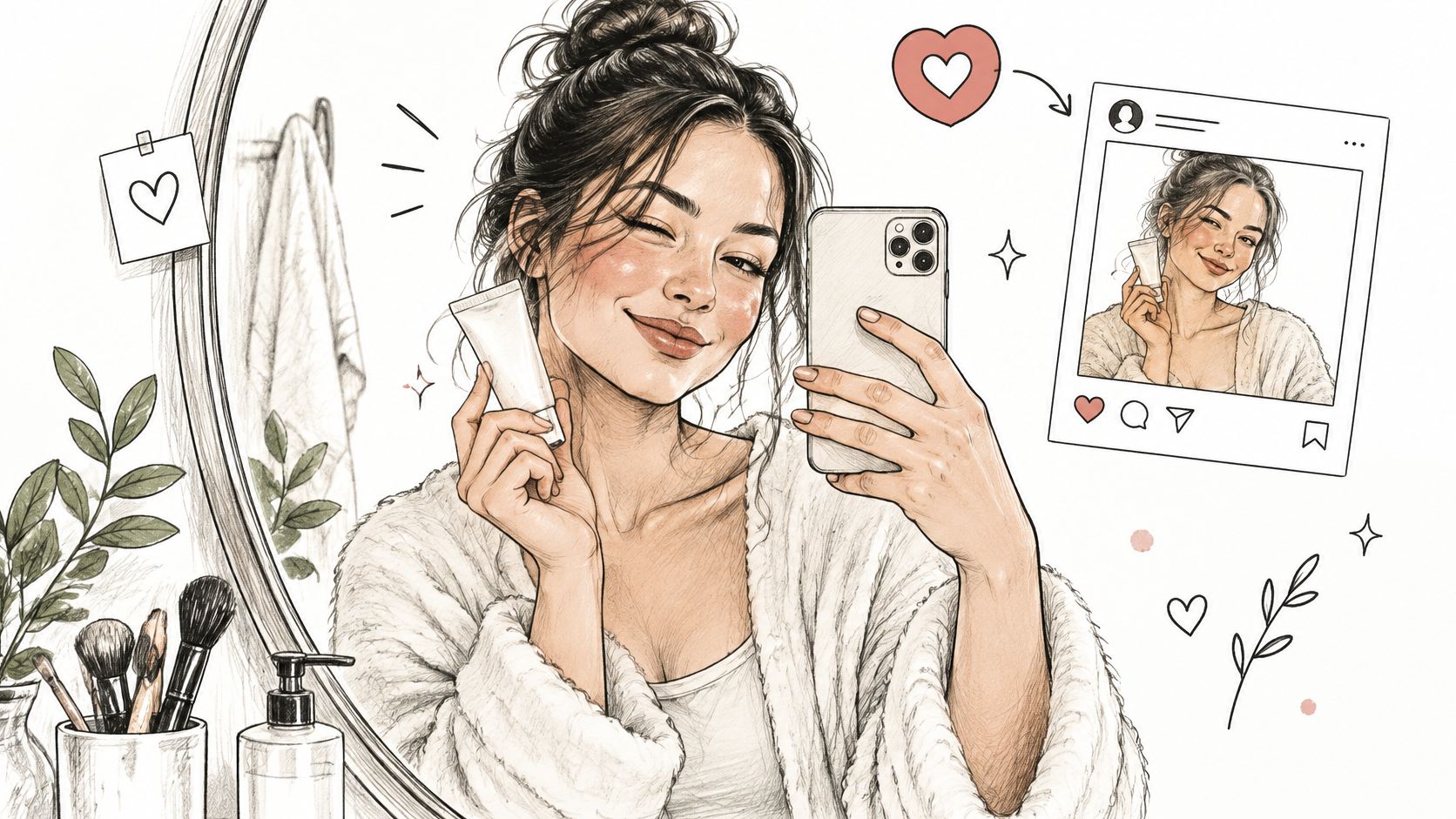
The images show products in real routines rather than in a studio set. Creator posts about the brand can be seen on the Glossier brand page.
Why it works
Customers show the product in everyday use. A range of people gives shoppers more reference points. The brand also gets fresh images without briefing every shot.
How to copy it
- Ask each customer for permission before you repost.
- Credit them by handle in the caption.
- Log who agreed and which channels they approved.
Ask for permission first, then give credit. Reposting without either can damage trust with the people you feature.
Learn more about building a creator content library to store permissions alongside each asset.
2. Rare Beauty: product shown on a range of people
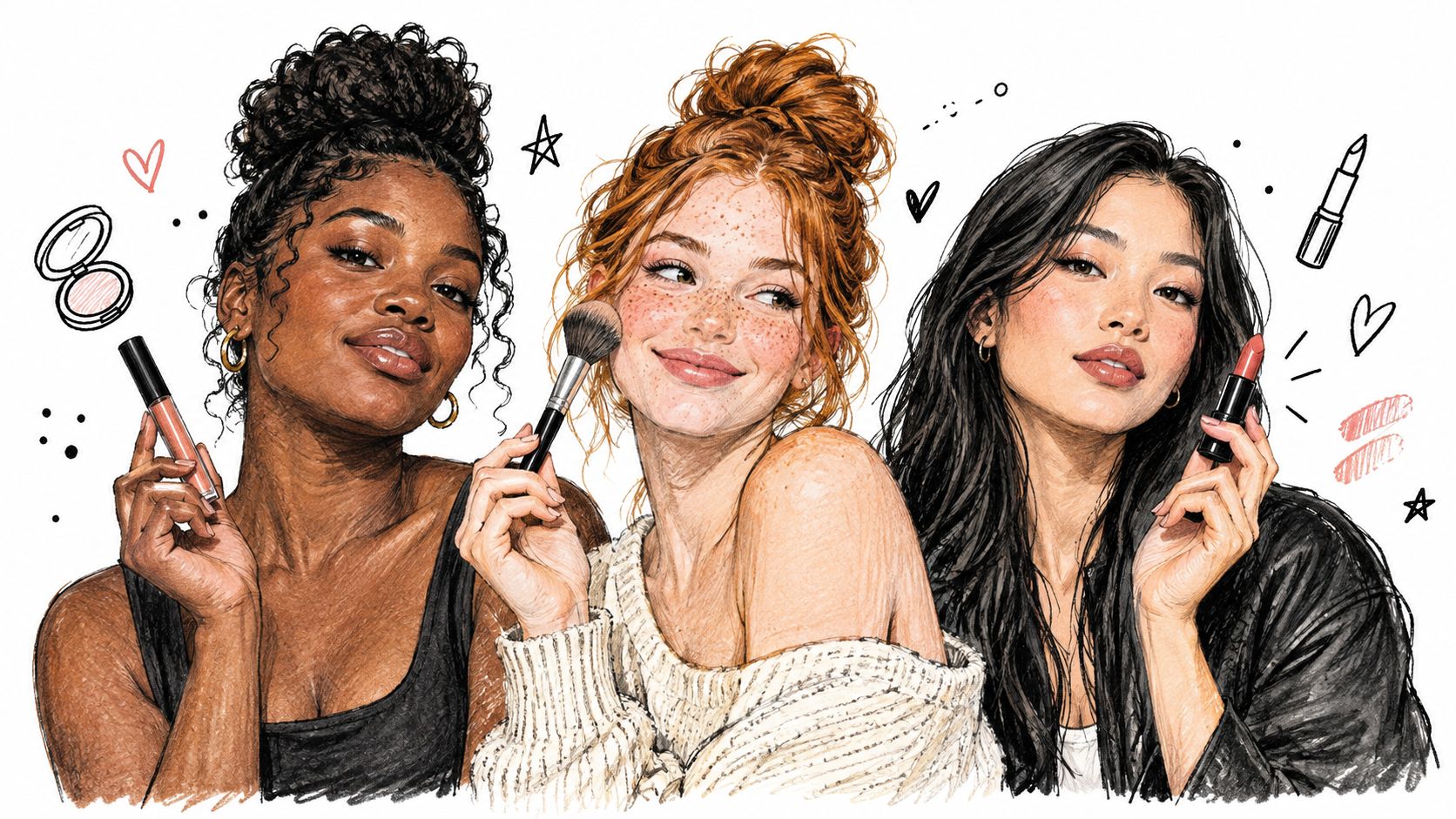
Rare Beauty's Instagram account shows its products on people with different skin tones and looks. This works as a UGC example because the faces change while the product stays the same. A shopper can judge a shade more easily when they see it on someone with a similar complexion.
What to take from it
- Cast for range: Brief creators on the people your product suits, not only the most common look.
- Show the shade: Ask for footage in natural light so the colour reads true on different skin tones.
- Get permission: Reuse customer photos only with written consent.
Show the product on the people it is meant for, not only on the people who are easiest to cast.
The approach is cheap to copy. Changing the brief from one look to a range of looks is often enough to start. You can see creator posts about the brand on its Rare Beauty brand page.
3. Summer Fridays: customer photos showing products in use
Summer Fridays shares photos from customers who show its skincare products in their own routines. It is a clear UGC example for a brand that sells everyday products. The brand's Instagram account shares this kind of customer content alongside its own posts.
Why it works
Routine photos show the product on a real face, on a real bathroom shelf, at a real morning sink. Other buyers can see how much to use, where it fits in a routine, and how it looks after use. A product page cannot answer those questions as well.
Customer photos in use work like a demonstration, and buyers trust them because nobody scripted them.
How to copy it
- Ask buyers to post their routine, not just the product on a plain background.
- Ask for a real setting, such as a bathroom, a desk or a travel bag.
- Get written permission before you repost, even for an unpaid photo.
Creator posts about the brand can be seen on the Summer Fridays brand page.
4. Alo Yoga: customers wearing the clothes
Alo Yoga shows its activewear on the people who wear it, including customers and creators. Its Instagram account carries this kind of content, so you can see how the clothes look in everyday settings. Creator posts about the brand are gathered at sup.co/brands/alo.

Shoppers buying clothes want to know how a garment fits and moves. A flat product photo rarely answers that. Footage of a real person stretching, squatting or walking in the same piece does.
Fit and movement are the details clothing buyers check first, so put them in every brief.
How to copy the approach
- Ask creators to film the garment in motion, such as a stretch, a squat or a walk.
- Request a close shot showing how the waistband, seams and hem sit on the body.
- Ask customers for permission before you repost their photos.
Use this format when fit is the main reason people hesitate to buy. Activewear, swimwear and fitted basics are the clearest cases.
5. Gymshark: community and athlete content
Gymshark shares posts from its athletes and community members wearing its clothing on its Instagram account. It is one of the clearer UGC examples in activewear, because the feed centres on people wearing the clothes during training. Creator posts about the brand can also be seen on its sup.co brand page.
How to copy the approach
Start with a small, named group of ambassadors. Then write posting rules they can follow every week. A brief could cover:
- Which products each post must feature
- Caption and tag requirements
- How often each person posts
- Who approves each post before it goes live
A small group that posts on a fixed schedule is easier to keep consistent than a large group that posts when it feels like it.
For more models, see brand ambassador program examples.
6. Stanley: customers and creators using the cups
Stanley is one of the clearer UGC examples for drinkware. Its Instagram account shows customers and creators carrying the cups through their day, and creator posts about the brand are gathered at sup.co/brands/stanley.
The content works because the viewer sees the cup as part of a routine, not as a studio prop. A flask on a desk or in a car shows a buyer how the product might fit their own life.
Show the product doing a job, rather than sitting on a shelf.
For your own campaigns, brief creators to film a real day. Ask them to show the cup at work, on a commute or on a trip, and to keep it in frame across the whole sequence.
- Give the brief a clear use case, such as a morning routine or a long drive.
- Ask for raw footage of the product in use, not only a finished edit.
- Agree reuse rights before you repost any customer clip.
Use this format when your product is carried, refilled or taken out during the day.
7. Olipop: fans and creators with the product
Olipop's Instagram account shares posts from fans and creators who show its drinks in everyday moments. It is a clear case of UGC that feels like ordinary life rather than a studio shoot.
The strength here is range. Each post shows the drink as part of a normal moment, so a viewer can picture it in their own day.
A single flavour in a single setting proves only one use. Fan posts across several flavours show each one doing a different job.
How to copy it
- Share fan posts from different flavours, so each flavour has its own visible use.
- Get written permission from each fan before you repost.
- Name the flavour in the caption, so buyers can match the post to the product.
Use this approach when your flavours suit daily routines and buyers need to see the product in use. Creator posts about the brand are collected on the Olipop brand page.
8. LEGO: fan-designed sets through LEGO Ideas
LEGO shows how fan-made work can feed directly into a product line. Through LEGO Ideas, fans submit set designs and other fans show support for them. LEGO says a design that reaches 10,000 supporters, or is picked in a challenge, may be considered for production as an official set.
The model works because the community does the early filtering. Supporters are already interested before a design reaches review, so the brand has a clear signal before it commits to production.
For more UGC examples from the brand's wider community, see LEGO's brand page.
What to copy from LEGO Ideas
- Publish written submission rules, including eligibility and what counts as a valid design.
- Explain how support is counted and how a project moves to review.
- State who keeps the rights and whether the designer is credited or paid if a set is released.
Fans put real time into their designs, so tell them what happens to their work before they submit it.
Use this model when your audience already makes things for your brand and you want that work to shape what you sell.
UGC Examples Compared at a Glance
| Example or approach | Implementation complexity | Resource requirements | Expected outcome | Ideal use case | Key advantage |
|---|---|---|---|---|---|
| Unpaid UGC | Low; request permission before reposting | Customer posts and basic moderation | Authentic customer-created content | Brands with customers who already share their experiences | Low-cost content and customer perspectives |
| Paid UGC | Medium; agree on deliverables, fees, and usage rights | Creator fees, briefs, and content coordination | Commissioned content aligned with campaign needs | Brands needing specific formats or reliable content volume | Greater control over content and usage |
| Glossier: customer photos | Low to medium; source posts and get permission | Customer submissions and social media management | Product imagery featuring customers | Beauty brands seeking customer-led social content | Shows products through real customers |
| Rare Beauty: varied creators and customers | Medium; plan representation and creator briefs | Diverse creator or customer contributions | Product content across different skin tones and looks | Brands serving customers with varied appearances | Illustrates product range across different people |
| Summer Fridays: products in routines | Low to medium; collect and review customer posts | Customer content and permission management | Product imagery in everyday routines | Brands whose products are used as part of a routine | Gives viewers context for how products are used |
| Alo Yoga: clothing in motion | Medium; guide creators on fit and movement | Creator or customer posts showing activewear | Clothing content that demonstrates fit and movement | Apparel brands where motion and fit matter | Shows garments in use |
| Gymshark: community and athlete content | Medium to high; establish ambassador guidelines | Ongoing athlete and community coordination | A continuing stream of community content | Fitness brands building an active ambassador community | Connects the brand with its athlete community |
| Stanley: drinkware in daily use | Low to medium; encourage real-life use scenarios | Customer or creator videos and permissions | Product content in everyday settings | Brands whose products are used throughout the day | Demonstrates practical use |
| Olipop: fans and creators with products | Low to medium; collect posts across flavours | Fan or creator content and social management | Everyday product content featuring different flavours | Brands with multiple flavours or product variants | Makes individual options visible |
| LEGO Ideas: fan-designed sets | High; establish submission, support, review, and rights processes | Platform, moderation, and design review | Community-supported concepts, some of which may become sets | Brands able to involve customers in product ideas | Invites fans to contribute and support designs |
Where to Take Your First Creator Post
Start with one product, one type of creator and one measure of success. A small first test gives you a clear answer, and a large programme rarely does.
Pick the content format before you pick the creators. A product demo, a fit check and a before-and-after each suit different people, so the format narrows your shortlist.
Choose the format first, then the creator, then the platform. Reversing that order usually leads to content nobody can reuse.
Every brand starts with one post. For one small brand's first, see the California Cowboy blog debut.
A simple first-post checklist
- Write a short brief with the hook, the product, the key claim and the posting window.
- Choose a few creators whose followers match your buyer, not just the largest audience.
- Agree usage rights before posting, so you can run the content as an ad later.
- Give each creator a tracking link or discount code, so you can see which posts drive sales or visits.
- Review the results once the posts have run, then keep the format that worked.
If you sell online, see how ecommerce influencer marketing works with Sup. It finds the creators, negotiates, contracts, pays and tracks, while you approve every creator and every post. You pay only for posts that go live.
Five lessons a smaller brand can copy
Five lessons follow, and each one needs only a small team and a clear brief. They come from the examples above.
- Ask for customer photos. Invite buyers to tag your product or use a hashtag. Repost only with their permission.
- Match creators to buyers. An audience that fits your customers matters more than the size of the account.
- Agree rights and fees in writing. Settle usage and fees before any post goes live. The Federal Trade Commission's guidance on influencer disclosures explains the rules, so check how they apply to your case.
- Show real use on product pages. Buyers see the product in use before they decide.
- Give each post a unique link or code. You can then see what each post drives.
Consistent habits teach a smaller brand more than one large campaign.
For the wider method, read the guide to user-generated content campaigns.
To see how a creator program could run for your brand, start a creator campaign with Sup.
More on content & ugc
See how many creators post about you and your competitors
Type in your brand's Instagram handle and we count the creators who post about you and about your five closest competitors. It takes about a minute and it is free. Or request a demo and we will show you the creators in your niche and walk you through the dashboard.
 Book a call