Retail · Shopper marketing
Shopper marketing with creators, proved by the receipt
Shopper marketing is the work of understanding how people shop and using it to influence what they buy, at each step from first noticing a product to picking it off the shelf. It turns a person who knows your product into a person who buys it in a shop. Sup does the part before the trip. Local creators show the product to people who shop where it is sold, and a receipt-verified Offer proves the purchase.
- Creators chosen for where they shop, city by city
- A receipt for each purchase an Offer brings
- No subscription. You pay for a creator only when their post is live
- 350M
- creators searched live on Instagram and TikTok
- 6 hours
- from your brief to a shortlist of local creators
- 11.4M
- views tracked on paid posts for packaged food and drink brands
Searched by place as well as by subject.
You say yes or no to each one.
A view count includes views from ads run on the post.
Local creators
Creators near the shops that stock you
A display reaches the shopper who is already in the aisle. A local creator reaches them at home, before the list is written. We search Instagram and TikTok by place as well as by subject, and check where each creator is based. Tell us the retailers and the cities, and the shortlist is built around them.
- One city, one region or one retailer’s catchment
- Creators who post about food, family, home or beauty
- You say yes or no to each one
- Food creators in Bristol
- Parents in Leeds who post family meals
- Snack creators in Dallas, Texas
Proof
A receipt proves the purchase
A post’s views say who saw the product. They do not say who bought it. An Offer is a cash-back deal tied to one of your products at the retailers you choose. A shopper buys it in store and uploads the receipt, and the receipt is checked before anyone is paid.
- Tied to one product and the retailers that stock it
- Shared by each creator, with their own link
- Each redemption shows the retailer, the city and the creator
- 01Set up the Offer: the product, the retailers, the cash back and the dates
- 02Creators share it, each with their own link
- 03Shoppers buy in store and upload the receipt
- 04You see each redemption, by retailer, city and creator
Content
Content you can use on the shelf page and in ads
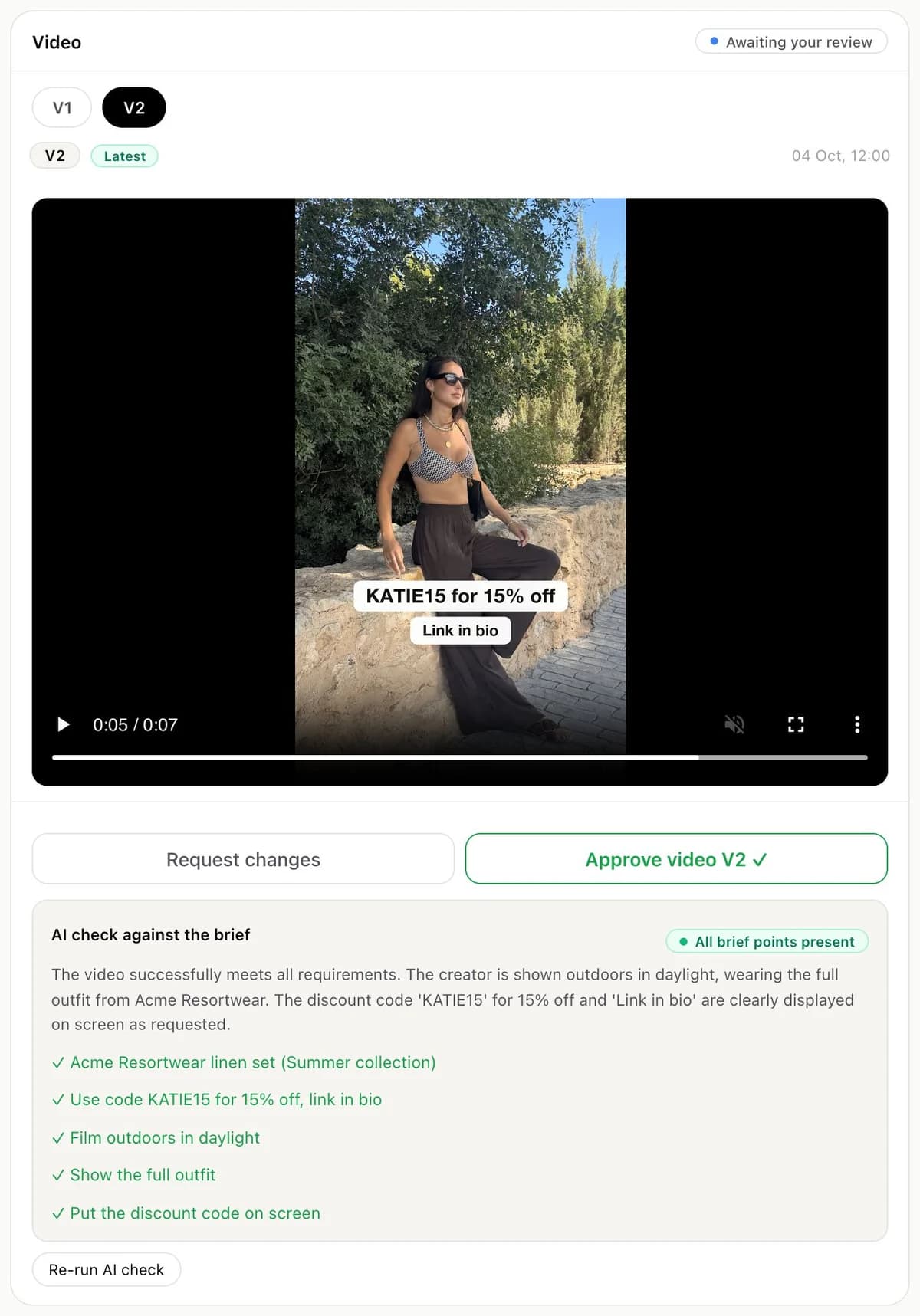
A display comes down at the end of the promotion. A creator’s video stays. Each creator signs an agreement that sets how long you may use the content and where, and each draft is checked against your brief before you see it.
- Usage rights as a length of time, in every agreement
- Nothing goes live without your yes
- Ad codes collected, so a post can run as an ad
How it works
From a listing to shoppers at the shelf
- 01
You name the shops
The products, the retailers that stock them and the cities that matter.
- 02
A shortlist of local creators
It comes back in 6 hours. You say yes or no to each.
- 03
Posts go live
With an Offer link, where you run one.
- 04
You see what happened
Every post’s numbers, and each receipt an Offer brought.
The difference
Shopper marketing in the shop, and with creators
Where the shopper is reached
In the shop
In the aisle: displays, signs and promotions
With Sup
Before the trip: a post from a local creator
Who speaks
In the shop
The brand
With Sup
A person the shopper already follows
The proof
In the shop
Sales before and after, from the retailer
With Sup
A receipt for each Offer purchase, and every post’s counts
What is left afterwards
In the shop
A display that comes down
With Sup
Videos and photos you may reuse, for the time in the agreement
The price
In the shop
A project fee, rarely published
With Sup
No subscription. The price you approve for each creator, when their post is live, with our fee inside it
The two work together. A display does more when the shopper arrives already knowing the product.
The detail
What shopper marketing is, and where creators fit
Shopper marketing is the work of understanding how people shop and using it to influence what they buy, at each step from first noticing a product to picking it off the shelf. The rest of this page sets it beside the disciplines it is confused with, shows where creators fit on the path to purchase, and gives the local campaigns we have run.
The basics
Shopper marketing, and the three things it is confused with
The four overlap, and one budget often pays for all of them. They differ in who they speak to and what they try to change.
| Who it speaks to | What it tries to change | A typical piece of work | |
|---|---|---|---|
| Consumer marketing | The person who uses the product | Whether they want it | A television or social media ad |
| Shopper marketing | The person who buys it, while they are choosing | What goes in the basket | A display, a promotion, or a local creator’s post with an Offer |
| Trade marketing | The retailer | Whether it lists the product, where and at what price | A listing deal and a promotions calendar |
| Retail media | Shoppers on the retailer’s own site and app | What they see while they shop there | A sponsored product slot |
The buyer is not always the user. A parent buys the cereal a child eats, so a shopper campaign can speak to a different person from the brand’s ads.
Where creators fit
The path to purchase, and what a creator adds at each step
The path to purchase is the trade’s name for the steps from first notice to the till. Classic shopper marketing works at the last two. Creators work at the first two, and an Offer joins them up.
- 01
At home: first notice
A creator who lives nearby shows the product in use and says where they bought it.
- Who:
- The creator
- 02
On the list: the reason to try it
The creator’s Offer link gives cash back at a named retailer. It is a reason to buy this week.
- Who:
- The Offer
- 03
In the shop: the choice
The shopper finds the product on the shelf. This is where displays and promotions do their work.
- Who:
- The retailer and your trade team
- 04
After the till: the proof
The shopper uploads the receipt. The purchase is checked and counted against the retailer, the city and the creator.
- Who:
- The shopper and Sup
An Offer can also run with no creators, to drive trial at one retailer or to support a new product. How it is set up, how a receipt is checked and who pays the cash back are on the Offers page. The whole retail campaign, step by step, is on how it works.
Our own record
Local campaigns we have run, place by place
Shopper marketing with creators depends on finding people in one town. These two programmes ran that way. They were for a restaurant chain and a museum, not for a product on a shelf. The method is the same: creators who live near the door.
- 14 months
- of creator posts for one US restaurant chain, Curry Pizza House
- 16 months
- of creator posts for Moco Museum, in London, Amsterdam and Barcelona
- 11.4M
- views tracked on paid posts for packaged food and drink brands
A separate campaign for each restaurant, with creators who live nearby.
1.5M views on those posts.
A view count includes views from ads run on the post.
Creators by UK city
Creators by US city
How we counted. The campaign figures are from Sup’s own reporting, which reads each tracked post’s public counts. A programme’s length runs from its first tracked post to its last. We hold no sales or redemption figure, and this page gives none. Read on 5 October 2026.
A short glossary
The words a shopper marketing buyer uses
The same idea has a UK word and a US word, and a creator campaign is judged in both.
| The word | What it means | What a creator campaign can show |
|---|---|---|
| Path to purchase | The steps from first noticing a product to paying for it | A post at the first step, and a receipt at the last |
| Rate of sale (UK), velocity (US) (calculator) | Units sold in each shop each week | Nothing by itself. Compare the cities and weeks with posts against the ones without |
| Activation | A campaign in or around a shop | A set of local posts timed to it |
| Sell-in | Winning the listing from the retailer’s buyer | Posts and receipts to show at the next meeting |
| Uplift, or incremental sales | The extra sales a campaign caused | Redemptions through an Offer, which are sales you can count one by one |
| Retail media | Ads the retailer sells on its own site and app | Creator content with paid use rights, to run there |
For packaged goods in particular, see CPG marketing with creators. For how a brand sold in shops uses the content afterwards, see licensed UGC.

Written by
Matt Greenwell, Co-Founder and CEO of Sup
Matt started Sup in 2024 with Hassan Munir. Before Sup he co-founded Storefront, the marketplace for booking pop-up retail space. Before that he worked at Goldman Sachs.
The campaign figures are from Sup’s own reporting. The description of Offers is Sup’s own. The page gives no sales figure, because we hold none. Updated 5 October 2026.
FAQ
Shopper marketing questions
What is shopper marketing?
Shopper marketing is the work of understanding how people shop and using it to influence what they buy. It covers each step from first noticing a product to picking it off the shelf, in a shop or online. It differs from consumer marketing, which builds demand for a product among the people who use it.
What does a shopper marketing agency do?
It plans and makes the things that reach a shopper near the point of purchase: displays, signs, promotions, sampling and events, often for one retailer at a time. Sup does one part of shopper marketing, the part before the trip: local creators who show the product to people who shop where it is sold.
How does a consumer differ from a shopper?
A consumer uses the product. A shopper buys it. They are often two people: a parent buys the cereal a child eats. Shopper marketing speaks to the person with the basket, at the time they are choosing.
What is shopper marketing in FMCG?
FMCG is the UK term for consumer packaged goods: food, drink, toiletries and household products. These are bought often, on habit, from a crowded shelf, so the choice at the shelf matters more than for most products. That is why FMCG brands spend on shopper marketing.
How is shopper marketing measured?
By sales in the shop: the rate of sale, called velocity in the US, before and after a campaign and against shops where it did not run. A creator campaign adds two things that can be counted directly: every post’s views and engagement, and each purchase proved by a receipt where you run an Offer.
What is a receipt-verified Offer?
An Offer is a cash-back deal tied to one of your products at the retailers that stock it. Shoppers find it through a creator or in the Sup app, buy the product in store, and upload a photo of the receipt. The receipt is checked against the product and the retailer before the cash back is paid.
Which retailers can an Offer be tied to?
Any retailer that issues an itemised receipt. In the UK that includes Tesco, Sainsbury’s, Waitrose, Boots and Holland & Barrett. In the US it includes Target, Walmart, Whole Foods, Costco, Sprouts and Kroger. These are examples of where an Offer can be set. They are not partners of Sup.
What do I pay for?
You pay the price you approve for each creator, when their post is live, and we take our fee from creators. A gifting-only campaign pays $19 per gift as our fee. Where you run an Offer, you also pay shoppers for verified purchases. There is no subscription.
Related
Where to go next
CPG marketing
Creator campaigns for food, drink and household brands sold in shops.
Trade marketing
Creators timed to the launch, the promotion and the range review, with a record a buyer can see.
Sell-through rate calculator
Sell-through, days of cover and rate of sale per store per week.
Retail
How creators send shoppers to the shelf.
Offers
Cash back tied to your product, proved by the receipt.
Multi-chains
Local creators for every location of a chain.
UK brands
Creator campaigns for UK brands: UK creators, UK contracts and the UK’s ad rules.
Creator directory
Creators by country, city and subject.
Just won a listing, and need shoppers at the shelf?
Tell us the retailers and the cities. A shortlist of local creators comes back in 6 hours, and you only pay for posts that go live.
 Book a call