Retail · Retail media
Retail media, with creator content you have the rights to run
Retail media is advertising that a retailer sells on its own site, app, emails and in-store screens, targeted with what the retailer knows about its shoppers. The creative is the brand’s problem. Sup makes it: creator videos about your product, with paid-use rights written into each creator’s agreement, so they can run on a retailer’s network and on your own channels.
- Creator videos made for the product, with paid-use rights
- Rights set as a length of time in every agreement
- The same content for the retailer’s product page and your own ads
- 11.4M
- views tracked on paid posts for packaged food and drink brands
- 60 days
- the usual paid-use term in our signed creator agreements
- 6 hours
- from your brief to a shortlist of creators
On the creators’ own posts. A view count includes views from ads run on the post.
Set in 53 of the 73 agreements that name one. Longer terms are agreed per deal.
You say yes or no to each one.
The creative
Videos made to run as ads, not screenshots of posts
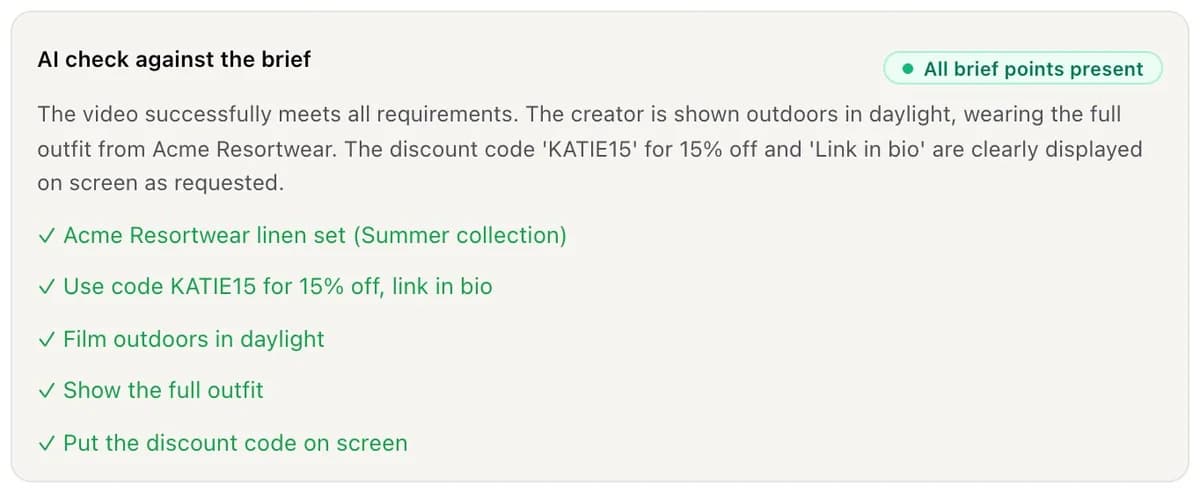
A retail media placement needs a video that shows the product, says what it does and fits a small screen. Each creator gets a brief with the shots and the claims you approved, sends a draft, and nothing is used until you have said yes.
- A brief per creator, with the claims you approved
- Drafts checked before anything is made public
- Ad codes collected, so a post can also run as a Spark Ad or a partnership ad
The rights
Paid-use rights, written as a length of time
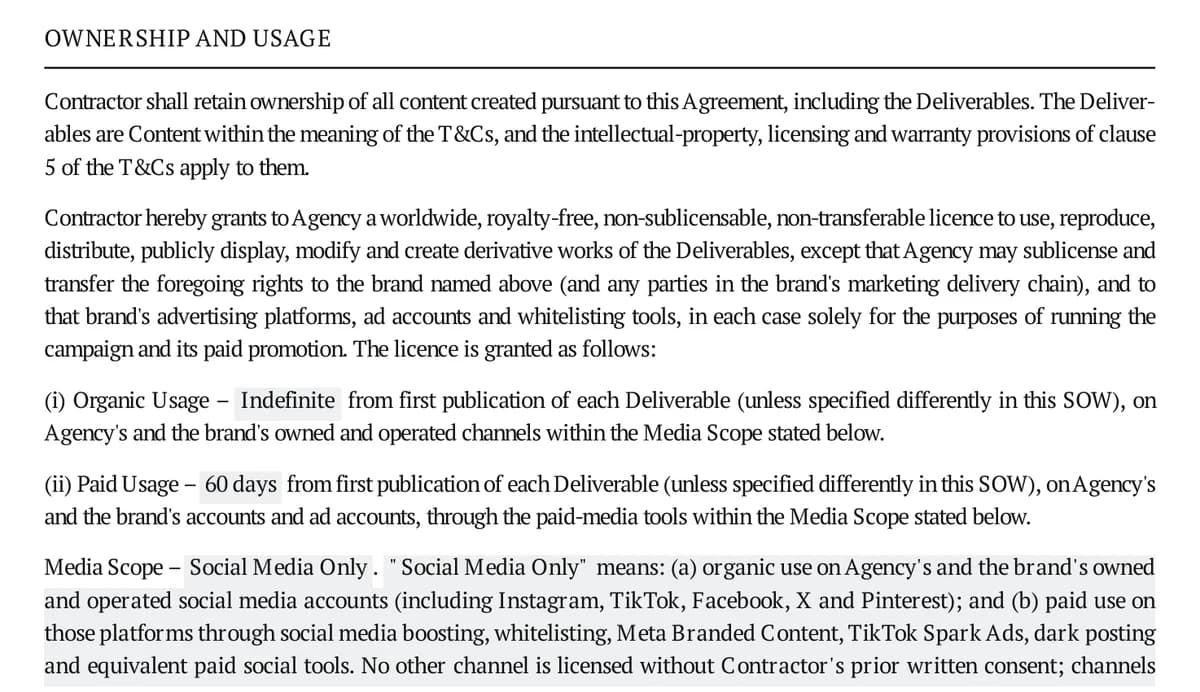
The common failure is a video that performs on the retailer’s site and has to come down because nobody agreed the rights. Our creator agreements set an organic-use term and a paid-use term for every piece of content, and the terms are in the signed copy you can download.
- Organic use and paid use set separately
- The term starts when the content goes live
- Longer terms agreed per deal, before the creator films
- 60 days
- paid-use term in 53 of the 73 signed agreements that name one
- 73
- signed creator agreements with a paid-use term
- $10.10
- creator cost per 1,000 views on their own posts, without ad spend
The measurement
Two reports, and what each one proves
The retailer’s network reports the sales its ads led to, because it records the purchase. Our report covers the creators’ own posts: every post with its public counts, read three times a day, and one cost figure. Put the two side by side and you can see what the same content did in each place.
- Every creator post listed with its views and engagement
- One cost figure for the creators, without ad spend
- The retailer’s own report for the ads that ran on its network
How it works
From a brief to a video on the retailer’s page
- 01
You send a brief
The product, the claims you can make, the retailers where it is sold and the placements you have in mind.
- 02
A shortlist in 6 hours
Creators with their numbers, their subjects and where they are based.
- 03
Contract, product and drafts
Each creator signs with the usage terms set, gets the product, and sends a draft for your approval.
- 04
Posts go live, and the files are yours to run
We track the creators’ own posts. You or your media agency run the videos on the network.
The difference
Creative for retail media on your own, or through Sup
Finding creators
On your own
A search by hand, by follower count
With Sup
A live search by subject and place, with a shortlist in 6 hours
The rights
On your own
Agreed creator by creator, if at all
With Sup
Organic and paid terms in every agreement
The claims
On your own
Whatever the creator says
With Sup
A brief with the claims you approved, and a draft before it goes out
The files
On your own
A download link from each creator
With Sup
Every approved video in one place, with its rights
Paying creators
On your own
An invoice and a transfer for each one
With Sup
One invoice from Sup
The detail
What retail media is, and where creator content fits
Retail media is advertising sold by a retailer on its own property. The rest of this page says how it works, where creator content runs in it, the rights it needs, and the words the people who buy it use.
The basics
How retail media works
Six things the guides agree on, and each one is a reason the creative has to come from somewhere.
The retailer is the publisher
The ads run on the retailer’s own site, app, emails and store screens. The retailer sells the space, as a newspaper once did.
First-party shopper data
The retailer knows what each account bought. It uses that to target the ads, which is what brands pay for.
On-site and off-site
On-site ads run inside the retailer’s own channels. Off-site ads run elsewhere, on social and video platforms, targeted with the retailer’s data.
Closed-loop measurement
The retailer sees the ad and the sale, so it can report which ads led to a purchase. No other channel can do that for a product sold in its shops.
The networks
Amazon Ads, Walmart Connect, Roundel at Target and Kroger Precision Marketing in the US. Tesco Media and Insight Platform and Boots Media Group in the UK.
The creative is the brand’s
The network sells the placement and the targeting. The video or image that runs in it is the brand’s to supply, with the rights to run it.
Where creator content runs
Four places a creator’s video does the work
The same video, made once with the rights agreed, can run in each of these.
The product page
A video of a person using the product, beside the pack shots. It answers the question a shopper has before adding to basket: what is it like?
Sponsored video and display
The paid placements on the retailer’s site and app. A creator’s video is the ad, and the retailer’s data decides who sees it.
Off-site ads
The retailer’s data targets the ad on social and video platforms. A creator’s video fits those platforms better than a studio advert does.
The creator’s own post
The video also runs on the creator’s own Instagram or TikTok, which is where our report counts its views. With the ad code, it can run as a Spark Ad or a partnership ad as well.
How the ad codes and the partnership ads work is on the Spark Ads page. What licensed content is, in the words the retail pages use, is on the licensed UGC page.
From our agreements
The rights, as our creators sign them
Every creator agreement sets an organic-use term and a paid-use term. These are the paid-use terms in the agreements signed through Sup that name one.
| Paid-use term | Signed agreements |
|---|---|
| 60 days | 53 |
| 90 days | 13 |
| 12 months | 6 |
| 45 days | 1 |
A term starts when the content goes live. Longer terms are agreed per deal, before the creator films.
How we counted. Counted from the creator agreements signed through Sup’s signing tool. An agreement with no paid-use term named is not counted. The usage rights calculator gives a way to price a longer term: usage rights calculator. Read on 5 October 2026.
A short glossary
The words a retail media buyer uses
A creator campaign is judged by people who think in these terms. Each one comes with what creator content can do for it.
| The word | What it means | What creator content can do |
|---|---|---|
| Retail media network, or RMN | The retailer’s advertising business, sold as a platform | Supply the video that runs in its placements |
| Sponsored products | Paid listings in the retailer’s search results | A creator image or video where the placement takes one |
| On-site and off-site | Ads inside the retailer’s channels, and ads elsewhere targeted with its data | The same video in both, with the rights to run it |
| First-party data | What the retailer knows about its own shoppers | Nothing by itself. It decides who sees the content |
| Closed loop | The retailer sees the ad and the sale | The report that proves what the content sold, which ours cannot |
| Usage rights (calculator) | What the brand may do with a creator’s content, and for how long | Set in every agreement, for organic use and paid use |

Written by
Matt Greenwell, Co-Founder and CEO of Sup
Matt started Sup in 2024 with Hassan Munir. Before Sup he co-founded Storefront, the marketplace for booking pop-up retail space. Before that he worked at Goldman Sachs.
The campaign figures are from Sup’s own reporting and the rights figures from the agreements signed through Sup’s signing tool. The description of retail media is general, and the page names the networks without figures. Updated 5 October 2026.
FAQ
Retail media questions
What is retail media?
Retail media is advertising that a retailer sells on its own property: its website, its app, its emails and its in-store screens. The retailer uses what it knows about its shoppers to target the ads, and because it also records the sales, it can report which ads led to a purchase.
What is a retail media network?
The retailer’s advertising business, run as a platform that brands buy from. Amazon Ads, Walmart Connect, Roundel at Target and Kroger Precision Marketing are examples in the US, and Tesco Media and Insight Platform and Boots Media Group in the UK.
How is retail media different from shopper marketing?
Retail media is paid advertising inside the retailer’s own channels. Shopper marketing is the wider work of reaching a person while they shop, in the aisle or online, with displays, promotions, sampling and content. Retail media is now one of the main ways a brand buys shopper marketing.
Can creator content run as a retail media ad?
Yes, where the rights allow it. A retailer’s network sells placements that take video and images, such as sponsored products, product page video and display. A creator’s video can fill them if the agreement with the creator covers paid use for the length of time the ads run.
What rights do I need?
Paid-use rights, set as a length of time, covering the channels you will run the content on. Our creator agreements set an organic-use term and a paid-use term for every piece of content, so you know before a video is made how long you may run it.
Does Sup buy retail media?
No. Sup does not buy ads on a retailer’s network, and this page does not claim to. We make and license the creator content, and we run the creators’ own posts on Instagram and TikTok. Your media agency or the network’s own team places the ads.
How much does it cost?
There is no monthly fee. You pay the price you approve for each creator, for the content and posts you approved, and we take our fee from creators. Across our paid campaigns the creator cost was $10.10 per 1,000 views on the creators’ own posts, without ad spend.
Related
Where to go next
Licensed UGC
Creator content with the rights cleared for ads and retail media.
CPG marketing
Creator campaigns for food, drink and household brands sold in shops.
Shopper marketing
Local creators send shoppers to the shelf, and a receipt proves the purchase.
Trade marketing
Creators timed to the launch, the promotion and the range review, with a record a buyer can see.
Spark Ads and partnership ads
How to run a creator’s post as your ad, step by step.
Usage rights calculator
A way to price a longer term for a creator’s content.
Need creative for a retail media campaign?
Tell us the product, the retailer and the placements. A shortlist of creators comes back in 6 hours, and you only pay for the content and posts you approved.
 Book a call