Retail · Trade marketing
Trade marketing with creators, from the listing to the sell-out
Trade marketing is the marketing a brand aims at the trade: the retailers, wholesalers and distributors that stock it, rather than the shoppers who buy it. It wins the listing, the shelf space and the promotions. Sup runs the part a buyer asks about next: the creators who send shoppers to the shelf, and the record that they did.
- Creators chosen by the shops that stock you, city by city
- Posts timed to a launch, a promotion or a range review
- A report, and receipts, you can put in front of a buyer
- Parents in Leeds who post their weekly shop
- Snack creators in Austin, Texas
- Fitness creators in Florida with 10K to 100K followers
- 350M
- creators searched live on Instagram and TikTok
- 6 hours
- from your brief to a shortlist of local creators
- 11.4M
- views tracked on paid posts for packaged food and drink brands
Searched by place as well as by subject.
You say yes or no to each one.
A view count includes views from ads run on the post.
The buyer
Sell-out support a buyer can see
A listing is kept on how the line sells, and a range review is where it is decided. Creators are one of the few things a brand can add to a product after the listing is won. We time the posts to the moment that matters: the launch, the promotion, or the weeks before the review.
- Posts dated and placed, so you can set them beside the retailer’s sales
- Creators in the cities and stores that matter to the buyer
- You approve every creator and every post
- 11.4M
- views tracked on our paid campaigns for packaged food and drink brands
- $10.10
- creator cost per 1,000 views across them, without ad spend
- 6 hours
- from a brief to a shortlist of creators
Content
Content for the pitch, the trade deck and the retailer’s pages
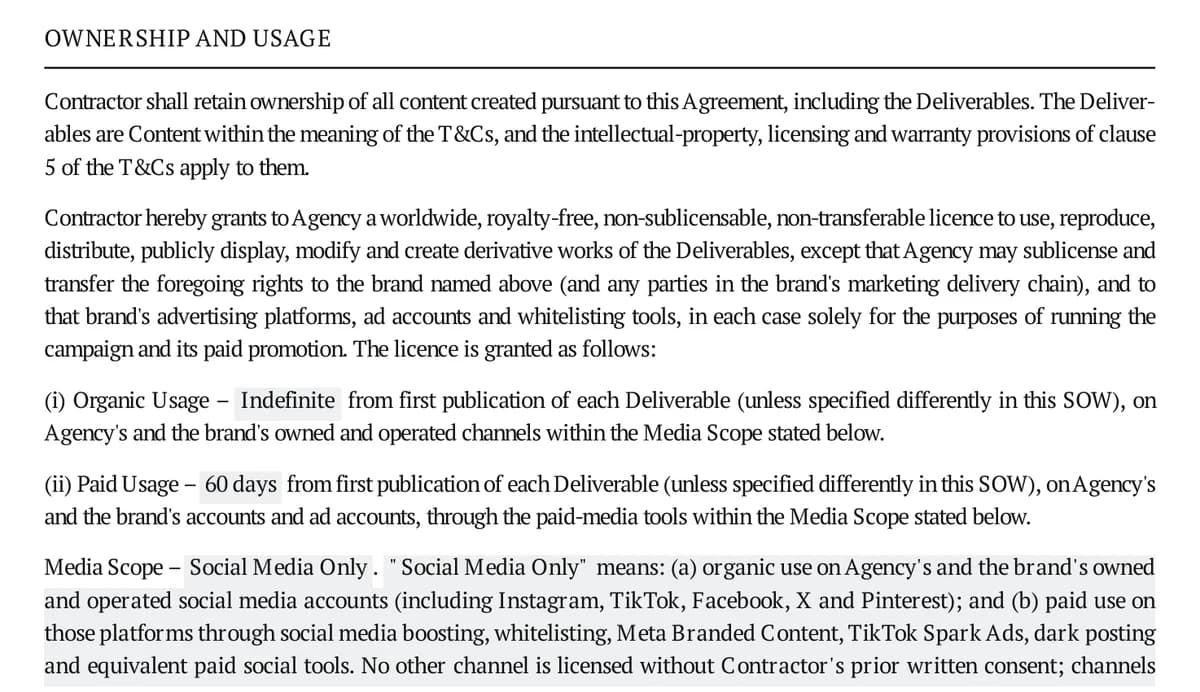
A buyer wants to see the product in use by people like their shoppers. Each creator signs an agreement that sets how long you may use the content, for organic use and for paid use, so a video from the campaign can go in the pitch, on the retailer’s product page and in your own ads.
- Usage rights as a length of time, in every agreement
- Ad codes collected, so a post can run as a Spark Ad or a partnership ad
- Nothing goes live without your yes
Proof
A record you can show at the next meeting
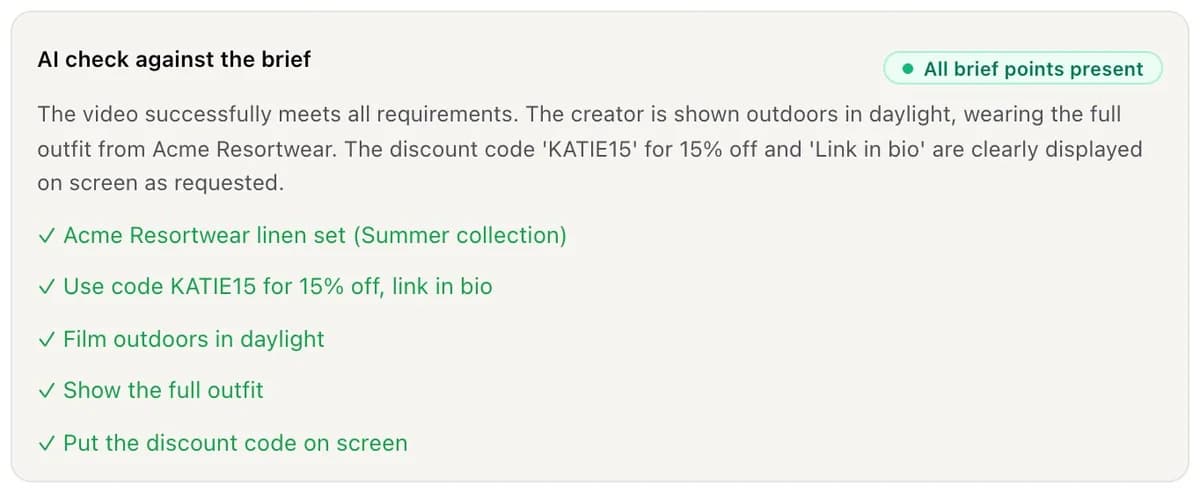
A view count is reach, not sales. Our report lists every post with its public counts, read three times a day. Where you run a receipt-verified Offer, each redemption is a purchase in a named store, and those add up to a record a buyer can check.
- Every post listed, with its views and engagement
- Receipts from an Offer, where you run one
- One cost figure for the creators, without ad spend
How it works
From a listing to posts the buyer can see
- 01
You send a brief
The product, the retailers that stock it, the launch or promotion dates, and what you want made.
- 02
A shortlist in 6 hours
Creators with their numbers, their subjects and where they are based.
- 03
Contract, product and drafts
Each creator signs, gets the product, and sends a draft for your approval.
- 04
Posts go live, on the dates
We track every post, and you pay for the ones that went live.
The difference
Trade marketing on your own, or with creators through Sup
Showing the buyer demand
On your own
A deck and a sales forecast
With Sup
Posts from creators, their views, and receipts from an Offer
Launch support
On your own
In-store materials and a trade promotion
With Sup
The same, plus local creators in the launch cities
Content for the retailer’s pages
On your own
A product shoot
With Sup
Creator videos with usage rights in every agreement
Tying a post to the shelf
On your own
A guess
With Sup
The dates and cities of every post, beside the retailer’s data
Paying creators
On your own
An invoice and a transfer for each one
With Sup
One invoice from Sup
The detail
What trade marketing is, and where creators fit
Trade marketing is the marketing a brand aims at the businesses that sell its products. The rest of this page says what that covers, where a creator campaign fits in a trade plan, and the words a buyer uses.
The basics
What trade marketing covers
Six parts, and each one is a reason a buyer asks what a brand is doing to move the line.
The trade is the customer
The retailer, the wholesaler and the distributor decide whether a product is stocked at all. Trade marketing sells to them first.
Sell-in and sell-out
Sell-in is what the retailer buys from the brand. Sell-out is what shoppers buy from the retailer. A listing is won on the first and kept on the second.
The listing is rented
A range review decides which lines stay. A product that sells too slowly per store per week loses its place to one that sells faster.
Trade promotions
Price cuts, multibuys and displays, paid for by the brand. They move units for a few weeks and cost margin, so a buyer also wants demand that lasts.
The category buyer
One person at the retailer owns the category. They judge a brand on data: rate of sale, distribution, margin and what the brand is doing to bring shoppers in.
Shopper marketing is the other half
Trade marketing wins the shelf. Shopper marketing brings people to it. The two are planned together and judged on the same sales figure.
Where creators fit
Three moments in a trade plan where creators do the work
A creator campaign is sell-out support: it brings shoppers to a shelf the brand has already won. These are the moments a buyer notices it.
Before the pitch
Send the product to creators who fit it, and take their posts and views into the meeting as evidence that people want it. A gifting campaign costs product and postage, not fees.
At the launch
Local creators in the launch cities, posting in the launch weeks, with an Offer tied to the product at the stores that stock it. The receipts show which stores moved.
Before the range review
A burst of posts in the weeks before the review, in the cities where the line is weakest, and the report and the receipts in the deck.
How gifting works is on the gifting page, how an Offer works is on the Offers page, and how shoppers are brought to the shelf is on the shopper marketing page.
The plan
A trade calendar with creators in it
What the trade sees at each moment, and what a creator campaign adds to it.
| The moment | What the trade sees | What creators add |
|---|---|---|
| The pitch | A deck, a forecast and a trade promotion offer | Posts and views that show demand, and content for the deck |
| The launch | In-store materials and the first order | Local creators in the launch cities, timed to the launch weeks |
| The promotion | A price cut or a display for a few weeks | Posts in the promotion window, so shoppers know before they go |
| The range review | Rate of sale by store and the margin | The dates and cities of every post, and the receipts from an Offer |
A short glossary
The words a category buyer uses
A creator campaign is judged by people who think in these terms. Each one comes with what a campaign can show against it.
| The word | What it means | What a creator campaign can show |
|---|---|---|
| Sell-in | What the retailer buys from the brand | Content and posts for the pitch |
| Sell-out | What shoppers buy from the retailer | Posts dated and placed, to set beside the sales |
| Range review | The meeting where a retailer decides which lines stay | A burst of posts before it, and the record of them |
| Trade spend | The money a brand gives a retailer for promotions and displays | A creator cost per 1,000 views, to compare with it |
| Rate of sale, or velocity (calculator) | Units sold in each shop each week | Nothing by itself. Compare the weeks and cities with posts against the ones without |
| Retail media (how creators fit) | Ads sold by a retailer on its own site, app and screens | Creator content with paid use rights, to run there |

Written by
Matt Greenwell, Co-Founder and CEO of Sup
Matt started Sup in 2024 with Hassan Munir. Before Sup he co-founded Storefront, the marketplace for booking pop-up retail space. Before that he worked at Goldman Sachs.
The campaign figures are from Sup’s own reporting. The description of trade marketing is general, and the page gives no sales figure, because we hold none. Updated 5 October 2026.
FAQ
Trade marketing questions
What is trade marketing?
Trade marketing is the marketing a brand aims at the trade: the retailers, wholesalers and distributors that stock its products, rather than the shoppers who buy them. Its job is to win a listing, hold the shelf space and get the retailer’s support, through pitches, trade promotions, merchandising and category data.
What is the difference between trade marketing and consumer marketing?
Consumer marketing builds demand among the people who buy and use the product. Trade marketing persuades the businesses that sell it. The two depend on each other: a retailer lists a product it believes shoppers want, and keeps it when the sales show they did.
What is the difference between trade marketing and shopper marketing?
Trade marketing speaks to the retailer. Shopper marketing speaks to the person in the shop, at the point of choosing. A brand usually needs both: the listing first, then shoppers at the shelf.
What does a trade marketing manager do?
They plan the pitch to each retailer, agree promotions and the money behind them, make the in-store materials, train the sales team and track how each line sells by retailer. Creator campaigns are one of the few things they can add to a product after the listing is won.
Can creator campaigns help win a listing?
They can help a pitch, because a buyer wants to see that people already want the product. Posts from creators, the views they had and, where you ran one, the receipts from an Offer are evidence of demand. Nothing on this page claims a listing was won by a campaign: the buyer decides.
How do you prove sell-out to a buyer?
With the retailer’s own sales data, by shop and by week. A creator campaign cannot supply that figure. It can supply the dates and cities of every post, so you can set them beside the sales, and the receipts from an Offer, which are purchases you can count one by one.
How much does it cost?
There is no monthly fee. You pay the price you approve for each creator, when their post is live, and we take our fee from creators. A gifting-only campaign pays $19 per gift as our fee. Across our paid campaigns the creator cost was $10.10 per 1,000 views, without ad spend.
Related
Where to go next
CPG marketing
Creator campaigns for food, drink and household brands sold in shops.
Shopper marketing
Local creators send shoppers to the shelf, and a receipt proves the purchase.
Retail media
Creator videos with paid-use rights in every agreement, for the retailer’s site, app and screens.
Retail
How creators send shoppers to the shelf, and how an Offer proves the purchase.
Sell-through rate calculator
Sell-through, days of cover and rate of sale per store per week.
UK brands
Creator campaigns for UK brands: UK creators, UK contracts and the UK’s ad rules.
A range review coming up?
Tell us the retailer, the cities and the date. A shortlist of local creators comes back in 6 hours, and you only pay for posts that go live.
 Book a call