5 June 2026
Top Instagram Story Ideas for Brands & Creators
You open Instagram, tap the plus icon, and stare at a blank Story frame. You know Stories can move people from casual attention to clicks, replies, bookings, and purchases, but most idea lists still give you the same tired prompts. Ask a question. Post a selfie. Share a meme. None of that helps when you need content that earns attention and supports a real growth target.
That gap matters in the UK because Instagram isn't a niche channel. DataReportal reported 35.2 million Instagram users in the UK in January 2024, equal to 51.8% of the population and 49.4% of UK adults aged 18+, with 55.0 million internet users and 66.8 million social media user identities overall, which makes Story-led campaigns relevant to a broad connected audience rather than a side tactic (UK Instagram audience context from Hootsuite's DataReportal summary).
Most brands don't have an idea problem. They have an execution problem. They need Instagram Story ideas that fit a business goal, match the creator type, and can be tracked without a spreadsheet mess. They also need assets that don't look thrown together, especially when creators and in-house teams are posting fast. If your visual system is the bottleneck, this batch workflow for Instagram Story backgrounds is a useful place to tighten production.
Below are 10 Instagram Story ideas that work better when you treat them as mini playbooks. Each one is built to help brands and creators produce content that feels native, stays useful, and gives your team a cleaner way to attribute what happened next.
1. Behind-the-Scenes Creator Takeovers
A takeover works when the creator shows your brand the way a customer would realistically encounter it. Not as a polished advert. As a sequence of small decisions, reactions, and moments that make the audience feel they're getting access they wouldn't normally get.
For restaurants, this could be a local food creator showing the arrival, the menu scan, the first bite, and the bill-worthy verdict. For an e-commerce brand, it might be a creator walking through why they chose one product variant over another. For a multi-location chain, give different nano creators one location each so every branch gets local context instead of a generic corporate Story.
How to structure the takeover
Keep the brief tight but not scripted. Give the creator three things only: the campaign goal, the essential talking points, and the call to action.
Then let them film like a person, not a presenter.
- Opening frame: Show where they are and why this is worth watching.
- Middle frames: Capture decision points, product detail, staff interaction, or ambience.
- Final frame: Push one action only, such as book, order, save, or reply.
Practical rule: If every frame could have been posted by your brand account without a creator, it isn't really a takeover.
A common mistake is over-branding. Heavy logos, rigid text overlays, and legal-sounding captions kill the exact reason this format works. Viewers want a creator perspective. They don't want a disguised ad deck.
Tracking that actually helps
Use creator-specific promo codes and campaign links. That gives your team a clean way to compare one takeover against another. Save the strongest sequences to Highlights, and add the top frames to your paid retargeting library if usage rights allow it.
This format is especially useful for local businesses that care about footfall and reviews, because generic Story advice rarely connects content format to outcomes that matter on the ground. That local-business gap is worth taking seriously when planning UK campaigns (analysis of the local business Story content gap from Sprinklr).
2. Product Unboxing and First Impressions
Unboxing still works because it removes one layer of uncertainty. People get to see packaging, scale, texture, setup, and the creator's immediate reaction before they buy.
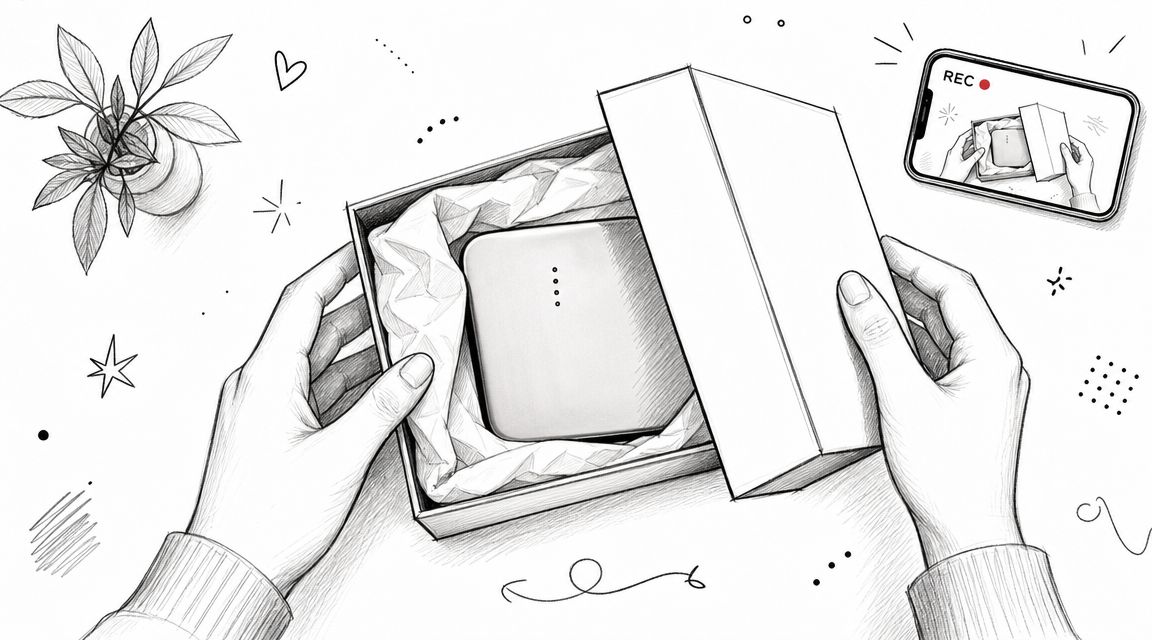
Beauty brands can use this for formula texture and applicator close-ups. Tech brands can focus on what's in the box and how quickly the product is usable. Food and delivery brands can turn unboxing into an arrival moment, especially when presentation is part of the customer experience.
The biggest trade-off is control versus credibility. If you over-direct the creator, the Story feels staged. If you give no guidance, they may miss the details buyers care about. The answer is a creator brief that asks for specific shots, not specific opinions.
What to ask creators to capture
A useful unboxing sequence usually includes:
- Seal and packaging: Show how the parcel arrives and what the first impression is.
- Close-up details: Capture textures, inserts, labels, and any premium touches.
- Immediate reaction: Ask what surprised them, positively or negatively.
- Context frame: Explain who the product is for and when they'd use it.
If you're shipping products for this format, your seeding process matters. A sloppy mailer produces sloppy content. A more structured PR package workflow makes it easier to standardise packaging, inserts, creator prompts, and fulfilment notes.
Don't judge this format only by Story views. Judge it by downstream behaviour. Did people click the product link, use the creator code, or revisit through retargeting later? Unboxings often introduce buyers to your brand before a later conversion event.
A good example is a DTC skincare brand sending the same hero product to several creators with different skin types. One highlights texture, another packaging, another routine fit. Same product, different proof angles.
Later in the campaign, use a video reference point to brief creators on pacing and framing standards.
3. Day-in-the-Life and Creator Lifestyle Content
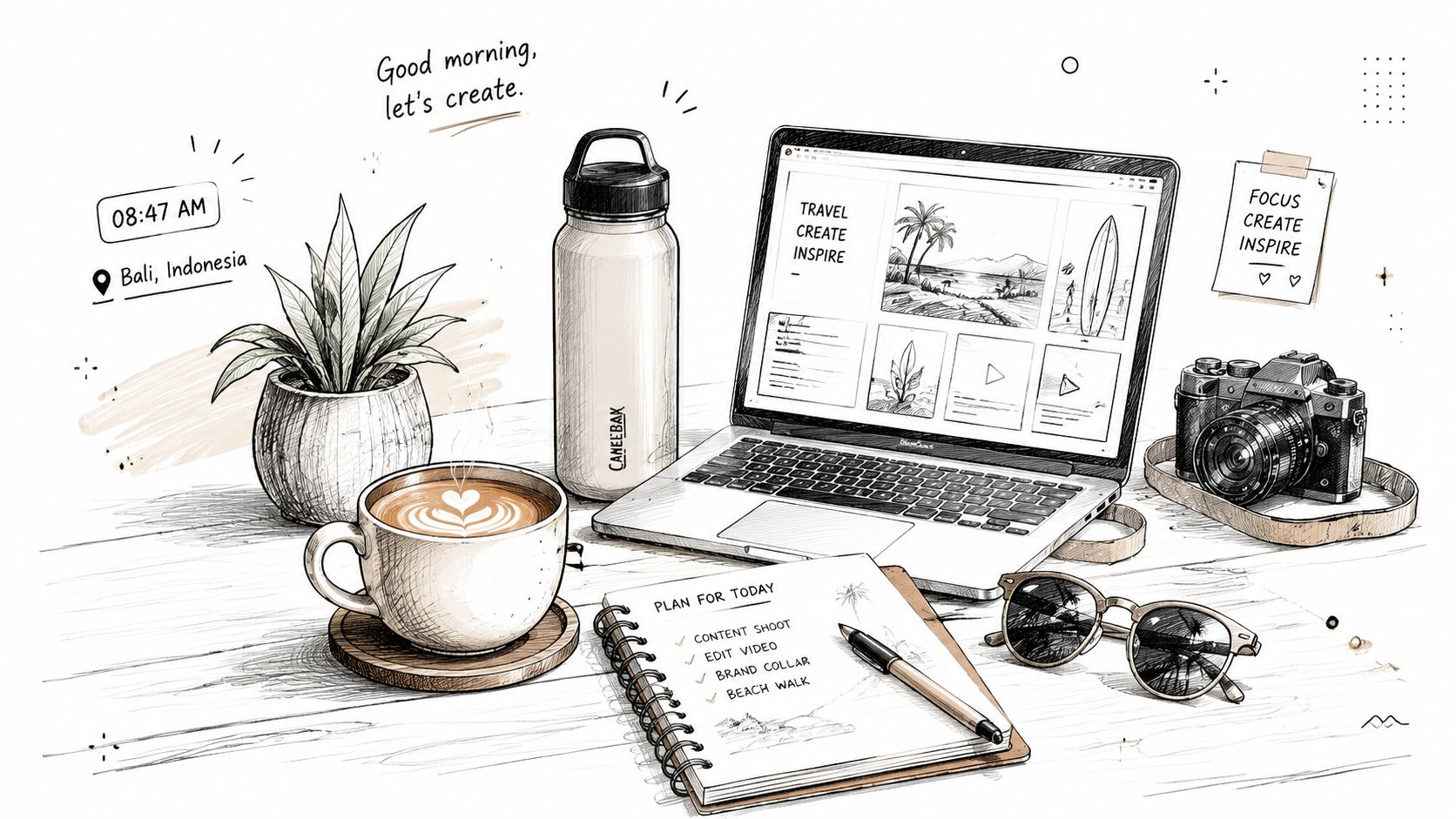
Some products don't need a reveal. They need integration. Day-in-the-life Stories work best when the product appears naturally inside a routine the audience already trusts.
A coffee brand belongs in a morning reset. A salon booking belongs in a prep-for-the-week sequence. A fashion accessory can appear across commute, work, dinner, and evening plans without needing a direct sales pitch every frame.
Keep it lived-in, not inserted
The fastest way to ruin this format is to drop the product into a routine where it clearly doesn't belong. Viewers can tell when a creator suddenly becomes a spokesperson for one frame and then returns to normal in the next.
Instead, brief around context:
- Morning use: Drinks, supplements, skincare, productivity tools.
- Midday use: Lunch spots, fashion basics, errands, delivery services.
- Evening use: Dining, wellness products, streaming snacks, self-care.
For creator-led brands, this is also where personal positioning matters. A creator with a clear niche usually integrates products better than a general lifestyle account trying to cover everything. If you want a primer on how creators build that positioning over time, Sarra Pro's influencer guide is a useful reference.
The audience doesn't need the brand to appear in every frame. They need the brand to make sense in the story.
For local businesses, this format is especially strong when paired with location stickers, neighbourhood references, and creator-specific booking codes. A lunch Story from a creator who spends time in that area feels more persuasive than a polished venue montage from the brand account alone.
4. Quick Polls and Interactive Story Stickers
Interactive Story stickers are one of the few formats that create engagement and customer insight at the same time. Polls, sliders, quizzes, and question boxes give the viewer something to do, not just something to watch.
That matters because educational and useful Story frames have stronger footing than random engagement bait. Meta's own guidance, cited in a later industry write-up, says 46% of users want brands to offer tips or advice on their Stories, which makes sticker-led education more defensible than generic prompt posts (interactive and educational Story rationale from HeyOrca).
Better prompts than “this or that”
Weak poll: “Do you like coffee?” Strong poll: “Which launch should we drop first, iced pistachio or salted caramel?”
Weak question sticker: “Ask us anything.” Strong question sticker: “What usually stops you from booking a colour appointment?”
The difference is intent. Good interactive Stories collect signal your team can use.
- Restaurants: Ask which special should return next week.
- Beauty brands: Run a quiz around skin concerns, then link to the matching product.
- Hotels: Use sliders to gauge interest in brunch, spa, or late checkout add-ons.
- Creators: Ask followers what they want tested on camera before posting the review.
How to close the loop
Always follow with a result or response frame. If people vote, show what won. If they ask questions, answer the best ones. If they choose between two products, tell them when the winner goes live.
What doesn't work is posting a poll only to inflate engagement, then never using the result. Audiences notice. They're less likely to respond next time.
A practical version for a local café is simple. Frame one shows two weekend specials. Frame two runs the poll. Frame three reveals the winner and adds a location tag plus a code for in-store redemption. That turns a low-effort interaction into a measurable visit driver.
5. Customer Testimonial and Review Stories
Most testimonials fail because they sound written. Story reviews work when they sound like what someone would actually message a friend after trying the product.
For restaurants, that might be a diner talking through the dish they'd reorder. For an e-commerce brand, it could be a customer explaining what felt better than expected after the first week of use. For service businesses, the strongest angle is often what removed doubt before booking.
Ask better questions, get better proof
Don't ask, “Can you leave us a review?” Ask narrower prompts:
- Surprise prompt: What was better than you expected?
- Decision prompt: What nearly stopped you buying or booking?
- Routine prompt: Where does this fit into your day now?
- Comparison prompt: What were you using or doing before?
Those prompts create Story-ready answers. They also help the viewer see themselves in the customer experience.
A strong testimonial doesn't praise the brand in broad terms. It removes one specific objection.
For visual direction, keep it light. Natural lighting, plain backgrounds, and small bits of context beat over-produced testimonial graphics. If a customer is speaking on camera, add captions. If they aren't comfortable on camera, use screenshot reviews paired with product footage, venue clips, or creator voiceover.
This format is particularly useful for hospitality, salons, wellness brands, and service-led businesses, where uncertainty often blocks the first conversion. A client saying “I thought this would be awkward, but the staff explained everything” does more than a generic five-star graphic ever will.
6. Time-Sensitive Promotions and Flash Sales
Stories are well suited to urgency because the format already feels temporary. A flash offer belongs here more naturally than it does in a static grid post.
This can work for a restaurant filling slower dayparts, a fashion brand moving a limited colourway, or a salon promoting last-minute appointment slots. The content doesn't need to be complex. It needs to be immediate and easy to act on.
Build urgency without making it look desperate
The best-performing promotions are clear, narrow, and time-bound. One audience. One offer. One action.
Use this sequence:
- Frame one: State the offer plainly.
- Frame two: Explain who it's for or what's included.
- Frame three: Add countdown sticker, code, or booking link.
- Frame four: Reminder close to expiry.
A common mistake is posting a “limited-time offer” that feels permanent because the brand runs a similar sale every week. If there's always urgency, there's no urgency.
Where brands get this wrong
They stack too many calls to action. Visit the site, reply to the Story, join the mailing list, use the code, and tag a friend. That's too much friction for a format people tap through quickly.
Keep the ask singular. For local businesses, that's often “show this Story today” or “book using this code”. For e-commerce, it's usually one product collection link with one creator code.
Recent guidance across Story content has also shifted toward stronger hooks, clearer lead magnets, and reply-driven calls to action, but many teams still run Stories like one-off creative tasks instead of a repeatable campaign system. That's a real operational gap for brands managing recurring promotions or multiple locations (recent Story strategy gap noted by Sprout Social).
7. Local Discovery and Recommendation Stories
If you run a local brand, generic Story inspiration won't take you very far. You need content that makes someone in a specific area think, “I could go there this week.”
That's why local discovery Stories work. A nano creator with a tight neighbourhood audience can make a place feel relevant in a way broad lifestyle creators often can't. The audience already trusts their local taste.
What local creators should actually show
A useful local Story doesn't just say a place is good. It reduces the effort of deciding to go.
Show the route, the exterior, what to order, what time to visit, whether booking matters, and what the vibe is like. If parking is tricky or the lunch queue moves fast, say so. Those details drive visits.
For brands trying to source creators in a more structured way, this guide on how to find local food influencers in your city is a practical starting point.
- Neighbourhood cue: Mention where it is in relation to a known local landmark.
- Decision cue: Recommend one standout item or experience.
- Access cue: Include map, tag, or simple “walk-in vs booking” note.
- Attribution cue: Use branch-specific codes where possible.
A strong scenario here is a multi-location restaurant group using different local creators for each branch. One creator frames the venue as a post-work dinner spot. Another presents a different branch as a weekend brunch choice. Same brand, different local reasons to visit.
8. Comparison and Before-After Content
Comparison Stories help when the value isn't obvious at first glance. They work best when you can show contrast clearly and credibly.
Beauty brands can compare finish, texture, or wear. Home organisers can show messy versus functional. Food creators can compare a standard option with a premium upgrade, as long as the comparison stays honest. The visual itself does much of the selling.
Credibility matters more than drama
The easiest way to lose trust is to exaggerate the transformation. If the change takes time, say that. If the result depends on regular use, say that too.
What works:
- Same lighting and angle
- Clear labels
- Creator commentary on what changed
- A realistic timeline or usage context
What doesn't work:
- Different camera setups that distort the result
- Missing context
- Overwritten “miracle” captions
- Before shots designed to look worse than reality
Show enough process that the outcome feels earned.
A creator reviewing a meal-kit brand, for example, can compare takeaway spending habits with a more structured cooking routine. A skincare creator can show texture and routine changes over time without overclaiming. A fashion creator can compare styling options before and after adding one hero piece.
This format also gives your team strong reusable assets. Before-and-after frames often repurpose well into Highlights, ad creative, landing pages, and creator recap decks.
9. Q and A Sessions and Creator Expert Content
Q and A Stories work best when the creator has real authority in a narrow lane. Not celebrity authority. Practical authority. The kind that makes followers ask what to order, what to wear, how to prep, or which option to choose.
A fitness creator answering recovery questions can naturally feature a wellness product. A food creator can answer “What should I get if I'm visiting for the first time?” A stylist can answer fit or layering questions while wearing the brand.
Keep the value weighted toward the audience
A good rule is that most of the Story should help the viewer even if they never buy. That's what keeps the product mention believable.
Ask creators to collect questions in advance. Then group answers by theme:
- Beginner questions: Ideal for top-of-funnel viewers
- Decision questions: Best for product or booking conversion
- Objection questions: Useful when buyers hesitate
- Usage questions: Strong for retention and repeat purchase
For teams working with specialist creators, it helps to understand the difference between a broad influencer and a subject-led expert. This explainer on what is a key opinion leader is useful when deciding who should front advisory Story content.
A practical example is a nutrition-focused creator answering “What should I order if I want something filling but quick?” for a restaurant partner. The brand gets useful content, the creator stays credible, and the audience gets advice they can apply immediately.
10. Exclusive Access and Behind-the-Scenes Sneak Peeks
Exclusivity gives Stories a reason to exist right now, not later. When viewers feel they're seeing something early, hidden, or limited to insiders, watch-through tends to improve because curiosity carries the sequence.
This format fits product drops, menu previews, soft openings, creator-only events, and pre-launch samples. It also suits hospitality brands opening a new space, or fashion brands teasing a collaboration before the public release.
What makes sneak peeks worth watching
Don't reveal everything at once. A good sneak peek shows enough to create anticipation, but not so much that the later launch feels redundant.
Use a sequence like this:
- Tease the access: “Got early access to something not out yet.”
- Reveal selective detail: Texture, packaging, setting, menu close-up, or one standout feature.
- Add exclusivity cue: Launch date, waitlist note, or countdown sticker.
- Close with action: Save the date, join the list, or watch for the drop.
This is one of the few formats where tighter brand control often helps. If timing matters, give creators exact windows for posting and a list of what can't be shown. If the launch is sensitive, use approval workflows and written usage rules.
For local venues, sneak peeks can be powerful before a relaunch, tasting night, or seasonal menu update. For e-commerce, they're especially effective when layered with creator reactions rather than sterile product renders. Audiences want the feeling of being let in.
Top 10 Instagram Story Ideas Comparison
| Format | Implementation Complexity 🔄 | Resource Requirements ⚡ | Expected Outcomes 📊 | Ideal Use Cases 💡 | Key Advantages ⭐ |
|---|---|---|---|---|---|
| Behind-the-Scenes Creator Takeovers | Medium, scheduling, creator vetting | Low to Med, micro-creator fees, onboarding | High, authentic engagement, account cross-traffic | Local restaurants, ecommerce showcases, multi-location partnerships | Authentic connection, scalable UGC |
| Product Unboxing & First Impressions | Low, simple shoot, minimal direction | Low, product samples, shipping | High, strong shareability and product clarity | Ecommerce/DTC launches, beauty, tech | Clear product demonstration, high engagement |
| Day-in-the-Life & Creator Lifestyle Content | Med to High, longer filming, narrative structure | Med, creator time, multiple frames | High, deep relatability, brand affinity | Lifestyle, wellness, hospitality, fitness | Natural product integration, strong storytelling |
| Quick Polls & Interactive Story Stickers | Low, native tools, minimal prep | Very Low, creator time only | Med, high engagement, rapid audience insights | Menu testing, product validation, quick research | Immediate feedback, data-rich and low friction |
| Customer Testimonial & Review Stories | Med, recruiting participants, editing | Med, coordination, simple production | High, credible social proof, reduces hesitation | Ecommerce reviews, services, hospitality | High credibility and persuasive social proof |
| Time-Sensitive Promotions & Flash Sales | Low to Med, promo setup, inventory checks | Med, promo codes, coordination, inventory | High, immediate conversions, measurable lift | Flash sales, off-peak traffic, inventory clearance | Urgency-driven conversions, clear attribution |
| Local Discovery & Recommendation Stories | Med, sourcing local creators per area | Low to Med, multiple local partnerships | High, hyperlocal foot traffic and credibility | Multi-location restaurants, pop-ups, neighborhood campaigns | Hyperlocal relevance, trusted local endorsements |
| Comparison & Before/After Content | Med, consistent visuals, authentic results | Med, product use time, controlled setup | High, persuasive visual proof of benefits | Beauty, fitness, home improvement, food | Visually compelling proof, highly shareable |
| Q&A Sessions & Creator Expert Content | Med, prep, credibility and research | Low to Med, creator prep time | Med to High, authority building, engaged audience | Fitness, beauty, food, expert-led product education | Positions brand via trusted expertise |
| Exclusive Access & Behind-the-Scenes Sneak Peeks | Med to High, timing, NDAs, coordination | Med, controlled access, logistics | High, buzz, FOMO, pre-launch excitement | Product launches, new locations, limited editions | Creates exclusivity and strong pre-launch buzz |
Turn Ideas Into Attributable Growth
Strong Instagram Story ideas aren't the hard part once you've got a working playbook. The hard part is turning scattered creator content into a repeatable operating system. That's where many organizations get stuck. They can come up with a poll, a takeover, a launch teaser, or a local recommendation sequence. What they can't do consistently is source the right creators, brief them properly, ship products, collect assets, deploy tracking, and compare what truly drove sales or bookings.
That's why repeatability matters more than novelty. Hibu reports platform guidance suggesting 2 Stories per day, and Socialinsider recommends organising Stories into repeatable pillars such as company updates, team and culture, product or service content, customer proof, and education. That's a more useful benchmark than chasing random inspiration, because it gives teams a framework for consistency and completion rather than improvisation (repeatable Story cadence and content pillars from Hibu).
For brands, agencies, restaurants, and multi-location groups, the biggest gains usually come from standardising the parts that shouldn't require creative reinvention every week. Creator outreach scripts. Promo code formats. UTM naming conventions. Approval flows. Asset libraries. Post-campaign reporting. Once those pieces are stable, your team can spend more time improving the content itself instead of rebuilding the machine behind it.
That's also why the best Story programs mix goals, not just formats. Some Stories should earn replies. Some should generate clicks. Some should create proof you can reuse in ads and Highlights. Some should drive bookings at specific locations. If every Story is judged by the same metric, you'll misread what's working.
A platform like Sup can fit into that system if you need help operationalising creator campaigns rather than managing them manually. Based on the publisher information provided, Sup combines creator sourcing, outreach, tracking links, promo codes, campaign management, and a central content library, which is useful for teams that want cleaner attribution and less manual coordination. If your current process still lives across DMs, notes, spreadsheets, and disconnected reporting, tightening the workflow will likely do more for growth than chasing another batch of generic Instagram Story ideas.
Keep the creative native. Keep the brief clear. Keep the tracking simple enough that your team will use it. If you do that, Stories stop being filler content and start becoming a measurable part of your growth engine. For teams also trying to speed up production around recurring campaigns, this social media post generator AI workflow is a practical companion to the planning side.
If you want a faster way to turn these Instagram Story ideas into live creator campaigns, Sup helps brands source relevant creators, organise briefs, deploy tracking links and promo codes, and keep campaign assets in one place so Story collaborations are easier to launch and measure.
More on content & ugc
See how many creators post about you and your competitors
Type in your brand's Instagram handle and we count the creators who post about you and about your five closest competitors. It takes about a minute and it is free. Or request a demo and we will show you the creators in your niche and walk you through the dashboard.
 Book a call