22 February 2026
How to Find Local Food Influencers in Your City and Drive Orders
If you want to find the best local food influencers in your city, your first move should be to dive deep into hyper-local hashtags and location tags on Instagram and TikTok. From there, it's all about analysing the profiles of creators who are already posting about nearby restaurants. My advice? Focus on nano and micro-influencers; they're the ones who build genuine engagement and actually get people through your door.
Why Local Food Influencers Are Your Secret Ingredient
Forget chucking money at broad, impersonal ad campaigns that never quite hit the mark. In today’s competitive dining scene, real growth is built on authentic connections. That’s exactly where local food influencers shine. We’re not talking about celebrities with millions of followers; these are the trusted voices within your community whose recommendations feel like getting a tip from a friend. This kind of genuine social proof is your restaurant's most powerful asset for turning scrollers into loyal customers.
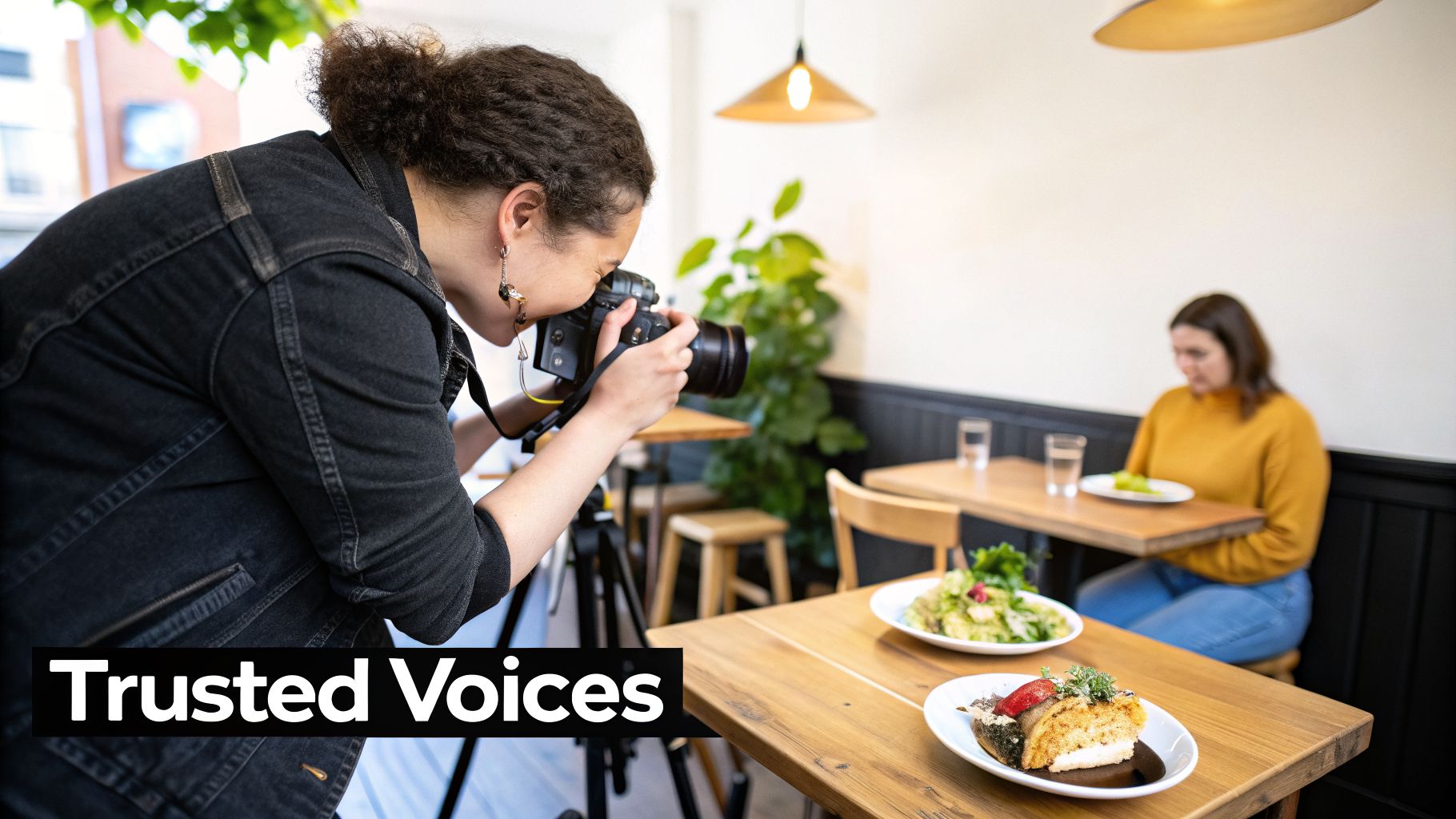
This is a perfect snapshot of a creator in their element, crafting the kind of high-quality, authentic content that can make a local restaurant stand out. It’s this dedication to their craft that builds the trust you need to tap into.
The Power of Hyper-Local Trust
Just picture it: a quiet Tuesday night. Then, a single, mouth-watering Reel from a beloved local foodie goes live, and suddenly, your booking system is buzzing. This isn't just wishful thinking; it's the real, direct impact of hyper-local influence. These nano-influencers (1k-10k followers) and micro-influencers (10k-50k followers) have spent years building rock-solid trust with an audience that lives, works, and, most importantly, eats right in your neighbourhood.
When a local creator recommends a new dish at your cafe, their followers listen. Why? Because the recommendation is relevant, timely, and comes from a source they genuinely believe in. It’s word-of-mouth marketing, supercharged for the digital age.
The data backs this up, too. Food content is a massive driver of consumer behaviour in the UK, especially on platforms like Instagram. In fact, it’s the most engaging category for 30% of UK consumers, and a huge 52% actually act on food and drink content they see from creators. These partnerships are a crucial part of building your brand, which ties directly into the importance of online reputation for attracting and keeping customers.
Real ROI for Restaurants
Working with local influencers delivers a tangible return on investment that often leaves traditional marketing in the dust. And the benefits go way beyond a temporary spike in likes.
- Authentic Social Proof: Their content acts as a powerful, unbiased testimonial. It builds credibility and trust in a way that your own marketing never can.
- Targeted Reach: You’re connecting directly with potential customers in your specific area. No more wasted ad spend on people who will never visit.
- High-Quality Content: You get a library of professional, user-generated content (UGC) that you can repurpose across your own social media channels, website, and even in-store menus.
By focusing on these creators, you're not just buying an ad; you're investing in a relationship that fosters long-term brand advocacy. For restaurants on https://sup.co/restaurants looking to drive both footfall and positive reviews, learning to manage these partnerships effectively is a total game-changer. This guide will walk you through exactly how to do it.
Unearthing Local Gems with a Manual Search
Forget expensive software for a moment. The best tools for finding local food influencers are probably already on your phone. By getting clever with how you use apps like Instagram and TikTok, you can manually build a fantastic list of collaborators who are genuinely part of your city's food scene.
It’s all about thinking like a local, not a marketer. How do real people in your city search for and talk about food? Forget casting a wide net with generic hashtags; we’re going to zero in on the creators who matter. Combining your city's name with popular foodie terms is the first step to cutting through the noise and finding people who are passionate about what’s happening in their own backyard.
Beyond the Basic Hashtag
Your first instinct might be to search for #foodie, but that’s like shouting into the void. The real magic happens when you get hyper-local.
Think about the unique slang and abbreviations for your city. For a restaurant in Manchester, this means going beyond the obvious. You'd want to search for:
- #manchesterfoodie: A solid starting point, but everyone uses it.
- #mcrfood: Now we're getting warmer, using the common city abbreviation.
- #manchestereats: This is great: it’s action-oriented and popular.
- #eatmcr: This is the jackpot. It's a term locals and established creators use, signalling you're in the know.
This logic applies everywhere. In Bristol? Try #bristolfood. Up in Edinburgh? You’ll get great results with #edinburghscran or #edinburghfood. Using these terms helps you find the people who are at the very heart of your city's digital food conversation.
Remember, the goal is to discover creators who are already embedded in the local community. Their content should feel authentic because it is. They are dining at and talking about the places right around the corner from your own establishment.
Here’s a pro tip: once you’ve found a promising hashtag, don’t just look at the 'Top' posts. Switch over to the 'Recent' tab. It's a real-time feed where you can spot up-and-coming creators who have incredible engagement but haven't been snapped up by every other restaurant in town yet.
Tapping into Instagram’s Location Features
Hashtags are just one side of the coin. Instagram’s location features are arguably even more powerful for finding the perfect influencers.
Start by digging into the 'Places' tab. First, search for your own restaurant and see who’s already tagged you. Then, the fun begins. Search for popular landmarks nearby, specific neighbourhoods, and, most importantly, your direct competitors. Take a look at the content tagged at their locations. Who is posting brilliant photos and videos? Who is getting genuine comments from other locals? These are your prime candidates.
It’s a simple, effective way to get a shortlist of potential partners. Plus, you’ll get some invaluable insight into what kind of content performs well at similar venues.
Uncovering Influencers on TikTok
TikTok’s algorithm is a goldmine for spotting the next big thing. Its 'For You Page' is incredibly good at figuring out where you are and showing you relevant content.
Here’s how to find local food influencers on TikTok:
- Feed the Algorithm: Start by searching for things like "things to do in Glasgow" or "best brunch in Leeds". Watch and interact with the food videos that pop up.
- Let It Learn: The more you engage with local food content, the more the algorithm will serve it to you. Your 'For You Page' will quickly turn into a curated feed of local creators.
- Check Their Profile: Found a great video? Tap on the creator’s profile. You're looking for a bio that mentions your city and a feed full of content from other local spots.
This approach is fantastic for uncovering nano-influencers who might be creating viral content on a smaller budget. In the UK food scene, these creators are absolute gems. In London alone, there are over 98,000 Instagram accounts with more than 5,000 followers, many focusing on regional food. Our guide to London food bloggers lists some of the best known. These nano-influencers can deliver astonishing engagement rates, sometimes as high as 15.2% on TikTok, which completely overshadows the typical 1-3% you’d see from a massive account.
If you want to dive deeper into the data, these influencer marketing statistics from charle.co.uk offer a fascinating look at how these creators are shaping the UK market. By combining these manual search techniques, you’ll quickly build a solid list of authentic creators who are ready to hear from you.
Alright, you’ve pulled together a list of potential creators. Finding them was the easy part. Now comes the real work: vetting. This is the crucial step that separates a campaign that actually brings customers through your doors from one that’s just a disappointing waste of time and money.
Don’t just look for someone to post a one-off Reel for a free meal. Your goal is to find a genuine partner who can become a true ambassador for your restaurant. That means digging deep into their content, their audience, and their engagement to make sure they're the right fit.
This flowchart gives you a good look at the manual search process that gets you to this vetting stage.
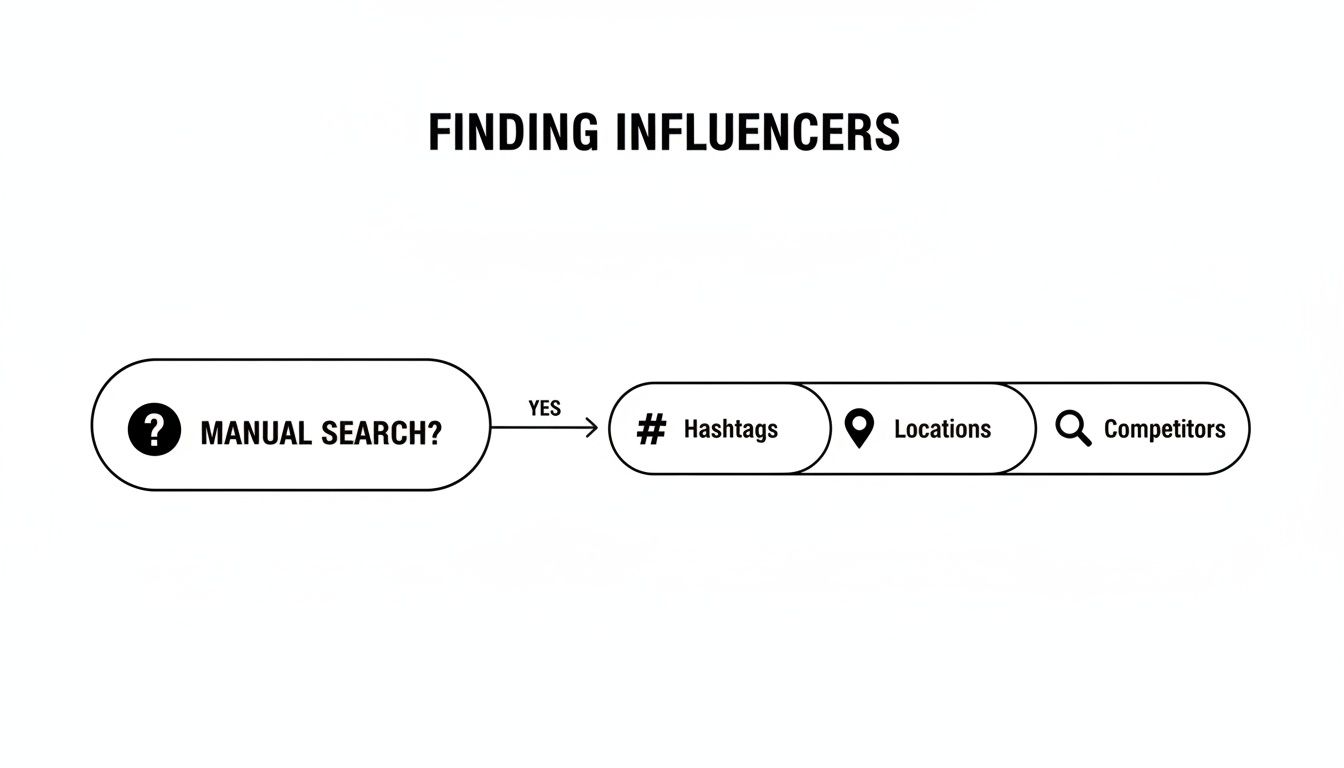
As you can see, it all starts with those three pillars: hashtags, location tags, and checking out who your competitors are working with. Each path leads you to potential partners, but now you need to figure out who's actually worth your investment.
Look Past the Followers and Analyse Engagement Quality
A massive follower count looks great on the surface, but it means nothing if no one is actually listening. Real influence is all about engagement, and I’m talking about quality, not just numbers.
Start by scrolling through the comments on their recent food posts. Are people having actual conversations? Look for comments like, "That looks incredible, I have to try it!" or "Is this place good for a date night?". That's the stuff you want to see. It shows genuine interest. If all you see is a wall of "Yum," "Wow," or a flood of generic emojis, that’s a red flag. It often points to low-quality or even bought engagement.
A healthy engagement rate for a micro-influencer (10k-50k followers) is usually somewhere between 3-6%. For nano-influencers (1k-10k), it can be even higher. Anything much lower than that could signal a fake or disengaged following.
Also, take a look at who is doing the commenting. Are they other local foodies and potential customers from your city? Or is it just a random jumble of other influencers from all over the world? The more local the conversation, the better for your business.
Check for Audience Authenticity and Brand Alignment
Before you even think about signing a contract, it’s absolutely essential to audit an influencer profile to make sure their followers are your potential customers.
Don't be afraid to ask for their media kit or even screenshots of their audience demographics from Instagram or TikTok analytics. Here's what you need to look for:
- Top Locations: The majority of their audience must be in your city or the immediate surrounding areas. An influencer with 50,000 followers is completely useless to your Glasgow restaurant if most of their audience lives in London or Los Angeles.
- Age and Gender: Do their followers match your ideal customer? If you run a trendy cocktail bar targeting 25-35 year olds, a creator whose audience is mostly over 50 probably isn’t your best bet.
Sudden jumps in their follower count are a massive red flag. A steady, organic growth curve is what you're looking for. A sharp, unnatural spike often means they've bought followers, which is a definite deal-breaker.
To make this process a bit more structured, I like to use a simple scorecard. It helps me stay objective and compare creators side-by-side.
Influencer Vetting Scorecard
| Vetting Criterion | What to Look For (Good) | Red Flag (Bad) |
|---|---|---|
| Engagement Quality | Real conversations, questions, comments from local followers. | Generic single-word comments, emoji spam, comments from bots. |
| Audience Location | Majority of followers in your city/region. | Audience is spread out globally or concentrated in the wrong city. |
| Follower Growth | Steady, organic growth over time. | Sudden, unnatural spikes in follower numbers overnight. |
| Content Aesthetic | Visual style matches your brand's vibe (e.g., elegant, casual). | Clashing aesthetic; poor quality photos/videos. |
| Content Niche | Consistent, high-quality food content. | Posts are all over the place (fashion, travel, random life updates). |
| Professionalism | Clear disclosure of past ads; professional communication. | Hiding sponsorships; history of unprofessional call-outs. |
This scorecard isn't about finding a "perfect" 10/10, but about identifying the best possible fit and avoiding partners who are clearly wrong for your brand.
Assess Their Content and Overall Brand Fit
Finally, take a hard look at their content. Ask yourself one simple question: would I be proud to have their photos or videos represent my restaurant?
- Aesthetic and Style: Does their visual style match your brand? A fine-dining spot needs that polished, high-quality photography. On the other hand, a casual street food vendor could get great results from more energetic, on-the-go video content. It’s all about the right match.
- Consistency: Do they post about food all the time, or is it just an occasional meal mixed in with travel and fashion? You want someone who is known for their food recommendations. Their audience trusts them for that specifically.
- Professionalism: Look at how they handle sponsored posts. Do they disclose them properly? Their track record with other brands is a pretty good indicator of how they'll work with you. If you manage campaigns for clients, these details are crucial. It's why many agencies partner with platforms like Sup to make sure everything is above board and to streamline this whole vetting process.
By taking the time to properly vet these creators, you’re not just finding local food influencers. You’re building authentic, effective partnerships that will actually drive real, measurable results for your restaurant.
Crafting Outreach That Gets a Response
So, you’ve done the hard work. You’ve sifted through countless profiles, vetted your top prospects, and now you have a solid list of local food influencers who feel like a perfect match for your brand. This is the exciting part, where you turn all that research into a real-life partnership. But be warned: a generic, copy-and-paste DM is the quickest way to be left on read. Your outreach needs to be just as personal and considered as your vetting process was.
That first message really does set the tone for everything that follows. It's your chance to show you’ve done your homework and genuinely appreciate what they do, making them far more likely to be interested in what you have to say.
Personalise Your Pitch
Let's be honest, good local food influencers are bombarded with requests. To cut through the noise, you need to prove you’re not just another restaurant spamming a list. Personalisation is everything.
Start by mentioning something specific you liked about their content. Don't just say, "love your feed." Instead, try something like, "Your Reel on the new tacos at [Competitor's Name] was brilliant: the editing was so sharp." That small detail immediately shows you've actually watched their work.
From there, get to the point. Clearly and concisely explain why you’re reaching out and what’s in it for them. Frame it as an exciting invitation, not a demand for their time.
Pro Tip: Keep your first DM short and sweet. Introduce yourself, drop a genuine compliment, and float the idea of a collaboration. The goal is to start a conversation, not to seal the deal in one message.
Demystifying Compensation Models
Talking about money can feel awkward, but it absolutely doesn't have to be. When it comes to local food influencers, compensation comes in a few different flavours, and it helps to be ready to discuss all of them.
- Gifted Experience: This is the go-to for nano-influencers who are just starting out. You offer a complimentary meal and drinks for the creator (and usually a plus-one) in return for some content. It’s a low-cost way to get your foot in the influencer marketing door.
- Hybrid Model (Gifted + Fee): For micro-influencers with a solid track record, a gifted experience plus a small fee is often the standard. It’s a way to acknowledge the real time and effort that goes into creating quality content.
- Paid Collaboration: For more established creators or for campaigns with very specific needs (like a multi-platform launch), a flat fee is the norm. Rates can vary wildly, from £200 to over £2,000 for a single video package in a major city, depending on the influencer's reach and the scope of work.
Don't be shy about asking for their rate card, but it’s always smart to have a budget in mind before you start the conversation.
Setting Crystal-Clear Expectations
Nothing kills a good collaboration faster than ambiguity. Before anyone agrees to anything, you need to be crystal clear about the deliverables. A vague "post about us" request is a recipe for disappointment.
Instead, define exactly what you’re hoping to receive. For example, a good starting point could be:
- One Instagram Reel: A 30-60 second video showcasing the dining experience.
- Three Instagram Stories: A series of behind-the-scenes clips or photos posted during their visit.
- A set of high-resolution photos: For you to use on your own channels (always with credit).
Having these deliverables clearly defined is a cornerstone of building successful campaigns. For a deeper look into crafting your content strategy, you can explore more insights on the Sup blog.
The Importance of a Simple Agreement
Even if it’s just for a gifted meal, a simple written agreement is a must. This doesn't need to be a complex legal document drawn up by a solicitor. A straightforward email summarising the agreed-upon terms is usually enough to protect both you and the creator.
Make sure your agreement clearly outlines:
- The Offer: What you are providing (e.g., a complimentary meal for two, with a value up to £100).
- The Deliverables: The exact content required (e.g., 1 Reel, 3 Stories).
- The Timeline: When the content should be posted (e.g., within 7 days of their visit).
- Content Usage Rights: Confirmation that you can re-share their content on your own social channels with proper credit.
- Disclosure: A reminder that they must clearly disclose the partnership in line with advertising standards (e.g., using #ad or #invited).
Taking this simple step avoids misunderstandings and gets everyone on the same page. It turns a casual chat into a professional collaboration and lays the foundation for a brilliant, long-term relationship. By crafting thoughtful outreach and setting clear expectations from the get-go, you can confidently turn that prospect list into a team of powerful brand ambassadors.
Measuring ROI and Building Long-Term Value
So, the content is live. The pictures look great. But does any of it actually matter? A collaboration doesn't end when the post goes up; that's really just the beginning. The real test is figuring out if it worked.
Likes and views are nice ego boosts, but they don't keep the lights on. To make influencer marketing a real part of your business, you need to connect the dots between their content and your bottom line, whether that's online orders or bums on seats. Let’s get into the practical ways to track what's driving actual results.
Attributing Sales with Unique Codes and Links
The most straightforward way to see an influencer's impact is to give their followers a specific way to identify themselves. This creates a direct trail from their content straight to your till.
The two most reliable tools for this are unique discount codes and custom UTM links.
A unique discount code (something like GEORDIEFOOD15) is dead simple. The influencer shares it, their followers use it, and your point-of-sale system tells you exactly who sent them. It's not just a discount; it's a clear attribution signal.
For online orders, UTM (Urchin Tracking Module) links are your secret weapon. These are just special URLs you can whip up in a few seconds using a free tool like Google's Campaign URL Builder. When a creator pops their unique link in their bio or a Story, every single click gets tracked in your website analytics.
Imagine you've partnered with a Manchester-based influencer. They share a Story with a swipe-up UTM link to your ordering page. You can see precisely how many people clicked it, how many started an order, and, most importantly, how many actually paid. That's powerful, direct attribution.
Building a Simple Attribution Dashboard
You don’t need to be a data whiz to track your campaigns. A basic spreadsheet is often all you need to get a clear picture of what’s going on. Think of it as your mission control for influencer activity.
Just create a simple table with a few key columns:
- Influencer Name: The creator you're working with.
- Campaign Date: When the content went live.
- Unique Code/Link: The specific tracker they used.
- Code Redemptions: Total times their discount code was used.
- Link Clicks: Clicks from their UTM link (check Google Analytics).
- Total Revenue Attributed: The sales total from that code or link.
- Cost of Campaign: Your total investment: their fee, the cost of their meal, everything.
If you update this weekly, you'll quickly spot your top performers. This data is gold. It lets you double down on the partnerships that are actually delivering and step back from those that aren't. It turns a hopeful guessing game into a measurable strategy.
From One-Off Posts to Long-Term Ambassadors
The best influencer programmes are built on genuine relationships, not one-time transactions. A successful post is fantastic, but turning that creator into a long-term brand ambassador is where the real magic happens.
An ambassador is someone who truly vibes with your brand and promotes you consistently over months, not just for a single post. This is often done for a monthly retainer or another kind of ongoing partnership. When followers see their favourite foodie visiting your spot again and again, the recommendation feels far more authentic and trustworthy than a one-off #ad.
The benefits of building an ambassador programme are huge:
- Sustained Visibility: You get consistent brand presence instead of a short-term spike in attention.
- Deeper Authenticity: Repeated, genuine endorsements build incredible credibility with their audience.
- Cost-Effectiveness: A retainer agreement can often work out to be more budget-friendly than paying for multiple one-off campaigns.
This long-term view transforms influencers from hired megaphones into true partners who are genuinely invested in seeing you succeed. Frankly, it's the ultimate goal.
Scaling and Automating Your Success
Managing a couple of collaborations is one thing. But what about when you want to work with ten, twenty, or even fifty local food influencers, maybe even in different cities? That’s when the admin hits hard. Manually tracking codes in spreadsheets, chasing invoices, and handling all the back-and-forth can quickly become a full-time job.
This is where a dedicated platform can be a game-changer. These tools are designed to automate the grunt work.
Take this dashboard from Sup for instance. It shows how you can see all your campaigns in one clean view.
A user can instantly check on active collaborations, see the content, and monitor the results without getting lost in a sea of emails and spreadsheets.
The right tool can handle everything from finding vetted creators and managing comms to automatically generating tracking links and handling payments. It lets you scale your efforts without losing your mind, ensuring every pound spent is tracked, measured, and put to work. This is how you turn influencer marketing into a reliable engine for growth.
Your Top Questions About Local Food Influencers, Answered
Diving into local influencer marketing for the first time? It's natural to have a few questions. I've worked with countless restaurants and marketers, and these are the queries that pop up again and again. Here are some straight-talking answers to help you get started on the right foot.
What’s the Real Cost of Hiring a Local Foodie?
This is always the first question, and honestly, there's no single price tag. The cost can swing wildly depending on the creator.
For up-and-coming nano-influencers (think 1k-10k followers), a simple gifted experience is often all it takes. You provide a fantastic meal on the house, and they create content to build their portfolio. It’s a win-win that gets your name out there with minimal cash outlay.
Once you start looking at more established micro-influencers (10k-50k followers), you'll need to budget for a fee. It usually starts with a gifted meal plus a payment, which can be anywhere from £150 to £500+ for a single campaign. For the city's top-tier foodies (the ones with a proven ability to fill seats), fees can easily run into the thousands, especially if you want a package deal with Reels, TikTok videos, and a gallery of professional photos.
Nano vs. Micro-Influencers: What's the Difference?
Getting your head around these terms is crucial for spending your budget wisely. It all comes down to their audience size and how they connect with them.
- Nano-Influencers (1,000 - 10,000 followers): These are your true neighbourhood champions. Their engagement rates are often through the roof because they’re talking to a close-knit group of friends, family, and locals who genuinely hang on their every word. Their recommendations feel like advice from a trusted friend.
- Micro-Influencers (10,000 - 50,000 followers): These creators have a bigger megaphone but still command a loyal local following. They’re generally more experienced, their content looks more polished, and they offer a great balance between broad reach and authentic connection.
My advice? For most local spots, the magic lies in using a mix of both. Deploy nano-influencers to build that deep-rooted community trust, and then bring in micro-influencers to shout about you to a wider (but still local) audience. It's the most effective strategy I've seen for getting a great return.
Can I Insist on a Guaranteed Positive Review?
You can try, but it's a bit of a minefield. An influencer's currency is their credibility, so they need to be honest. That said, there's an unspoken understanding in the industry.
Most professional creators operate on a simple policy: "If I don't have a good experience, I just won't post." They’ll often let you know this privately. This is a fair compromise. It saves you from a public takedown while allowing them to protect their integrity. Never try to force someone's hand for a glowing review after a bad experience. It's far better to take their private feedback on board and use it to improve.
How Can I Spot an Influencer with Fake Followers?
This is a vital vetting step. The biggest giveaway is a lopsided follower-to-engagement ratio. An account with 40,000 followers that only gets 50 likes and a few generic comments like "🔥🔥🔥" on each post should set off alarm bells.
What you want to see is real conversation. Are people asking questions about the dishes? Tagging their friends to make plans? Are the comments coming from other genuine, local accounts? Trust your gut here. If the engagement feels hollow or fake, it probably is. Always choose an influencer with an active, chatty community over one with huge but silent numbers.
Ready to find the right influencers without spending hours on Instagram DMs and spreadsheets? Sup uses smart technology with a human touch to connect you with proven local foodies. We handle the outreach, tracking, and reporting, leaving you free to do what you do best: run your restaurant. Find your perfect influencer match today with Sup.
More on recruitment
See how many creators post about you and your competitors
Type in your brand's Instagram handle and we count the creators who post about you and about your five closest competitors. It takes about a minute and it is free. Or request a demo and we will show you the creators in your niche and walk you through the dashboard.
 Book a call