26 November 2026
Influencer Marketing Trends Brands Are Planning for in 2027
Most UK brands are putting more money into creators next year, and the money is going somewhere different. IAB UK's Future of Influencer Marketing UK 2026/2027 report, a survey of 1,123 marketing decision-makers across the UK and European markets, found that 92.8% of UK brands and agencies expected to increase influencer-marketing spending over the following 12 months, against 75% across Europe. In the same survey, 38.3% of UK respondents measured campaign ROI, compared with 30.2% across Europe.
That pair of figures sets the tone. More money is being committed, and more of it is being checked. Flat fees for a single post are giving way to paid media behind the post, commission on tracked sales, and disclosure checks that decide whether content can run at all.
The eight trends below are the ones shaping influencer marketing trends brands are planning for in 2027. Each comes with the evidence, the action to take, and the contract, compliance and budget decisions that follow from it.
1. Paid amplification of creator posts
Paying to put a creator's post in front of people who don't follow the creator is now a normal budget line. Partnership ads run from the creator's own handle, and Spark Ads do the same on TikTok, so the creator's name, caption and comments stay attached to the paid placement. Brands extend a post that already performed instead of commissioning a fresh one for every push.
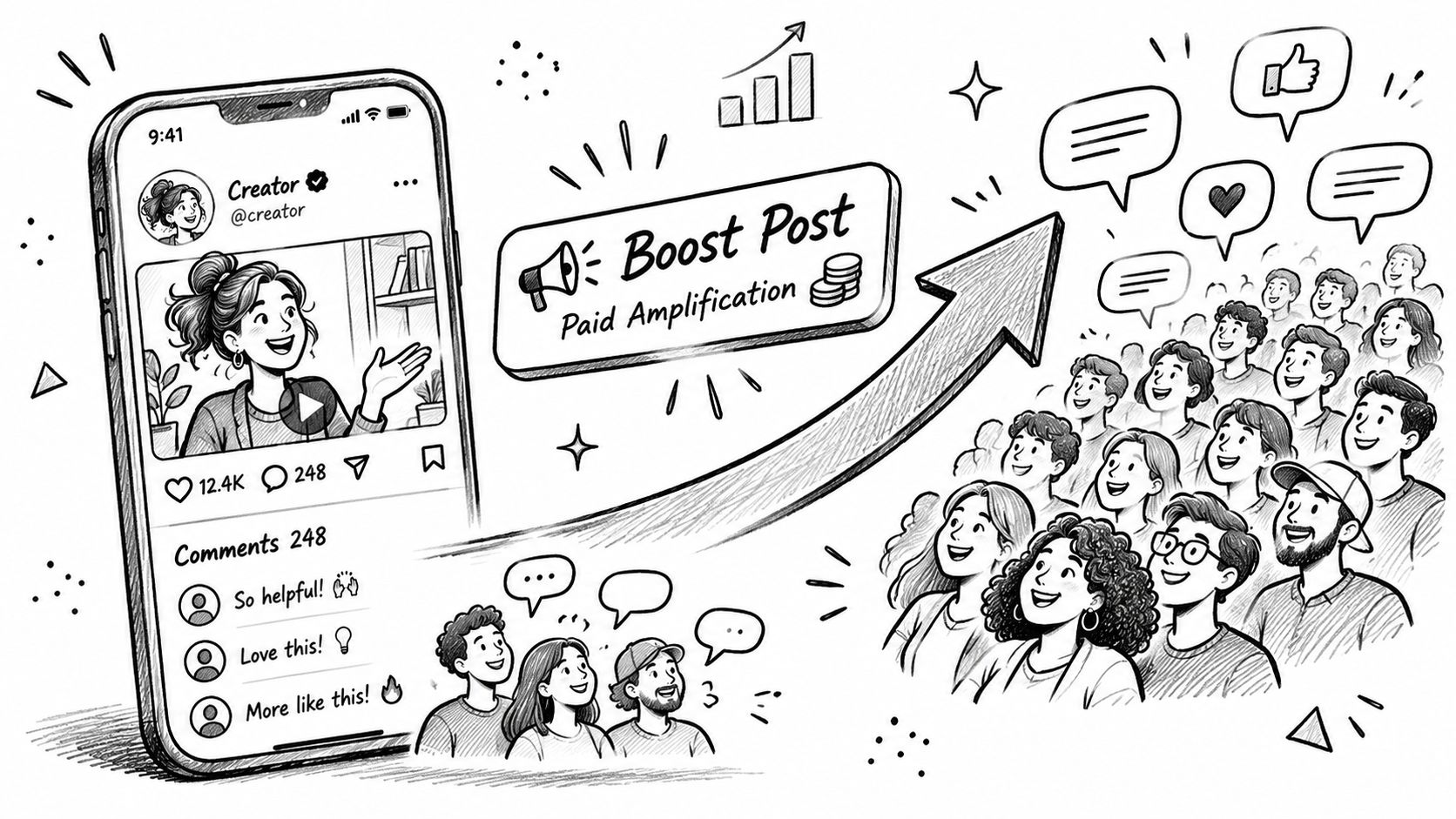
The catch is measurement. Once the same creative sits in the organic feed and in a paid placement, the reported result stops being easy to read. Kolsquare's UK influencer marketing 2026/2027 data found that UK marketers name ROI measurement (39%) and data reliability (26%) among their leading challenges, and a paid layer on top of a creator post is one reason the numbers blur.
Contract clause: name the paid usage window, the channels covered and who controls ad account access, because a brand can't run an ad from a creator's handle without permission.
Compliance check: the boosted post still needs its ad label visible before the audience reads the rest, and that holds when the brand places the ad rather than the creator.
Budget decision: size amplification as its own line against the post fee, not as a leftover from the content budget. The set-up steps for Spark Ads and partnership ads are worth reading before the terms are signed.
2. TikTok Shop and affiliate commissions
TikTok Shop turns a recommendation into a checkout. Brands plan commission deals where the creator earns on each sale made through their link, so part of the creator budget moves from a fixed fee to performance pay. That makes tracked sales the centre of the campaign rather than a line in the closing report.
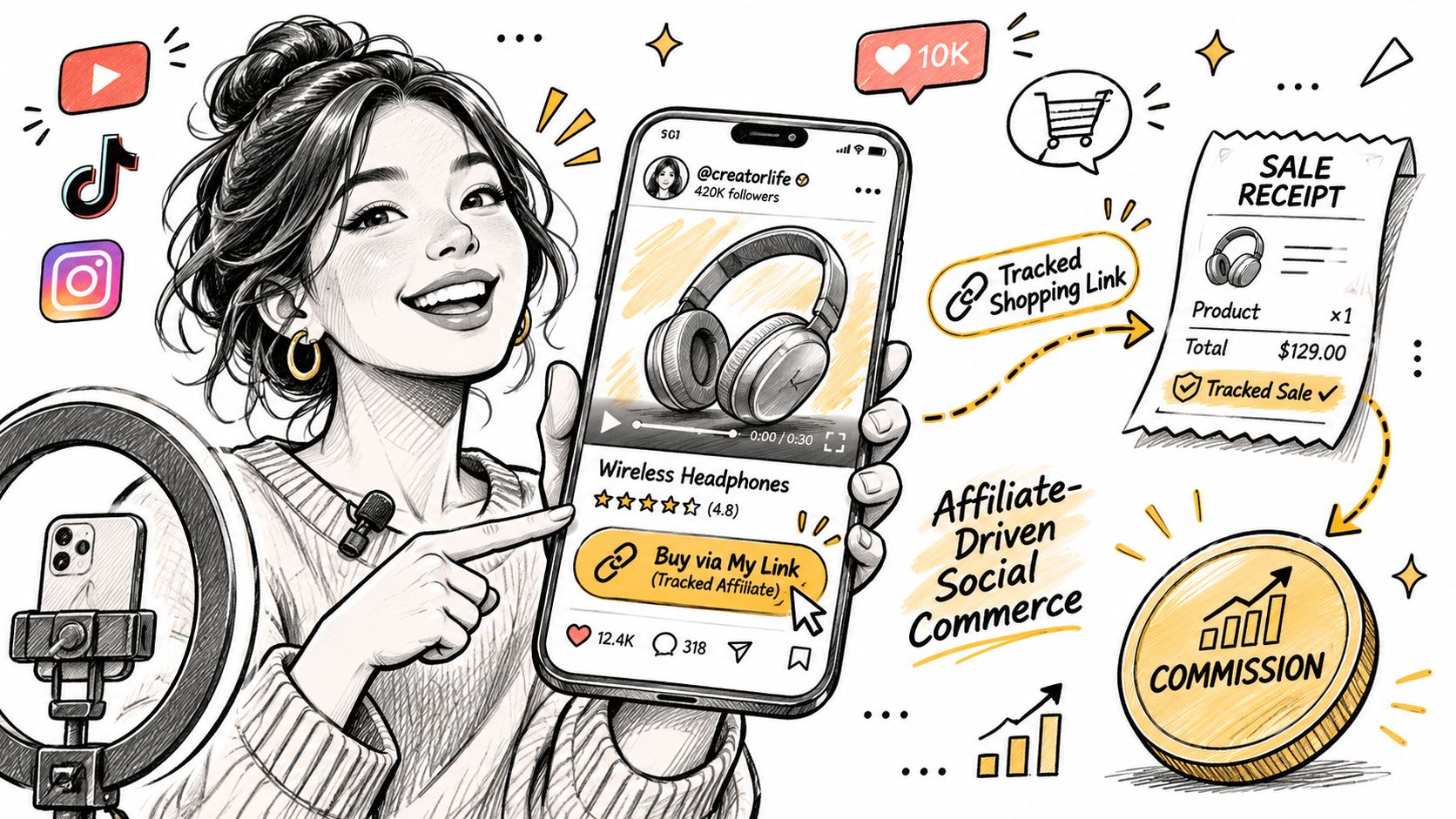
A TikTok Shop UK case study for H2B shows the shape of it. The brand recorded more than $300,000 in sales during a one-month affiliate-program period, up 118% month over month, with creator-attributed sales above $100,000 against $2,704 previously, and affiliate activity rising from 1.8% of total sales to 40.23%.
Budget decision: model the margin per sale after platform fees and commission before publishing a rate card. A commission that looks generous can wipe out the margin on a low-ticket product.
Where a creator needs a guaranteed minimum, a hybrid deal works better than pure commission, because it keeps the content funded while commission rewards the ones who sell. Contract clause: fix the commission rate, the attribution window and how refunds reverse a payout, since returns can claw back money months later. The fee structure is set out in How TikTok Shop Works for Brands: Fees and Affiliates, and affiliate set-ups are covered at TikTok Shop campaigns.
3. UGC bought for ads rather than posted by the creator
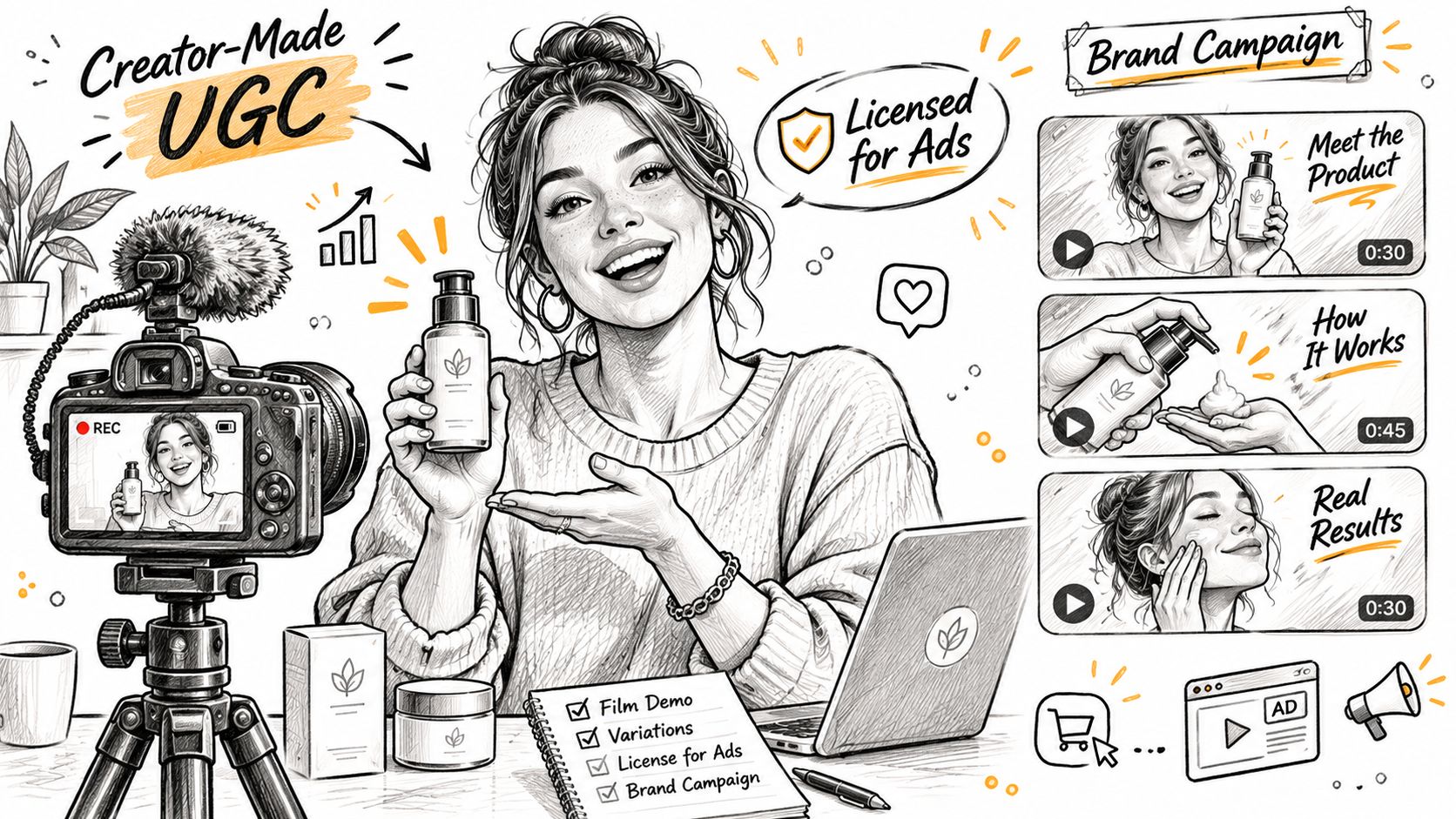
Not every creator post belongs on a creator's feed. Brands increasingly buy content from creators and run it as brand ad creative, shot to a brief and licensed for a set period. The creator is paid for production, not for reach, which separates the cost of the asset from the cost of the media behind it.
Buy the asset for the platform it will run on. Ofcom's Online Nation 2025 report found that nine in ten UK adult internet users aged 16 and over use social media, that Instagram reached 78% of UK online adults in 2025, up from 76% in 2024, and that TikTok reached 56% of UK online adults. A vertical cut for one feed placement and a square still for another are different jobs, and one shoot should produce both.
Write the licence before the shoot
- Contract clause: name the channels, the licence period and whether the brand can edit, re-cut and re-run the content.
- Compliance check: if the creator appears in the ad, the placement still has to be identifiable as advertising.
- Budget decision: price the licence separately from production, because a 12-month paid licence is worth more than a three-month one.
Ask for raw files and several cut-downs so the media team can test variants without booking another shoot. Creator-made content for brand use is covered at UGC creators, the reuse workflow is set out in repurposing influencer content for paid social ads, and platforms such as ShortGenius AI UGC ad platform can produce edits at volume once the footage is licensed.
4. Smaller creators in larger numbers
The quiet shift is from a handful of headline names to a broad roster of narrower audiences. Brands book dozens of smaller creators, each chosen for a specific interest, location or feed fit. That spreads delivery risk across many posts, lowers the cost per post and removes the single point of failure created by one creator's schedule.
Volume is already high. Marketing Week's report on UK creator revenue, citing IAB UK figures, says one in five UK marketers works with between 250 and 999 influencers a year, and that most work with creators who have between 10,000 and 100,000 followers. The planning problem is clear. More creators mean more contracts, more briefs, more approvals and more posts to check.

The trade-off is admin. Each creator needs a vetted brief, an agreed rate, disclosure wording, a tracked link and payment. A spreadsheet can hold a shortlist, but it will not carry hundreds of live approvals. Large rosters only work when the process is standardised before sourcing starts. Sup writes, sends, signs and files influencer contracts for the brand, which keeps the paperwork attached to each creator without making legal review a bottleneck.
- Contract clause: use one standard agreement with an annex for rate, deliverables and dates, so each creator needs fewer changes and review stays quick.
- Compliance check: confirm each creator's disclosure wording against the brief before the post is approved.
- Budget decision: ring-fence an operations cost for approvals, payments and reporting, because admin per creator does not fall just because the fee does.
A larger roster gives better local fit and more useful creative variety. It also makes weak approval paths expensive at speed, so build the contract, disclosure check and reporting line before adding volume.
5. Longer creator relationships
One post rarely changes what an audience believes. Brands are moving budget into repeat work with the same creators: retainers, ambassador terms and series that run across months. The fee per post can rise once a creator has proven they shift product, but the cost of sourcing and briefing falls.
The case rests on the time profile. IAB UK's State of Influencer Marketing UK and Europe 2025 reports an influencer short-term ROI index of 99, with influencers driving 4.5% of short-term sales, while the long-term ROI index reaches 151 and 6.2% of sales. The same research found 84% of UK marketers planned to work with more creators over the following 12 months.
Protect the terms that make a retainer work
Retainers that roll on without a review point tend to outlive their usefulness, and a creator who is never reviewed is never renegotiated.
- Contract clause: set a quarterly review date with agreed notice, so either side can adjust rates or end the term without a dispute.
- Compliance check: an ambassador posting monthly needs the ad label on every post, not just the first.
- Budget decision: commit a share of the budget to retained creators and protect it, because a retainer cut in month two wastes the familiarity it was bought for.
The ongoing formats are listed at creator programs.
6. YouTube creators for search and long views
YouTube is the placement that keeps working after the campaign report is filed. A review video stays searchable, gets recommended, and answers the same buying question for months. Brands plan it as an asset rather than a spike, which changes both the brief and the measurement window.
The behaviour behind that is research, and research now happens inside social apps. Younger UK buyers in particular treat TikTok and YouTube as search engines, looking up products there before they commit. Plan for viewers who look up comparisons before buying: a video that settles the question is what keeps earning views long after the posting date.
So brief the questions, not the features. Give the creator the search terms, the comparisons and the objections the video has to settle, then let them answer in their own format. A scripted read ranks poorly and convinces nobody, while a creator answering real objections in their own style keeps collecting search traffic.
Contract clause: agree how long the video stays live and whether the brand can link to it from product pages, because a video pulled at month four takes its search traffic with it.
Compliance check: read YouTube's current rules on paid promotion labels before briefing, and put the UK ad label in the contract, so the creator knows what has to appear on screen and in the description.
Budget decision: judge these videos on views and watch time across a quarter rather than a week. A slow first month is normal for search-led content, and cancelling at launch wastes the production spend.
7. Disclosure enforcement by the ASA and the FTC
A disclosure line in the brief is no longer enough. Paid and gifted creator posts sit inside an approval flow. The audience needs to know the relationship before the caption, voiceover or product claim does the selling. For brands, that turns disclosure from a creative detail into a publishing gate.
Enforcement has improved, but compliance still falls short. ASA's guidance for influencers sets out what the CAP Code requires in the UK, while FTC's disclosures 101 for social media influencers covers the American rules. The details depend on the market and the content, so check the specific case with a legal adviser. The practical point is simpler: label clearly, approve before posting and keep the evidence.
Where programmes break
- Contract clause: write the exact label wording and where it sits in the caption. Require brand approval before publication, as every post should reach the brand before it goes live.
- Compliance check: check every post before it goes live rather than a sample afterwards, including gifts, paid posts, tracked links and promo codes. Keep the approval record with the post.
- Budget decision: fund the approval step. Sup writes, sends, signs and files influencer contracts, and brands pay only for posts that are live, so review time should sit inside the campaign process rather than arrive as an afterthought.
This is also where sponsored Instagram posts need tighter controls, because the label, caption and paid status have to match before launch. Sponsored Instagram posts: how they work and what they cost explains the posting and cost mechanics that sit behind that check.
Track which creators label consistently and treat a poor disclosure record as a reason not to rebook. Measuring sponsored post performance is worth nothing if the post has to come down.
8. AI-made content and its labels
AI is now part of creator production, from generated backgrounds to edited voiceovers to scripts nobody spoke aloud. The planning question isn't whether to allow it. It's which uses you'll permit, and how the result is labelled so the audience isn't misled about what they're watching.
The label rules don't relax because a machine made the asset. The ASA's guidance on recognising ads on social media says content must be identifiable as advertising where a brand gives an influencer payment or another incentive, or where the influencer has a personal or commercial connection with the brand. That covers gifts, trips, hospitality and commissions, including where there's no obligation to publish, and the ASA says a prominent "Ad" label upfront is the clearest approach. Labels such as "gifted" or "supported by" are unlikely to be clear enough on their own.
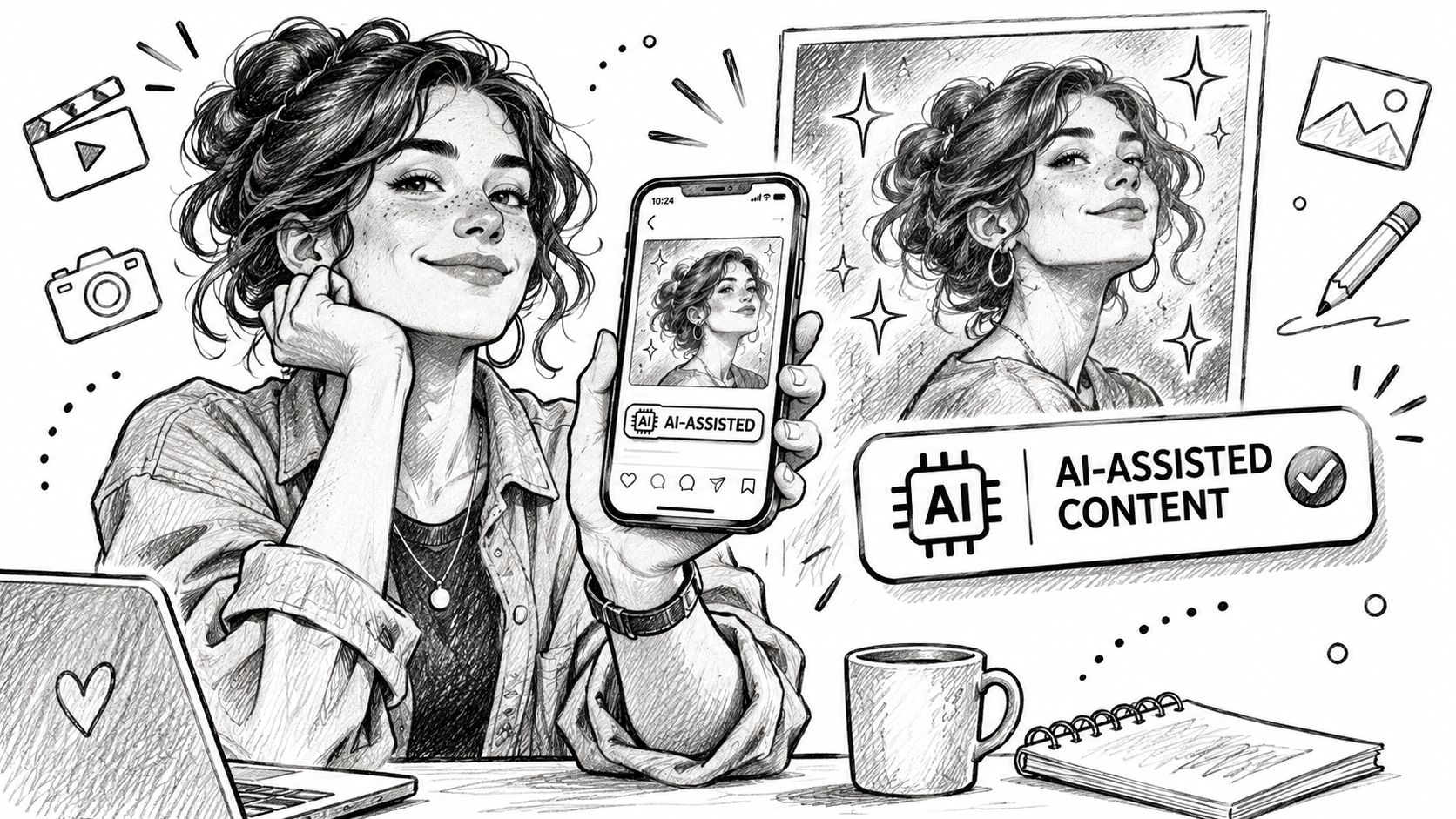
Put the rules in the contract
- Permitted use list: name what a creator may generate, such as backgrounds or captions, and what they may not, such as a fabricated testimonial or a synthetic version of a real person.
- Disclosure check: confirm the platform's label setting and the ad label before the post goes live, and record the approval.
- Budget decision: fund the review step. Volume is exactly when an unreviewed asset slips through.
Check the platform's current label options and the regulator guidance for your market before publishing, and put the AI terms in the brief rather than leaving them to the creator's judgement.
How the eight 2027 influencer marketing trends compare for planning
Each trend carries a different contract clause, a different compliance check and a different budget decision. Treating them as one line item is how creator budgets go wrong: a gifting post, a Spark Ad and a TikTok Shop video all need different terms before anyone briefs a creator.
The matrix below sets out what to agree, what to verify and what to fund for each trend. Use it line by line when you build next year's budget.
| Trend | Contract clause | Compliance check | Budget decision |
|---|---|---|---|
| Paid amplification of creator posts | State the usage period, the accounts that may run the ad, and whether Spark Ads or partnership ads are included in the creator's fee or priced separately | Confirm the creator has granted account access and the post carries its ad label once amplified | Ring-fence paid spend on top of creator fees, held back for the posts that earn it |
| TikTok Shop and affiliate commissions | Fix the commission rate, the attribution window and any guaranteed fee alongside it, so the creator knows the floor and the brand knows the ceiling | Check that commission-bearing posts are labelled as ads, since a commission is an incentive even with no obligation to publish | Model the margin after platform fees before agreeing rates; commission plus a small guaranteed fee costs more per post but de-risks weak months |
| UGC bought for ads rather than posted by the creator | Specify rights, channels and duration before production, including whether the licence covers paid use, the brand's own feed, or both | Confirm nothing in the asset reads as a genuine organic post when it runs as an ad | Pay for usage rights as a separate line from production, and price renewals rather than assuming perpetual use |
| Smaller creators in larger numbers | Use one standard brief and one standard contract across the roster, with per-creator annexes for fees and deliverables | Spot-check a sample of posts in each batch rather than reviewing every frame of high-volume gifting content | Budget for admin, not just fees: a roster of hundreds needs one approval path and one payment run |
| Longer creator relationships | Build in review points, exit terms and exclusivity limits, so a long contract does not become a long commitment to an underperformer | Re-check disclosure and content quality at each review point, since standards drift over a long term | Compare creators on consistent metrics before renewing, and hold part of the budget for replacing those who exit |
| YouTube creators for search and long views | Agree the brief around the search questions the video should answer, and set the measurement window in months rather than weeks | Check the ad label survives in the video description and the verbal disclosure, not just at upload | Accept a longer payback period and judge these videos on views and discovery over several months, not first-week clicks |
| Disclosure enforcement by the ASA and the FTC | Require a prominent "Ad" label upfront in every post, covering gifts, trips, hospitality and commissions as well as cash fees | Review each post before publication and record the approval, because the obligation sits with the brand as much as the creator | Fund the approval step as a fixed cost per post; skipping it is the expensive option when a regulator comes calling |
| AI-made content and its labels | Name what a creator may generate and what they may not, and put the AI terms in the brief rather than leaving them to the creator's judgement | Confirm the platform's label setting and the ad label before the post goes live | Pay for a review pass on high-volume campaigns, where an unreviewed synthetic asset is most likely to slip through |
Two patterns run through the table. First, the contract clause is almost always settled before production, because it decides what the finished asset may do. Second, the compliance check is cheapest when it is routine: a fixed approval step costs less than a takedown, a fine or a renegotiated roster.
Brands running several of these trends at once face an admin problem more than a strategy problem. Sup handles the contracting, payment and tracking side of creator campaigns, with posts going live on tracked links and promo codes and brands paying the approved price for each creator only when that post is live, which leaves the planning decisions above where they belong, with the brand.
Turning the eight trends into a 2027 creator plan
Start with the budget order, not the creator list. Settle the contract terms that affect every post first: usage rights, disclosure wording and permitted AI uses. Then set the commercial terms creator by creator. A flat fee, a commission deal and a paid amplification plan need separate lines because each one buys a different thing. Measurement sits above them all, with one rule: creator-level links and codes must stay comparable across the whole programme.
The sequencing matters because late decisions get expensive. If rights are unclear, a strong post may be unusable in ads. If disclosure wording is decided after production, edits slow approval. If AI rules are left vague, teams may produce variations they cannot publish. Put these decisions at the front, then brief creators against terms the whole team can apply.
Three budget decisions carry most of the value:
- Which posts you'll amplify. Set a review point, choose the posts with the clearest response and put paid media behind those. Avoid spreading a small budget across every post.
- Which creators you'll retain. Move repeat performers onto longer terms when the working relationship is smooth. Let the rest finish cleanly, with rights and payments closed out.
- What you'll count. Keep tracked links separate from promo-code redemptions. One shows the route to purchase. The other can include buyers who were already going to purchase.
Admin needs its own line. A large creator roster needs one approval path, one payment process and one place to see post status. Brands approve every draft before it posts, and the price they approve is the price they pay when that creator's post is live. That keeps the budget tied to published work and makes it easier to compare one creator with the next.
One planning choice sits outside the main roster. Teams that want a consistent face without a shoot schedule can create virtual influencers from photos, with the same disclosure checks applied to anything shown on screen.
More on content & ugc
See how many creators post about you and your competitors
Type in your brand's Instagram handle and we count the creators who post about you and about your five closest competitors. It takes about a minute and it is free. Or request a demo and we will show you the creators in your niche and walk you through the dashboard.
 Book a call