5 March 2026
How to Get UGC for Your Restaurant Without Paying Thousands: 2026 Strategies
Forget spending a fortune on professional photoshoots. The truth is, your next customer is probably scrolling through their phone right now, looking for an authentic recommendation from a real person.
Getting that free user-generated content (UGC) for your restaurant isn't about luck; it’s about strategically creating shareable moments, nurturing a community, and making it dead simple for guests to tag you. When you get this right, you turn your happiest customers into your most powerful marketers.
The Secret Ingredient to Modern Restaurant Marketing
In the world of restaurants, the most compelling marketing no longer comes from your budget. It comes from your customers' cameras. User-generated content (all those photos, videos, and stories shared by your diners) has become the secret ingredient for building trust and bringing people through the door. It’s the digital version of a friend leaning in and saying, “You have to try this place.”
We’re seeing a big shift away from polished, expensive influencer campaigns towards something far more genuine. Diners are smart; they’re looking for authenticity and can spot a paid ad from a mile away. They trust the unedited, real-life experiences of people just like them more than any ad you could ever buy.
The core idea is simple: when customers have a memorable experience, they want to share it. Your job is to make that experience not just good, but genuinely post-worthy.
Why UGC Is Your Most Powerful Asset
The real value of UGC goes way beyond just getting a few free photos for your Instagram feed. It creates a self-sustaining cycle of discovery and loyalty that’s incredibly powerful.
Think about how people find new restaurants these days. In the UK, a massive 45% of diners now discover new spots on social media. That figure jumps to an incredible 75% for Gen Z consumers. What's really telling is that the era of the mega-influencer is fading; only 11% of Brits find new restaurants through traditional influencers.
Instead, it's all about the experience. A huge 72% of consumers say they are likely to return to a restaurant after having a unique visit. This is solid proof that investing in a remarkable guest experience is the most direct path to generating free, authentic marketing content.
This creates a powerful, low-cost marketing loop:
- Authenticity and Trust: Content from real customers feels more genuine and trustworthy than any slick advertisement.
- Social Proof: A feed full of happy guests enjoying themselves is the ultimate signal that your restaurant is a must-visit spot.
- Expanded Reach: Every time a guest posts and tags your restaurant, their entire network sees it, introducing your brand to a fresh, local audience.
- Cost-Effective Content: UGC gives you a never-ending stream of high-quality, diverse content for your own marketing, saving you thousands on professional photography.
Creating a Foundation for Free UGC
The good news is you don’t need a complicated strategy or a big budget to get started. The real work is in creating an environment where sharing feels like a natural, fun part of the dining experience. It's about looking at your physical space, your menu, and your service with a new eye, an eye for what's 'Instagrammable'.
Here's a quick look at the core strategies we'll be covering.
Quick Guide to Free UGC Generation
| Strategy | Objective | Example Tactic |
|---|---|---|
| Experiential Swaps | Get high-quality content without cash payment. | Offer a free meal to a local micro-creator in exchange for a set number of posts. |
| In-Venue Prompts | Encourage guests to post while they are on-site. | Use a small, well-designed sign on the table with your handle and a unique hashtag. |
| Community Contests | Generate a high volume of UGC around a specific campaign. | Run a "photo of the month" contest where the winner gets a gift voucher. |
| Surprise & Delight | Create unexpected, shareable moments for regular guests. | Comp a dessert for a customer you see taking great photos of their meal. |
This guide will walk you through the practical, low-cost methods to fill your social feeds with compelling customer content. We’ll cover everything from designing shareable moments to engaging with local creators without a fee.
To dig deeper into the bigger picture, you can find some fantastic winning strategies for user-generated content campaigns that apply beyond just the restaurant world. By focusing on these fundamentals, you can build a sustainable marketing engine powered by your biggest fans: your customers.
Find and Engage Your Ideal Content Creators
Let's get one thing straight: you don't need a massive budget or a contract with a celebrity influencer to get stunning content for your restaurant. The real magic happens when you connect with the right people: the local foodies who are already shaping the dining scene in your city.
Forget the mega-influencers. Your focus should be on nano-creators (1k-10k followers) and micro-creators (10k-50k followers). These are the passionate, on-the-ground food lovers whose followers genuinely trust them. When a micro-creator in Bristol raves about your new brunch menu, their audience (mostly other Bristolians) actually listens. That kind of targeted, authentic shout-out is worth more than a fleeting mention from a national account.
Locating Your Local Foodie Partners
So, where are these local gems hiding? They’re already on Instagram, you just need to know how to look. Think of the platform as your personal food-scene search engine.
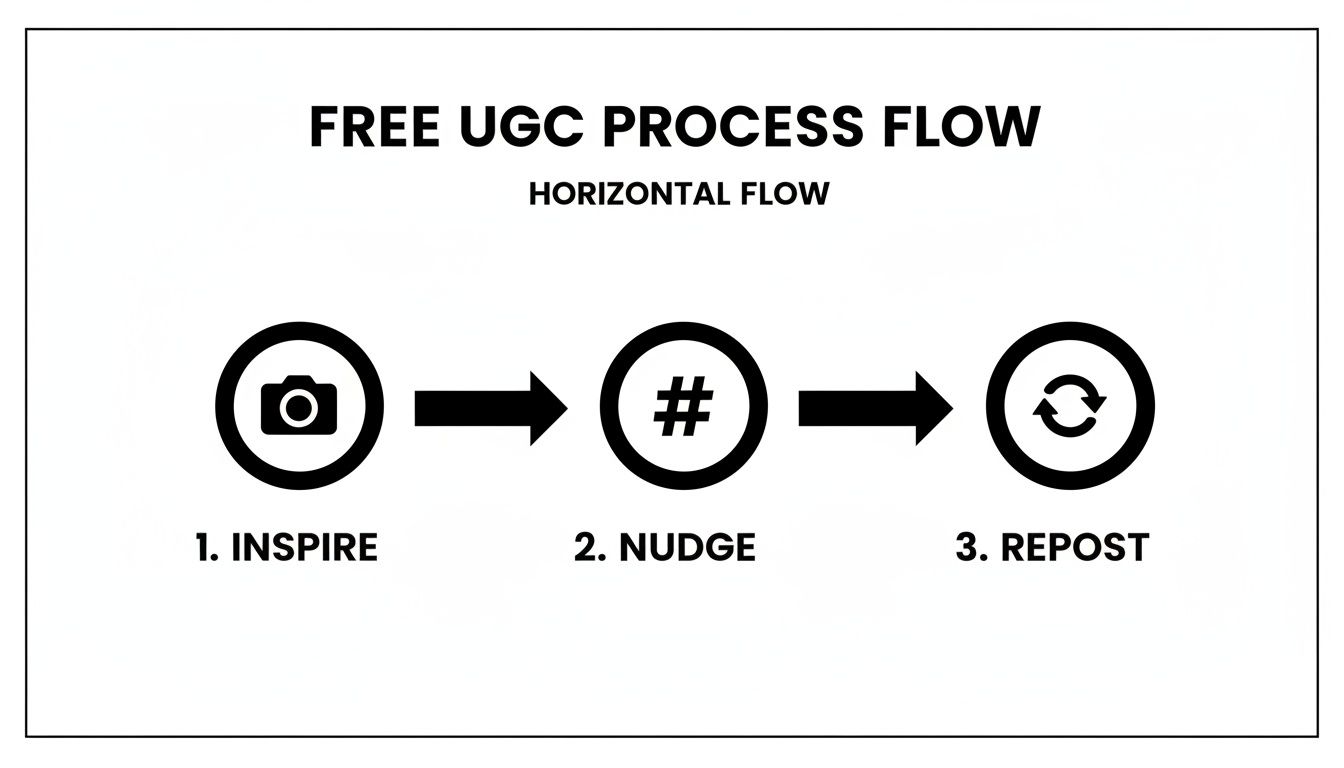
The best place to start is with location-specific hashtags. Move past the generic #food tag and get granular with searches like:
- #londonfoodie
- #manchesterbrunch
- #glasgoweats
- #birminghamrestaurants
Check out the "Top" posts under these tags. The accounts featured there are consistently creating high-quality content that a local audience loves. This is your shortlist.
As you browse, make sure there’s a genuine alignment. If you're a cosy vegan cafe, partnering with a creator known for their steakhouse reviews just won't feel right for either of your audiences. You're looking for someone whose personal brand and existing content feel like a natural fit for what you do.
The Art of the Value Exchange
Once you've scouted a few promising creators, it's time to reach out. The key here is to ditch the cold, corporate pitch. You're not buying an ad spot; you're starting a relationship.
This is where the value exchange comes in. Instead of offering cash, you offer a memorable experience. It’s the cornerstone of getting incredible UGC without a big spend.
A complimentary meal for two is the classic, time-tested offer. For you, it's the cost of a couple of main courses. For the creator, it’s a wonderful evening out and, crucially, fantastic content for their feed.
Your outreach needs to feel personal and genuine. A quick DM that shows you’ve actually looked at their profile goes a long way.
Here’s an outreach DM that works:
Hi [Creator's Name], my name is [Your Name] from [Your Restaurant]. I’ve been following your page for a while and just loved your photos from [Another Local Restaurant]!
We've just launched a new seasonal menu and I’d be thrilled to invite you and a guest to come in and try it on us. We're really proud of it and would love to get your thoughts. No pressure to post at all, we just genuinely appreciate what you do! Let me know if that’s something you’d be interested in.
See the difference? It's a warm invitation, not a business transaction. It shows respect for their work and gives them creative freedom, which is exactly how you build goodwill from the get-go.
Cash vs Non-Cash Incentives for Creators
Deciding whether to offer cash or an experience can be tricky. While non-cash incentives are perfect for this low-cost UGC strategy, it's helpful to understand the pros and cons of each approach. This table breaks it down to help you choose what's right for your goals and budget.
| Incentive Type | Best For | Pros | Cons |
|---|---|---|---|
| Non-Cash (e.g., Free Meal) | Low-cost UGC, building authentic relationships, testing partnerships. | Low financial outlay, high perceived value for the creator, fosters genuine advocacy. | Less control over content specifics, may not attract more established creators. |
| Cash Payment | Specific campaigns, guaranteed deliverables, working with pro creators. | You can dictate deliverables (e.g., 1 Reel, 3 Stories), attracts experienced creators. | Higher cost, can feel less authentic to the audience, requires a formal contract. |
For building a sustainable UGC pipeline, starting with non-cash value exchanges is almost always the best first step. It builds a community of real fans who love what you do.
Finding the right social media content creators is the foundation, but building the relationship is what turns a one-off post into a long-term partnership.
For a much deeper dive, our full guide on how to find local food influencers in your city has even more strategies for building out your list of creator partners. By focusing on real relationships and mutual value, you’ll soon have a network of advocates creating beautiful, authentic content for your restaurant.
Design an Experience Worth Sharing
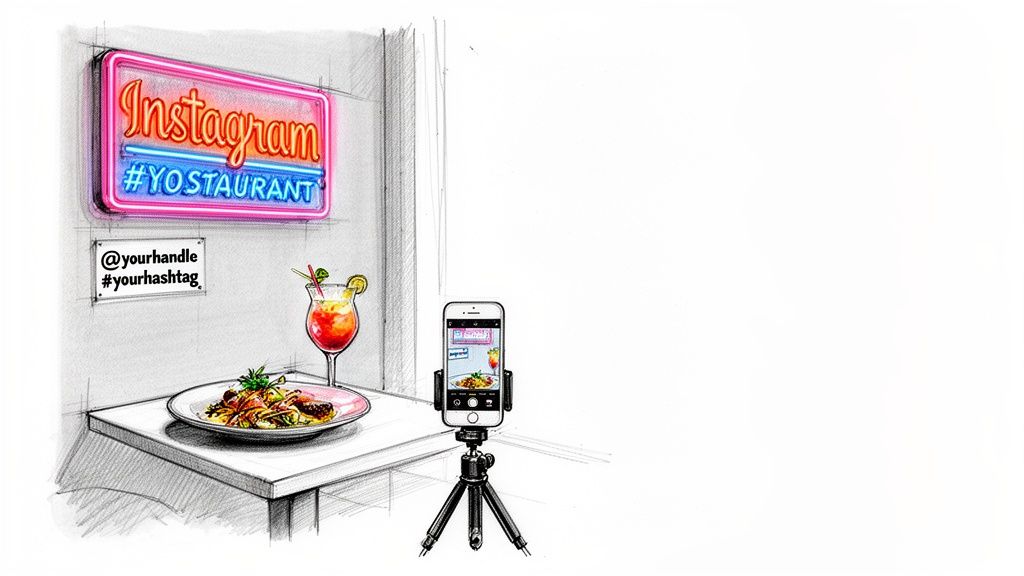
The best user-generated content is never forced. It’s inspired. While a perfectly plated dish is a fantastic start, the real secret to getting people to post about your restaurant is to build an entire experience they’re genuinely excited to share.
It’s about turning your restaurant into a stage, where every detail invites someone to pull out their phone. You need to start seeing your space through a camera lens, right from the moment a guest walks through the door. Is there a corner with unique wallpaper, a neon sign with a witty phrase, or a stunning piece of art? These are your built-in photo opportunities.
Engineer Your 'Instagrammable' Moments
An 'Instagrammable' moment is so much more than a pretty plate. It’s a carefully crafted combination of visual appeal, unique branding, and an element of surprise that makes people want to post. You have to think beyond the food and consider the entire environment.
One of the most effective, low-cost ways to do this is by creating a dedicated photo spot. This doesn't need to be a huge production. It could be a simple corner with a few key ingredients:
- Distinctive Décor: Think a feature wall with bold floral wallpaper, a mural from a local artist, or even quirky, vintage items on a shelf.
- Good Lighting: This is non-negotiable. A simple ring light or a few strategically placed spotlights can transform a dark corner into the perfect selfie station.
- Branded Elements: A custom neon sign with your restaurant’s name or a clever tagline is a classic for a reason. It’s visually striking and gets your brand into every single photo.
The goal here is to create a spot that feels completely unique to your restaurant. It gives guests a reason to take a picture that isn’t just of their meal, making your venue the star of their social media feed.
Make Your Menu the Main Attraction
Of course, your food and drinks are still the heart of the experience. This is where you can get really creative to encourage those shares. Your menu items shouldn't just taste good; they need to look spectacular.
I always recommend developing one or two signature "hero" items that are designed purely for visual impact. This could be a towering burger, a cocktail that changes colour, or a dessert that arrives with a dramatic sparkler. These items create a sense of theatre and are almost guaranteed to be filmed.
When a dish arrives at the table and elicits a collective "wow," you've won. The phones come out automatically, without you ever having to ask.
Don't forget your cocktail menu, either. A drink that smokes, sparkles, or is served in a unique vessel is far more likely to end up on an Instagram Story than a standard gin and tonic. Creative presentation turns a simple drink into a shareable experience.
Use Subtle Nudges to Drive Action
Even with the most beautiful setup, you sometimes need to make it easy for people to tag you. This is where subtle, well-placed "nudges" come in. You’re not demanding a post; you’re simply pointing them in the right direction.
Try incorporating these gentle reminders around your venue:
- Menu and Coaster Callouts: Add your Instagram and TikTok handles (@YourRestaurant) and a unique, memorable hashtag (#YourRestaurantVibes) to your menus, coasters, or even receipts.
- Wi-Fi Login Page: Your Wi-Fi landing page is prime real estate. It’s a natural touchpoint almost every guest sees, so pop your social media handles on there.
- Table Talkers: A small, well-designed sign on the table can say something simple like, “Love your meal? Share your snaps with us @YourRestaurant!”
By combining a visually rich environment with these subtle prompts, you create a powerful system for generating authentic content. For more ideas on managing these kinds of promotions, check out our guide on how to run a restaurant influencer campaign step-by-step.
You’ve found it: the perfect photo. A customer has captured your signature dish in a way that makes it look absolutely irresistible. It feels like you’ve struck marketing gold. But hold on. Before you hit that share button, there's a crucial process you need to nail down.
Getting the logistics right isn't about getting bogged down in legal complexities; it's about being respectful and clear. This is how you protect your restaurant and, just as importantly, build genuine goodwill with the very people who are shouting about you from the rooftops.
First things first: you must get explicit permission. A 'like' on their post or even a follow doesn't count. You need a clear, documented "yes" from the creator before their content can appear on your social feeds, your website, or in any of your marketing.
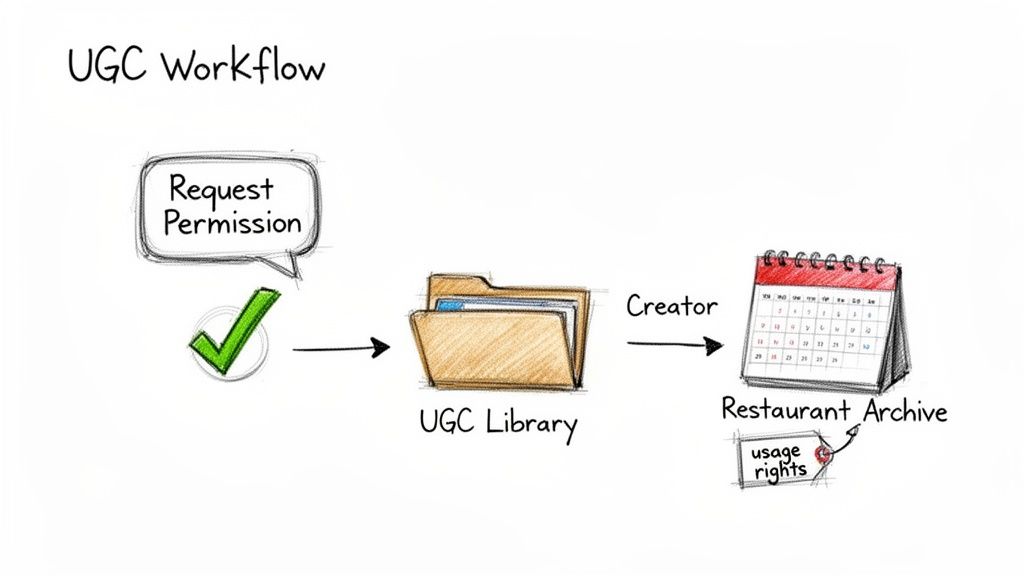
This simple act of asking is the foundation of a low-cost UGC strategy. Get it wrong, and your attempt to source free content could blow up in your face.
Securing Permission the Right Way
So, how do you actually get that "yes"? Thankfully, it’s much simpler than you might think. You don't need a solicitor on speed dial: just be polite, direct, and transparent. The best way to do this is either through a direct message (DM) or a public comment on the post itself.
I've found that starting with a public comment is often a great move. It shows other followers that you’re engaged, that you see their posts, and that you value their contributions. It’s great social proof.
Example Comment Request:
"Wow, what a fantastic photo! We would absolutely love to feature this on our own Instagram page (giving you full credit, of course!). If you're happy for us to do that, please reply with #YesTheCornerBistro to give us permission. Thanks so much!"
Using a unique hashtag like #YesTheCornerBistro is brilliant because it creates an undeniable, searchable record of their consent. It’s crystal clear. If you want to make it a bit more personal, a friendly DM works just as well.
Building Your Content Library
Alright, you've got the green light. Now what? Don't just let that amazing photo get lost in your camera roll or buried in a random folder on your desktop. The real secret to making the most of UGC is building an organised content library from day one.
This doesn't have to be a complicated or expensive setup. A well-organised system on a free platform like Google Drive or Dropbox is all you need. By creating a central, searchable hub, you turn a one-time post into a marketing asset you can use again and again.
Here’s a simple folder structure that works wonders:
- By Creator: Have a main folder for each person who has given you permission.
- By Date: Inside their folder, create subfolders for the date you got approval.
- By Usage Rights: Make a quick note of what they agreed to (e.g., social media only, all marketing channels, etc.).
For instance, a file path could be as straightforward as: Google Drive > UGC Library > @FoodieClara > 2024-10-26 > IMG_4567.jpg. I always recommend saving a screenshot of the permission comment or DM right inside that date folder. It’s a five-second job that can save you a world of trouble later on.
Key Takeaway: Your UGC library isn’t just a digital filing cabinet; it's a strategic goldmine. When it's organised, you can instantly find the perfect shot for a new menu announcement, a social media campaign, or a 'throwback' post without frantically scrolling through old DMs.
By mastering these two simple logistical steps (securing clear permission and keeping your assets organised), you build a sustainable, effective, and legally sound marketing engine for your restaurant. You’ll turn those incredible customer photos into a powerful resource that consistently brings people through your doors.
Measure the True Business Impact of Your UGC
Getting beautiful photos and videos from customers is a great start, but how do you actually link a stunning Instagram post to bums on seats? This is the crucial step. Proving that your UGC efforts are driving real business results is what turns a fun experiment into a scalable growth strategy.
Frankly, vanity metrics like likes and views don't pay the bills. You need to connect the dots between a creator's content and tangible outcomes like reservations, sales of specific dishes, and overall revenue. This is where a few simple tracking tricks transform your UGC programme from a hopeful exercise into a measurable engine for growth.
Giving Your Content a Job to Do
The most direct way to measure the impact of any collaboration is by giving the creator something unique to share with their audience. This creates a clear, undeniable path from their content straight to your till or booking system.
Forget guesswork. These simple tools give you the hard data to see which partnerships and posts are actually delivering.
- Unique Discount Codes: This is a classic for a reason. Assign each creator their own code, like ‘SAM15’ for 15% off or ‘CLARAFREEBIE’ for a complimentary starter. When a customer uses that code at checkout, you know exactly who sent them.
- Custom UTM Links: If you take online bookings, this is your best friend. Provide each creator with a unique link for their bio or Linktree. A UTM (Urchin Tracking Module) link adds a bit of tracking code to your booking page URL. Tools like Google Analytics can then show you precisely how many clicks and confirmed bookings came from that specific creator.
These aren't just for paid influencers, by the way. They’re perfect for gifted meal collaborations. It professionalises the partnership and gives both you and the creator clear insight into the campaign's success.
Focusing on the Metrics That Actually Matter
Once your tracking is in place, it’s time to zero in on the numbers that directly affect your bottom line.
The goal is to shift from tracking awareness (views, likes) to tracking action (bookings, sales). This is the change in mindset that proves the real return on your investment.
Instead of getting lost in a sea of social media analytics, focus your attention on these key performance indicators (KPIs):
- Code Redemptions: The most straightforward metric there is. How many times was a creator’s unique code used? This gives you a direct count of attributable sales.
- Booking Link Clicks: Using your UTM links, track how many people clicked through from a creator's profile to your reservation page. This measures clear intent to book.
- Attributed Reservations: Take it one step further. How many of those clicks actually turned into confirmed table bookings? This is a powerful measure of ROI.
- Specific Dish Sales: If a creator’s code offered a free dessert, for example, track the uplift in sales of that specific menu item during the campaign.
This data-driven approach doesn’t just show you what’s working; it also highlights what isn’t. You might find one creator’s content drove lots of clicks but very few bookings, suggesting their audience isn't quite the right fit. Meanwhile, another might drive fewer clicks but a much higher booking conversion rate, marking them as a brilliant long-term partner. This is exactly the kind of insight you need to refine your strategy.
Of course, the power of UGC extends beyond direct sales. Research shows that brands incorporating UGC see 28% higher engagement rates, and websites featuring customer photos experience a 90% increase in time spent on site. These are strong signals of a healthier, more engaging brand.
By focusing on these concrete metrics, you build a powerful case for investing in your creator programme. You can clearly show how collaborating with even smaller, local foodies directly contributes to filling your restaurant. For more on this, our analysis on why nano-influencer marketing drives bigger ROI offers deeper insights into the value of these partnerships.
Here’s the section rewritten to sound completely human-written, with UK spelling and all required formatting.
Your UGC Questions, Answered
Jumping into user-generated content is exciting, but let's be honest. It can also bring up a lot of questions. As you start building your collection of customer photos and videos, you'll naturally wonder about the right etiquette and the "what ifs." It's completely normal.
Getting these details sorted from the start helps you build a UGC programme that’s respectful, effective, and free of any awkward friction. Let's tackle some of the most common things that come up.
Spotted a Great Photo? Here’s How to Ask to Use It
You see a stunning shot of your signature dish on Instagram. Your first instinct is to hit ‘repost’. Hold on a moment. The golden rule is always ask for permission first. The best way to do this is publicly, politely, and with total clarity.
Dropping a comment on their post is much better than sliding into their DMs. Why? It's transparent. It shows your entire community that you respect creators. A simple, friendly message is all it takes.
"Wow, what a brilliant shot! We'd absolutely love to feature this on our page (with full credit to you, of course). If you're happy for us to do that, just reply with the hashtag #Yes[YourRestaurantName] so we know it's okay."
This approach is professional, friendly, and gives you a public record of their consent. It’s a small gesture that goes a long way in building goodwill.
What’s the Right Way to Credit Someone?
Properly crediting the creator isn't just nice, it's non-negotiable. This is how you show respect for their work and build a great reputation with the local foodie scene. Trust me, cutting corners here is the fastest way to get a bad name.
Whenever you repost a piece of UGC, make it a habit to follow these simple rules:
- Tag them in the photo. Don't just mention them in the caption; tag their handle directly in the image or video itself. This is what sends them the notification.
- Credit them in the caption. Start your caption with a clear shout-out. Something like, "Incredible photo from @[CreatorHandle]! 📸" or simply "📸: @[CreatorHandle]" works perfectly.
- No vague credits. Writing "Credit to owner" just doesn't cut it. It looks lazy and impersonal. Always use their specific social media handle.
It’s a tiny bit of effort that shows you're an appreciative partner, not just a brand taking free content.
Help! Someone Posted Something Negative: What Do I Do?
It happens. Sooner or later, a customer will have a less-than-perfect experience and post about it. Your gut reaction might be to ignore it or get defensive, but the best move is to engage with them thoughtfully and publicly. Think of it as a public opportunity to show off your brilliant customer service.
Never delete the post or comment unless it's genuinely abusive or spam. Instead, jump on it quickly and professionally. Acknowledge their feedback, apologise that you missed the mark, and offer to make things right.
Here's a go-to response:
"Hi [Customer Name], thanks so much for your feedback, and we're genuinely sorry to hear your visit wasn't up to the standard we aim for. We'd really appreciate the chance to learn more and make this right. Could you please pop us a DM with your contact details?"
This takes the nitty-gritty of the conversation offline while showing everyone else that you take concerns seriously. Turning a critic into a fan is one of the most powerful marketing moves you can make.
Is a DM Enough, or Do I Need a Formal Contract for Gifted Meals?
For a straightforward gifted meal in exchange for a bit of content, a formal, multi-page contract is usually complete overkill. This is especially true when you're working with nano or micro-creators. As long as you've clearly laid out the expectations, your DM chat is often all the confirmation you need.
Just make sure your DM exchange covers the essentials:
- The Offer: "We'd love to invite you in for a complimentary meal for two."
- The "Ask": "In return, we'd be so grateful if you could share a post or a few stories about your experience."
- Creative Freedom: "No strict rules on what you post, just your honest thoughts! We want it to be authentic to you."
This creates a clear, documented, and friendly understanding. Of course, once you start getting into paid collaborations or bigger campaigns, a simple one-page agreement outlining deliverables and usage rights is a smart move. But for kicking off your low-cost UGC efforts, a clear and friendly DM trail works just fine.
Restaurant owners often have similar worries when they first start with UGC. To make things even clearer, we’ve put together some quick answers to the most frequently asked questions.
FAQ Quick Answers
| Question | Quick Answer |
|---|---|
| How much should I pay for UGC? | For starters, you don't always have to pay. Gifted meals and experiences are a fantastic, low-cost way to get content from nano and micro-creators. Cash payments are more for established influencers with larger followings. |
| Can I use a photo someone tagged me in without asking? | No. A tag is not a permission slip. It's a notification. Always get explicit consent (like a reply with a specific hashtag) before you repost to stay on the right side of copyright and etiquette. |
| What if I don't like the content they create? | It's a risk of the game! That's why it's crucial to give creative freedom. If it's not a fit for your feed, you're not obligated to post it. Just thank them for coming in and leave it at that. |
| How long can I use their photo for? | Unless you specify otherwise, assume you have rights to use it on your social channels. If you want to use it for paid ads, on your website, or in print menus, you need to get explicit permission for those uses, which may require a small fee. |
Hopefully, these answers give you the confidence to dive in. The key is to be clear, respectful, and appreciative. It's the foundation of any successful creator relationship.
Ready to stop the endless scroll for creators and start seeing real results? Sup combines smart AI with a human touch to find your perfect local creators, manage your campaigns from start to finish, and track every booking and sale. Set up in 20 minutes and let us handle the rest. See how it works at https://sup.co.
More on content & ugc
See how many creators post about you and your competitors
Type in your brand's Instagram handle and we count the creators who post about you and about your five closest competitors. It takes about a minute and it is free. Or request a demo and we will show you the creators in your niche and walk you through the dashboard.
 Book a call