20 October 2026
How TikTok Shop Works for Brands: Fees and Affiliates
TikTok Shop lets a brand sell inside TikTok through shoppable videos, LIVE shopping, the Shop tab and creator showcases. For UK sellers, the economics turn on two separate variable costs, TikTok's platform commission and the seller-set affiliate commission, plus refunds, discounts and shipping.
What TikTok Shop Is and Why Brands Care
A marketer has stock that sells on the brand's own store, a paid social budget under pressure and a director asking why the product isn't on TikTok Shop. Opening a shop means running a marketplace storefront inside an entertainment feed. It has its own listings, checkout, settlement reports, service standards and creator program.
The difference from a normal ecommerce store is where demand starts. A buyer usually sees the product in content before they see the product page. A creator demonstrates it, a live host answers questions, or the buyer finds it later through the Shop tab or a creator's showcase. The brand therefore manages product, content and fulfilment together. A strong listing with no creator supply will sit there. Strong creator content with weak stock control will create refunds and complaints.
Each country runs its own TikTok Shop, with its own Seller Center, registration rules, category rules and fees. A brand registers in the market where it will sell, such as the United States or the UK. Confirm that market's current requirements before you build listings, and do not copy a UK cost model into a US plan.
The channel is already large. On its TikTok Shop newsroom page, TikTok says it has over 200,000 active sellers on the platform, most of them small businesses, and a 131% annual increase in the number of shoppers on TikTok Shop in the UK. So judge it on margin, like any other sales channel. Teams comparing it with other creator routes can read about ecommerce influencer marketing as a wider frame.
Plan TikTok Shop as a marketplace that needs a steady supply of creator content.
The Four Ways a Product Gets Sold
Shoppable videos put a product link inside short-form content. A buyer watches a cleanser being used, taps the tag and checks out without searching for the item elsewhere. This suits products that can be understood quickly and bought on impulse.
LIVE shopping suits products that need demonstration or reassurance. A host shows sizes, shades, assembly or results and deals with objections in real time. The buying moment is driven by the explanation, not only by the listing copy.
Discovery and Intent
The Shop tab is closer to search and browsing inside the app. It catches buyers with clearer intent, including people returning for a product they have seen before. Good titles, images, reviews, price and delivery information matter most here.
A creator's showcase is the creator's selected product space. A buyer who trusts that creator can browse items the creator promotes, even outside one specific video. That makes creator fit a merchandising decision. The wrong creator puts the product in front of people who may watch but won't buy, or who will buy and return it.
Creators and affiliates largely decide which surface carries the product. That is why listing a product is only the start. How TikTok Shop works for brands depends on getting suitable creators to tag, demonstrate and keep recommending the right items.
Seller Fees in the US and the UK
In the United States, TikTok charges a referral fee of 6% on most categories, with a few jewelry and pre-owned categories at 5%, according to TikTok's US referral fees by category, read on 19 October 2026. TikTok calculates it as the rate multiplied by the customer payment plus platform discounts, minus tax.
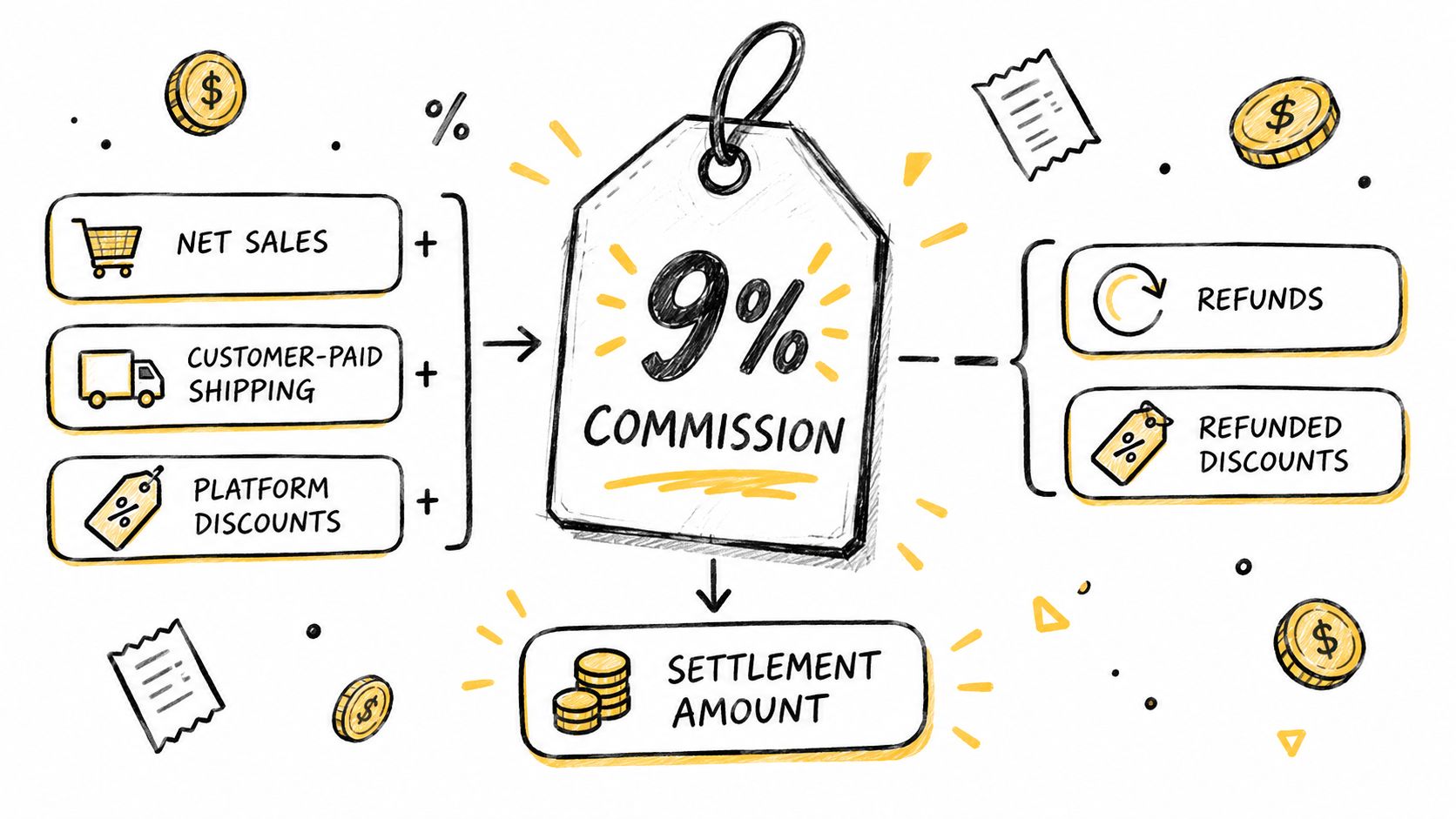
In the UK, the platform commission is 9%, including VAT, according to TikTok's UK seller commission policy, read on 19 October 2026. TikTok calculates it from net sales plus customer-paid shipping and platform discounts, minus refunded sales and refunded platform discounts, multiplied by the rate. In both markets the fee is a share of each order, not a monthly subscription.
The base matters. Take a UK order of a £40 product with £4 customer-paid shipping and no refunds. Under the formula above, the platform charge is 9% of £44, which is £3.96 (our own arithmetic). The brand keeps £40.04 before product cost, fulfilment, seller-funded discounts and creator commission. A team that applies the rate only to the product price will understate the fee when shipping or platform discounts sit in the calculation.
Refunds Change the Fee
In the UK formula, refunded sales and refunded platform discounts come off the base, so a refund lowers the commission. A refund of the customer-paid shipping does not. That helps, but it doesn't make a return costless. The brand may still carry outbound fulfilment, returned stock handling, customer service and lost packaging. Finance should therefore reconcile the fee at order level rather than averaging it across monthly sales.
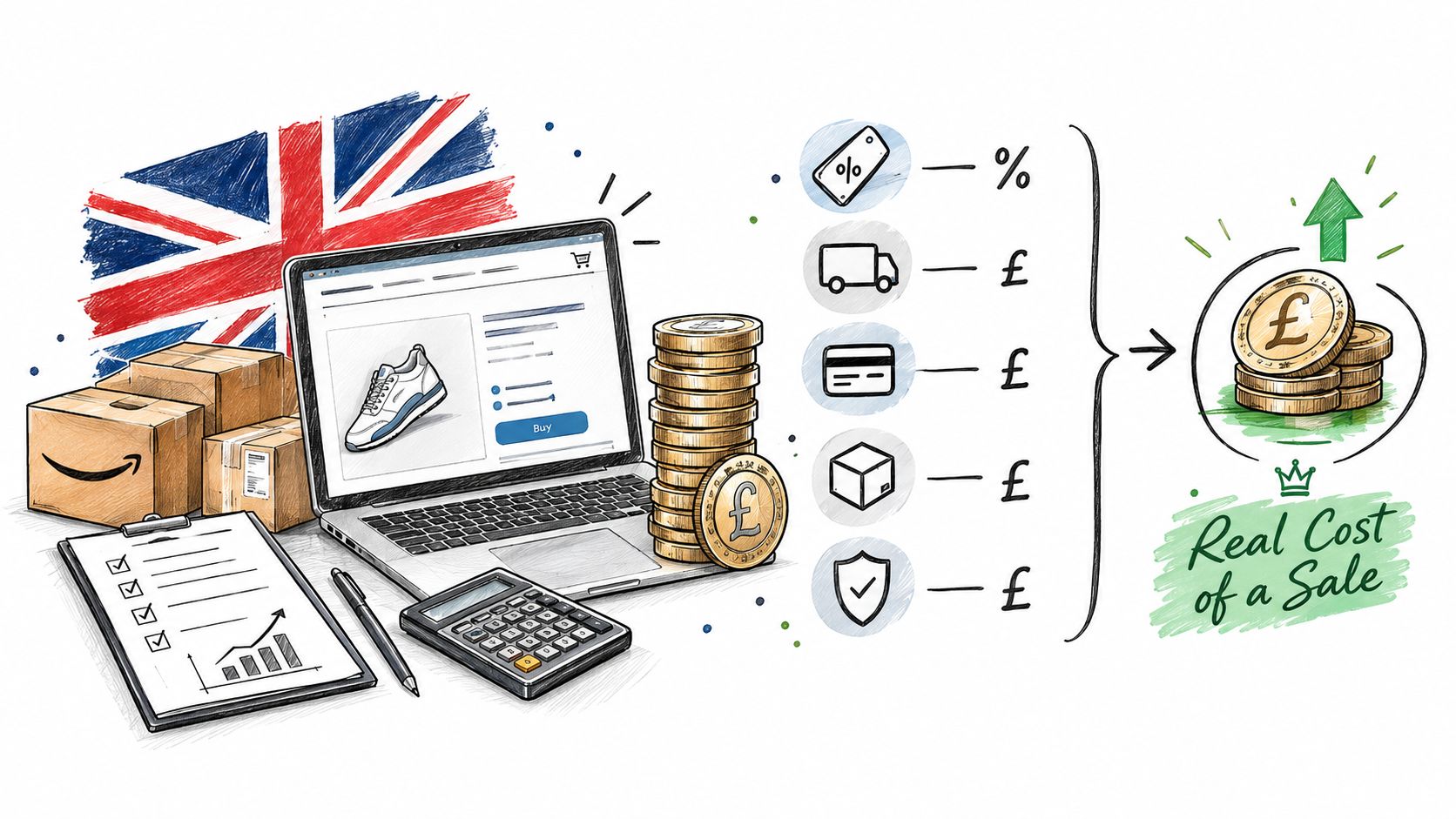
The platform fee also sits apart from creator affiliate commission and any affiliate partner commission agreed with an intermediary. Those costs are separate deductions and need separate lines in the margin model. Sellers who want a second explanation of the settlement mechanics can read this breakdown of TikTok Shop commissions and transaction fees alongside TikTok's own policy.
TikTok changes these rates from time to time and dates each change on its seller pages. Check the page for your market before launch and record the date you read it.
How the TikTok Shop Affiliate Program Works
TikTok describes its Affiliate Feature as a way for a seller to connect products with creators who promote them on the platform, and the seller may have to pay commission for those creator services, under TikTok's UK Affiliate Feature terms. Payment is tied to attributed, settled sales rather than to every post going live. That moves part of creator spend from an upfront media cost to a cost of sale.
An open plan makes a commission offer broadly available to eligible creators. It is useful for testing which products creators choose and which creators can convert. The risk is weak fit. A brand may get volume, discount-led content and buyers outside its target customer profile.
A targeted plan invites specific creators. It gives the brand more control over category fit, content standards and the rate offered to a particular creator or product. It takes more recruitment work, but it is the better structure when claims, demonstrations or brand presentation need control.
Who Sets the Rate
The seller sets the affiliate commission for each product or campaign. TikTok calculates creator commission as the product price excluding tax, minus the seller discount, multiplied by the rate the seller set, as explained in TikTok's UK affiliate commission guide. Gifted samples, paid deliverables, bonuses, exclusivity and content usage rights may sit outside that percentage. Brands should state which items are included before a sample is sent. The same thinking applies to longer creator relationships, as these brand ambassador program examples show.
Commission is paid when the order settles. If the order is refunded before creator settlement, the commission is reversed in full. After creator settlement, the creator keeps it and the seller absorbs the cost, according to the affiliate commission guide linked above. That timing is central to cash flow and disputes.
Sample requests should be approved like media spend. A sample without a posting expectation, deadline, product link and approval process is a cost with no control. Test rates and creator cohorts in small groups, then expand only where settled contribution improves. Our research page on how brands run TikTok Shop affiliate programs describes how brands set commission rates by product, handle sample requests and spread a product across many small creators.
Finding and Recruiting the Right Creators

Recruitment starts with a brief that names the buyer, the use case, claims that must not be made, the product link and the commission offer. Match creators by category, audience and content style before looking at follower count. A creator whose audience buys similar products is worth more than a general account with a larger but colder audience.
Check engagement quality before inviting a creator. A brand can sense-check recent posts with the TikTok engagement rate calculator and then review comments for buying intent, repeated questions and signs of trust. Views alone don't tell a marketer whether the creator can sell the item.
Outreach and Terms
Good outreach states the product, rate, sample terms, deadline, approval route and rights requested in plain language. The practical guide to influencer outreach that gets a clear reply helps teams structure that first approach without vague promises. Brief creators on the message and let them present it in their normal format, because scripted content usually looks like an advert and gives the brand less useful evidence.
Do not use the affiliate rate to buy everything by implication. Paid posts, LIVE sessions, exclusivity, Spark Ads use and reuse in paid media are separate commercial points. Agree them in writing before content is made. Teams planning broader TikTok influencer marketing should also decide which creators are being tested only on commission and which justify a fixed fee because the brand needs a launch date or a specific deliverable.
Brands can also prepare additional short product clips for listings and paid use, and the ShortGenius TikTok ad generator is relevant where a team needs to produce advert variants from product material. That does not replace creator proof. It can support a listing while affiliate content is being created.
Recruitment rule: approve a small matched cohort, compare settled sales and refunds, then scale the creators who produce profit.
Attribution, Tracking and KPIs That Actually Matter
Attribution links a tracked order to the creator content or showcase that produced it. The reported sale is not yet realised profit. Orders can be cancelled, partly refunded or returned, and the creator payment position depends on settlement timing. Brands need a worksheet that separates gross attributed revenue, settled revenue, refunded revenue, platform fees and creator commissions for each SKU and creator cohort.
Here is a simple UK example, worked out by us. On a £30 order with a 15% creator commission, the creator receives £4.50. The platform fee at the 9% rate in TikTok's UK platform commission guide adds £2.70. The final settlement can differ once shipping, discounts and refunds are included. This is why a generic calculator is not enough.
The framework for measuring influencer marketing on settled outcomes should be applied with TikTok Shop settlement data, not screenshots of attributed sales. Reconcile Seller Centre statements weekly and investigate creators with strong sales but weak contribution.
TikTok Shop KPI Cheat Sheet
| KPI | How to calculate | What to watch for |
|---|---|---|
| Settled revenue | Gross attributed revenue minus cancelled and refunded orders | A gap between tracked and settled sales |
| Contribution per SKU | Settled revenue minus product, platform, affiliate, fulfilment and return costs | Products that sell but lose money |
| Refund rate | Refunded orders divided by attributed orders | Weak fit, unclear content or product issues |
| Creator commission share | Creator commission divided by settled revenue | Rates rising faster than profit |
| Average order value | Settled revenue divided by settled orders | Discount-led or low-value baskets |
| Conversion by cohort | Settled orders divided by product clicks | Creators who generate intent, not only views |
Review new-customer share as well, because affiliate spend is harder to justify when it mainly captures buyers who would have purchased anyway. Engagement and saves help assess a creator before recruitment, but settled contribution decides whether the relationship should grow.
Compliance, Rights and Operational Readiness
Creator content that promotes a product must be identifiable as advertising where the relevant UK rules require it. Brands selling in the United States must also check the current endorsement requirements that apply there. The safe approach is to put disclosure, prohibited claims, pricing statements and product safety points in every brief, then have the brand's own legal adviser check its specific case before launch.
Rights need the same discipline. An affiliate commission does not automatically buy whitelisting, paid amplification, editing rights or long-term reuse. The guidance on getting influencer content rights for marketing use is useful when a brand wants to reuse a converting video beyond the original post. Agree the term, channels, paid use and approval rights before the creator films.
Launch Checks
- Stock and delivery: Confirm inventory, dispatch cut-offs, carrier performance and failed delivery handling.
- Returns: Make sure return labels, inspection, refunds and customer messages work before creator traffic arrives.
- Listing quality: Check images, titles, variants, reviews, shipping charges and discount funding.
- Payment control: Record who negotiates creator terms, who approves content and how post-settlement disputes are handled.
Operational failure damages creator trust quickly. Creators stop promoting products that arrive late, sell out without warning or produce avoidable complaints in their comments.
Should Your Brand Open a TikTok Shop
Open a shop when the product is easy to demonstrate, the margin can carry two variable commissions plus returns, and the team can recruit and approve creators every week. The channel suits brands with creator-ready products, reliable fulfilment and enough margin to test rates without relying on discounts.
Wait if the range depends on thin-margin replenishment, the product needs lengthy personal advice, or nobody owns settlement reconciliation. A shop without that owner will report attributed sales while contribution leaks through refunds, shipping and creator payments.
In the first month, confirm three things. Settlement statements must reconcile to finance records. Creator cohorts must be judged on settled contribution, not views. Returns must be traced back to product, listing or creator content. A brand can plan its first affiliate campaign at Sup's campaign start page.
More on channels
See how many creators post about you and your competitors
Type in your brand's Instagram handle and we count the creators who post about you and about your five closest competitors. It takes about a minute and it is free. Or request a demo and we will show you the creators in your niche and walk you through the dashboard.
 Book a call