24 April 2026
10 Key Trends on Instagram for 2026: A Guide
Beyond the scroll, Instagram still rewards what most brands underinvest in: creator-led content you can track. In the UK, Instagram’s user base stands at approximately 32.9 million monthly active users as of early 2026, with 70% usage among 18 to 34 year olds, according to SearchLab’s 2026 Instagram statistics roundup. That scale matters, but reach alone isn’t the point. What matters is whether your Instagram activity leads to clicks, bookings, code redemptions, and revenue.
That’s why the most useful trends on instagram aren’t the flashy ones. They’re the formats and workflows that help brands launch faster, test cleaner, and keep what works. Reels. Micro-creators. UGC libraries. Local creator campaigns. Affiliate structures. Smarter matching. All of them can perform, but only when you build them around attribution from day one.
For ecommerce brands, restaurants, agencies, and multi-location operators, Instagram has become less of a social channel and more of a performance surface. A single creator post can drive awareness, but a properly structured campaign can also drive measurable redemptions. The difference usually comes down to setup. That includes creative briefs, creator selection, promo codes, UTM links, approval flows, and a dashboard that makes results visible without spreadsheet chaos.
If you’re also refining timing, this guide pairs well with data on the best time to post on Instagram, because even strong creator content gets stronger when distribution is deliberate.
The ten trends below matter because they’re practical. Each one includes how to activate it, what to watch for, what usually goes wrong, and how to use Sup to launch and attribute the campaign with less manual work. If you want Instagram to become a repeatable growth engine instead of a monthly experiment, start here.
1. Short-form vertical video Reels
Reels still set the pace on Instagram. In the UK, Reels account for over 50% of time spent on the platform and drive 22% higher interaction rates than standard videos, according to Mediastreet’s summary of UK Instagram data. If your brand is still treating Reels as an optional extra, you’re building for a side street while audience attention is on the main road.
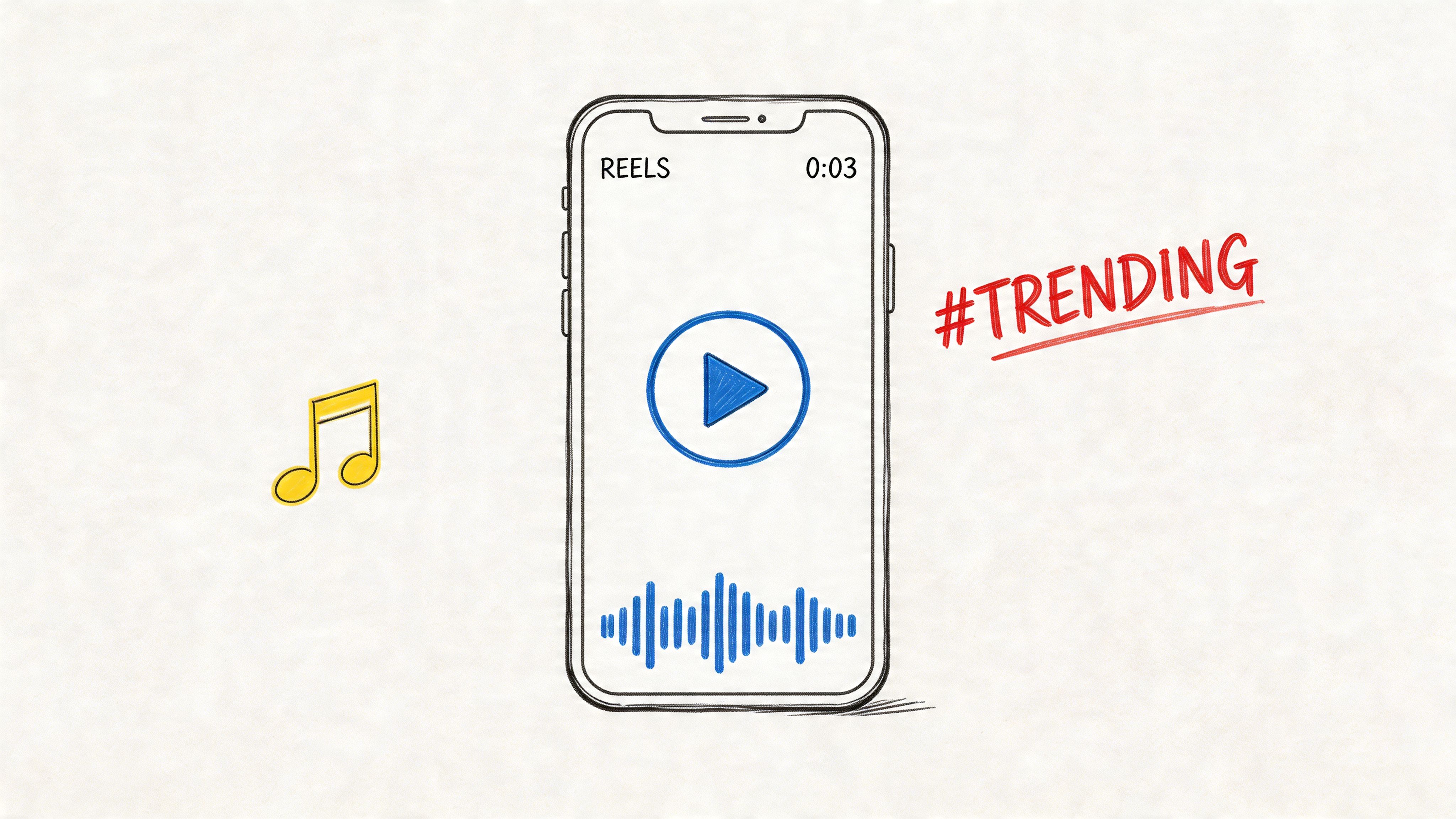
The mistake brands make is trying to turn Reels into mini adverts. That usually produces stiff intros, over-scripted lines, and weak retention. Restaurants do better with quick prep shots, first-bite reactions, and creator narration. DTC brands do better with demos, comparisons, unboxings, and “this is how I use it” clips.
How to activate Reels with Sup
Start with one narrow campaign angle, not five. A coffee chain might brief local creators around “favourite order” videos. A skincare brand might brief nano-creators around one product, one use case, and one code.
In Sup, prebuild the campaign with:
- A single conversion path: one promo code or one UTM-linked landing page per creator
- A short creative brief: hook in the first seconds, native-feeling delivery, clear mention of the offer
- A reusable creator batch: multiple creators producing variations on the same concept so you can compare patterns fast
Practical rule: Don’t ask creators to sound like your brand guidelines. Ask them to make your offer sound believable in their voice.
What works is speed of iteration. If one format lands, reuse the structure across more creators and locations. What doesn’t work is spending weeks polishing one hero Reel that gives you no clean test data.
A restaurant group, for example, can run creator visits across several locations, issue creator-specific codes, and see which Reels lead to bookings or redemptions in Sup’s dashboard. That makes Reels useful beyond reach. It turns them into measurable campaign assets.
Here’s a useful breakdown of Reel creation in practice:
2. Micro and nano-influencer partnerships
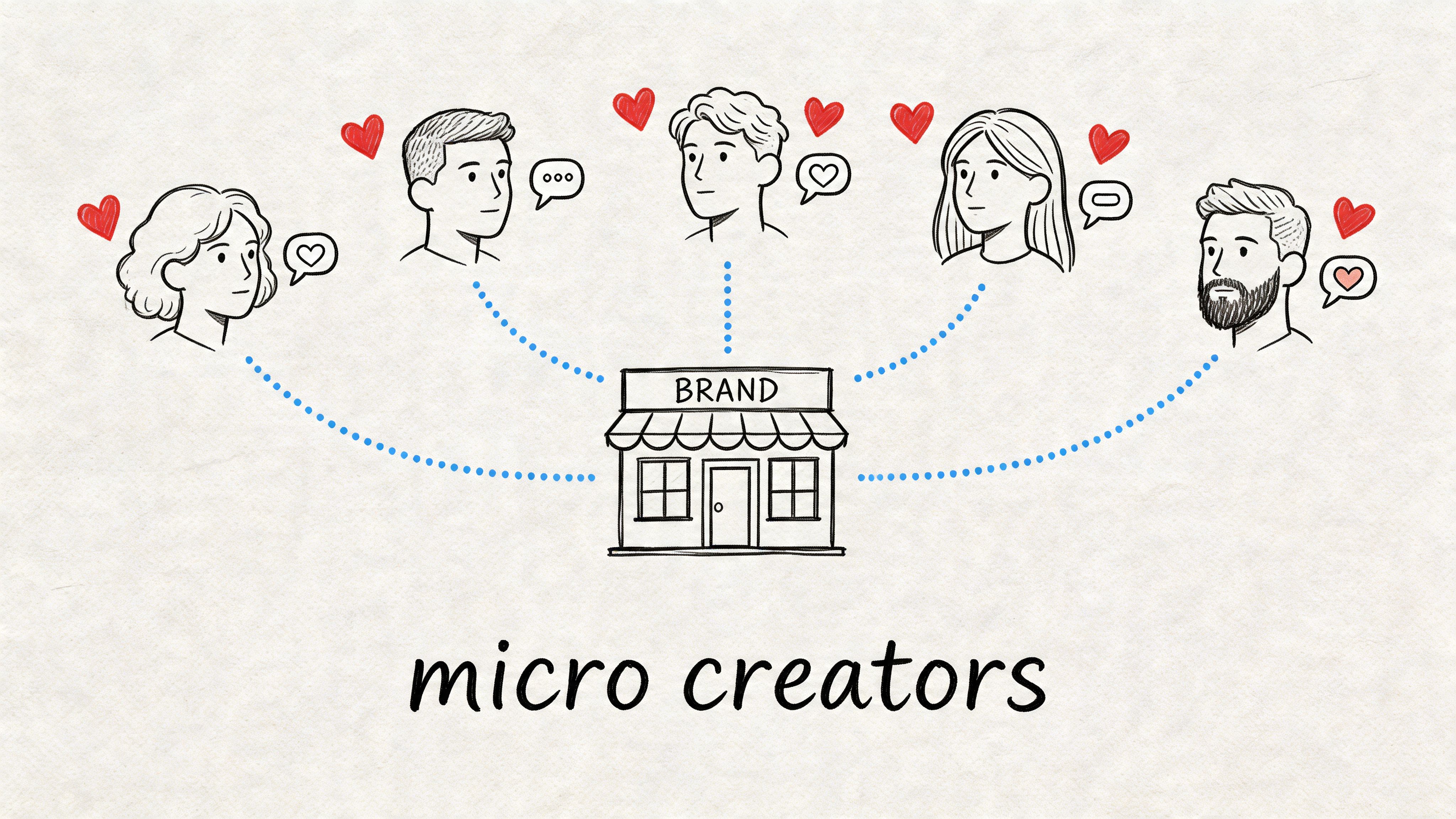
Bigger audiences don’t automatically mean better outcomes. For many brands, smaller creators are where efficiency improves. SearchLab’s 2026 benchmark says UK micro-influencers with 10k to 50k followers deliver 3.2x higher engagement rates, averaging 4.1% versus 1.2% for macro creators, and 28% better ROI on attributed conversions via UTM-linked promo codes in the campaigns it analysed in the UK market.
That tracks with what practitioners see every week. Local food creators, neighbourhood lifestyle accounts, niche beauty reviewers, and specialist hobby pages often move faster because their recommendations still feel personal. Their audience trusts their specifics.
What to screen for before you hire
Follower count is the least interesting part of creator selection. You want audience fit, local relevance, posting consistency, and content quality that already resembles how people buy in your category.
Use a short screening stack:
- Check audience relevance: a Manchester brunch creator is more useful to a local café launch than a generic lifestyle account with broader but weaker local pull
- Check content behaviour: look for comments that show intent, not just likes
- Check format fit: if your campaign needs Reels, don’t hire someone whose best work is static posts
Sup is especially useful here because it narrows sourcing by niche and location, then prebuilds outreach, tracking, and campaign structure. If you want a deeper view of why smaller creators often outperform, this explainer on nano influencer marketing and why smaller creators drive bigger ROI is worth reading.
One trade-off matters. Smaller creators usually need more operational support. They may need a cleaner brief, examples, and follow-up. That’s exactly why manual DM outreach becomes a bottleneck. Sup removes a lot of that friction by handling outreach and follow-ups while keeping attribution intact.
3. User-generated content UGC and creator takeovers
A lot of brand content looks branded before anyone even reads the caption. That’s the problem. UGC works because it carries the texture of real use. A creator filming a dinner visit, a customer showing an unboxing on their kitchen table, or a staff member walking through the morning setup often feels more persuasive than a polished studio asset.
Takeovers add another layer. When a creator temporarily publishes from the brand account, the content can feel more immediate and less filtered. Restaurants can use this for opening nights, chef specials, or location walkthroughs. Ecommerce brands can use it for product launches, order packing, or “three ways I’d style this” sessions.
Turn one campaign into a reusable content library
The activation mistake is treating UGC as disposable. It’s better to collect usage rights upfront and organise assets by product, campaign, season, and creator type. That gives you a library you can reuse across paid social, email, landing pages, and organic.
Sup helps because every creator campaign can feed directly into a central content library alongside attribution data. That means you’re not just storing clips. You’re storing clips tied to outcomes.
If your team needs a practical framework, this guide on UGC for ecommerce and getting creator content that converts covers the mechanics well.
Some of the best-performing creator assets don’t look “high production”. They look trustworthy.
There is one operational caveat. UGC scales only if moderation and permissions are handled properly. Brands that invite customer submissions should also think through review processes and safety standards. This overview of User Generated Content Moderation is a useful starting point.
In practice, a takeover works best when the creator has a tight brief on tone, required mentions, and CTA, but enough freedom to post naturally. Overcontrol kills the very thing you hired them for.
4. Authentic storytelling and behind-the-scenes content
Polished brand content still has a place, but it rarely builds trust on its own. Instagram has trained users to spot overproduced messaging quickly. Behind-the-scenes content works because it lowers the distance between brand and buyer. It shows the work, the people, and the imperfect moments that make the business real.
For hospitality, this can be kitchen prep, early deliveries, table setup, or staff recommendations. For ecommerce, it can be founder commentary, packing orders, product testing, sourcing decisions, or the reason a product exists in the first place. None of this needs cinematic production. It needs clarity and honesty.
What good BTS content actually looks like
Good BTS content answers one of three questions: how it’s made, who makes it, or why it matters. Bad BTS content is just random footage with no story arc. If the viewer can’t understand why they should care, “authentic” won’t save it.
A simple execution pattern works well:
- Start with a real moment: opening the shop, receiving stock, prepping a dish, testing a product
- Add context fast: one line on screen or creator voiceover that explains what’s happening
- Tie it to the audience: why this improves their experience, solves a problem, or makes the product worth trying
Creator selection matters again. Some creators are great at aesthetics. Others are great at narrative. For BTS, pick the ones who can talk through details without sounding scripted.
Sup can support this by sourcing creators who already make diary-style, review-style, or day-in-the-life content in your niche. Then build the campaign around a narrow story prompt, not a generic “show our brand”. The strongest prompts are specific, such as “show what surprised you most during your visit” or “walk through how this product fits into your actual routine”.
5. Performance-based influencer marketing and measurable attribution
This is the shift that separates social activity from accountable marketing. UK Instagram advertising reach expanded to 24.8 million users in January 2025, up 7.2% from 23.1 million in 2024, according to Hootsuite’s Instagram statistics roundup. Reach is growing, but broad visibility doesn’t tell you which creator drove a sale, booking, or redemption. Attribution does.
Performance-based creator marketing means every collaboration has a measurable path. That path could be a promo code, a UTM-tagged link, a creator-specific landing page, or a booking link. The tactic isn’t new. The discipline is.
The setup that makes attribution usable
Most attribution breaks because brands bolt it on at the end. Build it at the campaign brief stage.
Use this structure:
- One creator, one code: memorable and unique, so staff and customers can use it
- One creator, one tracked link: don’t send everyone to the homepage and hope analytics sorts it out
- One reporting rhythm: review views, clicks, code use, and conversions on a consistent cadence
Sup is built for this part of the workflow. It prebuilds campaign tracking, assigns unique codes and UTM links, and shows results in one dashboard so you can connect content to outcomes without manual reconciliation. For teams trying to prove channel value, this guide on influencer marketing ROI and how to measure what actually works is directly relevant.
If a creator campaign can’t be measured, it usually gets defended with opinions. That’s when budget confidence starts to disappear.
The trade-off is that strict attribution can undercount the broader brand effect. Someone may see a creator Reel, visit later through search, and never use the code. That doesn’t mean attribution is flawed. It means you should treat code redemptions as a hard signal, then read reach and saves as supporting context.
6. Niche community and identity-based marketing
Broad targeting creates broad creative, and broad creative tends to be forgettable. The strongest Instagram campaigns often speak to a community that already sees itself in the message. That could be vegan diners in a city, runners training for local races, new parents looking for practical routines, or café-hoppers who follow neighbourhood review accounts.
This isn’t about performative identity marketing. It’s about relevance. When a creator already participates in the community you want to reach, the recommendation feels natural. When they don’t, the content feels rented.
How to avoid superficial community marketing
Start with communities where your product already has a believable role. A plant-based restaurant can work with creators who regularly post vegan city guides. A wellness brand can work with creators whose audience follows realistic health routines, not just aspiration-heavy lifestyle content.
Then tighten the message:
- Match the problem language: use the words the community already uses
- Match the proof: show actual use, not just endorsements
- Match the CTA: ask for the next realistic action, whether that’s trying a menu item, visiting a location, or redeeming an offer
One reason this trend keeps growing is that Instagram audiences reward specificity. SearchLab’s 2026 data also noted strong adoption among younger adult users in the UK, which makes community-led positioning especially actionable for brands that need fit more than mass.
Sup helps here by filtering creators by niche and location before the campaign even goes live. That matters because the wrong creator can still generate decent vanity metrics while failing to move the right audience.
A good test is simple. If you removed your logo, would the content still make sense coming from that creator? If not, the fit probably isn’t strong enough.
7. Interactive and shoppable content
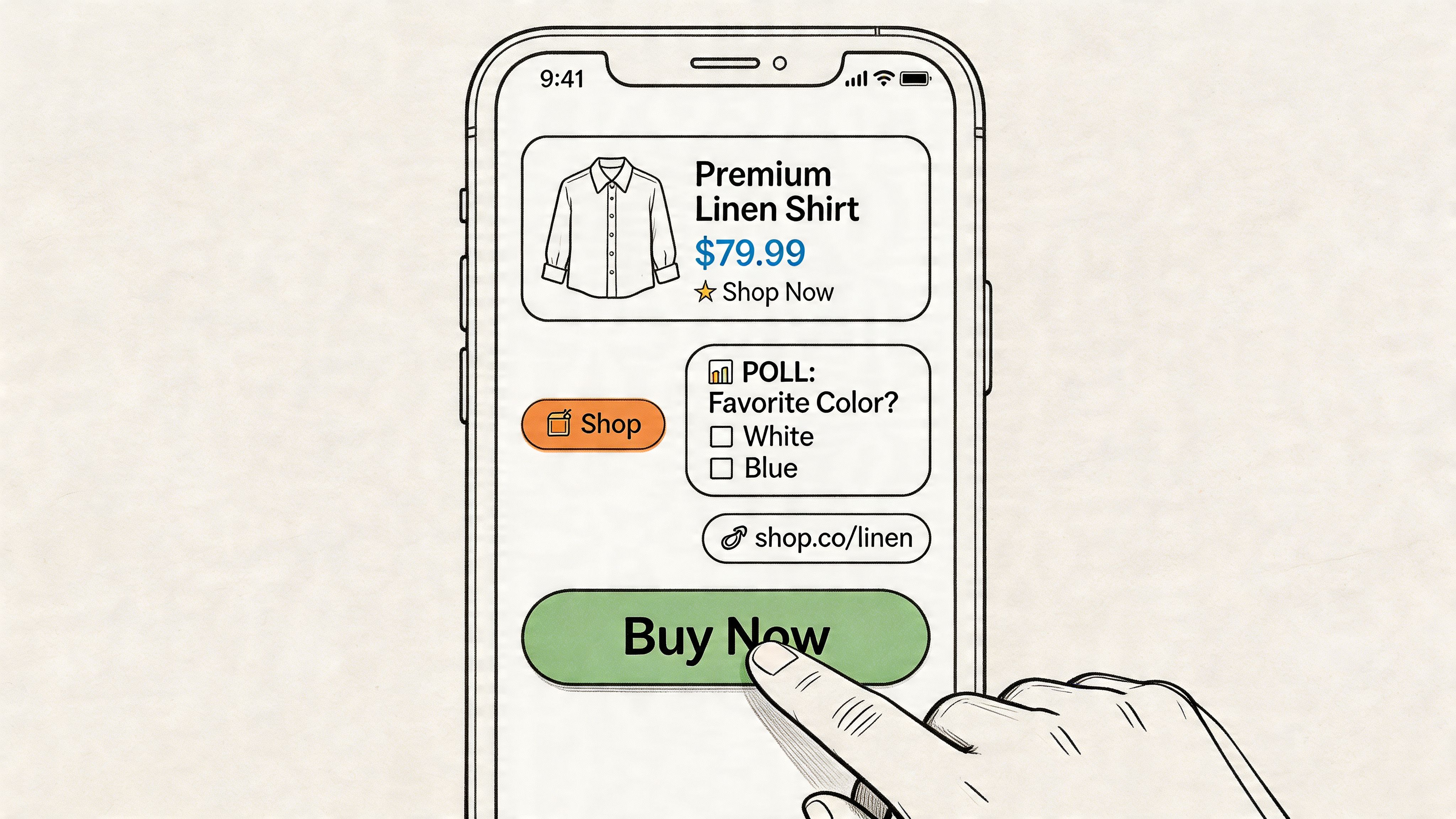
Engagement is stronger when the audience has something to do, not just something to watch. Polls, quizzes, question stickers, product tags, and story links all reduce the gap between interest and action. For ecommerce, that can mean faster movement from product discovery to purchase. For restaurants and hospitality, it can mean menu voting, booking prompts, event RSVPs, or direct offer clicks.
Instagram’s commerce tools matter more when the path is short. Product tags work best when the creative itself builds intent. A creator showing how they style a jacket, use a skincare product, or choose a meal gives the tag context. A tagged product with weak creative rarely gets saved or clicked.
Build a shorter route from content to checkout
SearchLab’s 2026 summary referenced trials where AR shopping tags boosted checkout completions by 19%. Even without advanced shopping setups, the core lesson holds. Reduce friction.
Useful patterns include:
- Tag the exact product: not a generic collection page
- Use Stories for intent capture: polls, questions, and link stickers can qualify interest fast
- Pair interaction with offer logic: if someone engages with a menu poll or product quiz, the next click should feel like a natural continuation
Sup can support this by matching creators who already make product-led content, attaching UTM links to creator assets, and tracking which content type moves users further down the funnel. The analytics matter because “shoppable” isn’t automatically profitable. If the product page is weak or the offer is unclear, tags only make the drop-off visible faster.
A practical example: a beauty brand can brief creators to publish carousel tutorials with product tags, then compare click behaviour against story links and creator codes. A restaurant can use story polls to let followers pick a featured item, then drive them to a tracked booking or offer page.
8. Local and hyperlocal influencer marketing
For physical businesses, local reach is often more valuable than broad reach. A creator who regularly posts about one borough, one city, or one neighbourhood can be more commercially useful than a much larger account with a scattered audience. That’s especially true for restaurants, cafés, gyms, salons, and multi-location retail.
SearchLab’s 2026 summary also referenced a redemption lift from geo-targeted nano-creators in urban areas such as London and Manchester. That points to a practical truth: local credibility improves conversion when the outcome depends on someone visiting a place.
How to run local campaigns without operational sprawl
Hyperlocal creator marketing gets messy when each location runs ad hoc outreach. The fix is standardisation.
A workable model looks like this:
- Create one campaign template: same brief structure, same approval flow, same reporting logic
- Swap local details only: location, offer, creator list, booking link, and code
- Centralise the data: each store or venue can have local creators, but head office still sees outcomes in one place
For multi-location teams, Sup is unusually helpful. You can source verified local creators, attach location-specific tracking, and avoid managing everything through email threads and spreadsheets.
Local creator campaigns don’t fail because the idea is wrong. They fail because nobody standardised the process.
A café opening in Bristol might partner with nearby creators who already review coffee shops and weekend spots. A restaurant chain can repeat that process city by city while keeping attribution consistent. If your team is also building commerce features around these campaigns, this walkthrough on how to set up a shop on Instagram adds useful operational context.
9. Affiliate and commissions-based creator programmes
One-off sponsored posts are easy to buy and easy to forget. Affiliate structures create a different relationship. The creator earns when the campaign produces a result, so both sides have a reason to improve the content, the offer, and the timing.
This model suits ecommerce especially well, but it also works for offers tied to bookings, events, subscriptions, and repeat purchases. It’s a better fit when you already know the product converts and you want to expand distribution without paying flat fees for every test.
When affiliate works and when it doesn’t
Affiliate creator programmes work best when the creator already likes the category and can mention the product repeatedly without forcing it. They don’t work well when the product needs a lot of education, the checkout experience is weak, or the commission logic is too confusing to trust.
What good execution looks like:
- Clear commission terms: creators need to understand the model quickly
- Reliable tracking: code use and link reporting have to be visible
- Fast payouts and feedback: creator confidence drops when reporting is vague or late
Sup can support this by giving creators unique links and codes, then showing redemptions and campaign outputs in real time. That matters because affiliate relationships fall apart when creators feel they’re promoting into a black box.
A practical scenario: a DTC snack brand can recruit a group of creators who already post recipe ideas, gym bags, lunch routines, or office snack recommendations. Instead of paying only for a single post, the brand can run an ongoing programme where top performers keep earning and keep posting. That compounds learning. You start to see which creator style, audience niche, and offer framing keeps converting over time.
10. AI-powered creator matching and audience insights
Manual creator discovery breaks first at scale. It’s manageable when you need five creators. It’s painful when you need fifty across several niches and cities. That’s why AI-assisted matching is becoming one of the more practical trends on instagram. The value isn’t replacing judgement. The value is reducing wasted search time and improving shortlist quality.
Sup’s done-with-you model fits here well because AI handles the first layer of matching by niche and location, then a human team manages outreach, approvals, scheduling, and follow-up. That combination matters. Pure automation can surface technically relevant creators who are still wrong for the campaign in tone, reliability, or audience context.
Use AI for speed, then apply human judgement
The strongest workflow is hybrid:
- Use AI to narrow the field: category, location, audience fit, format history
- Use humans to validate fit: content style, brand safety, communication quality
- Use live data to refine the next round: the campaign should teach the system what “good” looks like for your brand
The operational upside is substantial. Sup says it can help teams set up in about 20 minutes, save up to 95% of manual outreach time, and support campaigns across 650+ brands and agencies. Those are meaningful gains for agencies, ecommerce teams, and hospitality operators who don’t have time to chase creators manually.
There’s also a creative upside. Better matching means briefs can be tighter. You’re not writing generic instructions for a random creator pool. You’re building a campaign for people already likely to make it work.
One caution is worth keeping in mind. AI can speed up poor strategy just as easily as good strategy. If the offer is weak, the landing page is unclear, or the attribution is missing, faster matching only gets you to disappointing results sooner.
Top 10 Instagram Trends Comparison
| Item | 🔄 Implementation Complexity | ⚡ Resource Requirements | 📊 Expected Outcomes & Quality (⭐) | 💡 Ideal Use Cases | ⭐ Key Advantages |
|---|---|---|---|---|---|
| Short-Form Vertical Video (Reels) | Medium, requires rapid trend adaptation and consistent cadence | Low to Medium, phone/video editing, batching recommended | Very high engagement and organic reach (⭐⭐⭐⭐⭐) | Product demos, restaurant highlights, creator-led campaigns | Native distribution, cross-platform repurpose, strong ROI tracking |
| Micro & Nano-Influencer Partnerships | Medium to High, many relationships to manage and vet | Low per creator; needs coordination tools to scale | High engagement & conversion potential (⭐⭐⭐⭐) | Local activations, niche targeting, scalable testing | Cost-effective, authentic, high engagement-to-follower ratios |
| User-Generated Content (UGC) & Takeovers | Medium, needs briefs, legal rights, and moderation | Low production cost but needs content ops and moderation | Strong ad performance; evergreen asset creation (⭐⭐⭐⭐) | Ads, email, brand account growth, hospitality takeovers | Scalable content library, trust signals, high repurposability |
| Authentic Storytelling & BTS Content | Low to Medium, simple capture but needs curation | Low, minimal production, creator-led capture | Higher trust and emotional connection (⭐⭐⭐⭐) | Founder stories, employee spotlights, behind-the-scenes series | Cost-effective, relatable, stands out vs. polished ads |
| Performance-Based Influencer Marketing | High, tracking, integrations, multi-touch attribution | Medium, tracking infra, dashboards, CRM integration | Clear, measurable ROI and sales attribution (⭐⭐⭐⭐⭐) | Ecommerce, SaaS, ROI-focused campaigns | Pay-for-performance, data-driven optimisation, stakeholder accountability |
| Niche Community & Identity-Based Marketing | Medium, deep audience research and sensitive messaging | Low to Medium, targeted creator sourcing and relationship building | Strong loyalty and higher conversion within segments (⭐⭐⭐⭐) | Values-driven brands, community ambassadors, identity-led products | Deep resonance, advocacy, reduced wasted spend |
| Interactive & Shoppable Content | Medium, product catalog sync and tagging setup | Medium, catalog management, mobile assets, commerce setup | Shorter path to purchase; higher conversion (⭐⭐⭐⭐) | Fashion, beauty, DTC with product links, Story interactions | Frictionless shopping, direct attribution, interactive engagement |
| Local & Hyperlocal Influencer Marketing | Medium to High, granular sourcing and location coordination | Low per creator; needs geo-tracking and local promos | Increased foot traffic and local conversions (⭐⭐⭐⭐) | Restaurants, multi-location chains, neighbourhood events | Drives visits, builds local reputation, efficient local spend |
| Affiliate & Commissions-Based Creator Programmes | Medium, program ops, payouts, performance management | Medium, payment systems, dashboards, creator onboarding | Sustained promotion and scalable sales (⭐⭐⭐⭐) | DTC ecommerce, SaaS referrals, long-term ambassador programs | Aligns incentives, pay-for-performance, fosters long-term relationships |
| AI-Powered Creator Matching & Audience Insights | Low for users (automation); high backend complexity | High initial data and tooling; reduces manual sourcing time | Better match quality; lower wasted spend (⭐⭐⭐⭐) | Large-scale sourcing, predictive campaign planning | Fast sourcing, fraud detection, predictive performance insights |
Your Next Move Turn Trends into Trackable Revenue
The most useful trends on instagram all point in the same direction. Brands are moving away from polished but vague activity and toward creator campaigns that feel native, local, and measurable. Reels dominate attention. Smaller creators often outperform bigger ones on trust and relevance. UGC has become a reusable asset, not a one-off deliverable. Interactive content shortens the path to action. Local campaigns matter more for businesses that need footfall, bookings, and reviews, not just awareness.
The common thread is accountability. Reach still matters, but reach without a tracking plan turns every campaign review into guesswork. That’s why promo codes, UTM links, creator-specific landing pages, and campaign dashboards are no longer nice to have. They’re the operating system behind a channel you can defend internally and scale with confidence.
A lot of brands still approach Instagram in fragments. One creator here. A few boosted posts there. A product seeding idea that never gets measured. That approach can produce occasional wins, but it rarely builds a repeatable engine. The better model is to choose one trend, structure it around one clear outcome, and run it with enough discipline to learn from it. If you’re a restaurant, that could be a hyperlocal Reel campaign tied to a booking link or redeemable code. If you’re an ecommerce brand, it could be a UGC plus affiliate test with a small group of nano and micro-creators. If you’re an agency, it could be a standardised local creator template you can deploy across multiple client locations.
The key is to keep the first campaign tight. One audience. One offer. One content angle. One attribution method. Too many teams overload the first test with too many variables, then can’t tell what worked. Simpler campaigns produce cleaner signals. Cleaner signals produce faster optimisation.
This is also where operational design matters more than trend awareness. Teams already know Reels matter. They already know UGC feels authentic. They already know local creators can drive visits. The bottleneck is usually execution. Finding the right creators takes time. Outreach gets buried. Approvals stall. Tracking links are inconsistent. Content ends up scattered across inboxes and folders. Reporting becomes a manual task that nobody wants to own by the end of the month.
That’s why platforms like Sup are useful beyond convenience. They help turn creator marketing into a process. Source the creators. Prebuild the campaign. Assign the codes. Launch the outreach. Track the clicks and redemptions. Store the content. Pay the creators. Review what happened. Then repeat with the next batch using what you learned.
The brands getting the most from Instagram in 2026 won’t be the ones chasing every format update. They’ll be the ones treating trends as testable levers inside a system. Start with one. Make it measurable. Keep the creators close to the audience you want. Then scale what proves itself.
If you want Instagram to deliver more than views, Sup gives you a practical way to launch creator campaigns that you can measure. It sources matched micro and nano creators, prebuilds campaigns with outreach and tracking, manages follow-up, and shows views, clicks, code redemptions, bookings, and revenue in one place so your team can move from trend-chasing to trackable growth.
More on channels
See how many creators post about you and your competitors
Type in your brand's Instagram handle and we count the creators who post about you and about your five closest competitors. It takes about a minute and it is free. Or request a demo and we will show you the creators in your niche and walk you through the dashboard.
 Book a call