24 September 2026
How to Run Ads on Instagram: The Complete 2026 Guide
Instagram is essential for 2026 campaigns because it reaches 78% of UK online adults, while Instagram Stories ads deliver a 29% higher click-through rate than feed ads. The practical answer is to use Instagram for reach and action, then combine paid distribution with creator-led content that feels native rather than producing every advert as a polished brand commercial.
That approach changes how you plan ads on Instagram. You're not buying placements and uploading finished artwork. You're building a testing system around creators, audience signals, usage rights, compliance, and measurable outcomes. A creator's voice can provide the credibility and context, while paid media gives the content enough distribution to prove whether it works beyond the creator's existing audience.
Why Instagram Still Dominates Paid Social in 2026
Instagram reaches 78% of UK online adults, equivalent to 38.5 million adults, according to UK social media reach data. That scale makes Instagram difficult to ignore, but reach alone isn't a campaign strategy. The question is whether you're buying new attention, repeating exposure to people who already know you, or trying to turn existing interest into a sale.
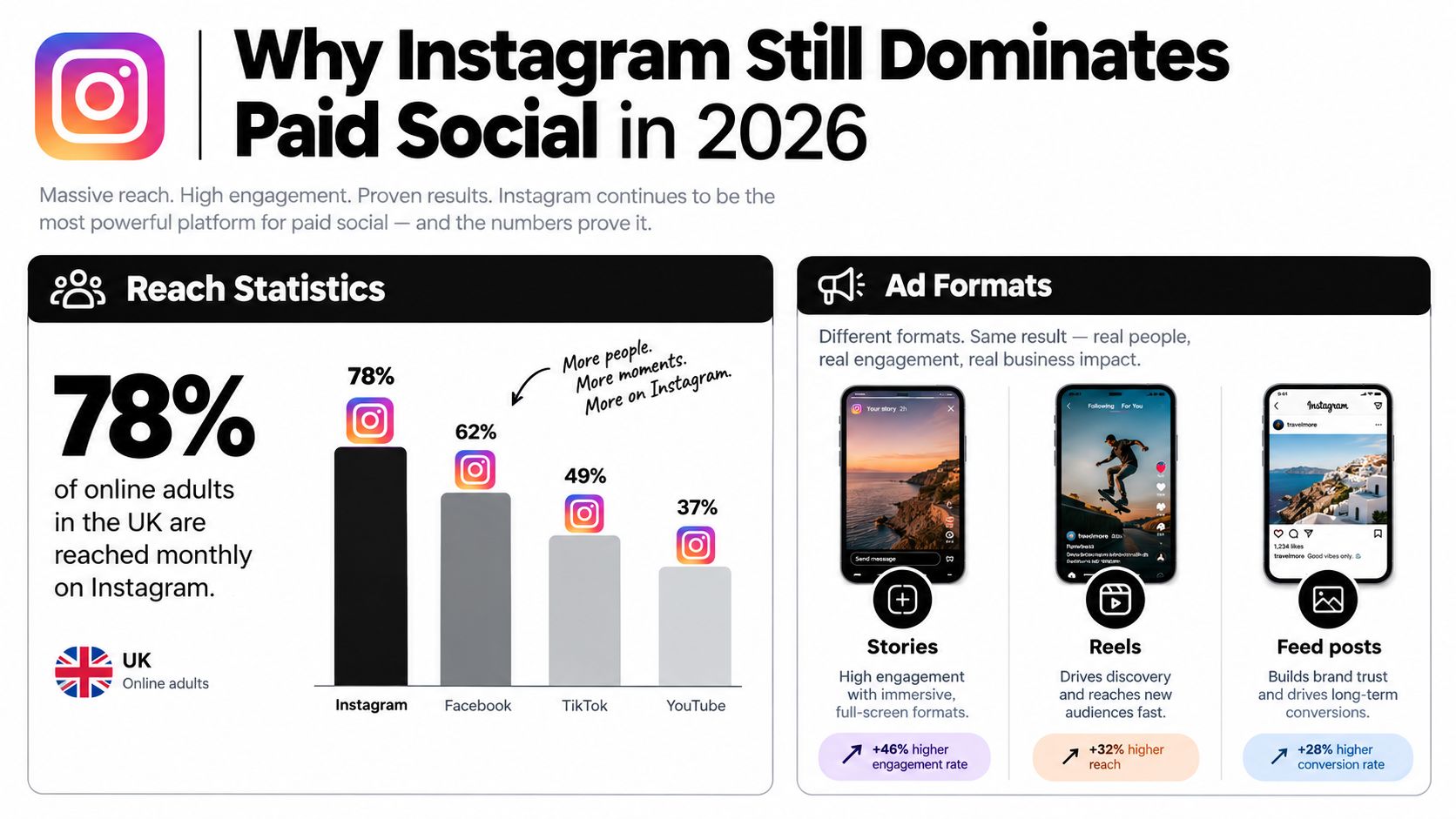
Meta's planning tools recorded an Instagram UK advertising audience of 35.5 million users in late 2025, equal to 50.9% of the total population and 62.6% of adults aged 18+. The same data showed the audience expanded by 3.0 million, or 9.2%, between October 2024 and October 2025, as reported in UK social media advertising statistics. For marketers, that growth means more room to test creative and audiences, even if mature segments show signs of repetition.
Match the format to the buying job
Stories deserve early attention because UK data places their click-through rate 29% above feed ads in 2025 benchmarks, while Instagram advertising research from Sprout Social also identifies a substantial UK social advertising market. Use Stories when the user needs a direct, mobile-first next step. Use Reels when the creative needs demonstration, social proof, or discovery. Keep Feed and carousel placements for considered browsing, product comparison, and messages that benefit from more reading time.
Instagram shouldn't operate as an isolated channel. Treat it as a layer in a wider acquisition system, with creator content producing assets that can also inform organic social, landing pages, email, and retargeting. For current platform behaviour and creative direction, find IG Ads content alongside Sup's Instagram trends guide.
Practical rule: Don't scale Instagram because the platform is large. Scale the combination of audience, format, creative angle, and conversion signal that produces profitable attention.
Structuring Your First Campaign for Real Results
Start with the business outcome, not the advert format. A retailer trying to increase online orders needs a sales-focused setup and a product page that can complete the journey. A consultancy collecting qualified enquiries needs a lead or conversion structure, a clear qualification step, and a response process that begins as soon as a prospect submits details.
Choose one primary objective
Use awareness when the immediate job is to introduce a brand or product to a relevant audience. Use traffic when you're validating the appeal of a landing page or content asset. Use sales or leads when you've got a reliable conversion event and enough operational capacity to act on it.
The common mistake is choosing an engagement objective because likes and comments arrive quickly. Engagement can help identify promising creative, but it doesn't prove commercial value. A creator Reel with strong comments may still attract people who enjoy the format but have no buying intent. Optimise towards the event that represents value, then use engagement as a diagnostic rather than the finish line.
Build a controlled test
Keep the first structure simple enough to interpret. Create one campaign around one commercial objective, then test a small set of creative concepts across Reels, Stories, and Feed placements. The verified UK benchmark range for Instagram advertising is broad, with CPCs around £0.30 to £2.00, CPMs around £5 to £12, and average conversion rates reported near 1.85%, as outlined in UK paid-social advertising cost benchmarks.
Those ranges aren't promises. They show why a single result can mislead you. A narrow audience, a weak landing page, or a creator whose audience doesn't match the product can move costs substantially.
For an ecommerce launch, start with product demonstrations, creator reviews, and problem-led hooks. Give each asset a distinct job, such as showing use, answering an objection, or proving the result. For a service business, test expert explanation, customer language, and a clear offer. Don't combine every message in one video.
Pace spend deliberately
Use a daily budget when you need ongoing learning and a lifetime budget when the campaign has fixed dates, such as a launch or event. Avoid making large changes while the system is still learning. Instead, review spend, click quality, conversion volume, and creative fatigue on a regular schedule, then make one meaningful adjustment at a time.
A practical sequence is:
- Validate the hook: Find out whether people stop, watch, click, or take the first meaningful action.
- Validate the audience: Check whether the response comes from people who can realistically buy.
- Validate the journey: Confirm that the landing page, checkout, form, and follow-up preserve the value created by the advert.
- Reallocate with discipline: Move budget towards the strongest combination, not the advert with the cheapest click.
Audience Targeting Strategies That Actually Work
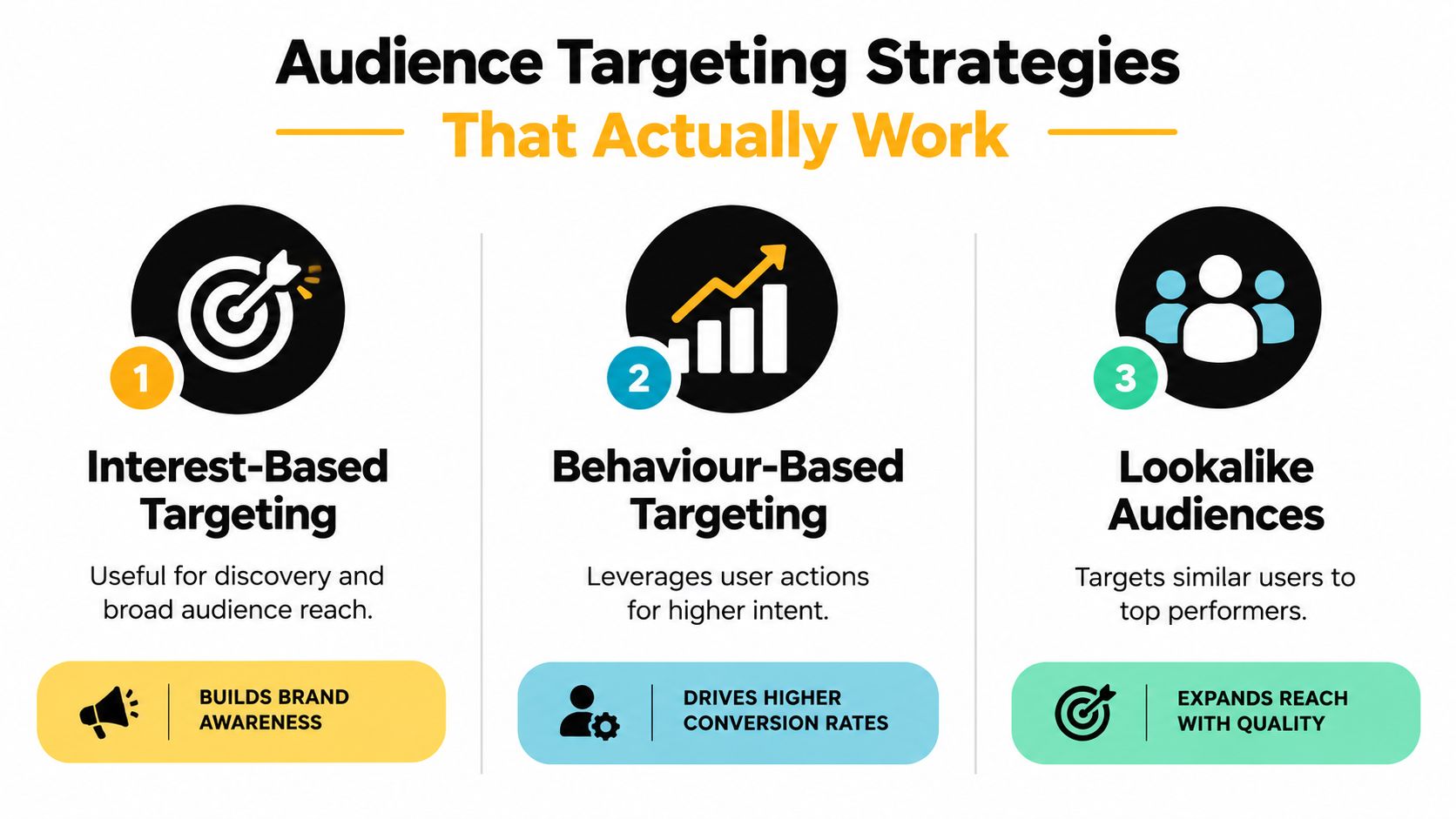
Audience choice should follow the information you have, not a rigid preference for narrow targeting. Interest-based audiences help you find new prospects when you lack first-party data. Behaviour-based audiences help you focus on signals such as site activity or prior interaction. Lookalike audiences can extend the characteristics of valuable customers to new people, provided the source audience is genuinely useful.
Compare the three approaches
| Approach | Best use | Main risk |
|---|---|---|
| Interest-based targeting | Discovery when you need a relevant starting point | Interests can be broad proxies rather than buying signals |
| Behaviour-based targeting | Retargeting people who have interacted with your brand | The audience can become repetitive or too small |
| Lookalike audiences | Finding new people who resemble high-value customers | Weak source data produces weak similarity |
Interest targeting works well for a new product with a clear category, especially when creator content gives the algorithm several different ways to interpret the offer. Don't over-layer interests until the audience becomes too constrained. You want enough room for delivery and learning, while retaining a clear reason for inclusion.
Behaviour-based targeting is stronger when you've already generated meaningful interaction. Build separate groups for people who watched creator content, visited a product page, added to basket, or purchased. Each group needs a different message. A viewer may need education, while an abandoned basket user may need reassurance about delivery, fit, or returns.
Use location as a commercial variable
Local brands shouldn't treat geography as a simple postcode filter. UK advertising data supports using city and neighbourhood segmentation for local brand lift and store-footfall campaigns, particularly because Instagram's advertising audience is large enough for structured creative and placement testing. A restaurant can brief local creators around atmosphere and menu context, while a multi-location retailer can adapt the opening line, offer, and proof point by catchment area.
Watch overlap carefully. If the same person sits in several ad sets, your reporting becomes harder to interpret and repeated exposure can inflate costs. Use exclusions where appropriate, keep prospecting and retargeting distinct, and consolidate similar audiences rather than creating a separate ad set for every small variation.
Leveraging Creator Content for Higher Converting Ads
A creator-led advert often wins because it starts with a lived experience rather than a brand claim. The creator already knows how to frame the product for their audience, which can make the first seconds feel like content instead of an interruption.

Consider a footwear brand briefing several creators to show the same product in different contexts. One creator might focus on comfort during a commute, another on styling, and another on sizing concerns. The paid campaign doesn't need to choose a single universal message before testing. It can distribute these perspectives, then reveal which problem and presentation attract the strongest commercial response.
That doesn't mean polished creative has no role. Brand assets can communicate product quality, clarify an offer, or provide visual consistency. The mistake is assuming production value automatically creates relevance. Creator content needs a clear brief, but it shouldn't be edited until it loses the natural pacing and language that made it useful.
Brief for paid distribution from the start
Tell creators where the content may run, what claims require evidence, which brand terms are mandatory, and how long the brand needs usage rights. Request clean versions without platform-native music where licensing could restrict paid distribution. Ask for different openings and cutdowns when the campaign needs format flexibility, but don't force every creator into identical scripts.
Whitelisting and partnership-style ads add another layer. The advert appears through the creator's handle, which can preserve social context while giving the brand control over audience, budget, placements, and optimisation. That control is valuable only when permissions, identity, disclosure, usage rights, and approval responsibilities are documented before launch.
For practical guidance on turning creator material into paid placements, use this AdManage.ai ad creative playbook as a production reference. Sup's guide to repurposing influencer content for paid social ads is also relevant when your team needs a repeatable route from approved post to paid asset.
Creative test: Keep the creator's natural voice, but make the commercial action unmistakable. Authenticity earns attention. Clarity earns the click.
A workable approval flow has three gates: confirm the creator and commercial terms, approve the script or concept, then approve the final asset and disclosure before publishing. This prevents the expensive situation where a high-performing post can't be promoted because the rights, claim wording, or disclosure wasn't resolved.
The video below provides another visual reference for creator-led Instagram advertising workflows.
Measuring What Matters Beyond Vanity Metrics
A professional measurement plan connects the advert to the business result. Reach and impressions tell you whether delivery occurred. Thumb-stop behaviour, video retention, outbound clicks, landing page views, add-to-basket actions, leads, purchases, revenue, and contribution margin tell you whether the delivery created value.
Start by assigning metrics to the funnel stage:
- Awareness: Reach, impressions, completed views, and quality of engagement.
- Consideration: Landing page views, outbound clicks, product page depth, and engaged sessions.
- Conversion: Cost per acquisition, qualified leads, purchases, revenue, and return on ad spend.
- Creator contribution: Creator-level clicks, code redemptions, assisted conversions, and the paid performance of each approved asset.
A creator's organic post and its paid distribution should not share an unstructured reporting label. Use unique tracking links, UTM parameters, creator-specific promo codes, and platform conversion events. The link identifies the route, the code helps capture behaviour that may not be fully visible in platform reporting, and the conversion setup connects the visit to an outcome on your site.
Separate the creative signal from the media signal
If a creator asset receives a low click-through rate, ask whether the issue is the opening, the audience, the placement, or the offer. If it receives clicks but no sales, inspect the landing page, mobile experience, price, delivery information, and checkout. Don't rewrite the creator's script when the problem occurs after the click.
For whitelisted content, report both the creator identity and the media variables. Compare the same creator asset across placements, audiences, and objectives, but avoid changing all three at once. That's how teams end up with a winner they can't reproduce.
Build a usable attribution view
Platform attribution can capture direct conversions, while analytics and customer data may show a different path. Review direct conversions alongside assisted interactions, code use, branded search movement, and post-purchase survey responses. None of these signals should automatically replace the others. Together, they help explain how creator content creates demand before another channel receives the final click.
Use Meta conversion tracking guidance for ROI when reviewing implementation choices, and apply the practical framework in Sup's cost-per-acquisition guide to keep acquisition reporting tied to actual economics.
Launch Checklist and Common Pitfalls to Avoid
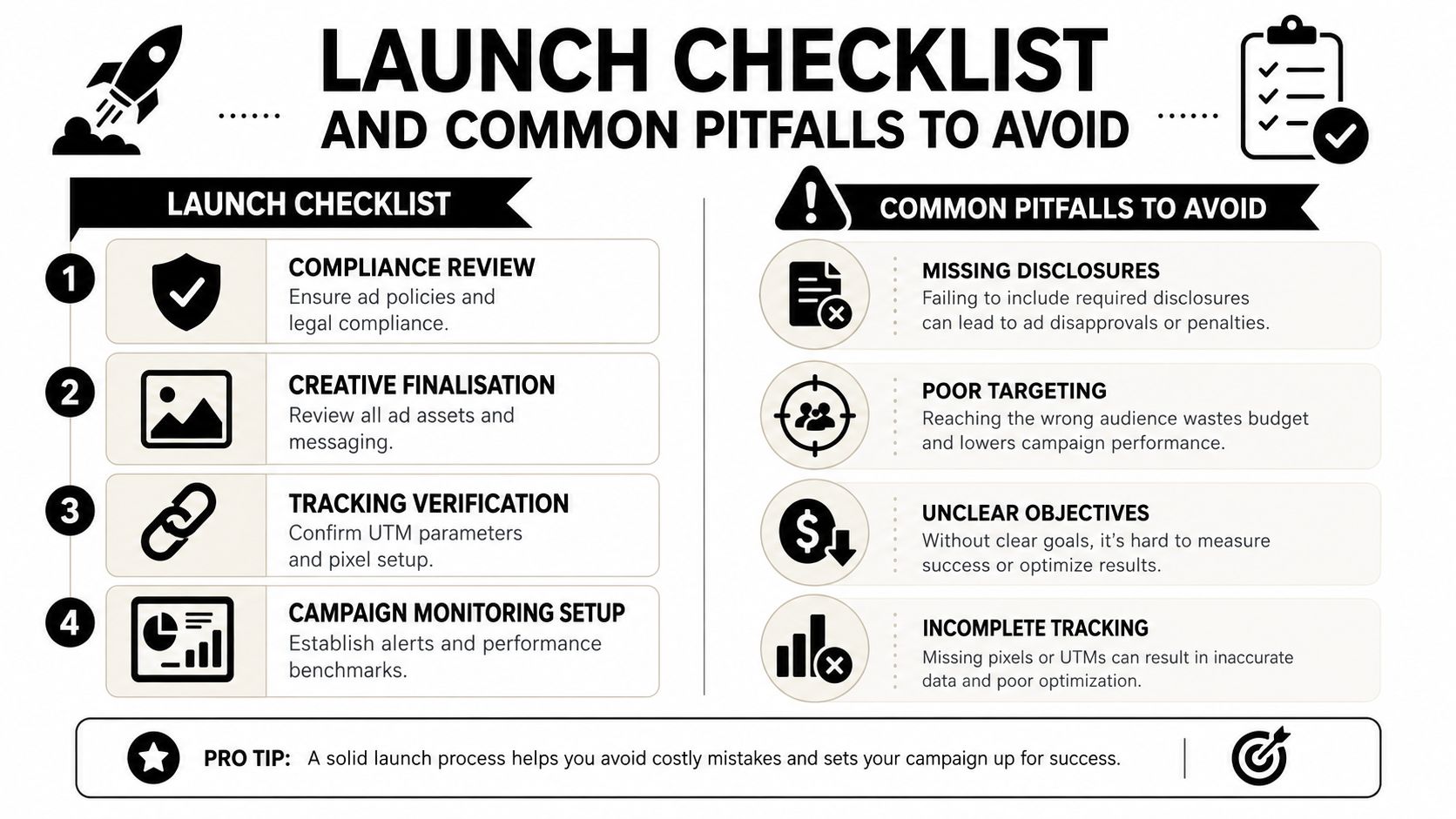
The strongest launch process treats compliance, creative, targeting, and measurement as one operating system. A creator advert can look excellent and still fail if the disclosure is unclear, the licence excludes paid use, the tracking link is broken, or the landing page can't support the promise in the video.
Complete the pre-publish checks
Compliance review comes first. The ASA found that 65% of ads across 122 monitored UK Instagram accounts weren't clearly disclosed as advertising, and estimated that roughly 57% of influencer content on Instagram and TikTok in the UK would likely be adequately disclosed, according to its influencer ad disclosure report. Treat disclosure as a pre-publish approval, not a correction after performance begins.
Check that the advert clearly communicates its commercial nature, the creator has approved the wording, claims are substantiated, and any restricted category requirements have been addressed. UK Instagram advertising is regulated by the ASA, so creator-led execution needs the same care as conventional paid media.
Creative finalisation requires placement review. Watch every asset in the intended mobile format. Check the opening frame, subtitles, safe areas, product visibility, CTA, sound-off comprehension, and whether the creator's delivery still feels natural after editing. Don't rely on one asset. The verified benchmark data shows that format and placement can materially affect results, with Reels generally outperforming static image adverts on CTR in comparable benchmarks.
Tracking verification should happen in a test environment. Click every link, confirm UTM values, test promo codes, check events in the relevant platform tools, and ensure the landing page records the intended conversion. A dashboard can't repair missing data after the campaign has spent.
Avoid the familiar failure modes
- Missing disclosure: A paid partnership that looks organic can create regulatory and reputational risk.
- Single-asset dependence: One creator, one hook, or one format gives you no reliable comparison.
- Audience saturation: High reach can still hide repeated exposure to the same cohort, especially in a mature market where Instagram reaches a large share of online adults.
- Unclear rights: Confirm paid usage, duration, territories, whitelisting permissions, editing rights, and renewal terms before publication.
- Objective drift: Don't judge a sales campaign by likes or a reach campaign by immediate purchases alone.
- Slow monitoring: Set review points for spend, delivery, click quality, conversion events, frequency signals, comments, and policy notifications.
Recent UK-focused reporting has also raised broader platform-risk concerns, including an investigation into harmful adverts that passed Meta's screening process and exposed UK users to CSAM-related adverts in the study sample, as described by Sprout Social's UK Instagram trends coverage. Brands can't control every platform decision, but they can reduce exposure by tightening creator approvals, documenting rights, reviewing placements, monitoring comments, and escalating questionable delivery quickly.
Operational standard: No creator asset goes live until the person responsible for media, legal or compliance, brand, and measurement has approved the same version.
Use this launch sequence repeatedly: approve the creator and terms, validate the message, finalise the asset, verify tracking, publish with controlled spend, inspect quality signals, and scale only when the result remains commercially sound.
Sup provides managed creator sourcing, outreach, negotiation, contracts, usage rights, approvals, payments, tracking links, promo codes, and attributed revenue reporting for campaigns that use creator content in paid social. If you want to turn authentic Instagram content into a controlled testing and distribution programme, visit Sup and outline the creators, locations, formats, and outcomes you need.
More on channels
See how many creators post about you and your competitors
Type in your brand's Instagram handle and we count the creators who post about you and about your five closest competitors. It takes about a minute and it is free. Or request a demo and we will show you the creators in your niche and walk you through the dashboard.
 Book a call