17 March 2026
How Restaurants Are Using AI to Run Influencer Campaigns: Boost Local Sales
Restaurants are finally cracking the code on influencer marketing, and the secret ingredient is AI. They're using it to automate everything, from finding the perfect local foodies to managing collaborations and, most importantly, proving these partnerships actually put bums on seats. It’s a shift that turns a once chaotic, time-sucking task into a predictable way to grow the business.
A New Recipe for Restaurant Influencer Marketing
In today's crowded market, brilliant food and a great atmosphere are no longer a guarantee for a packed restaurant. You have to cut through the digital noise and reach people where they are: scrolling through their social media feeds. Influencer marketing always felt like the answer, but for years, the reality was a messy, manual grind that was impossible to scale or measure.
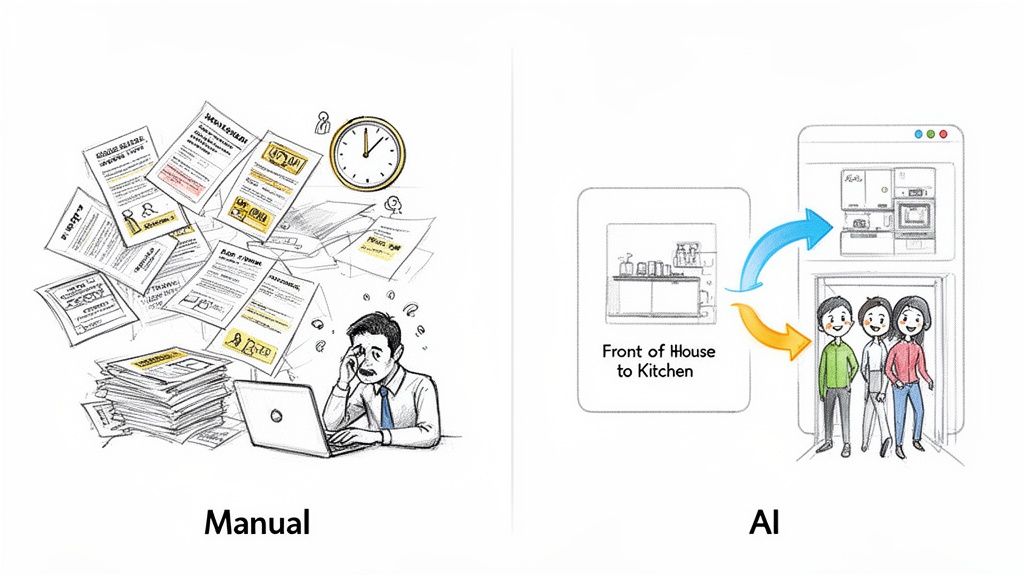
Think of the old way of doing things like running a busy kitchen without a proper ordering system. It was pure chaos. Managers would lose hours doom-scrolling Instagram, sending countless DMs, and trying to track partnerships in messy spreadsheets. At the end of it all, they had no real idea if the effort led to a single new customer walking through the door.
From Manual Guesswork to Measurable Growth
AI-powered platforms are completely changing the game. They act as that missing integrated system, connecting your marketing spend directly to your bottom line. Instead of guesswork, you get data-backed precision. These tools take care of the most tedious parts of the job, freeing up owners and managers to focus on what they do best: creating an unforgettable experience for their guests.
This isn’t just a minor upgrade; it's a fundamental change in approach. For restaurants, AI-driven influencer campaigns are now a key part of any serious strategy for online local business marketing. What used to be a fuzzy branding expense has become a measurable sales channel.
To really see the difference, it helps to compare the old manual slog with the new AI-powered workflow.
Manual vs AI-Powered Influencer Marketing
| Campaign Task | The Old Manual Method | The New AI-Powered Method |
|---|---|---|
| Creator Discovery | Hours of scrolling Instagram, guessing who has a relevant local audience. | Instantly identify creators whose followers match your ideal customer profile based on location, demographics, and dining interests. |
| Outreach | Sending one-off DMs and emails, often with low response rates. | Automate personalised outreach to hundreds of pre-vetted influencers, significantly improving response and activation rates. |
| Campaign Management | Juggling conversations and deliverables in spreadsheets and email threads. | Centralised dashboard for all communications, content approvals, and scheduling. No more missed deadlines or lost messages. |
| Attribution & Tracking | "Did you see us on Instagram?" Relying on unreliable verbal feedback. | Unique tracking links and codes tie every booking, order, and visit directly to the specific influencer who drove it. |
| ROI Measurement | Guessing the impact based on likes and comments. No real sales data. | Calculate precise ROI by comparing the cost of a collaboration to the actual revenue it generated. |
As the table shows, AI doesn't just make the process faster; it makes it smarter and, for the first time, truly accountable.
The real win here is moving from a high-effort, unscalable task to a system that drives predictable foot traffic and delivers a clear return on investment. It’s about knowing which collaborations fill tables, not just which ones get likes.
This change is about more than just saving time; it's about making better business decisions. By automating discovery, management, and attribution, restaurants can finally:
- Partner with the right people: AI finds local influencers whose audience genuinely fits the restaurant's target clientele.
- Scale up with ease: Launch campaigns with dozens of creators in the time it used to take to manually contact one.
- Prove the value: Track every booking and sale right back to the specific influencer who sent the customer your way.
1. Finding the Perfect Local Foodies with AI
Getting the right creators on board is everything. But let's be honest, manually trawling through Instagram for local foodies is like throwing darts in the dark. You might hit a bullseye eventually, but you'll waste a lot of time and effort. This is where AI steps in, not as some complex tech, but as your personal guide to the city's most trusted food lovers.
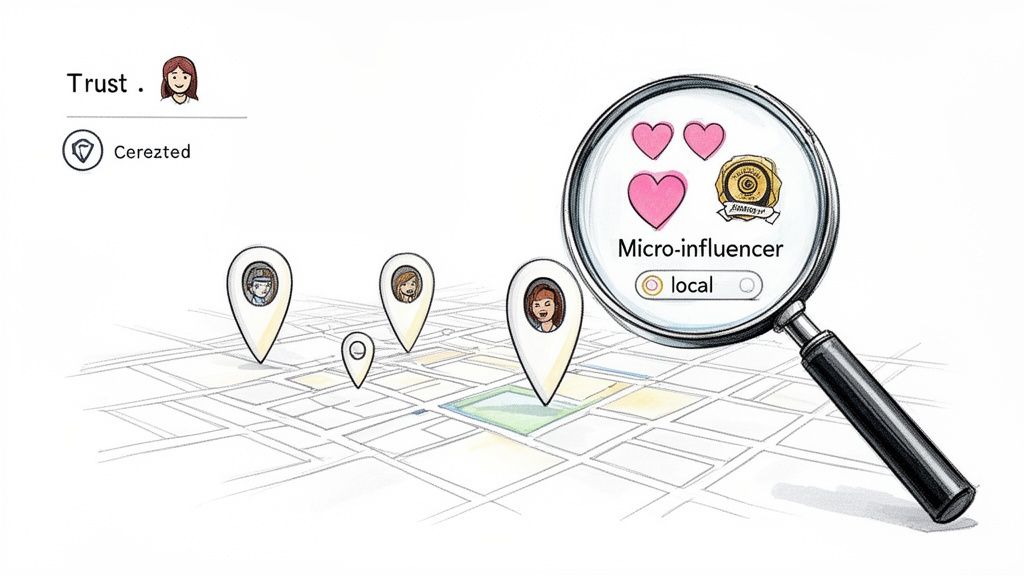
Think of these AI tools as a super-smart scout. They scan countless public profiles to find creators whose audience and style are a perfect match for what you're serving up.
Why Follower Count Isn't the Whole Story
A massive follower count looks impressive, but it means very little if those followers live hundreds of miles away or couldn't care less about your cuisine. For a local restaurant, the only goal that matters is getting people through the door. AI-powered discovery zeroes in on just that.
These platforms dig deep into the data to find creators based on criteria that actually drive footfall. This way, you're partnering with genuine advocates who can influence local dining habits. If you want to get into the nitty-gritty, we cover this in our guide on how to find local food influencers in your city.
Here’s the kind of information AI platforms vet for you:
- Who’s actually local? It checks an influencer’s audience geolocation to see if their followers are concentrated within your restaurant’s post code or delivery radius.
- Are people listening? It looks beyond likes to analyse comment quality and how the creator interacts with their community. A lively comment section is a sign of a loyal, engaged following.
- Do they fit your vibe? The AI scans bios, captions, and hashtags to find people who genuinely focus on relevant niches, like "vegan food in Bristol" or "family-friendly London eats."
- Is their audience your audience? It matches an influencer's followers to your ideal customer profile, looking at things like age, interests, and even spending habits.
Finding Authentic Voices at Scale
Let’s say you run a cosy neighbourhood bistro in Manchester and want to promote your new gluten-free menu. You need to find micro-influencers who specialise in exactly that. Hunting for them manually would be a nightmare of scrolling and guesswork.
With an AI platform, you can plug in these exact parameters and get back a curated list of ideal partners in minutes. The system will find creators who not only post about gluten-free food but whose followers in the Manchester area are actively searching for and engaging with it.
This approach is a game-changer. It saves a phenomenal amount of time and radically improves your chances of a successful campaign. You stop guessing and start making sharp, data-backed decisions to find creators whose followers are your future customers. It means your marketing budget goes directly towards connecting with people who are actually likely to book a table.
Automating Outreach and Campaign Management
So, you’ve found the perfect local foodies. Now for the hard part: actually getting a campaign off the ground. The reality of managing influencer marketing is that it quickly becomes a logistical headache. You're juggling personalised emails, tracking who’s replied, negotiating deliverables, and scheduling posts. It’s a mountain of admin that can easily stop a great campaign in its tracks.
This is precisely where AI steps in to clear the bottleneck. Instead of a manager getting bogged down in repetitive tasks, AI platforms can systematise the entire outreach process. You’re no longer starting from scratch with every single message. Instead, you can build smart campaign templates that include customisable outreach scripts, crystal-clear deliverables, and, crucially, embedded tracking links for proper attribution.
Think about launching a new seasonal menu. You’ve got a list of 50 vetted local creators you want to invite. Manually, that’s days of work: drafting emails, trying to personalise each one, and then chasing up anyone who hasn't replied. With the right AI tool, you can set up and launch that entire outreach in minutes.
Building Campaigns at Scale
The most immediate win here is the sheer amount of time you get back. These systems don't just blast out generic messages; they handle the whole initial workflow. That means generating unique discount codes for each influencer, making sure every post is set up with the correct tracking, and even sending polite, automated follow-ups to anyone who’s gone quiet.
This sort of automation delivers on two fronts for any busy restaurant:
- It frees up an incredible amount of time. We’ve seen teams cut down the manual hours spent on campaign admin by as much as 95%.
- It drives consistency. Every creator gets a professional, easy-to-understand brief with all the right details, which cuts down on miscommunication and mistakes later on.
Suddenly, your team isn't stuck in their inbox. They’re free to focus on what really matters: building genuine relationships with your best-performing influencers and looking after the new customers walking through the door.
The goal is to shift from a slow, one-by-one approach to a smart, automated system that lets you scale your efforts without sacrificing the personal touch that makes these collaborations feel authentic.
Keeping It Personal
Let’s be clear: automation isn’t about sending robotic, soulless messages. The best platforms are built to help you be more personal, not less. The AI can draft a compelling opening message based on a creator's profile, but you always have the final say.
Before hitting send, a manager can easily jump in and add a quick, genuine note. Maybe you mention a recent post of theirs you loved or compliment their photography style. This hybrid approach gives you the speed of automation with the warmth of a real one-to-one conversation, and it works wonders for response rates. It’s the perfect recipe for turning a list of potential partners into a network of true advocates for your restaurant.
From Clicks to Tables: Tracking Real-World Results
For years, the biggest headache with influencer marketing has been proving it actually works. Restaurants would spend good money on collaborations, see some lovely photos on Instagram, and just hope for the best. There was simply no reliable way to connect that online buzz to a full dining room.
This is exactly the problem that modern AI-powered platforms are designed to fix. They finally close the loop between an influencer's post and genuine, in-restaurant revenue. It’s the difference between asking guests, "So, how did you hear about us?" and having a dashboard full of hard data that shows you exactly which partnerships are bringing people through the door.
Essentially, it turns what was once a vague branding expense into a fully measurable sales channel. The process below shows how campaign elements are created, customised, and sent out with tracking built-in from the start.
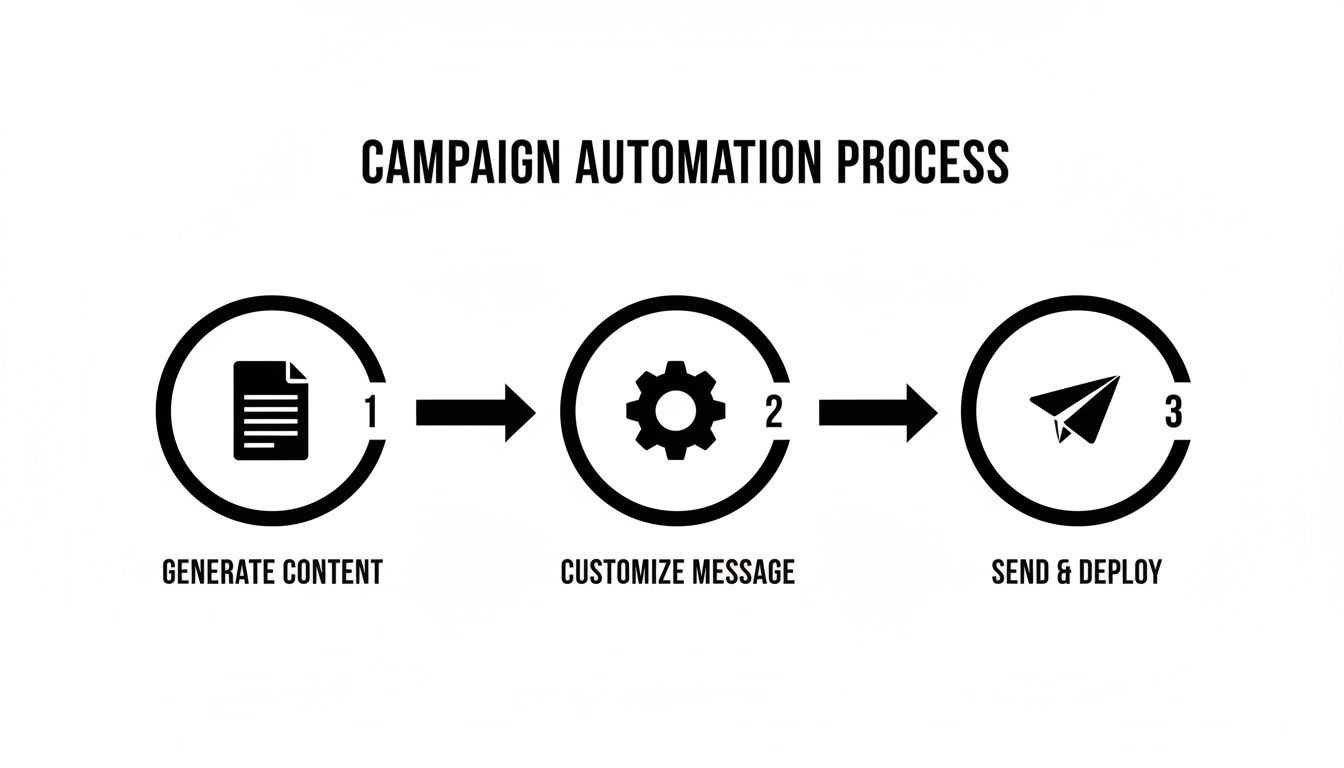
This ensures every single action can be monitored, giving you a clear picture of what's performing.
Moving Beyond Vanity Metrics
Likes and comments are nice to look at, but they don't pay the staff or the suppliers. Real attribution means tracking the actions that actually matter to a restaurant's bottom line. AI platforms make this possible by automatically generating unique tracking assets for every single influencer you work with.
These assets are the key to unlocking true ROI. Think of them as digital breadcrumbs leading directly back to your business.
- Unique Promo Codes: Giving a specific code (like "ANNAEATS15") to each creator lets you track every redemption right at your point-of-sale (POS) system.
- Custom Booking Links: By providing each influencer with their own unique URL for your reservations platform, you can see precisely how many tables they helped fill.
- Trackable Story Links: For delivery promotions, trackable links measure exactly how many people clicked through to order from an influencer’s story.
With a system like this, the guesswork is gone. You can pull up a central dashboard and see, in real time, which creators are driving actual sales. It's not just theory; it's happening right now across the UK's restaurant scene, where 41% of operators already using AI put it to work for marketing. A multi-location chain in Edinburgh, for instance, can now find the right TikTok creators and give them targeted promo codes that trace redemptions directly to bookings, cutting down manual admin time by an incredible 95%. You can explore more on this in the SevenRooms UK Restaurant Trends report.
This closed-loop system gives you a crystal-clear view of performance. You can confidently say, “This influencer generated £500 in bookings last week,” and adjust your budget to back your winners.
This level of detail is crucial for really understanding what works. If you're interested in going deeper on this, have a look at our guide on how to measure influencer marketing ROI. By focusing on tangible results, you can double down on your most valuable partnerships and stop spending on those that aren’t delivering. Every pound spent on marketing should be working as hard as you do.
Getting the Most from Your Investment: Repurposing Influencer Content
An influencer campaign isn’t over once the creator’s post goes live. If you stop there, you’re leaving most of the value on the table. The real, lasting benefit comes from the fantastic, authentic content those influencers create for you. Think of it less as a one-off promotion and more as the beginning of a powerful library of user-generated content (UGC) that acts as compelling social proof.
Anyone who’s run a campaign manually knows the old headache. You'd be chasing down photos lost in endless email chains, or worse, watching brilliant Instagram Stories vanish after just 24 hours. Thankfully, modern AI platforms have changed the game. They now automatically gather and organise every single campaign asset (photos, Reels, videos, you name it) into one central, searchable library.
Suddenly, that organised collection becomes a treasure trove for your marketing team. The money you spent on a single collaboration can now deliver value again and again.
Turning Influencer Posts into Marketing Fuel
Once you have this library of high-quality content at your fingertips, what can you do with it? AI can even give you a head start by pinpointing the posts with the best engagement, helping you identify which visuals are most likely to resonate with a wider audience.
Here are a few ways we see restaurants smartly reusing influencer content every day:
- Supercharge Your Digital Ads: Ditch the generic stock photos. Imagine using an influencer's vibrant, scroll-stopping shot of your signature cocktail in your next social media ad. It’s authentic and far more effective.
- Bring Your Website to Life: Why tell people your restaurant has a great atmosphere when you can show them? Feature a creator's video of your buzzing dining room on your homepage to give potential diners a real taste of the experience.
- Make Your Email Newsletters Pop: Announcing a new menu? Don't just list the items. Embed an influencer’s photo carousel directly into your email to showcase the new dishes in a relatable, real-world context.
- Fill Your Social Media Calendar: The content from just one or two successful campaigns can easily fill your own social feed for weeks. This keeps your profiles active with a steady stream of genuine, engaging posts without any extra work.
To really squeeze every drop of value from each asset, it helps to have a system. While focused on audio, this comprehensive podcast repurposing guide shares fantastic principles for breaking down larger content into smaller, shareable snippets: a strategy that works perfectly for influencer videos, too.
By repurposing influencer content, you’re extending the life and value of your campaign far beyond its initial audience. It creates a powerful feedback loop where authentic content attracts new customers, some of whom might just become your next great advocates.
This approach is absolutely fundamental to making your marketing budget work harder. If you’re building out your ad creatives, you’ll want to read our deep-dive on how restaurants use influencer content as paid ad creative for even better results. It’s all about turning a single campaign into a lasting asset.
Common Mistakes to Avoid with AI Campaigns
AI can be a game-changer for your restaurant's influencer marketing, but it's not foolproof. I've seen too many businesses jump in, expecting magic, only to end up with a wasted budget and a lot of frustration. The secret isn't just switching on the AI; it’s about guiding the technology with a smart, human-led strategy.
One of the easiest traps to fall into is over-automating your outreach. It’s tempting, I get it. But authentic creators, especially the micro-influencers who have real trust with their audience, can spot a robotic, copy-pasted message a mile off. It's the fastest way to get your message ignored.
The best approach is a hybrid one. Let the AI do the heavy lifting: finding potential creators and even drafting a first message. But before you hit send, a real person needs to step in and add that personal touch. A quick line from you or your manager mentioning their recent post about a local market or complimenting their food photography style shows you’ve done your homework. It makes all the difference.
Chasing Likes Instead of Diners
Another classic mistake is getting distracted by "vanity metrics." A post can rack up thousands of likes, but if it doesn’t lead to a single booking or takeaway order, what have you actually achieved? It's just noise.
The goal of any restaurant marketing campaign is simple: drive business. Your AI-powered campaigns should be judged on their ability to put money in the till, not just create a buzz online.
To get this right, you have to track what truly matters. Make sure your platform can handle unique promo codes and custom booking links for every single influencer. This is the only way to prove, without a doubt, that their campaign is bringing in actual revenue.
- The Wrong Metric: A post got 2,000 likes.
- The Right Metric: An influencer’s campaign generated £350 in takeaway orders using their unique discount code.
Leaving Influencers to Guess
Finally, a surprisingly common failure point is giving creators a vague brief. Influencers aren't mind-readers. Without clear direction, you’ll get off-brand content, missed key messages, and a campaign that just doesn't land.
Think of your brief as the single source of truth for the entire collaboration. It needs to clearly spell out everything, leaving no room for confusion.
- Key Messages: Are you pushing a new seasonal dish? A two-for-one cocktail offer? Be specific.
- Campaign Goals: Is the main aim to fill tables on a quiet Tuesday, boost delivery orders, or just announce a new menu?
- Visual Guidelines: What's the mood you're after? Should they tag the restaurant's location on their post? Are there any brand colours to feature?
- The Must-Haves: This includes any required tags, hashtags, and, most importantly, the trackable link or code you’re using to measure success.
By steering clear of these common slip-ups, you set your AI-driven influencer campaigns on the path to delivering genuine, measurable results for your restaurant.
Frequently Asked Questions
Thinking about using AI for your restaurant's influencer marketing? It's completely normal to have a few questions. We get asked these all the time, so here are some straight answers to the most common queries we hear.
Is AI Marketing Too Expensive for a Small Restaurant?
Not at all. The term ‘AI’ often brings big budgets to mind, but modern platforms have changed the game, making this technology surprisingly affordable.
The real cost to think about is the hidden one: the hours your team sinks into manually finding creators and managing campaigns, often with very little to show for it. AI platforms offer a much better return by automating the grunt work and directly connecting campaigns to sales, making it a smart, cost-effective choice even for independent spots.
How Much Time Does It Actually Save?
Honestly, the time savings are huge. Finding, checking, and messaging just a handful of local influencers can easily burn a whole day. When you add in campaign management and all the back-and-forth, you’re suddenly looking at dozens of hours every single month.
An AI-powered platform can slash that time by up to 95%. A task that used to take days (like building a vetted list of 50 local creators and sending them personalised messages) can now be sorted in less than 20 minutes.
Can AI Find Influencers That Match My Restaurant's Unique Vibe?
Absolutely. In fact, this is where AI really shines. It goes so much deeper than just looking at follower numbers.
Advanced algorithms sift through millions of data points, from a creator's bio and photo style to the tone of their captions and what their audience is saying. This helps them pinpoint influencers who don't just have a local following, but whose personal brand and content genuinely reflect your restaurant's specific atmosphere, whether you're a quirky vegan café or a sophisticated cocktail bar.
What Is the Difference Between an AI Platform and a Marketing Agency?
Think of it this way: an agency typically takes over your entire influencer strategy for you. This can work, but it's often expensive, and you can lose that hands-on connection to your brand.
An AI platform, on the other hand, is a powerful tool for your own team. It empowers you to manage and scale your growth in-house, automating the tedious jobs while you stay firmly in control of your brand, your budget, and the relationships you build with creators.
Ready to see how AI can drive real, measurable results for your restaurant? Sup combines smart technology with a human touch to manage your entire creator campaign workflow, from discovery to ROI tracking. Learn how Sup can fill your tables today.
More on industries
See how many creators post about you and your competitors
Type in your brand's Instagram handle and we count the creators who post about you and about your five closest competitors. It takes about a minute and it is free. Or request a demo and we will show you the creators in your niche and walk you through the dashboard.
 Book a call