19 March 2026
How Much Revenue Can One Influencer Post Drive for a Restaurant?
For a UK restaurant, a single influencer post can bring in anything from a few hundred quid to several thousand pounds in direct sales. The final number really depends on the influencer’s audience, how tempting your offer is, and, crucially, how well you track what comes back.
The True Revenue Potential of a Single Influencer Post
Let's get straight to it: what is one influencer post actually worth to your restaurant? The truth is, there's no single magic number. It's more like a recipe where different ingredients have to come together just right.
Think of it this way: the influencer’s follower count is the size of your fishing net, their engagement rate is how well that net is cast, and your special offer is the bait. A single, well-timed post can deliver a fantastic return, but it's never a dead cert. Success hinges on a few key factors that work in concert to turn a casual scroll into a customer booking a table.
Getting a handle on these components is the first step. It’s what separates a predictable, profitable campaign from just crossing your fingers and hoping for the best.
Your Core Revenue Drivers
At its heart, the money you can make from a post comes down to three main things. We’ll get into the exact maths later on, but for now, it’s vital to understand the concepts themselves:
- Reach: This isn't just about follower count. It’s the real number of unique people who actually see the post in their feed, which is all down to the platform's algorithm.
- Conversion Rate: This is the percentage of people who see the post and then actually do something, like using a promo code to order or clicking a link to book.
- Average Order Value (AOV): Simply put, this is the average amount a customer spends in one go when they visit your restaurant.
Together, these three elements form the basis of your 'Revenue per Post' (RPP). You'll be surprised how much of a difference a small improvement in just one of these areas can make, turning a so-so campaign into a real winner.
To give you a realistic starting point, it's helpful to see what's achievable. The table below outlines some benchmark figures based on what we'd expect to see from UK restaurant campaigns in 2026.
Estimated Revenue from a Single Post by UK Influencer Tier
This table shows potential revenue from one influencer post, using typical 2026 performance metrics for UK restaurant campaigns.
| Influencer Tier | Follower Count | Typical Engagement Rate | Estimated Post Reach | Potential Revenue per Post |
|---|---|---|---|---|
| Nano-Influencer | 1k - 10k | 5.5% - 8.0% | 2,000 - 5,000 | £250 - £1,200 |
| Micro-Influencer | 10k - 50k | 3.0% - 5.5% | 5,000 - 20,000 | £800 - £3,500 |
| Macro-Influencer | 50k - 500k | 1.5% - 3.0% | 20,000 - 100,000 | £2,000 - £10,000+ |
As you can see, the potential climbs steeply with each tier. However, these are just estimates. Your actual results will depend on the specific formula we're about to break down.
The Core Formula for Calculating Your Influencer ROI
It's time to stop guessing and start calculating. If you really want to know how much money a single influencer post can bring into your restaurant, you need a solid formula. This isn't about complicated spreadsheets; it’s a simple framework any restaurateur can use to move from hoping for the best to projecting results with some real confidence.
Think of it like this:
Estimated Revenue = (Reach x Click-Through Rate x Conversion Rate) x Average Order Value
It might look a bit formal written out, but each part is just common sense. Picture it as a set of dominoes. Someone sees the post (Reach), they decide to check it out (Click-Through Rate), they actually book a table or place an order (Conversion Rate), and then they spend a certain amount of money (Average Order Value).
Let's break down what each of those moving parts really means.
Deconstructing the Formula
- Reach: This is the big one. It’s not the influencer's follower count, but the number of unique people who actually see the post. Algorithms are fickle, so an influencer with 50,000 followers might only have their post shown to 15,000 people. You can usually find this "reach" metric in the post's analytics, which you should always ask to see.
- Click-Through Rate (CTR): This tells you how many of those people who saw the post were interested enough to take action. A "click" could mean anything from tapping the link in their bio to go to your booking page, visiting your restaurant's profile, or hitting a sticker in an Instagram Story. For a decent restaurant influencer post, you can expect a CTR of around 1-3%.
- Conversion Rate: Here's where the magic happens. This is the percentage of people who clicked and then followed through to completion. For a restaurant, that usually means making a reservation, buying a ticket for an event, or using a special discount code. A really compelling offer can push this conversion rate to 5% or even higher.
- Average Order Value (AOV): Simply put, this is the average amount a table or order spends when they come to you through the campaign. You can figure this out by dividing your total revenue by the number of orders from that source. In the UK, this could be anything from £30 for a casual spot to well over £100 for a fine-dining experience.
This diagram helps visualise how each piece of the puzzle fits together to drive your final revenue.
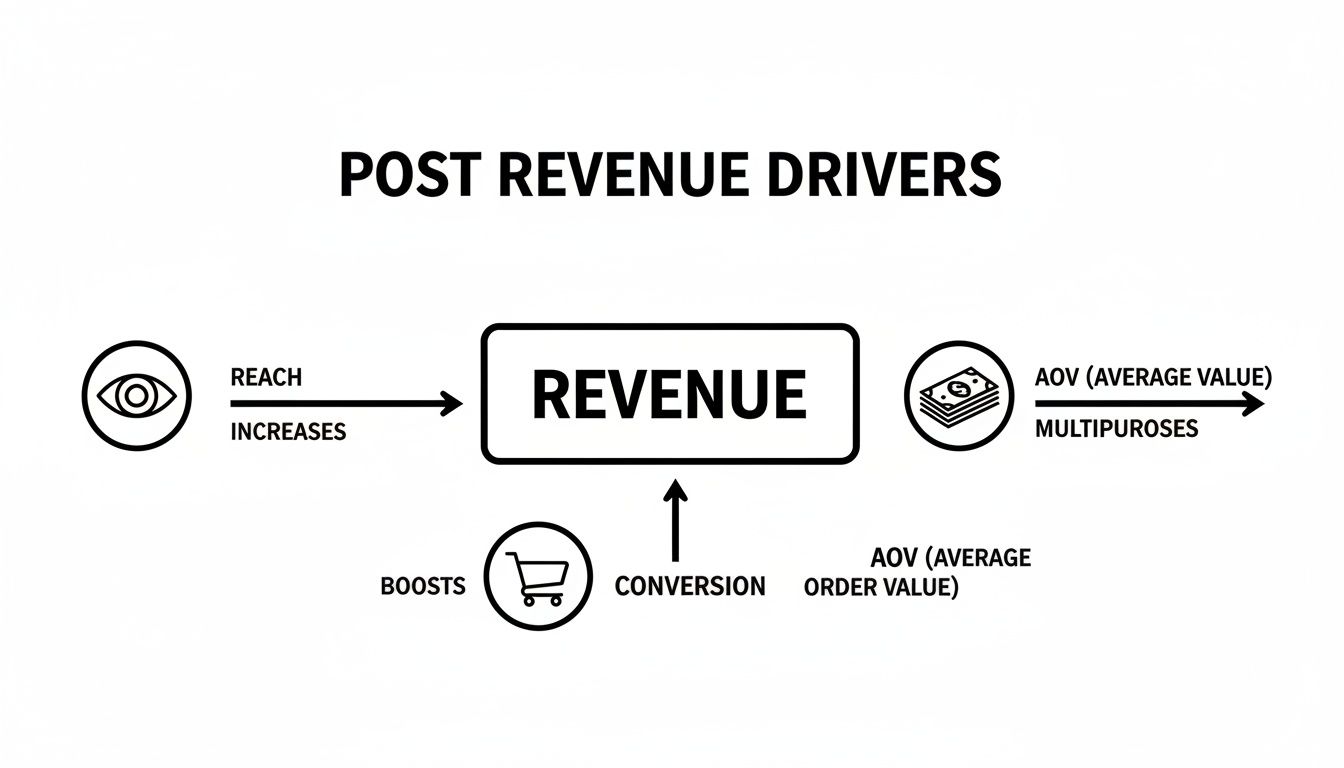
As you can see, revenue isn't just a numbers game about how many people see a post. It's about how well you guide them from that initial glance all the way to paying the bill. Getting a handle on these levers is the first step towards building an influencer marketing engine that delivers predictable returns.
If you want to go deeper on this, you can learn more about measuring influencer marketing ROI and what actually works. Next, we’ll plug some real-world numbers into this formula to see what it looks like in practice.
Real-World Revenue Scenarios from UK Restaurants
The theory and formulas are a great starting point, but what does this all look like out in the wild? Let's walk through three real-world examples from across the UK to see just how much money one influencer post can actually bring in.
We'll break down the numbers for a nano, micro, and macro-influencer partnership. Seeing how it plays out for different types of restaurants will help you set realistic expectations and choose the right creators for your own campaigns.
The Nano-Influencer Boost in Manchester
Don't let the small follower count fool you. Nano-influencers often have an outsized impact, especially when it comes to local businesses. Their audience trusts them implicitly, which can translate into incredible engagement.
Think about a trendy ramen spot in Manchester. They worked with a local nano-influencer who had just 5,000 followers. A single Instagram Reel, showing an authentic, fun dining experience, ended up driving a staggering £3,200 in direct revenue over just one weekend.
The post included a simple promo code for 20% off, which was used 67 times. Considering the creator was paid a modest £250 fee, this single post delivered a phenomenal 12.8x ROI. It's a perfect example of how hyper-local buzz can pack a serious punch.
The Takeaway: Never write off a small, dedicated following. For restaurants focused on a specific neighbourhood or city, nano-influencers can deliver some of the best returns by turning genuine local enthusiasm into immediate footfall.
The Micro-Influencer Impact in Edinburgh
Micro-influencers really hit the sweet spot. They blend the strong engagement of a smaller creator with a much bigger reach, making them perfect for restaurants trying to attract a specific type of clientele, like high-spending food lovers.
Picture a fine-dining restaurant in Edinburgh partnering with a well-respected local food critic who has 35,000 followers. Here, the goal isn't just about filling any seat; it's about attracting diners who will spring for the tasting menu and premium wine pairings.
Let's run this through our formula:
- Reach: The post gets in front of 15,000 people.
- Click-Through Rate (CTR): The critic's trusted voice drives a solid 2% CTR, sending 300 people to the booking page.
- Conversion Rate: This is a highly motivated audience, so they convert at 5%, resulting in 15 new bookings.
- Average Order Value (AOV): These are exactly the customers they wanted. The AOV per table is £180.
Revenue Calculation: 15 Bookings x £180 AOV = £2,700
Even with a creator fee of £700, the return is fantastic. The magic here wasn't chasing a huge audience, but rather attracting the right customers who would maximise the Average Order Value. If this targeted approach sounds right for you, our guide can show you how to run a restaurant influencer campaign step-by-step.
The Macro-Influencer Myth in Birmingham
Working with macro-influencers gives you massive reach, but it almost always comes with a trade-off: lower engagement and a much lower conversion rate. Their audience is so broad that it becomes a pure numbers game.
Let’s look at a casual dining chain in Birmingham that teams up with a lifestyle influencer with 250,000 followers. The post is promoting a new lunch deal.
- Reach: An impressive 80,000 people see the post.
- CTR: The audience is very general, so the CTR is a lower 1.2%, which still generates 960 clicks.
- Conversion Rate: Only a tiny fraction of the audience is local and ready for lunch, so the conversion rate drops to just 2%, resulting in 19 redemptions.
- AOV: The promotion is a lunch deal, so the AOV is only £45.
Revenue Calculation: 19 Redemptions x £45 AOV = £855
The reach was enormous, but the actual revenue is pretty underwhelming, especially when a macro-influencer might charge £2,500 or more for a single post. This scenario is a crucial reminder that reach alone doesn't pay the bills.
Essential Tools to Track Your Influencer Revenue
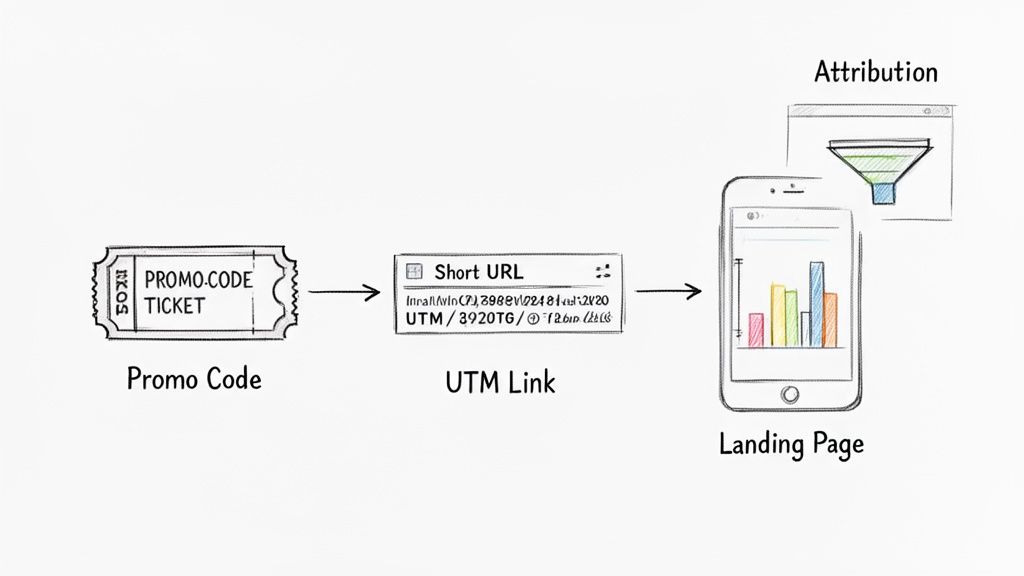
Running an influencer campaign without proper tracking is a bit like a chef cooking a new dish without tasting it. You’re putting all the ingredients and effort in, but you have no real idea if the final result is any good. To figure out how much money a single influencer post actually brings in, you have to connect their content directly to your sales.
It’s the only way to move beyond guesswork. Without clear attribution, any return on investment (ROI) you calculate is just a hopeful estimate. The good news? Setting up a solid tracking system is surprisingly straightforward. It all comes down to a few key tools that show you exactly what’s working and what isn’t.
Unique Promo Codes
The most direct and time-tested tool in the box is the unique promo code. This is simply a special discount code you create for a specific influencer, something memorable like "SOPHIE20" or "TASTYLONDON15".
When a customer redeems this code (whether they're ordering online or mentioning it to your staff in-house), you get an instant, undeniable link back to the influencer who sent them. It makes tallying up the revenue from their post incredibly easy.
Platforms like Sup can even generate these codes automatically for every creator you work with, so you don't have to worry about the manual admin. Every sale gets tied to the right person, every time.
UTM Parameters
For tracking anything that happens online, from bookings to delivery orders, UTM parameters are an absolute game-changer. These are just small bits of code added to the end of a URL that act like a digital passport, telling your analytics tools precisely where a website visitor came from.
Think of it as following a trail of digital breadcrumbs. When an influencer shares a link, it might look something like this: yourrestaurant.co.uk/booking?utm_source=instagram&utm_medium=influencer&utm_campaign=spring_menu&utm_content=sophie_b
This one link tells a powerful story in your Google Analytics:
- Source: The customer came from Instagram.
- Medium: They found you via an influencer.
- Campaign: They were interested in your "Spring Menu" promotion.
- Content: The specific post was from "Sophie B".
This level of detail is gold. It shows you not just who is driving traffic, but also how their audience interacts with your site once they arrive. Getting a handle on these codes is a massive step up for your marketing, and you can dive deeper in our full guide to learn more about influencer marketing attribution with promo codes and UTMs.
Dedicated Landing Pages
To really drive conversions, the final piece of the puzzle is the dedicated landing page. This is a purpose-built page on your website with one clear job: to get the user to act on the influencer's specific offer.
By sending traffic to a focused page that echoes the influencer's message and offer, you remove distractions and create a seamless path from their social media post to your booking system or online menu.
This streamlined journey makes a huge difference. Instead of dropping potential customers on your busy homepage and forcing them to hunt for the deal, you guide them straight to what they came for. It makes it far easier for them to say "yes" and spend money with you.
Optimising Your Campaign for Maximum Profitability
Having the formula is a great start, but the real magic happens when you start optimising each part of it. This isn't about throwing more money at your campaigns; it’s about making smarter, targeted tweaks that can massively boost the revenue a single influencer post generates.
Think of it like being a sound engineer at a mixing desk. Every part of your revenue calculation (Reach, Click-Through Rate, Conversion Rate, and Average Order Value) is a separate slider. A small adjustment to one can dramatically change the final mix. Get them all right, and you've got a hit on your hands.
Choose the Right Creator, Not Just the Biggest
It’s a classic mistake: getting dazzled by a massive follower count. The truth is, profitability comes from relevance, not sheer numbers. An influencer with 10,000 dedicated local foodies who hang on their every word is infinitely more valuable than one with 100,000 generic lifestyle followers scattered across the country.
A smaller, hyper-engaged audience brings a crucial ingredient: trust. A Sprout Social study revealed that for Gen Z, a brand's social media presence is a massive driver of trust, with 88% citing it as a major factor. That trust is what turns a casual scroll into a booking.
Key Insight: Prioritise audience alignment over raw reach. An influencer whose followers look exactly like your ideal customer will always deliver a better return, because their genuine enthusiasm translates directly into bums on seats.
Boost Your Click-Through and Conversion Rates
Once you have the right audience in front of you, the next step is to give them a very clear, compelling reason to act. A lazy "check them out" just won't get the job done. To really move the needle, you need to focus here:
- Make an Irresistible Offer: A generic 10% discount is easy to ignore. Get creative with something time-sensitive or exclusive, like "Free prosecco with your main course this week only" or a special "influencer-collab cocktail" they can't get anywhere else.
- Create a Crystal-Clear Call-to-Action (CTA): The creator needs to tell their followers exactly what to do. "Swipe up to book your table and use code 'FOODIE25' for a special treat!" is direct, simple, and provides an immediate incentive.
- Nail the Post Timing: Collaborate with your influencer to publish content when people are actually thinking about where to eat. A post that goes live at 6 p.m. on a Thursday has a much better shot at converting into a weekend booking than one dropped on a Monday morning.
Extend the Value Beyond a Single Post
The most profitable influencer campaigns don't just stop once the content is live. Think of the photos and videos the creator produces as valuable assets for your own marketing. You have every right to repurpose that great content on your social channels, in your email newsletters, or even in your paid ad campaigns.
This simple step transforms a one-off campaign cost into a long-term content library, stretching your return on investment much further than the initial post. On top of this, looking into other channels like effective restaurant WiFi strategies to drive revenue can create a powerful, multi-pronged approach to keeping your restaurant full.
Calculating Long-Term Value Beyond the First Visit
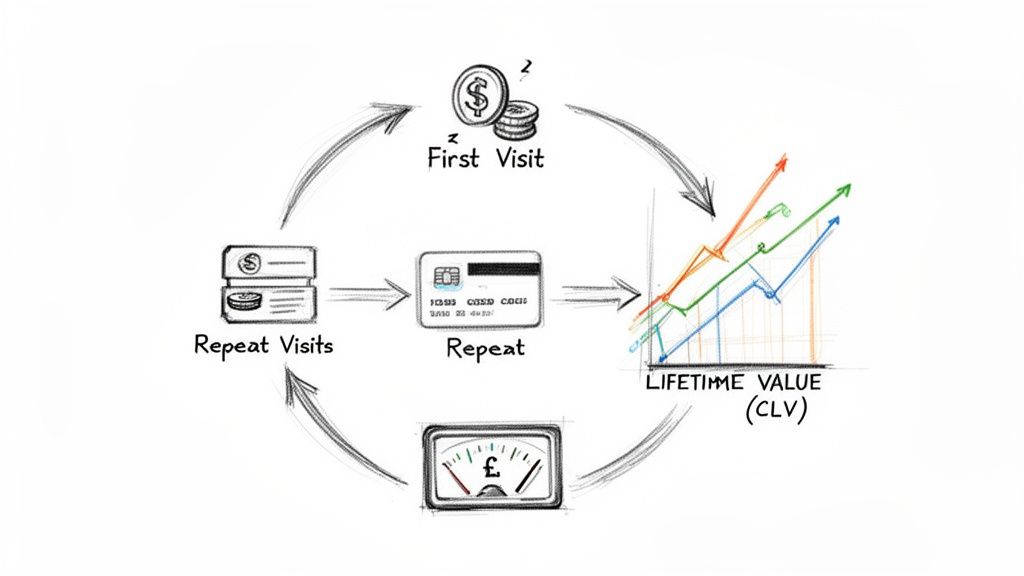
The money that comes in right after an influencer post goes live is just the beginning. The true success of any collaboration isn’t just about getting new bums on seats; it’s about how many of those new faces come back for a second, third, and fourth time.
This is where you need to start thinking about Customer Lifetime Value (CLV). It’s the metric that shows you the real, long-term return on your investment.
Think of it this way: a new customer who finds you through an influencer and spends £50 is a good start. But if that same customer loves their experience and comes back four more times over the next year, their value suddenly jumps to £250. That’s the number that truly matters.
If you only count the takings from that first visit, you're massively undervaluing how much revenue one influencer post can drive for your restaurant. You're only seeing the first chapter of the story.
Tracking Repeat Business
So, how do you keep tabs on these valuable repeat visits? The good news is you don’t need a complicated analytics department to figure it out.
Here are a few straightforward ways to track this:
- Just Ask: A simple, friendly "How did you hear about us?" at the till or when taking a booking can give you a surprising amount of clarity. Keep a tally sheet next to the register to track mentions.
- Loyalty Programmes: When diners from an influencer campaign sign up for your loyalty scheme, you get a direct line to their spending habits and how often they return.
- Monitor Promo Code Users: If a customer used an influencer’s specific code on their first visit, your point-of-sale (POS) system can often flag their profile, making it easy to spot when they return.
The Value Beyond the Till
Beyond the direct sales and repeat custom, a well-executed influencer campaign gives you other powerful benefits that pay dividends for months, even years.
An influencer partnership is a strategic investment in your brand’s future, not just a short-term expense to drive sales. It builds your reputation and gives you a library of marketing assets.
These lasting advantages are crucial for long-term growth:
- Authentic Social Proof: A genuine recommendation from a trusted local creator is the new word-of-mouth. In fact, research shows that 73% of people have visited a restaurant after seeing it reviewed on social media.
- Increased Brand Awareness: The post introduces your restaurant to thousands of potential customers in your area who might never have known you existed otherwise.
- High-Quality Content: You walk away with a collection of professional-looking photos and videos. This user-generated content (UGC) is gold dust. You can repurpose it across your own social media channels, your website, and even in paid ads, saving you a small fortune on content creation.
Answering Your Key Questions
Alright, let's get down to the brass tacks. Before you spend a single pound on influencer marketing, there are always a few crucial questions that need answering. I hear these from restaurant owners all the time, so let's clear them up so you can move forward with confidence.
What Is a Good ROI for a Restaurant?
When it comes to return on investment (ROI), a good benchmark to aim for with an influencer campaign is between 3x and 5x.
What that means in practice is for every £100 you invest (that includes the influencer's fee plus the cost of their meal), you should be seeing £300 to £500 in revenue directly traceable to that collaboration. If you hit anything above 5x, you’ve got a real winner on your hands. It's a clear sign that you've found the perfect influencer for your audience and offer.
How Much Should I Pay a UK Food Influencer?
This is the big "how long is a piece of string?" question, but there are some reliable ballpark figures we can work with. The cost really depends on the creator's audience size, their engagement rates, and exactly what you're asking them to do.
- Nano-influencers (1k-10k followers): These creators are often happy to work in exchange for a complimentary meal for two. This is known as a 'contra' deal.
- Micro-influencers (10k-50k followers): Here's where you start seeing a mix. Expect to offer a gifted meal plus a fee, which can range from £150 to £500+ for a single post.
- Macro-influencers (50k+ followers): With larger audiences comes bigger fees. These partnerships typically start at £500 and can easily run into the thousands, depending on their reach and the campaign's scope.
Are Contra-Only Collaborations Worthwhile?
Working with smaller influencers for a gifted meal can absolutely be a smart move. It's a low-cost way to get your name out there, build some buzz, and generate some great photos and videos you can use on your own social channels.
However, if your primary goal is to drive measurable, bottom-line revenue, you'll almost always see better results from a paid partnership. Putting a fee on the table professionalises the entire arrangement. It gives the creator a real incentive to produce their very best work and focus on getting their followers to take a specific action, which is exactly what you need to see a return.
More on industries
See how many creators post about you and your competitors
Type in your brand's Instagram handle and we count the creators who post about you and about your five closest competitors. It takes about a minute and it is free. Or request a demo and we will show you the creators in your niche and walk you through the dashboard.
 Book a call