6 March 2026
How Restaurants Use Influencer Content as Paid Ad Creative
So, what’s the big idea? It's simple, really. Restaurants are teaming up with food creators to get their hands on genuine, high-quality photos and videos. After getting the legal green light to use this content, they're turning it into targeted ads on platforms like Meta and TikTok. It's a smart blend of authentic social proof and the precision of paid advertising.
The Secret Ingredient in Modern Restaurant Marketing
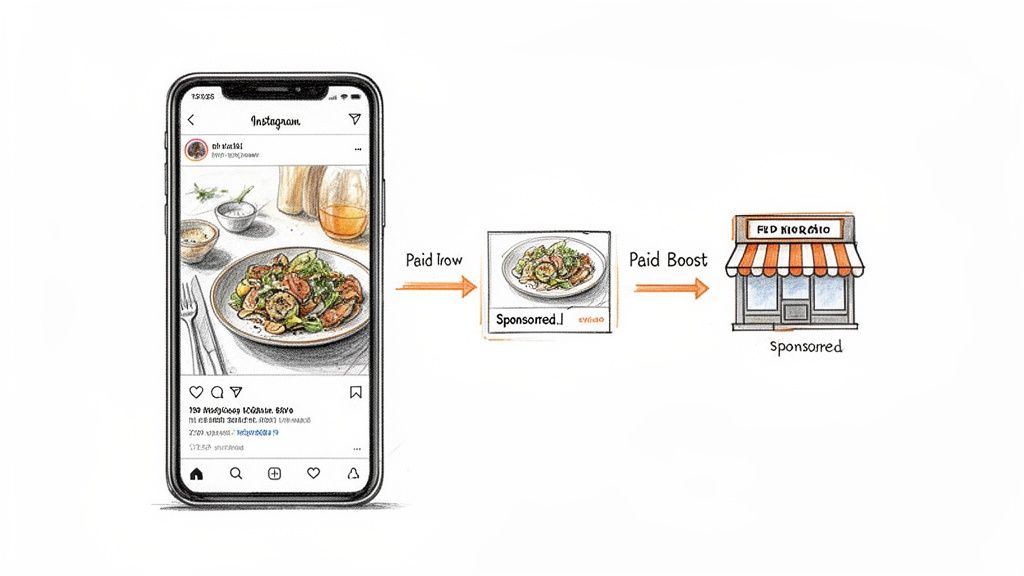
Let's be honest, people are tired of polished, corporate ads. They scroll right past them. That's why the smartest restaurants are flipping the script. Instead of creating their own ads, they’re boosting content made by real customers and local food influencers.
Think about it. Which is more powerful? A slick brand video telling you how delicious a burger is, or a post from a local food blogger you follow, genuinely raving about it? The second one, every time. It’s no longer about the brand talking at people; it’s about a customer sharing an experience with them. This simple change turns a bland advertisement into something that feels like a personal recommendation from a friend.
Why This Strategy Is So Effective
At its core, this approach works because it leans into authenticity. It’s a specific type of user-generated content, often called influencer-generated content (IGC), that just feels right on social media. We've seen firsthand how this content slots seamlessly into someone's feed, looking less like a disruptive ad and more like a post from a friend. If you want a deeper dive, you can read more about what UGC content is.
There are a few clear reasons this is a winning play:
- It Builds Instant Trust: Content from a real person simply feels more honest than a brand’s own marketing. It’s the social proof that says, "Yes, people actually come here and love it."
- Engagement Goes Through the Roof: We consistently see that organic-style content gets more likes, comments, and shares. It feels personal and relatable, so people are more likely to interact with it.
- It’s Incredibly Cost-Effective: Working with nano or micro-influencers is often far cheaper than hiring a crew for a professional photoshoot or video shoot. You get fantastic creative without the huge price tag.
The real magic happens when you combine the trust of a word-of-mouth recommendation with the powerful, targeted reach of paid ads. You genuinely get the best of both worlds.
This isn’t just a niche tactic anymore; it’s becoming the standard. Here in the UK restaurant scene, using influencer content for paid ads is exploding. In fact, 89% of UK brands are already using Instagram for their influencer campaigns, turning authentic posts into high-performing ads that drive real footfall.
Traditional Ads vs Influencer-Led Ad Performance
When you put the numbers side-by-side, the difference between old-school advertising and this new influencer-led approach becomes impossible to ignore. Traditional ads often hit a wall with ad fatigue and dismal click-through rates, while content from influencers excels at grabbing genuine attention.
This table breaks down how the two typically stack up.
| Metric | Traditional Restaurant Ads | Influencer Content as Paid Creative |
|---|---|---|
| Audience Trust | Low | High |
| Engagement Rate | Low to Moderate | High to Very High |
| Cost Per Acquisition (CPA) | Moderate to High | Low to Moderate |
| Content Authenticity | Appears Staged | Feels Genuine & Relatable |
The data paints a very clear picture. By tapping into the raw authenticity of influencer content, restaurants can stretch their advertising budget further, achieve better results, and build a more connected and loyal customer base along the way.
Finding Food Influencers Who Actually Drive Footfall
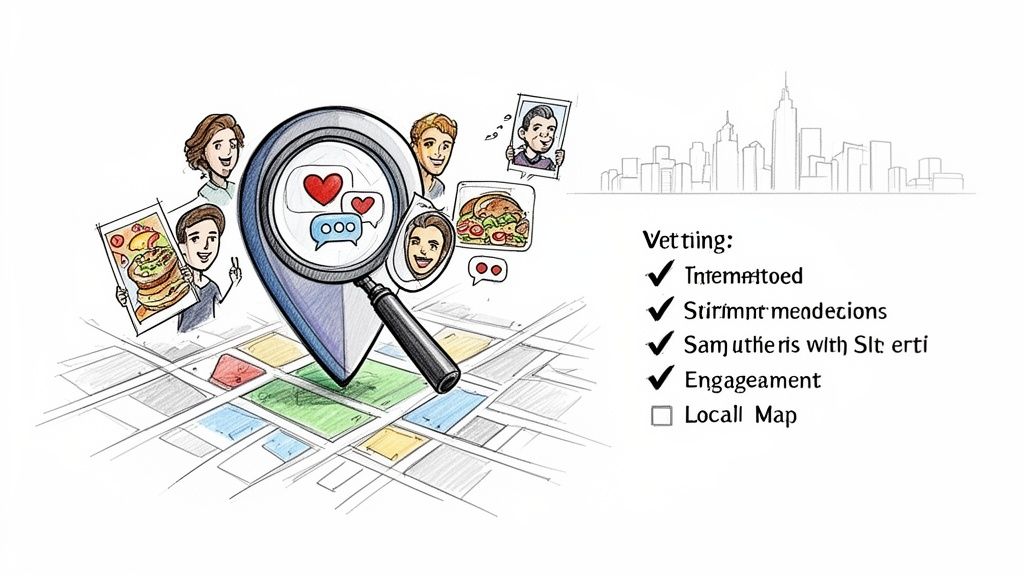
When you start looking for creators, your first instinct might be to go for big numbers. Forget it. That's the biggest mistake I see restaurants make. An influencer with 500,000 followers scattered across the country does you no good. What you need are bums on seats, not just empty impressions.
A creator with just 5,000 followers who all live within your delivery radius is infinitely more valuable. This is the world of nano (1k-10k followers) and micro-influencers (10k-100k), and for local restaurants, they are your secret weapon. Their followers genuinely trust them because they’re real members of the community, not distant celebrities. That authenticity is exactly what makes their content so powerful when you turn it into an ad.
Where to Find Your Ideal Creators
So, where are these local gems hiding? It takes a bit of savvy searching, but it’s far from impossible. Think like a local.
Your first stop should be Instagram's location tags. Look up your own restaurant, then branch out to nearby landmarks, your neighbourhood, and your city. You’ll quickly find people who are already posting great-looking content from right on your doorstep. These are your easiest wins.
From there, get smart with hashtags. You need to combine food and location terms to find the right people. Try a mix of:
- Broad: #[YourCity]Food, #[YourCity]Eats, #[YourNeighbourhood]Restaurants
- Niche: #[YourCity]Vegan, #[YourCity]Brunch, #[YourCity]Cocktails
- Hyper-local: #[StreetName]Eats, #[MarketName]Food
This method helps you filter out the noise and find creators who are already immersed in your specific culinary scene. If you want to go even further with these techniques, our guide on how to find local food influencers in your city has more advanced strategies.
Vetting Influencers Beyond the Follower Count
Finding a few potential creators is just the start. Now you have to vet them properly, because fake followers and poor engagement are everywhere. You need to look past the surface-level numbers.
Start with their engagement rate. A huge follower count is meaningless if no one is actually paying attention. You can work it out with a simple formula: (Total Likes + Total Comments) / Follower Count * 100. For a micro-influencer, you should be looking for a healthy rate, typically above 3-5%.
A creator with 8,000 followers and 400 likes per post (5% engagement) is often more valuable than one with 80,000 followers and 800 likes per post (1% engagement). The smaller creator’s audience is more attentive and loyal.
Next, read the comments. Are they just a stream of fire emojis and "Great shot!" from other bots and influencers? Or are people asking real questions like, "What was your favourite dish?" or tagging friends saying, "We have to try this!"? Genuine conversation is a sign of a real, engaged community.
Finally, take a hard look at their actual content.
- Does their aesthetic match your brand’s? If you’re a fine-dining spot, a creator who focuses on messy street food probably isn’t the right fit.
- Is the photo and video quality high enough? Remember, the plan is to use this in your paid ads. It needs to look professional, be well-lit, and make your food look incredible.
- Do they disclose paid partnerships? A creator who isn't using #ad or #sponsored is a major red flag. It’s against advertising standards and shows they’re willing to mislead their audience, and by extension, yours.
Putting in this work upfront ensures you’re partnering with people who create stunning content and, more importantly, have the trust of an audience that’s ready to become your next regular customer.
Crafting Collaborations for Ad-Ready Content
A brilliant influencer ad campaign doesn't start in Meta Ads Manager. It starts long before that, with the collaboration itself. The raw materials (the photos and videos you get from a creator) will ultimately set the creative ceiling for your ads. To make sure you’re getting versatile, high-quality content that’s ready for paid advertising, you need to be intentional about how you structure these partnerships.
This means getting away from the casual, "Just post about us!" approach. You need a clear plan that guides the creator without killing the authentic spark that made you want to work with them in the first place. The goal is to set clear expectations from day one, ensuring the assets you receive are not just beautiful, but technically perfect for your ad campaigns.
Creating the Perfect Creative Brief
Think of a creative brief as your best friend in this process. It’s not about dictating every single shot, but about providing a clear framework. A good brief is a delicate balance between giving direction and showing trust, making sure you get what you need while letting the influencer work their magic.
A great brief should be concise and visual, not some ten-page document that no one will read. Here’s what it absolutely has to cover:
- Content Formats: Get specific. Do you need a 9:16 vertical video for Reels and Stories? Or maybe some high-resolution landscape images for a carousel ad? Listing the exact formats you need prevents a lot of headaches later on.
- Key Messaging Points: What’s the one thing you really want people to remember? Is it your new bottomless brunch, the dog-friendly patio, or that two-for-one weekday special? Give them the core message, but let them say it in their own voice.
- Visual Mood & Vibe: It helps to include a few examples of a style you like, perhaps from your own feed or other creators you admire. Using words like "bright and airy," "cosy and intimate," or "vibrant and energetic" really helps set the scene.
- A "Do Not" List: This is often more important than the "to-do" list. Simple things like, "Please avoid showing empty tables in the background," or "Please don’t use filters that change the colour of the food," can make all the difference.
Your brief acts like the guardrails on a bowling lane. It keeps the ball heading in the right direction without forcing a perfect strike every time. It’s a crucial step we explore in much more detail in our complete guide on how to run a restaurant influencer campaign from start to finish.
The best collaborations feel like a partnership, not a transaction. A clear brief is an act of respect for the creator’s time and talent, and it’s your first step toward getting content that actually converts.
For UK restaurants, getting this right is especially important. You need a constant flow of fresh, engaging visuals to stay top-of-mind. After all, recent data shows that 73% of diners will ditch a restaurant for a competitor if their online presence feels unresponsive or dated. Turning authentic influencer content into polished ad creative is one of the best ways to keep your brand looking fresh and relevant.
Securing Content Usage Rights
Right, let’s talk about the most critical, non-negotiable part of this whole thing. Getting permission to use an influencer’s content isn't just a courtesy; it's a legal requirement. Using their photos or videos in paid advertising without explicit, written consent is copyright infringement, and it can land you in serious legal and financial hot water.
Don't worry, your agreement doesn't need to be some complicated legal document from a high-priced solicitor. For most collaborations, especially with micro-influencers, a simple, clear contract or even a detailed email agreement is perfectly fine.
Here’s a quick checklist for what your usage rights agreement should include:
- Scope of Use: State clearly that you plan to use the content for paid advertising (or "paid media") on platforms like Meta (Instagram and Facebook) and TikTok.
- Duration: How long can you use the content? A standard term is often 12 months, but this is always negotiable.
- Exclusivity: Do you need them to avoid working with a direct competitor for a set period? This is less common for smaller projects but can be important for bigger campaigns.
- Modification Rights: This one is vital. Are you allowed to edit the content? That means adding text overlays, your logo, different music, or cropping it to fit various ad formats. This right is what lets you turn a single post into a dozen different ad variations.
Getting these details sorted in writing before a single photo is taken protects both you and the creator. It transforms a one-off Instagram post into a lasting marketing asset you can use again and again, massively boosting the return on your investment.
Turning Influencer Posts into High-Converting Ads
You’ve found the right creators and have a folder full of fresh content. Fantastic. Now for the fun part: turning those authentic posts into a proper engine for driving bookings and getting more people through the door. This is where we shift from sourcing content to making it work hard for your budget, turning raw assets into polished, high-performance ads.
Don't fall into the trap of making influencer content look like a slick corporate ad. The whole point is to keep that genuine, user-generated feel. We’re just adding a direct-response layer, clear calls-to-action (CTAs) and compelling hooks, without stripping away the authenticity that made it effective in the first place.
From Organic Post to Polished Ad
Think of the original post as your raw material. A single great video or a few quality photos can be sliced, diced, and remixed into dozens of ad creatives for different platforms and goals. Often, it's the smallest, most strategic edits that make the biggest impact and nudge a viewer to take action.
A few simple tweaks can work wonders:
- Add Punchy Text Overlays: Use the native text tools on Meta or TikTok to call out what matters in the first three seconds. Think "New Brunch Spot in Shoreditch" or "£10 Pizza Deal." It’s direct and immediately grabs attention.
- Include Unmistakable CTAs: Never assume people know what to do next. Add a final screen or a simple text overlay saying "Book a Table," "Order Now," or "Get Directions." Be direct.
- Write Captions That Engage: Your ad caption is valuable space. Use it to repeat the offer, tag the influencer (if you have permission), and maybe ask a question to get the comments flowing.
The best influencer ads I see feel like they belong in the user's feed, but they have a crystal-clear commercial goal. It’s a delicate balance, but getting it right is what drives conversions.
The journey from a basic influencer post to an ad campaign that actually performs follows a pretty straightforward path.
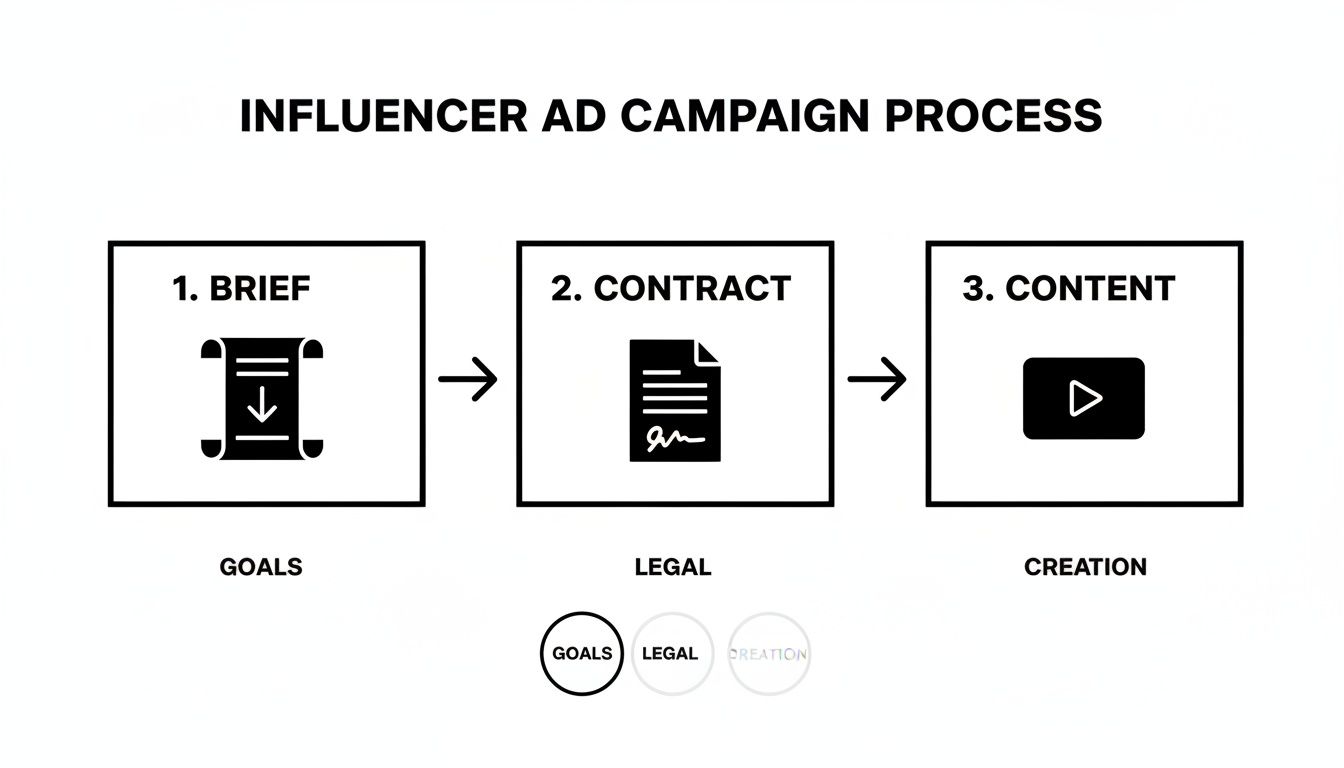
When you follow this flow, you ensure that every piece of content, from the initial brief to the final video, is created with ad performance baked in from the start.
Building a Diverse Ad Creative Library
One of the biggest mistakes I see restaurants make is running a single ad with one piece of influencer content and calling it a day. The real power comes from building a whole library of ad creatives from just a couple of collaborations. To really get this right, you have to understand the nuts and bolts of making UGC that converts into real business.
Let’s look at how you can squeeze maximum value out of what you’ve got.
Scenario 1: You have a single influencer video An influencer gives you a 30-second vertical video of their dinner experience. You could easily turn this into:
- A 15-second Reel ad focusing on the food close-ups, with a "Book Now" button.
- A set of three 10-second Story ads, each one highlighting a different dish.
- A silent, looping video for a feed ad that relies entirely on text overlays to tell the story.
Scenario 2: You have photos from a few different creators You’ve worked with three influencers who all took fantastic photos of your weekend brunch.
- Build a Meta Carousel ad featuring the best shot from each, creating a narrative of a fun group outing.
- Stitch the photos into a fast-paced slideshow video and set it to a trending sound on TikTok or Reels.
The ability of this content to drive action is huge. A recent Statista survey found that four out of 10 UK respondents (40%) said social media directly inspired them to try a specific restaurant or dish on holiday. This just shows the massive potential of using UGC in your ads.
Platform-Specific Creative Techniques
What kills it on Instagram Reels might completely flop on TikTok. You absolutely have to tailor your creative to what users expect on each platform if you want to get the best performance for your money.
| Platform | Best Creative Approach | Key Tactic |
|---|---|---|
| Instagram Reels/Stories | Fast-paced, visually appealing vertical video. | Lean into interactive stickers like polls and quizzes to boost engagement. Use native text overlays so it feels like it belongs. |
| TikTok | Raw, unpolished, trend-led content. | Jump on trending sounds and editing styles immediately. The less it looks like a traditional ad, the better it will do. |
| Facebook Feed | Slightly longer, more story-driven videos or carousels. | Tell a story. A carousel can walk someone through an appetiser, main, and dessert. A video could feature a short testimonial. |
By building out this versatile library and tweaking your content for each platform, you’re not just running a one-off campaign. You're creating a scalable, repeatable system for how your restaurant uses influencer content as paid ad creative. It's the key to making sure every pound you spend delivers a real return.
Measuring Success and Scaling Your Ad Strategy
So, you’ve launched your influencer content as paid ads. That’s a great start, but it's only half the battle. The real magic happens when you can prove that your ad spend is putting bums on seats and driving revenue.
Without a solid tracking system in place, you’re just guessing. You’re throwing money at the wall, unable to tell which campaigns are filling your tables and which are just an expensive hobby. Let’s fix that and build a system that actually grows your business.
How to Actually Know if Your Ads Are Working
The goal here is to connect the dots between a specific ad and a customer's action. You need to be able to confidently answer the question, "Did that Reel from @MancEats actually lead to table bookings last week?" To do this, you’ll need a couple of essential tools in your belt.
First up, unique promo codes. These are your best friend for tracking customers who come in person. Simply give each influencer their own distinct code, like "CHLOE15" or "SAMBRUNCH". When a customer uses that code at the till, you have a direct, undeniable link between that creator and a paying customer.
Next, you need custom UTM links for everything happening online. A UTM is just a small bit of code you add to a URL that tells your analytics where a click came from. By creating unique UTM links for each ad campaign, you can track every click that leads to your online booking page or delivery platform.
Putting these two together gives you a complete picture:
- Promo Codes: Track your offline conversions and foot traffic.
- UTM Links: Track your online actions, like bookings and orders.
Don’t get distracted by vanity metrics like likes and shares. Your focus should be on what actually moves the needle for your restaurant: revenue, bookings, and new customers. The only numbers that truly matter are the ones that impact your bottom line.
Keeping an Eye on Performance
Once your tracking is live, you need a single place to see how everything is performing. Forget getting lost in a dozen different spreadsheets. A simple dashboard, whether you build it in Google Looker Studio or just a well-organised spreadsheet, will be your mission control.
This dashboard should pull in data from your Meta Ads Manager, your booking system, and your point-of-sale (POS) system. This gives you a clear, at-a-glance view of which campaigns are winning.
Here are the key metrics you should be watching:
- Ad Spend: How much you're investing in each influencer's campaign.
- Return on Ad Spend (ROAS): The total revenue you’re making for every pound you spend.
- Cost Per Acquisition (CPA): How much it costs you to get a new booking or customer.
- Code Redemptions: The number of times each influencer's unique promo code has been used.
With this data at your fingertips, you’ll start seeing patterns emerge. Maybe one creator’s videos are brilliant for driving lots of low-cost table bookings, while another's food photos are better for boosting takeaway orders. If you want to dive even deeper, our guide on how to measure influencer marketing ROI breaks down more advanced ways to track your results.
Double Down on What Works, Fix What Doesn’t
This data-driven approach is your roadmap for growth. The strategy is straightforward: find what’s working and do more of it. Identify your top-performing creators, content formats, and offers, and reinvest your budget there.
For instance, if you discover that vertical videos showing off your cocktails are bringing in a 5x ROAS, it’s a no-brainer. Commission more of that exact type of content from that influencer or others like them.
On the flip side, if a campaign barely broke even, you can now figure out why. Was it the ad creative itself? Was the offer not compelling enough? Or was the audience targeting slightly off?
This cycle of measuring, analysing, and optimising is what turns your marketing from an unpredictable expense into a reliable revenue driver. You’re no longer just hoping for the best; you're making smart, informed decisions that will consistently grow your restaurant.
Common Questions on Using Influencer Content for Ads
Once you start thinking about turning influencer posts into paid ads, a handful of practical questions always pop up. It’s completely normal. From sorting out budgets to navigating the legal side of things, getting these details right from the start is what separates a successful campaign from a stressful one.
Let's walk through the most common questions I hear from restaurant owners, so you can move forward with confidence and turn all that great creator content into a genuine source of new customers.
How Much Should I Pay an Influencer for Ad Content Rights?
This is always the first question, and the honest answer is: it really depends. The fee is a moving target based on the influencer’s audience size, how long and where you want to use the content, and whether you're asking for exclusivity.
For nano and micro-influencers, starting with a complimentary meal in exchange for the content itself is a well-trodden path. But the moment you want to use that photo or video in a paid ad, the game changes. You need to pay a flat fee for the usage rights because you’re getting direct commercial value from their work.
In our experience, a fair fee for a local micro-influencer can be anywhere from £100 to £500 per asset. Think of an asset as one video or a small gallery of photos. The most important thing is to have this conversation upfront and get it all down in a simple agreement. Make sure it specifically mentions rights for "paid media" or "advertising." This simple step prevents any misunderstandings and keeps your relationship with the creator strong.
Why Does Influencer Content Outperform Brand-Created Ads?
It all comes down to two powerful words: authenticity and social proof. When someone is scrolling through Instagram, a polished, professional ad from a brand screams "I'm trying to sell you something." We’ve all developed ‘ad blindness’ and have become experts at tuning those out.
Content from an influencer, on the other hand, looks and feels like a real recommendation from someone they trust. It slips past our built-in ad filters. Because micro-influencers have spent years building genuine trust with their followers, that trust naturally extends to your restaurant when their content shows up as a sponsored post.
An ad featuring a local foodie feels like a friend leaning in and saying, "You have to try this place." That's a recommendation you can't buy, and it's infinitely more persuasive than your brand simply saying, "We have the best food." This is exactly why these ads see higher engagement and a better return on your ad spend.
Can I Use Influencer Content Without Asking for Permission?
Let me be crystal clear on this: absolutely not. This is a red line you must never cross. Using an influencer’s photos or videos in your marketing, especially for paid ads, without their explicit, written permission is copyright infringement.
Repurposing content without an agreement is the fastest way to find yourself in legal trouble. It can permanently damage your restaurant's reputation and ruin relationships with the local creative community. Before you even think about downloading or reposting their work, you must have a formal agreement that details how, where, and for how long you can use their content. Consider this a non-negotiable part of running an ethical and protected business.
How Can I Track In-Person Visits from a Social Media Ad?
Tracking someone who saw an ad online and then walked into your restaurant is definitely trickier than tracking a website click, but it's far from impossible. You just need a simple system to connect the digital world with the physical one.
Here are a few methods that we’ve seen work time and time again:
- Unique Promo Codes: This is the cleanest way. Give each influencer or campaign a unique discount code (e.g., "SOPHIE20"). When a customer uses it to pay, you know exactly which ad brought them in.
- "Show the Ad" Offers: A simple call to action like, "Show this post at the bar for a free appetiser," works beautifully. It's easy for customers to do and simple for your team to tally.
- Booking System Notes: If you use an online reservation system, add an optional field asking, "How did you hear about us?" You can even make it a dropdown menu with options like "Instagram," "TikTok," or the influencer's name.
By using one or a combination of these tactics, you can start building a really clear picture of how your campaigns are directly driving footfall and putting money in the till.
Ready to stop the manual DMs and spreadsheets? Sup is your done-with-you influencer growth engine, helping you find verified creators, launch campaigns, and track ROI in real-time. Book a demo and see how Sup can scale your restaurant's influencer marketing today.
More on content & ugc
See how many creators post about you and your competitors
Type in your brand's Instagram handle and we count the creators who post about you and about your five closest competitors. It takes about a minute and it is free. Or request a demo and we will show you the creators in your niche and walk you through the dashboard.
 Book a call