24 November 2026
Instagram Takeovers: How to Hand Your Account to a Creator
An Instagram takeover is when a creator hosts your brand's Instagram account or Stories for an agreed period. To run one well, agree the content and boundaries first, then choose whether your team publishes the creator's material or grants temporary access.
What an Instagram Takeover Is and When to Use One
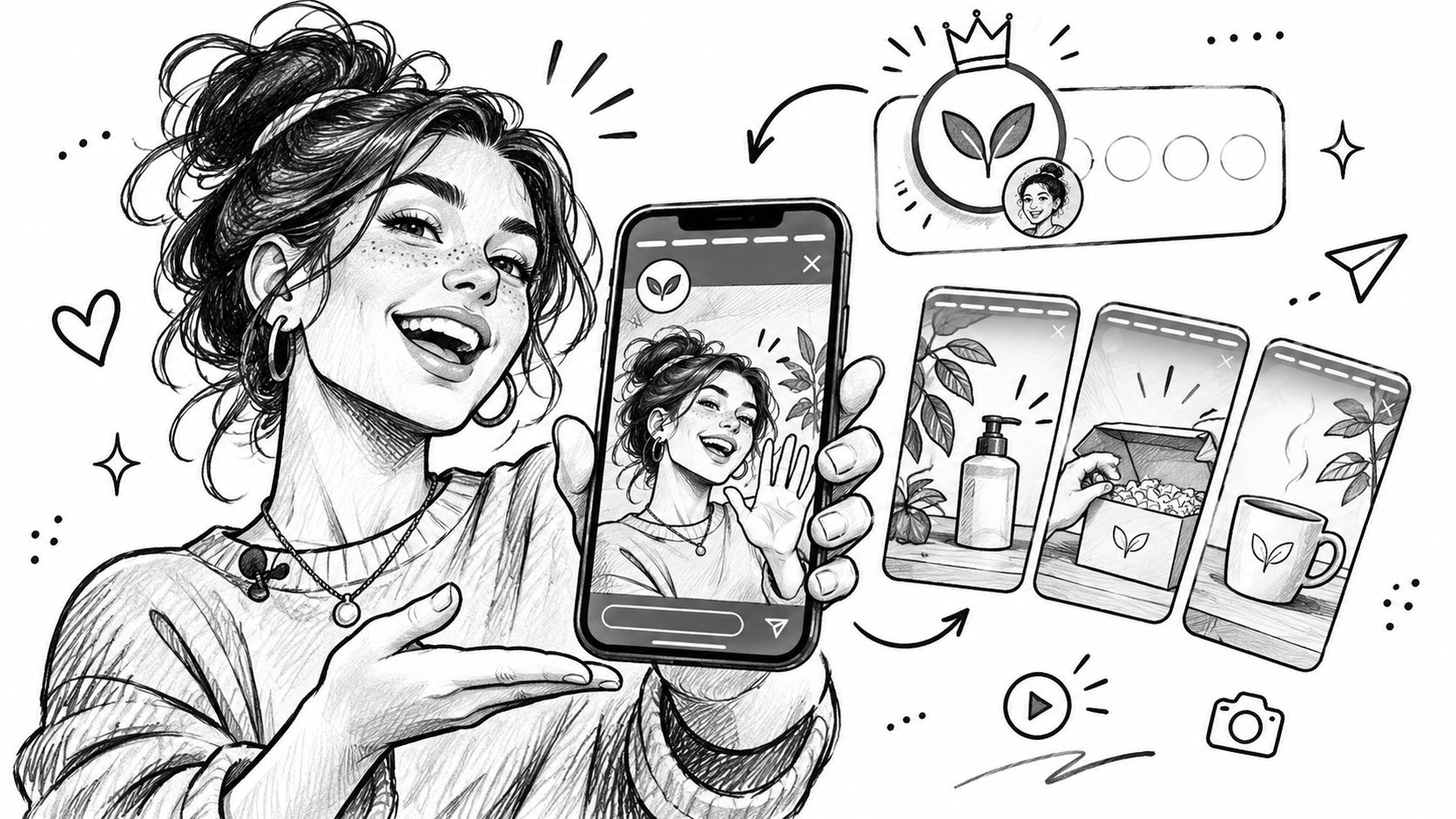
Think of a takeover as guest hosting, not handing over your marketing strategy. The creator brings their perspective. Your team sets the purpose, approves the scope, and stays responsible for the brand account throughout.
Sort the scope before you start discussing content:
- An account takeover can cover agreed feed posts and Stories, giving the creator room to build a broader narrative.
- A Stories takeover keeps the guest appearance inside Stories, so your planned feed content stays untouched.
The format should answer a real audience need. A product demonstration wants a different brief from a backstage visit or a conversation with your team. Pick something the creator can speak about credibly, rather than asking them to fill airtime.
Buy a useful perspective, not just a different face on your account.
Takeover Versus a Post on the Creator's Account
A takeover suits campaigns built to pull people into your brand's world. It gives your existing followers a fresh voice and gives the creator's followers a reason to visit your profile.
A post on the creator's own account works differently. It puts the message where their audience already lives, which is the smarter route when reaching their followers matters more than generating activity around your profile. Here is how the two options compare side by side.
| Question | Takeover on the brand account | Post on the creator's account |
|---|---|---|
| Where does the content appear? | On your account | On their account |
| Who sees it? | Your followers and visiting viewers | Their existing audience |
| What does the brand keep? | Profile activity, plus anything covered by agreed reuse rights | Exposure, plus anything covered by agreed reuse rights |
| What is it best at? | Building engagement around your profile | Extending reach through the creator's audience |
The short version: choose a takeover when you want traffic and engagement pointed at your profile. Choose a creator post when borrowed reach is the whole point. Some campaigns do both, but only if the brief is written for each placement separately.
Reuse rights are not automatic in either case. Agree permission upfront before treating takeover content as future campaign material.
Set your primary objective before booking anyone. Decide whether success means Story reach, profile visits, or follows, then build the brief around that single outcome. If you are weighing up a post on the creator's own account instead, the same rule applies: one goal, one brief, one way to measure it.

Start with audience fit, ahead of follower count. This person is borrowing your brand credibility for a day, so their viewers should look like people who might genuinely buy, book or visit.
Check three things before anyone makes the shortlist.
- Their audience sits inside your market, by city, age and the interests showing up on recent posts.
- Comment threads sound like real buyers, with questions about price, stock, opening hours or how to visit.
- They have posted about this category before, so the day feels natural rather than like a one-off script.
Read the Voice Before You Offer Access
Open the last two weeks of Stories and feed posts. Look at pace, jokes, sentence length and how they talk when a product enters the frame.
A dry, careful voice can suit a clinic. Louder humour can suit a restaurant. If that tone would grate on your account, assume it will grate harder when the account is theirs for a day.
A creator who has never hosted a takeover needs a tighter brief and a short rehearsal. Someone who has done one still needs the same rules, with less coaching around timing and handovers.
Reach is a weak proxy when the goal is reservations, footfall or promo-code redemptions.
Run an audience quality check before fees enter the conversation. A spike in suspicious followers means the audience you think you are borrowing may be thinner than it looks. That gap lands on your profile too.
Creator Checks Before a Takeover
Before the call, turn gut feel into evidence. Ask each shortlisted creator for proof in the same areas, then listen for vague answers.
| Check | What to ask for | Red flag |
|---|---|---|
| Story craft | Two previous Story examples | Only polished feed posts, no Stories |
| Difficult viewers | How they handle negative comments | They delete criticism or argue in public |
| Public credit | Comfort with being named in your announcement | They want the day kept anonymous |
A clear answer usually sounds specific: examples, dates, what went wrong, what they would repeat. A weak answer drifts into reach and vague claims about audience taste.
When choosing who should take over your account, use a structured vetting process similar to hiring a senior social lead.
For the first call, use these questions to ask influencers before you work together so you test fit, judgement and working style, with dates kept in their proper place.
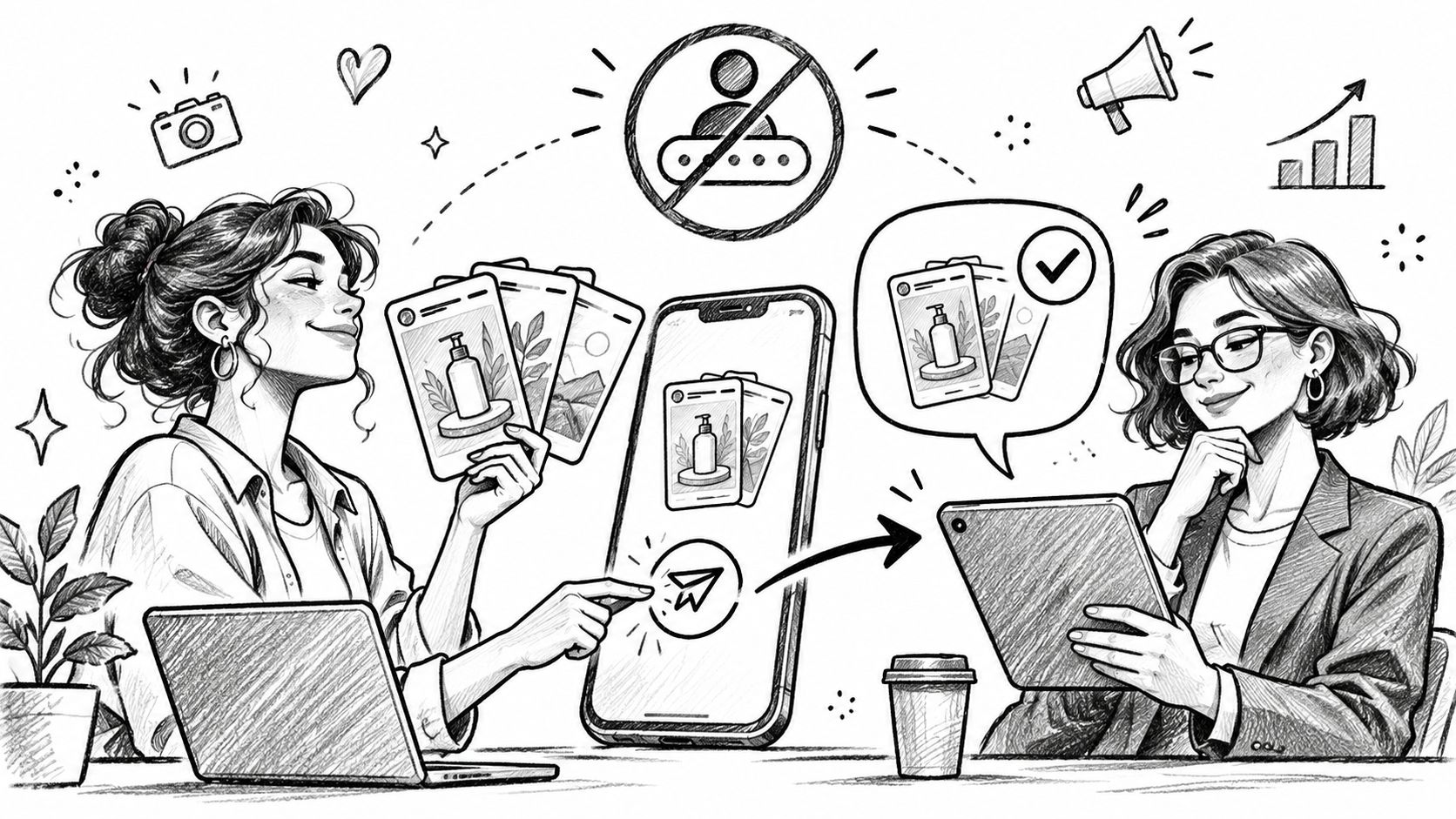
Most of the risk in an Instagram takeover sits in how content reaches the account. Two routes work in practice, and the choice should be settled before the day starts.
Send Content for the Brand to Publish
The creator records the Stories and posts, then sends the files to your team. Your team publishes them from the brand account.
The password stays with the people who already hold it. Nothing goes live until someone on your side posts it, so approval remains with the brand.
The day can still sound like the creator. Ask for raw clips, unpolished photos and captions in their voice, rather than a finished design deck.
Give Temporary Access for a Set Window
Here the creator publishes directly inside an agreed window. There is no pause between draft and live post, so a wrong Story can reach followers before you see it.
Instagram states in its help centre that you can add and switch between up to five accounts, which helps the creator check which profile is open. That does not replace keeping the brand password private.
Instagram states in its help centre that two-factor authentication adds an extra security step at login. Do not switch it off to make the takeover easier.
Never send a password by message. Never share a login the brand also uses for email, ads or the shop. If the creator resets the password, the password you know stops working, and recovery depends on the email or phone already saved on the account.
Two Safe Routes for Running a Takeover
Pick the route that matches how much checking the brief needs.
| Route | How it works | Main risk | Best for |
|---|---|---|---|
| Send and approve | Creator sends files. Your team posts them. | Slower publishing | Briefs where every item must be checked |
| Temporary access | Creator posts inside a set window | Less control once logged in | A short, rehearsed day with someone watching |
The safer default is send and approve when the brand cannot watch every post. Temporary access suits a short, rehearsed window with someone monitoring live.
Failures to Avoid
Watch for these slips on the day:
- The creator posts from a personal account by mistake.
- Stories go live with no approval.
- Nobody at the brand is watching during the window.
Keep the password with the brand. A faster Story is not worth a locked account.
Change the password as soon as the window ends, then confirm your own login still works.
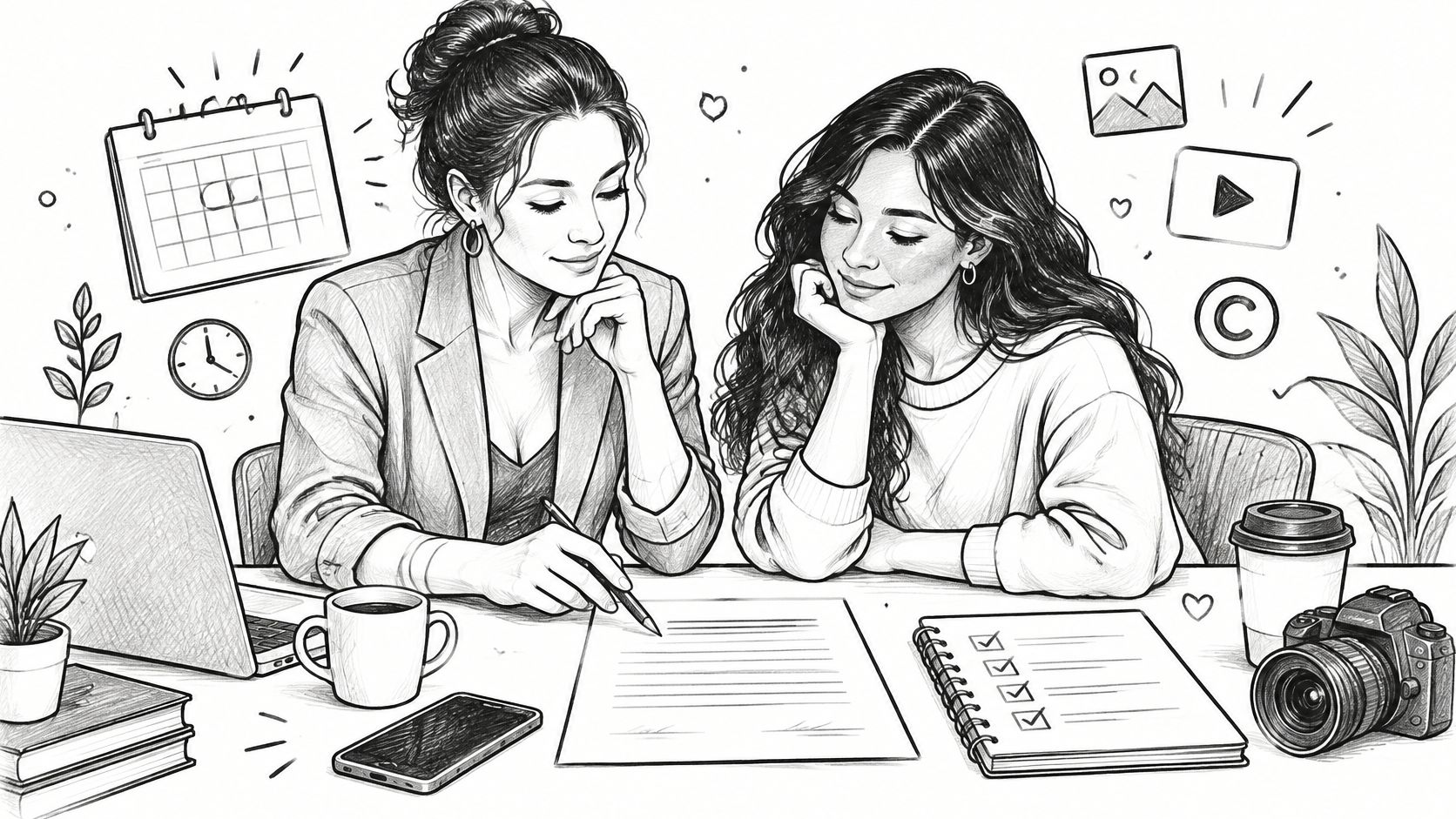
Before you hand over the login, get the Instagram takeover terms down in writing. A plan agreed on a quick call tends to fall apart the moment a Story goes live early, or a commenter asks about a price you have not published yet.
Lock the Day and the Deliverables
Write down the date, the start time, the finish time and the time zone. It sounds obvious, but a creator in another city can easily start while your team is still offline and nobody is there to answer.
Next, state the exact number of Stories, feed posts and Reels. Also say whether a Story still counts if the creator deletes it early. That way, a removed frame cannot turn into an argument about what was delivered.
Before the day starts, list the topics to steer clear of:
- Competitors, and any comparison you have not approved
- Pending legal matters
- Pricing that is not public
- Anything the brand has not signed off
Require sign-off before anything is published, and write down how quickly your team will reply. A slow answer is often what pushes a creator to post without a yes.
If it is not in the agreement, assume it will be argued on the day.
Rights, Disclosure and What Happens if Plans Change
Agree the disclosure wording in advance, then check it on every live item. In the UK, the rule is that ads must be obviously identifiable, as set out by the ASA in its guidance on recognising ads. Check your own case against that guidance before you draft anything.
Be clear about who keeps the content, which usage rights the brand gets, and for how long. Then cover what happens if the creator falls ill or cannot appear. A short clause saves panic later.
Tie payment to posts that have gone live. A file sitting in a chat thread is not a delivered Story.
Use an influencer contract template as the starting point, then get your own legal check. For a sense of what belongs in one, see what belongs in an influencer agreement. Settle approvals and rights early, and you will have a clean route for terminating brand deals without disputes if the day has to stop.
Announce the Instagram takeover on your brand account and the creator's account before it starts, and give each audience a real reason to show up.
Get the announcements ready together, then work through this sequence:
- Your brand introduces the host. Say who is taking over, when it starts and what people will see.
- The creator points followers your way. They should name your account, explain how they are involved and say why it is worth a visit.
- Both accounts repeat the invitation. Give advance notice a few days before takeover day, then send a reminder that morning.
Hand the creator approved product wording, a tone guide and the same schedule your team is working to. Then read both drafts side by side. It is easy for one account to promise a giveaway or a behind the scenes clip that the other never agreed to.
Disclosure belongs in the opening Story, not tucked away in the closing frame.
In the US, the FTC rule is that endorsements must make any material connection clear, as set out in Disclosures 101 for Social Media Influencers. Check your own case against that page before anything goes live. For background on how to disclose paid partnerships, use the regulator page as the source.
Match Promotion to Audience Size
If the creator's following is much larger, lead with their invitation and make your account impossible to miss as the destination. If yours is bigger, use your announcement to explain why the creator is worth following.
A shared post can help as well. Instagram states in its help centre that inviting a collaborator lets a single post appear on both profiles. For how brands apply that format with creators, read Instagram Collab Posts: How Brands Use Them with Creators.
Approve the announcement wording before either account schedules its promotional content.
An Instagram takeover only works if somebody is holding the wheel while it runs. This is live publishing, not a post you can queue and forget. Before the window opens, decide who is doing what: one person watches the account, one approves content, one handles comments. The approver needs proper authority, otherwise drafts stack up and the creator starts guessing what they can post.
Set expectations early:
- Comments answered within an hour where possible.
- Anything about orders, refunds, complaints or legal issues goes straight to the brand team.
- The creator stays on agreed topics. The brand still has final sign-off.
Keep the approval route simple. Draft comes in, brand replies yes or names one change, then it goes live. No side channels.
One approval route, every time. Shortcuts are how unapproved Stories appear.
Keep the brief nearby during the window so decisions do not drift. Note what posted and when, screenshot each item with its disclosure, and save anything worth reusing.
The usual problems are predictable: something slips out unapproved, or a thread turns difficult while nobody is looking. If the first happens, pause the window until the next item is cleared. If the second starts, answer once in public, then move it to direct messages.
If the creator goes quiet, try them once and follow the contract. It should already say who covers missed slots and what happens to payment.

Read the Instagram takeover against a normal week on the brand account. One spike on its own tells you very little.
Pull the numbers for the live window, then be honest about what each one proves and what it misses.
Measures Worth Reading
- Story reach and Story completion from the brand account. Reach confirms the takeover found people. Completion shows they watched through, though it still leaves the sales question open.
- Profile visits during the window. A lift means the audience came closer. Whether they stayed is a separate question.
- Net follows, with unfollows counted in the same period. A healthy gain means behaviour shifted. A noisy gain followed by exits means the crowd was passing through.
- Link taps and promo-code redemptions, matched to the takeover dates. Code use points to money changing hands. Taps alone only signal interest.
Ask the creator to share their Story metrics as well, so performance on both accounts can be read together. Treat theirs as context rather than a substitute for the brand figures.
Reach showed up. Follows showed intent. Code redemptions showed sales.
What to Record for the Next Brief
Capture the date, the format used, the moments that held attention, and the single metric tied to your original goal. That small note is what makes the next brief tighter.
Keep the Stories and clips that drove completion, visits or redemptions, provided the agreement gives the brand reuse rights.
For a wider read on how brands read campaign success metrics, use the same discipline after every creator activity.
When the next takeover is ready to book, start with Sup.
More on channels
See how many creators post about you and your competitors
Type in your brand's Instagram handle and we count the creators who post about you and about your five closest competitors. It takes about a minute and it is free. Or request a demo and we will show you the creators in your niche and walk you through the dashboard.
 Book a call