19 April 2026
Influencer Marketing for Pubs: Your 2026 Playbook
A lot of pubs are in the same position right now. Friday and Saturday still look healthy, but Monday to Wednesday can feel unpredictable, event nights need more promotion than they used to, and a few boosted posts on Instagram rarely translate into enough people through the door to justify the spend.
That’s where Influencer Marketing for Pubs stops being a novelty and starts behaving like a channel. Not a one-off “free meal for a post” deal. A repeatable system for getting the right local people talking about your venue, driving actual visits, and building a bank of content you can reuse long after the first Reel goes live.
Why Your Pub Needs Influencer Marketing in 2026
A quiet pub has a visibility problem before it has a sales problem. If people aren’t seeing your food, your pints, your beer garden, your quiz night, or the energy in the room, they’re making plans somewhere else.
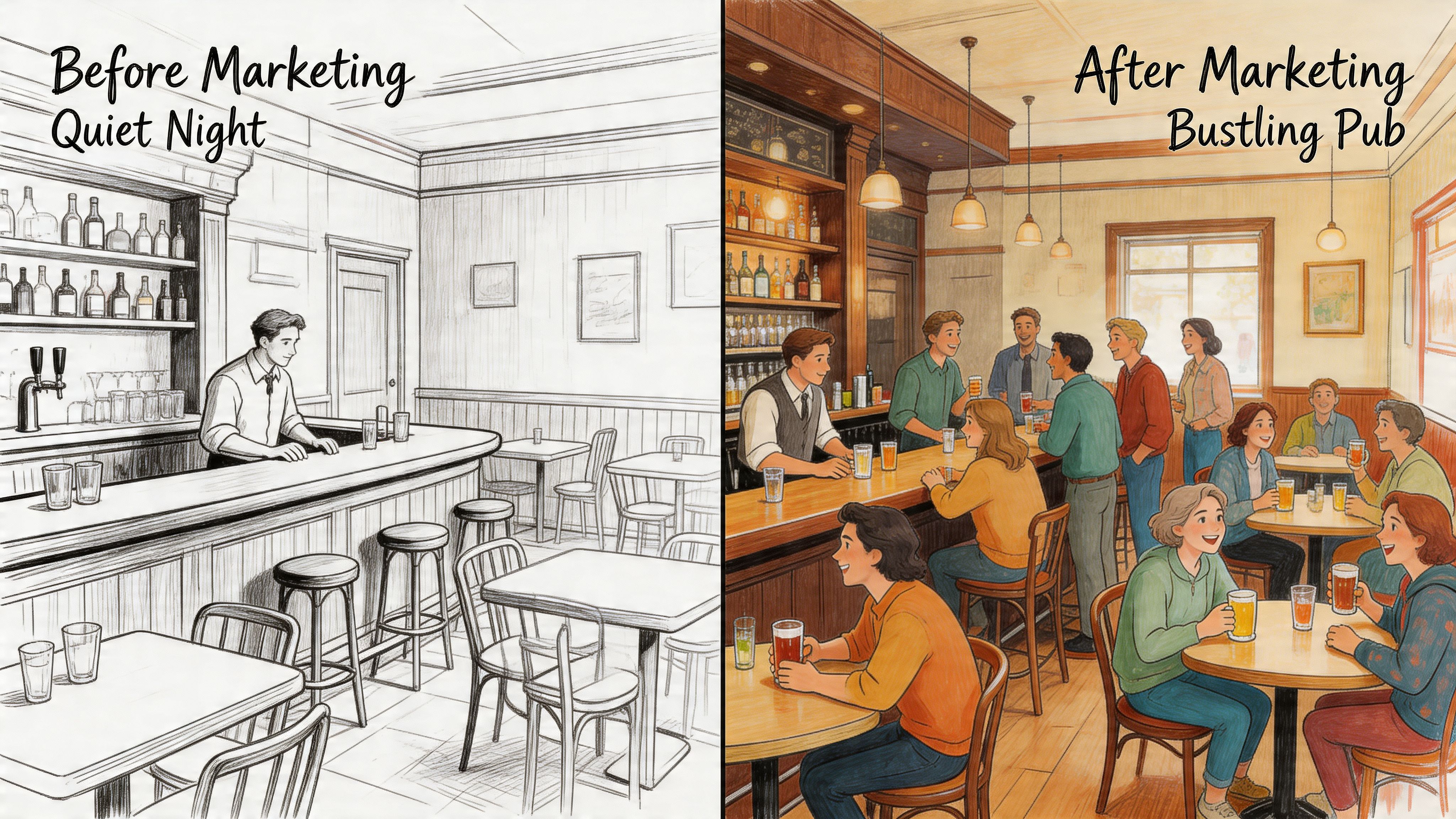
Traditional local advertising still has a place, but pubs need something more immediate and more believable. A local creator posting a packed darts night, a Sunday roast, or a new craft tap launch gives your venue social proof in the exact format people already consume. That matters because restaurant brands working with influencers achieve an average $6.50 in revenue for every $1 spent, and local food creators deliver around 8× ROI on average, alongside a 30% increase in reservations within one week of posting, according to restaurant influencer marketing statistics.
That doesn’t mean every pub should start paying large lifestyle creators to make polished brand films. In practice, the strongest pub campaigns usually come from local micro and nano creators who already post about nights out, neighbourhood food spots, live events, and their town’s social scene. Their audience is smaller, but it’s often the right audience.
Why pubs benefit more than generic hospitality advice suggests
Pubs aren’t restaurants with a different drinks menu. They rely on frequency, local habit, atmosphere, and timing. You’re often trying to fill slower sessions, shift an off-peak hour, push event attendance, or make one featured product visible enough that people mention it to friends.
That’s why creator content works so well at pub level. It captures atmosphere, not just menu items.
If you track wider changes in the pub industry, the pattern is clear. Operators are under pressure to compete on experience, not just price. Local creator partnerships fit that reality because they make the experience visible before someone decides where to go.
A pub rarely loses trade because no one within walking distance exists. It loses trade because no one thought of it first.
What this changes operationally
Influencer marketing is useful when it solves one of three pub problems:
- Slow periods need demand. You need a reason for people to visit on a specific day and time.
- Events need momentum. A quiz, live music slot, seasonal menu launch, or sports fixture needs pre-event buzz.
- Your venue needs fresher creative. Most pubs don’t suffer from lack of stories. They suffer from lack of consistent content.
The pubs that get value from this channel don’t treat creators as media owners only. They treat them as a hybrid of local discovery engine, trust signal, and content producer.
Planning Your First Pub Influencer Campaign
The first mistake most pubs make is starting with the influencer instead of the outcome. If your brief is just “come in and post something”, you’ll get activity without much control over results.
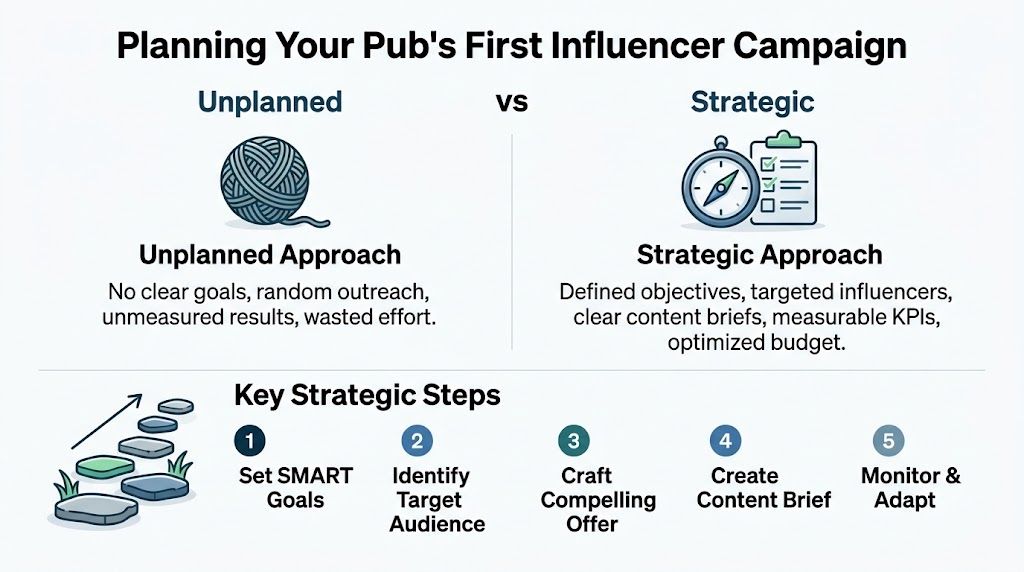
A pub campaign needs a single commercial purpose. Fill Tuesday evenings. Launch a new burger menu. Sell tickets for a whisky tasting. Drive local awareness before summer. If you can’t state the business outcome in one sentence, the campaign isn’t ready.
Start with the operational target
Useful campaign goals for pubs are usually narrow and tied to a time window. Broad awareness is fine later, but for a first campaign it’s too vague.
A better framing looks like this:
- Footfall goal. Increase visits on a specific daypart such as post-work drinks or Sunday lunch.
- Offer goal. Move one menu item, flight, tasting board, or drinks package.
- Event goal. Promote a date-bound experience such as quiz night, live music, screening events, or themed socials.
- Content goal. Build a library of strong local-first photos and short-form video for your own channels.
If you want a practical workflow for structuring that campaign from brief to posting, this step-by-step restaurant influencer campaign guide is worth adapting to pub operations.
Choose the campaign format that fits the goal
Not every pub needs the same creator brief. A gastropub launching a seasonal menu needs a different setup from a city centre venue trying to push late midweek drinks.
| Campaign Type | Primary Goal | Typical Cost | Effort Level |
|---|---|---|---|
| Classic tasting | Showcase food, drinks, ambience | Usually trade or gifting based | Medium |
| Event takeover | Drive attendance for a fixed date | Trade, ticket access, sometimes fee | High |
| Happy hour push | Increase off-peak footfall quickly | Usually low cash cost, offer-led | Medium |
| Menu launch preview | Introduce new dishes or drinks | Trade with tighter briefing | Medium |
| Community night spotlight | Reinforce local identity and repeat attendance | Low to moderate | Medium |
Three campaign models that work well in pubs
The classic tasting
This is the easiest entry point. Invite a small group of local creators in for a hosted visit. Give them a clear tasting path rather than an oversized free-for-all. A starter, featured mains, one signature drink, and a simple brand story are enough.
The strength of this format is control. You can decide what gets shown and make sure the content reflects the parts of the pub you most want customers to notice.
The event takeover
This works when your venue already has something worth filming in motion. Quiz nights, live acoustic sessions, sports screenings, tap takeovers, comedy nights, and seasonal activations all perform better than static dining content because they show atmosphere and crowd energy.
One of the best ways to sharpen this offer is to study formats outside pub marketing. For example, these unforgettable couples game night ideas with a whiskey twist are useful because they show how themed social occasions become content hooks. That thinking translates well to whisky flights, date-night packages, and hosted tasting evenings.
The happy hour push
This is less glamorous and often more commercially useful. You’re asking creators to promote a specific time-bound incentive. That could be after-work drinks, a quieter weekday slot, or a pre-bookable social package.
The key is clarity. One offer. One time window. One call to action.
Practical rule: If the creator can’t explain the offer in one sentence on camera, customers won’t act on it.
Decide the resource level before outreach
Pubs often underestimate the on-site effort involved. Even a small collaboration needs someone to own the booking, host the creator, make sure staff know what’s happening, and collect any tracking links or promo details afterwards.
Before you send a single DM, decide:
- What you’re offering. Drinks, meal, event access, tab limit, or fee.
- What you need in return. Reel, Stories, TikTok, stills, or all of the above.
- When content should go live. Before event date, during the visit, or in the days after.
- How you’ll judge success. Bookings, code use, walk-ins, content quality, or all four.
That prep saves endless confusion later.
Sourcing and Reaching Out to Local Influencers
Most pubs don’t need “influencers” in the broad internet sense. They need people nearby whose audience overlaps with the pub’s real catchment area. In other words, creators whose followers can turn up in person.
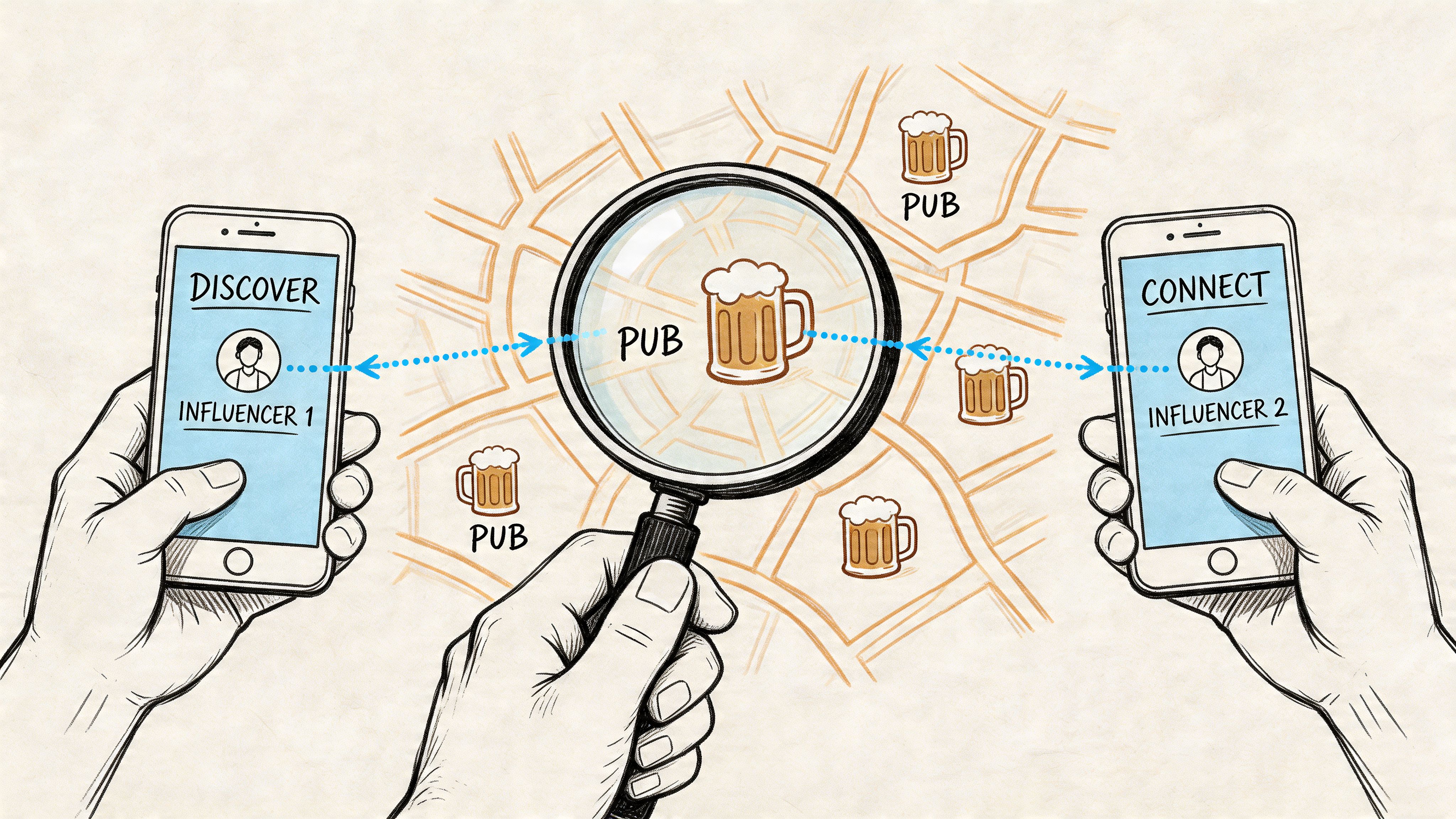
The simplest way to build a shortlist is to stop searching by follower count and start searching by place. Look at Instagram location tags for your town, nearby neighbourhoods, train stations, shopping districts, and competing venues. Search local hashtags tied to food, pubs, nights out, student life, weekend plans, and city guides. Then look at who consistently appears in those pockets.
A more structured version of that process is laid out in this guide to finding local food influencers in your city. The principle is the same for pubs. Local relevance beats broad reach.
Where to find creators who actually move local trade
Good pub creators tend to sit in one of these groups:
- Neighbourhood food and drink accounts. They already review pubs, bars, cafés, and casual dining spots.
- Local lifestyle creators. They post date ideas, friend activities, city guides, and social plans.
- Event-led creators. They focus on things to do this weekend, which suits quizzes, live music, or screenings.
- Specialist niche creators. Craft beer, cocktails, whisky, sport, live music, or dog-friendly places.
The account doesn’t need to look “professional”. It needs to look trusted and local.
Vet for fit before you vet for size
A lot of weak pub collaborations come from choosing someone because the number looks impressive. That’s backwards. Start by checking whether their audience and content style match the pub.
Use a shortlist and review these points manually:
- Location consistency. Are they posting in your area regularly?
- Pub compatibility. Does their content suit casual social venues, not just fine dining or luxury travel?
- On-camera style. Can they explain atmosphere, offers, and experience clearly?
- Audience behaviour. Do comments look local and genuine, or generic and repetitive?
- Brand fit. A family-friendly Sunday roast pub and a late-night city bar shouldn’t brief the same type of creator.
The benchmark worth keeping in mind is that pubs should prioritise creators with engagement rates above 4.5%, compared with a UK average of 3.2%, and personalised automated trade-exchange outreach can generate roughly a 70% response rate from micro-influencers, according to this five-step hospitality influencer strategy.
Red flags that usually lead to disappointing campaigns
You can avoid a lot of wasted tabs by watching for patterns that show up before the first message is sent.
- Follower-heavy, interaction-light accounts. Large audience, weak comments, minimal saves, little story response.
- Content that never names venues clearly. Nice visuals, no useful discovery value.
- Too many unrelated sponsored posts. Their recommendations stop feeling credible.
- No evidence of local pull. The audience may be broad, but not practical for a pub.
- Slow, vague communication. If the DM thread is hard work, the collaboration usually is too.
Later in the process, a simple written agreement matters too. It doesn’t need to be legal theatre. It needs to state deliverables, timing, and what happens if dates change.
A quick operational explainer can help your team align on what good creator discovery looks like before outreach starts:
A DM template that gets replies
The best outreach sounds like a local invitation, not a media buy.
Hi [Name], I run marketing for [Pub Name] in [Area]. We’ve been following your local food and going-out content and think your style would suit the pub well. We’d love to invite you in for [specific experience], in exchange for [clear deliverables]. The focus is [offer, event, or menu item], and we’re looking for content around [timing]. If it’s of interest, I can send over the details and a few date options.
That works because it does four things quickly. It proves you know who they are, makes the experience specific, explains the exchange, and gives them an easy next step.
Don’t ask creators to “pop in sometime and tag us if they like it”. That feels casual, but it creates the exact ambiguity that causes missed posts and weak content.
Build a usable shortlist, not a giant spreadsheet
For one pub, a tight list beats a bloated one. Keep a simple working sheet with:
- Handle and platform
- Local area
- Content niche
- Contact status
- Preferred collaboration type
- Notes on tone and audience fit
You’re not trying to map the whole creator economy. You’re trying to find the next handful of people who can make your pub more visible to nearby customers.
From Briefing to Posting A Smooth Collaboration
Once a creator says yes, the quality of the campaign depends less on social strategy and more on execution. Many pub collaborations often falter at this stage. Not because the creator is poor, but because the visit feels disorganised, staff aren’t informed, or the brief is either too loose or too controlling.
A strong pub brief fits on one page. If it takes six documents and multiple voice notes to explain, the job wasn’t clarified internally first.
What the brief must include
Keep it direct. A useful brief usually covers:
- The campaign focus. One offer, event, launch, or message.
- What to show. Signature serve, food hero, beer garden, live atmosphere, sports setup, or décor.
- Required mentions. Venue handle, booking prompt, event date, any disclosure wording needed.
- Deliverables and timing. What gets posted, on which platform, and by when.
- Content rights. Whether you can repost organically and whether paid usage is allowed.
You don’t need to script the caption line by line. In fact, that often makes the content worse. The creator should sound like themselves. Your job is to make sure they don’t miss the important commercial details.
The staff briefing matters as much as the creator briefing
If the front-of-house team doesn’t know a creator is coming, the whole thing can feel awkward within minutes. Someone asks for the duty manager, the host has no idea why they’re there, the bill is handled clumsily, and the creator starts filming while the team is already irritated.
Avoid that by giving the shift lead a simple internal note:
- Creator name and arrival window
- What’s included in the visit
- Any key dishes or drinks that should be prioritised
- Who signs off the bill
- Whether filming is expected in busy areas
This isn’t about fussing over a guest. It’s about removing friction.
The creator experience should feel like a well-hosted booking, not a backstage production.
Keep the visit structured without making it staged
A pub has atmosphere when it feels natural. That means you don’t need to over-direct every moment.
What does help is giving the creator a suggested flow. Start at the bar. Film the pour or serve. Move to food. Capture the room once it has some energy. Get one clear explanation of the offer or event while the venue is audible but not deafening. Then leave room for them to notice what’s distinctive.
That approach protects authenticity while still giving you usable content.
Sort the awkward bits before the visit
Most operational headaches are predictable. Solve them in advance.
- Billing. Decide exactly what’s comped and what isn’t.
- Timing. Don’t book a filming-heavy collab in the busiest service crunch unless the crowd itself is the reason.
- Space. If there’s a better-lit table or booth, reserve it.
- Music and screens. Think about filming noise and sightlines, especially during sport or live sets.
- Approval expectations. If you need to check factual details before posting, agree that early.
A lot of pubs become too passive after the booking is confirmed. The better approach is light-touch management. Message the day before. Reconfirm arrival time. Remind them of the key angle. Make sure the manager on shift has the details.
After posting, respond properly
The collaboration doesn’t end when the content goes live. Your team should engage with the post, share it, save the assets you’re allowed to reuse, and note what landed in comments and DMs.
If followers keep asking the same question, that’s valuable. It usually tells you what the next brief should make clearer. Parking. Dog-friendly rules. Booking requirement. Roast availability. Quiz entry. Those details move people from interest to action.
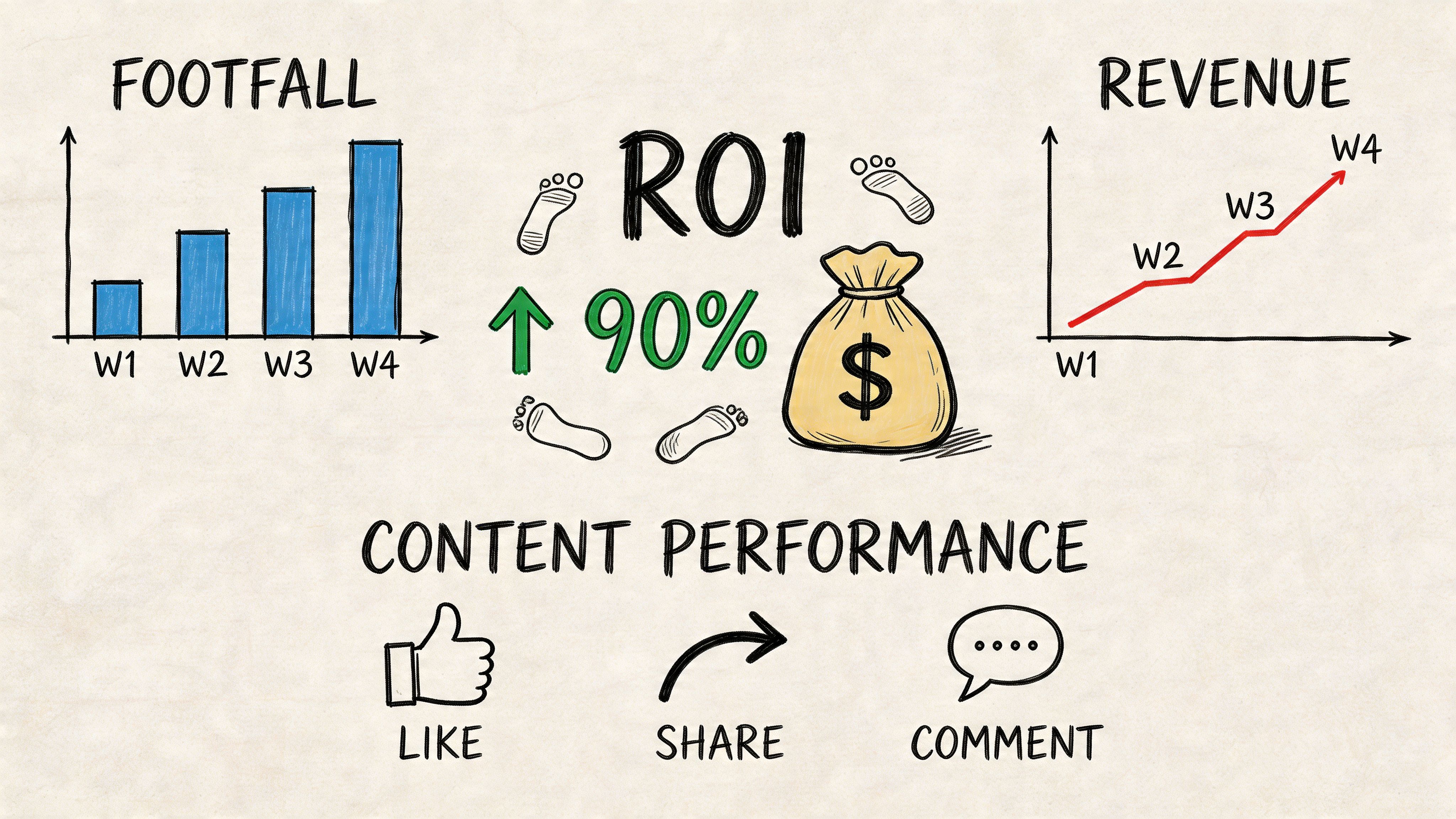
Tracking Footfall Revenue and Content Performance
Pub influencer marketing either matures or stays amateur. Most venues are good at noticing “it felt busier after that post”. Very few are set up to prove what happened, which creator drove it, and whether the spend or gifting was worth repeating.
That’s harder in pubs than in restaurants. Walk-ins are common. Decisions are impulsive. Group orders blur attribution. Some visits don’t involve bookings at all. If you don’t plan for that upfront, you’ll end up guessing.
Why pubs struggle with attribution
One underserved issue in pub marketing is that common restaurant tracking methods don’t always map neatly to pub behaviour. Generic promo codes and booking links miss plenty of real-world purchases, especially where transactions are more impulsive or handled in ways that don’t connect cleanly to social clicks. That gap matters because a write-up on influencer marketing for restaurants and pubs notes that pubs face unique attribution problems around footfall and off-premise sales, and only a minority report confidence in measuring influencer ROI.
The answer isn’t to chase perfect attribution. It’s to build enough signal that repeat decisions become obvious.
Use a layered tracking model
For pubs, one tracking method is rarely enough. Use several simple ones together.
- Unique promo codes. Best for offers, tastings, events, and bookable packages.
- UTM-tagged links. Useful when the creator is sending people to a booking page or event listing.
- Staff ask-at-source checks. Train the team to ask selected customers how they heard about the event or offer.
- Featured item tracking. Watch the sales pace of the exact dish, drink, or package shown in the content.
- Time-window analysis. Compare the promotion period with a normal equivalent trading window.
The strongest argument for proper tracking is that 42% ROI misattribution affects untracked hospitality campaigns, while unique promo codes and UTM links can produce 87% accurate sales tracking, according to this piece on influencer attribution statistics.
What to measure beyond vanity metrics
Views and likes matter only when they connect to a commercial action. A useful pub report should answer five questions:
- Did the content reach local people likely to visit?
- Did anyone click, book, redeem, or mention the offer?
- Did the featured product move faster than usual?
- Did the venue gain reusable content worth posting again?
- Should this creator be rebooked?
If your reporting can’t answer those, you have social activity, not a marketing channel.
Make analogue attribution part of service
For pubs, analogue checks often catch what links miss. During a campaign window, brief bar staff and floor staff to note when guests mention a creator, show a Story at the bar, refer to a featured drink, or ask for an event they saw on TikTok.
This doesn’t need to be formal or intrusive. It just needs to be consistent enough to spot patterns.
A surprising amount of pub attribution sits in conversations at the bar. If nobody records those signals, the channel looks weaker than it is.
Build a content library while you measure
Every creator collaboration should produce two outputs. Immediate demand and reusable creative.
Save approved assets in a simple library organised by venue, season, campaign type, and format. Tag clips by use case such as beer garden, food close-up, event crowd, couple’s night, quiz table, roast, or pint pour. Later, those assets become your own organic posts, paid social creative, event promos, and website updates.
If you want a fuller framework for tying creative output back to commercial outcomes, this guide on influencer marketing ROI and what to measure is a useful reference. Tools can help here too. A platform such as Sup can centralise creator comms, promo codes, UTM links, and the collected UGC in one dashboard, which is practical if you’re managing multiple venues or repeated campaigns.
What good reporting actually looks like
A pub doesn’t need a glossy report deck. It needs a repeatable post-campaign review.
Use a simple scorecard:
| Area | What to check |
|---|---|
| Commercial impact | Redemptions, bookings, walk-in mentions, featured item sales |
| Content quality | Clear venue visibility, strong hooks, reusable shots, accurate messaging |
| Audience fit | Local comments, relevant questions, realistic intent to visit |
| Operational ease | Did the creator arrive on time, follow the brief, and post as agreed |
| Repeat potential | Worth rebooking, gifting only, paid next time, or not a fit |
That review is what turns one good collaboration into a playbook.
Expanding Beyond Single Campaigns to a Growth Engine
One successful collaboration is useful. A steady creator programme is what changes trade over time.
The shift happens when the pub stops treating influencer work as occasional outreach and starts treating it like local media buying with community upside. You identify which neighbourhood creators drive bookings, which ones are best at atmosphere content, which ones suit launches versus recurring nights, and which venues in your group need different creator profiles.
Build a roster, not a revolving door
The strongest pub programmes usually have a mix of creators:
- Reliable repeat partners who already understand the venue
- Fresh local voices to stop content becoming repetitive
- Specialist niche creators for beer, whisky, sport, food, or live events
- Location-specific creators for each site if you run multiple pubs
That roster approach reduces briefing time and improves output because each person is used where they fit best.
Standardise what should be standard
If you manage more than one pub, centralise the parts that don’t need reinvention. Outreach templates, booking workflows, basic agreements, content rights language, and tracking methods should be shared. What stays local is the offer, the creator mix, and the atmosphere.
That’s the difference between scalable creator marketing and endless ad hoc DMs.
Test newer formats carefully
Once the basics work, pubs can explore more interactive formats. One emerging area is TikTok LIVE. A 2025 UK trend note says TikTok LIVE delivers 35% higher conversion rates for UK hospitality and could help pubs lift off-peak revenue by an estimated 28% through live happy hours with nano-influencers, according to this TikTok LIVE discussion.
That doesn’t mean every pub should jump straight into live alcohol promotions. It does mean the channel is shifting from passive viewing towards interactive selling. Pubs that already run event nights, tasting sessions, or ticketed experiences are in a better position than most to test it responsibly.
The long-term win isn’t one viral post. It’s a dependable system that makes local discovery easier every month.
Your Questions Answered
Should pubs pay influencers or offer gifting only
Start with trade or gifting when the creator is local, the brief is straightforward, and the commercial risk is low. That’s often enough for first collaborations. Move to fees when you want guaranteed output from proven creators, stronger usage rights, or more demanding campaign windows.
The core question isn’t “paid or gifted”. It’s whether the expected business value justifies the arrangement.
How do pubs stay compliant when promoting alcohol
Be careful with alcohol marketing rules and disclosure. Creators need to label commercial relationships clearly, and your brief should set that expectation in writing. Keep claims factual, avoid messaging that could appeal inappropriately, and make sure any time-sensitive offer is described accurately.
If you’re unsure, get the wording checked before the campaign goes live. That’s much easier than cleaning up after a complaint.
What if the creator visits and doesn’t post
This is why written confirmation matters. Agree deliverables, deadlines, and the posting window before the visit. If a post is missed, follow up politely, reference the agreed terms, and give a clear deadline to resolve it.
If someone becomes difficult after receiving the experience, don’t turn it into a public argument. Mark the account as unsuitable and tighten your process for the next campaign.
What if we don’t have online bookings
You can still track performance. Use staff prompts, unique offer names, featured item sales, event-specific asks at the bar, and campaign time-window comparisons. Pubs often have messier attribution than restaurants, but that doesn’t make measurement impossible.
How many creators should a pub start with
Start small enough that your team can host the experience properly and review results carefully. A handful of well-matched local creators will teach you far more than a rushed batch of mismatched accounts.
If you want a cleaner way to run this at scale, Sup helps hospitality teams source local creators, manage outreach, organise campaign tracking, and keep attribution in one place so influencer marketing becomes a repeatable part of growth rather than another spreadsheet-heavy side project.
More on industries
See how many creators post about you and your competitors
Type in your brand's Instagram handle and we count the creators who post about you and about your five closest competitors. It takes about a minute and it is free. Or request a demo and we will show you the creators in your niche and walk you through the dashboard.
 Book a call