27 April 2026
Influencer Marketing for Pizza Restaurants and Takeaways
Your Instagram inbox is full of the same message.
“Hi, we’d love to collaborate.”
“Can you offer a free pizza in exchange for a post?”
“I’m a food influencer in your area.”
Most pizza shops handle this the same way. They reply to a few, ignore the rest, comp a couple of meals, then hope something turns into orders. Usually it doesn’t. You get a few stories, maybe a Reel, a small spike in followers, and no clean answer to the only question that matters: did this sell pizza?
That’s the problem. For pizza restaurants and takeaways, influencer marketing often starts as informal barter and stays there. No campaign structure. No tracking. No local audience checks. No way to separate a nice-looking post from a profitable one.
That’s a waste, because the channel is too valuable to run on guesswork. UK restaurant campaigns can drive a 20 to 40% spike in local traffic during promotion periods, according to Mustard’s summary of broader restaurant influencer performance. The same source also notes that the UK pizza delivery market reached £2.9 billion in sales in 2023, and that local micro-influencers often see 3 to 5% engagement rates. That combination matters. Pizza is a high-frequency, visually strong, impulse-friendly category. Social proof moves orders.
The issue isn’t whether influencer marketing can work for pizza takeaways. It’s whether you’re running it like a channel or like a favour.
Why Your Pizza Shop Needs a Real Influencer Strategy
Friday night, a local creator posts your pizza at 6:15 pm. Orders tick up. The problem is what happens after that. By Monday, you still do not know whether the post drove direct website checkouts, app orders, or just a few likes from people outside your delivery area.
That attribution gap is where pizza takeaways lose money.
Pizza is naturally strong on social because the buying window is short. People see the product, get hungry, and can order within minutes. But that only turns into a reliable sales channel if the campaign is built around how takeaway businesses operate. Delivery zones, app commissions, postcode targeting, slow midweek slots, and thin margins all change what a good creator campaign looks like.
Random gifting usually hides those problems instead of solving them.
The old model wastes margin
Free pizza in exchange for a post sounds low-risk. In practice, it creates a pile of small costs that add up fast. Staff spend time replying to DMs. Kitchen teams produce comped orders during service. Creators with weak local reach get the same treatment as creators who can drive sales. Then the post goes live and nobody can tie it back to revenue.
For a takeaway, that is not a branding exercise. It is lost margin with no clean read on performance.
Practical rule: If you cannot show how a creator might drive a tracked order, treat the spend as speculative.
This gets missed early on, especially by operators still sorting out setup, menu pricing, packaging, and launch marketing. Creator activity should be planned much earlier than that. It belongs alongside decisions about your direct ordering setup and your opening offer. If you are still in that phase, this guide to starting a pizza shop is a useful reminder that marketing systems need building before the first campaign, not after a few random comps.
Local influence beats broad reach
UK pizza takeaways do not need national exposure. They need trusted visibility inside a delivery radius.
A creator with a modest following in your town is often more valuable than a much larger account with scattered followers and weak local intent. The test is simple. Can this person put your brand in front of people who can order tonight?
As noted earlier, local restaurant influencer campaigns can lift traffic during promotion windows, and micro-creators often outperform larger accounts on engagement. For pizza operators, the commercial angle is clearer than the vanity angle. A smaller local audience is easier to convert, easier to track, and easier to re-market to later.
What a real strategy changes
Once influencer marketing is treated as a channel, the decisions get sharper:
- The objective is commercial. More direct orders, more bundle redemptions, more first-time customers, more collection orders on weak shifts.
- Creator selection gets filtered by postcode relevance. Follower count matters less than audience location and buying intent.
- Tracking is built in before content goes live. Codes, landing pages, tagged links, and offer windows give you a way to judge performance.
- Rebooking becomes data-led. You keep creators who produce profitable orders and cut the ones who only produce nice content.
That is the difference between handing out free food and building a repeatable sales channel. For pizza shops, that difference shows up quickly in wasted stock, staff time, and missed direct-order revenue.
Designing Your High-ROI Influencer Campaign
Most bad influencer campaigns fail before outreach. The offer is vague, the goal is fuzzy, and the operator hasn’t decided what success looks like. So the creator makes some content, the team reposts it, and everyone moves on.
Pizza brands need tighter planning than that because takeaway economics are tighter than full-service restaurant economics. If margin is under pressure, every comped meal, paid post, and discount code has to earn its place.
Pick one campaign objective
Don’t start with “we need influencers.” Start with the trading problem.
A pizza shop usually has a small number of practical reasons to run a creator campaign:
- Fill slow periods: Good for weekday evenings, lunch, or collection-heavy times.
- Launch something new: A menu item, a meal deal, a side, a vegan option, or a limited-time special.
- Shift channel mix: Push customers from marketplace apps to direct ordering.
- Build local proof: Generate content and social mentions that make new customers trust you faster.
Each objective changes the campaign design. If the target is app orders, the CTA and tracking setup will differ from a dine-in launch or local opening push.
Match the format to the goal
The wrong campaign model causes friction straight away. A tasting event might create good content but weak delivery conversion. A single Story exchange might be fine for UGC, but it won’t tell you much about repeat order potential.
Here’s a practical comparison.
| Campaign Type | Best For | Typical Cost | Key Benefit |
|---|---|---|---|
| Contra deal with free food | Testing small creators and generating initial content | Product only | Low-risk way to assess creator fit |
| Paid single-post collaboration | Promoting a specific offer or menu item | Fixed creator fee plus any product cost | Cleaner deliverables and clearer expectations |
| Multi-post local creator burst | Opening weeks, local awareness, postcode coverage | Multiple creator fees and product costs | Better local saturation across several audiences |
| Tasting event or hosted visit | Brand storytelling, menu launches, UGC collection | Event cost, food, staff time, possible creator fees | Richer content and stronger in-person experience |
| Delivery-focused promo code campaign | Direct online orders and attribution | Creator fee, discount cost, tracking setup | Best fit for takeaway sales measurement |
| Ambassador arrangement | Ongoing awareness, retention, repeat content | Recurring fee or structured monthly value exchange | Stronger familiarity and more reliable output |
Don’t confuse cheap with efficient
A free meal can be the right structure for a nano creator. It can also be the wrong structure for a creator who knows they can move local orders. Treat compensation as part of channel design, not a moral debate.
What matters is whether the arrangement matches the expected outcome.
A few useful rules:
- Use product-only deals for testing, not for your whole strategy.
- Pay for control when the campaign matters, especially if timing, messaging, or usage rights are important.
- Bundle deliverables clearly, so one post doesn’t slip into three rounds of follow-up and missed deadlines.
- Budget for redemption cost, not just creator cost. Discounts and freebies affect margin too.
If you’re trying to optimize local business marketing spend, influencer campaigns should be judged the same way you judge paid social or search. Not by whether the post looked good, but by what it cost to produce each incremental sale.
Build campaigns around behaviour, not content formats
Too many operators plan around “we need three Reels and five Stories.” That’s backwards. Start with the customer behaviour you want, then choose the content.
For example:
- A creator showing the unboxing and delivery arrival is better for takeaway conversion than a polished sit-down review.
- A late-afternoon Story with a code can be stronger for same-night orders than a feed post published at noon.
- A side-by-side menu comparison can work well when introducing a new crust, bundle, or upsell.
The best pizza influencer content doesn’t just look appetising. It gives the customer a reason to order tonight.
Keep the brief narrow
A high-ROI campaign usually has one audience, one offer, one action, and one tracking method. Operators lose money when they try to make a single creator post do everything at once.
If you want direct orders, say so. If you want collection redemptions, say so. If you want a code used by people inside a delivery zone, build the whole campaign around that.
Pizza operators who stay disciplined here usually get better data, cleaner content, and fewer awkward creator conversations.
Finding Authentic Local Food Influencers in the UK
The hardest part isn’t deciding to run a campaign. It’s finding creators who can effectively influence orders inside your trading area.
Generic advice says to search hashtags, scan TikTok, and message food bloggers in your city. That sounds workable until you try to do it at scale. Then you realise most creators aren’t local enough, their audience data is unclear, and half your shortlist lives nowhere near your actual delivery radius.
QSR coverage points to that exact issue. There’s plenty of advice saying micro-influencers are effective, but far less on how UK operators should identify and vet creators by postcode, audience location, and operational fit in real local markets like Manchester or Birmingham, as noted by QSR Magazine.
City-level isn’t local enough
A creator can be “London-based” and still be useless for a pizza takeaway in Walthamstow. A creator can post in Birmingham and still have an audience spread too widely to affect your Friday orders. If you deliver within a tight radius, then audience relevance has to be checked at that same level.
That means looking beyond bio lines and hashtags.
You need evidence that the creator’s audience overlaps with the area where you can fulfil orders.
What to check before you contact anyone
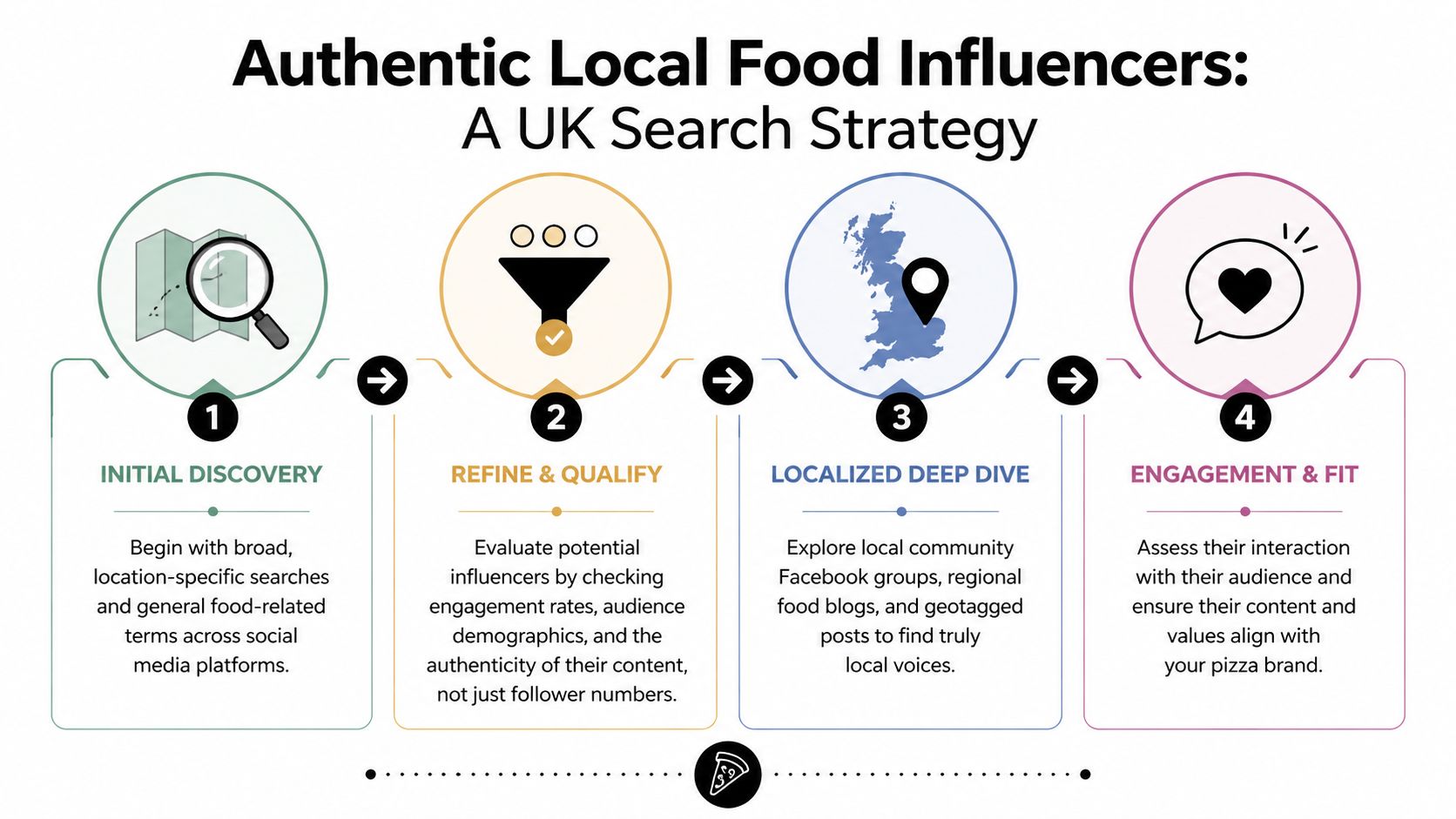
Follower count is the fastest way to build the wrong shortlist. What matters more is audience trust, local concentration, and whether their content changes behaviour.
Use a vetting screen like this:
- Audience location: Ask for audience geography before agreeing to anything. You need local concentration, not national scatter.
- Comment quality: Real influence shows up in specific comments, local references, and genuine food discussion. Generic emoji strings tell you very little.
- Content pattern: Check whether they regularly post local food, takeaway nights, neighbourhood recommendations, or delivery content.
- Brand fit: A premium sourdough-focused shop and a late-night student takeaway don’t need the same type of creator.
- Operational reliability: Did they publish on time for other partners? Do they communicate clearly? Can they follow a brief without sounding scripted?
Manual sourcing is possible, but it’s slow
Plenty of independent operators still build creator lists manually. There’s nothing wrong with that if you’re disciplined. Start with geotag searches, local food hashtags, tagged competitor posts, and creators already posting in your area. Then move into local Facebook groups, community pages, and regional food accounts.
A strong manual workflow usually looks like this:
- Search location tags and neighbourhood food posts on Instagram and TikTok.
- Build a shortlist based on relevance, not size.
- Review recent content for consistency and authenticity.
- Request audience screenshots before agreeing to any collaboration.
- Keep notes on communication, rates, and campaign fit.
For many teams, the bottleneck isn’t finding names. It’s keeping the process organised once the list gets bigger. Spreadsheets fill up quickly. DMs go missing. Audience screenshots sit in random folders. If you want a more detailed local sourcing method, this walkthrough on how to find local food influencers in your city is a practical reference.
The biggest red flags
Most wasted budget comes from the same mistakes.
- A broad lifestyle account with weak food relevance
- Good-looking content with thin local engagement
- Creators who ask for free food immediately but can’t explain their audience
- An account with inflated followers and low conversation in comments
- A mismatch between your trading area and their actual community
If a creator can’t show local audience relevance, don’t invent it on their behalf.
The platform trade-off
At some point, operators choose between doing this manually or using a dedicated platform or managed system. Manual sourcing gives you control and lower direct software cost, but it consumes staff time and tends to break once you need multiple creators running each month.
A platform-led approach is useful when you need verified creators, outreach support, campaign organisation, and attribution built into the workflow. That’s especially true for multi-site groups, franchises, or any takeaway brand trying to cover several postcodes without a full in-house creator team.
The mistake is assuming sourcing is the easy part. It isn’t. Good local creator selection is where most campaign ROI is won or lost.
Executing Your Campaign from Outreach to 'Go Live'
Once you’ve picked the right creators, the tone of the campaign changes. You’re no longer “seeing if someone wants pizza.” You’re managing a marketing partnership with deadlines, deliverables, and revenue expectations.
That means acting like a serious operator from the first message.
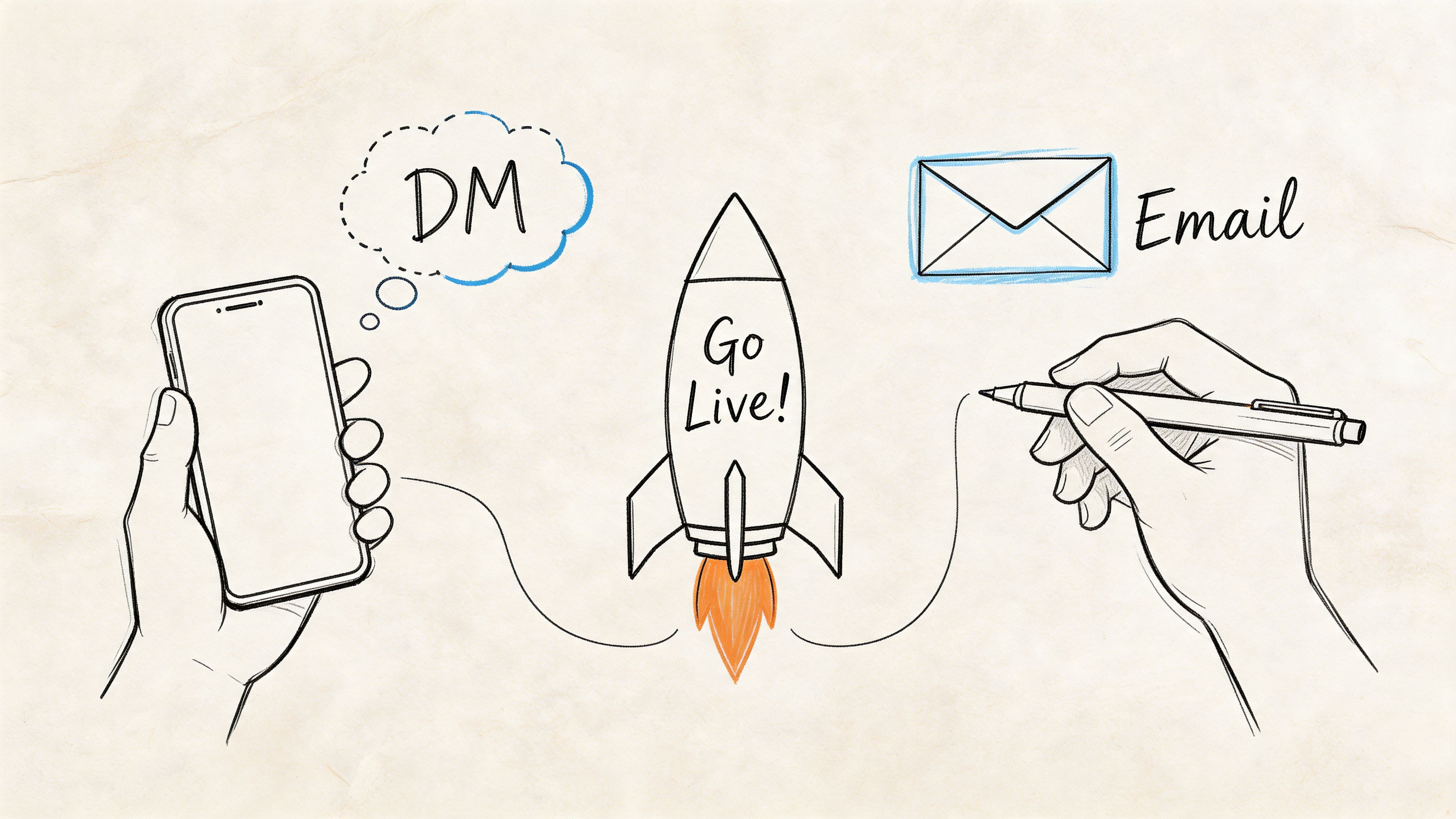
Outreach that gets replies
Most outreach fails because it’s lazy or vague. “Want to collaborate?” doesn’t tell a creator what you need, why you picked them, or what’s in it for them.
A better first message is short and specific:
Hi [Name], we run [Pizza Brand] in [Area]. We like your local food content, especially your posts around [relevant example]. We’re planning a campaign around [offer or menu item] and think your audience is a strong fit for our delivery area. If you’re open, I’d like to send over a brief with deliverables, timing, and how we’d structure the partnership.
That works because it does three things. It proves you’ve looked at their work, it frames the collaboration as professional, and it avoids haggling in the first line.
Negotiate the whole package, not just the post
Creators don’t only provide exposure. They provide production, audience access, timing, and often reusable content. If you negotiate only around “one Reel for one pizza,” you’ll end up with confusion later.
Clarify these points before anything is confirmed:
- Deliverables: What exactly are they posting?
- Timing: When does content need to go live?
- Usage rights: Can you reuse the content on your own channels?
- Approval process: Do you need to review before posting?
- Tracking method: Which code or link belongs to them?
- Compensation: Fee, product, guest allowance, or a mix?
This is also where the micro-creator advantage matters. According to DotSignage’s overview of restaurant influencer performance, micro-influencers generate 60% more engagement than high-profile counterparts, and the same source recommends UTM-tracked links, promo codes, and POS syncing to track conversions instead of focusing on follower count alone.
Your brief needs operational detail
Most campaign briefs are too fluffy. “Show our brand personality” is not a useful instruction to a creator who needs to publish on Thursday.
A working brief for a pizza takeaway should include:
- The offer: What exactly are they promoting?
- The audience: Delivery customers, collection customers, or dine-in guests.
- Key talking points: Example, fresh dough, halal menu, vegan option, late opening, bundle value.
- Mandatory tags: Account tag, location tag, campaign hashtag if relevant.
- CTA: The action you want now.
- Tracking: Their unique code and/or ordering link.
- Deadlines: Content review date and live date.
- Compliance: Ad disclosure language and any required wording.
The brief should remove uncertainty, not creativity. Good creators still need clear rails.
A full operational checklist helps if you’re handing this off to a manager or agency. This guide on how to run a restaurant influencer campaign step by step is a useful process reference.
Don’t skip pre-live checks
Before content goes live, check the basics:
- The code works.
- The tracked link lands on the right ordering page.
- The promoted item is currently available.
- Staff know the campaign is running.
- Delivery and collection teams understand the offer.
- Customer service knows how to handle questions.
A lot of campaigns fail because marketing launches something operations can’t fulfil cleanly.
This short video is worth reviewing if your team needs a practical visual on campaign setup and workflow.
What good execution feels like
The creator knows what to post. Your team knows when it’s going live. The code is active. The offer is live in every ordering channel you’re using. Someone is watching performance on the day.
That’s not glamorous. It is what makes the campaign work.
Measuring What Matters From Clicks to Conversions
Most pizza influencer campaigns often falter at this stage.
The content goes live. Views come in. Comments look positive. Maybe orders lift that night. But the team can’t prove which creator drove what, whether the discount hurt margin, or whether the orders came from regular demand anyway.
That attribution gap is especially sharp for takeaways. PMQ highlights the problem clearly: restaurant guidance often lacks detail on measuring actual revenue for pizza delivery models, especially when operators need to separate influencer-driven orders on apps, account for seasonal shifts, and evaluate longer-term order value, as noted by PMQ.
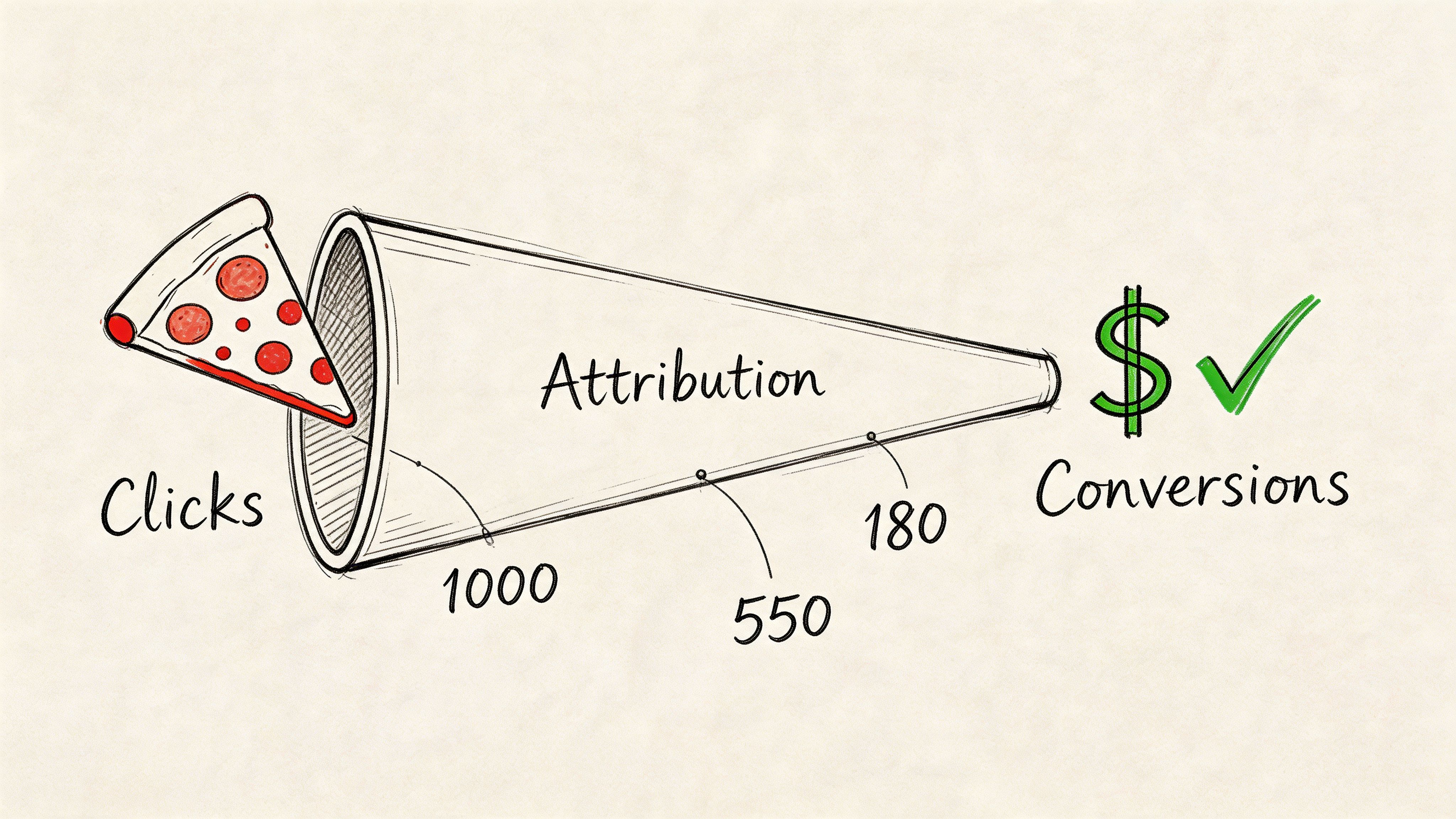
The two tracking tools you actually need
For most pizza restaurants and takeaways, you don’t need an elaborate analytics stack to start. You need two core mechanisms working properly.
Unique promo codes
Each creator gets their own code. Not one campaign code shared across everyone.
That lets you answer basic commercial questions:
- Which creator drove redemptions?
- Which code got used more than once?
- Which offer produced weak margin?
- Which creator brought in customers willing to buy add-ons?
Codes work well for direct orders, collection offers, and some app-based redemptions where links are less reliable.
UTM-tracked links
Each creator should also get a unique tracked link to the right destination. Not your homepage. Not your Instagram profile. The actual ordering page or campaign landing page.
That helps you see:
- Click volume by creator
- Which posts caused traffic spikes
- Whether clicks turned into sessions with intent
- Which creators generated interest even when code use lagged
Use both together. Codes show redemption behaviour. UTMs show traffic behaviour. Neither tool is enough on its own.
What to measure each week
Influencer reporting for pizza brands should be operational, not performative. Keep the dashboard narrow.
Track these fields per creator:
| Metric | Why it matters |
|---|---|
| Post date and time | Helps compare performance windows |
| Content type | Reels, Stories, TikTok, static posts can behave differently |
| Views and engagement | Useful as top-of-funnel context, not the final verdict |
| Link clicks | Shows immediate response to CTA |
| Promo code redemptions | Direct indicator of attributable orders |
| Revenue tied to code or link | Connects exposure to commercial output |
| Offer cost | Needed to understand margin impact |
| Creator fee and product cost | Required for channel economics |
| Repeat booking decision | Turns reporting into action |
Handle app orders carefully
Delivery apps create the most confusion. If you sell on Deliveroo, Uber Eats, Just Eat, and your own site, attribution gets messy fast. The same campaign can influence an app order even if the tracked link pushed users to direct checkout.
That doesn’t mean you give up. It means you separate campaign design by channel.
Use one of these approaches:
- Direct-order push: Send creator traffic only to your own ordering page and judge performance there.
- App-specific code strategy: If the app setup allows it operationally, isolate a creator offer for one marketplace.
- Blended reporting: Compare direct attributed results with wider order trends during the live window, but keep those interpretations separate from hard attribution.
Views are not worthless. They’re just not proof of sales.
Keep attribution windows realistic
Pizza is a fast decision purchase compared with many other categories. A lot of response happens quickly after publication, especially with Stories and short-form video tied to dinner-time intent.
That’s why same-day and short-window tracking matters. Don’t wait weeks to review a campaign that was designed to trigger immediate orders. Pull early numbers, then revisit them after a reasonable follow-up period to catch delayed conversions and repeats.
Build a simple decision system
Good reporting should tell you what to do next.
At the end of each campaign, sort creators into three groups:
- Rebook immediately Strong redemptions, solid content, easy communication, local fit.
- Test again with changes Good engagement but weak CTA, poor offer fit, or timing issues.
- Stop using Weak audience fit, low commercial response, or unreliable execution.
If you want a practical benchmark framework for this kind of analysis, this guide on influencer marketing ROI and what actually works is a good reference.
The reporting mistake that costs the most
Operators often report influencer campaigns the way social teams report content. Reach, likes, comments, shares. Those metrics matter, but only as context.
For pizza takeaways, the useful line of questioning is tighter:
- Did this creator move orders?
- Were those orders profitable?
- Did the campaign shift customers towards direct ordering?
- Should we invest again?
If your dashboard can’t answer those, it’s not a performance system yet.
Turning One-Off Posts into a Scalable Growth Engine
Friday goes well. A local creator posts at 5:30 pm, orders spike for two hours, the team gets slammed, then everyone moves on. Two weeks later, nobody can say whether the post brought profitable new customers, whether the content can be reused, or whether that creator is worth booking again.
That is the difference between a campaign and a channel.
One-off posts create short bursts of attention. A scalable programme gives you repeatable outputs. More usable content, faster launch cycles, clearer attribution, and a shortlist of local creators who can drive orders without constant hand-holding. For UK pizza takeaways, that usually matters more than reach. Delivery windows are short, margins are tight, and the team running marketing is often the same team dealing with stock, staffing, and aggregator pressure.
The wider restaurant sector is already treating influencer activity more seriously. In the first half of 2023, food and beverage influencer activity generated $4.8 billion in earned media value, and the NRN analysis argues that restaurants need persistent tracking infrastructure such as unique codes, UTMs, and POS integration if they want influencer marketing to become a predictable revenue channel instead of a vanity play.
Reuse the content you’ve already paid for
A strong creator post should keep working after the first publish.
If usage rights were agreed upfront, that content can be reused across:
- Organic social posts on your Instagram and TikTok
- Website visuals for direct ordering pages and menu promotions
- Paid social ads built from creator-style footage
- Delivery app artwork where platform rules allow it
- Email and SMS creative for future offers
Pizza brands need fresh visuals constantly. Reusing creator content cuts the cost of new shoots and usually performs better than polished brand photography because it looks closer to how customers discover local food.
Turn winners into recurring partners
The strongest local creators rarely win on one post alone. They win because they can produce reliable sales signals over multiple campaigns.
That is especially true for takeaways. The first post introduces the brand. The second or third often converts better because the audience has seen the shop before, recognises the product, and trusts the recommendation more. Repetition also makes operations easier. The creator already knows your best-sellers, your delivery radius, your peak order times, and what not to promise on turnaround or customisation.
Keep a tight roster and judge it hard. Rebook creators who:
- deliver on time
- follow the brief without constant chasing
- reach the right local audience
- generate attributable orders or strong UGC
- fit your brand without sounding scripted
In practice, a roster of five reliable local creators beats a long list of one-off freebies.
Build a repeatable operating model
Independent takeaways usually need a monthly cycle they can run without adding admin every week. Multi-site groups need a standard process that local managers can follow without improvising codes, briefs, and approvals.
A setup that scales usually includes:
- A live creator roster by postcode, town, or delivery zone
- Campaign templates for new menu items, quiet midweek periods, and major order nights
- A fixed tracking method for links, codes, offer windows, and reporting fields
- A usage-rights process so good content can be reused quickly
- A review cadence that removes weak creators and expands proven ones
The operational failure point is rarely strategy. It is admin. Messages get buried in Instagram DMs. Codes are reused without clean naming. Payments get delayed. Staff forget which offer belongs to which creator. Then reporting turns into guesswork, and the next campaign starts from scratch.
What scaling actually looks like
Scaling is not more creators, more discounting, or more noise.
Scaling means the campaign can run again next month with less effort and better odds of profit. The brief is already written. The offer structure is already tested. The creator list is already filtered. Tracking is already in place. Content rights are already clear. That is how influencer marketing stops being a string of free-pizza deals and starts acting like a real acquisition channel.
For pizza takeaways, that shift is where the ROI improves. You waste less stock on weak partnerships, spend less time sourcing from zero, and make faster decisions on who to keep, who to test again, and who to drop.
More on industries
See how many creators post about you and your competitors
Type in your brand's Instagram handle and we count the creators who post about you and about your five closest competitors. It takes about a minute and it is free. Or request a demo and we will show you the creators in your niche and walk you through the dashboard.
 Book a call