11 April 2026
How to Use Promo Codes for Influencer Campaign Tracking: How
You know the pattern. The campaign went live, creators posted on Instagram and TikTok, the screenshots look strong, and the reporting sheet is full of views, likes, saves, reach, and comments. Then finance asks the only question that matters: what did it drive?
Influencer programmes often break there. The content exists. The spend is real. The attribution is vague.
Promo codes fix that when they’re built properly. Not as an afterthought, and not as a random discount string someone creates five minutes before launch. A good code system ties each creator, campaign, channel, and redemption back to revenue. It also works in places where links fail, including TikTok, podcasts, in-store visits, and hospitality campaigns where staff need a simple way to log walk-ins.
How to Use Promo Codes for Influencer Campaign Tracking comes down to four disciplines: structure the codes, distribute them clearly, connect them to your ecommerce or POS stack, and validate what happened after redemption. If any of those steps is loose, your reporting gets noisy fast.
From Vanity Metrics to Verifiable Revenue
A spreadsheet full of influencer metrics can look healthy and still tell you almost nothing. Reach doesn’t pay for stock. Engagement doesn’t explain which creator should get another brief. Views don’t tell a restaurant manager whether a Friday night TikTok push drove covers.
Promo codes change the job of influencer marketing. They turn creator activity into a trackable conversion path.
Used properly, a promo code does two things at once. It gives the customer a reason to act, and it gives the brand a way to attribute that action to a specific creator or campaign. That’s the difference between “we think this creator did well” and “this creator drove redemptions, revenue, or footfall”.
This matters even more if you're already working on broader ecommerce conversion issues. Influencer traffic doesn’t live in a separate universe. If checkout is clunky, offers are weak, or landing pages don’t match the content, even strong creator partnerships will underperform.
Why promo codes work where links fall short
Links are useful, but they miss part of the picture. People see a TikTok, remember the brand, visit later, and buy without clicking the original link. The same thing happens with podcast ads, event mentions, and restaurant campaigns where someone says the code at the till.
That’s why code-based tracking is so practical. It captures intent at the moment of purchase, not just at the moment of click.
Practical rule: If a channel makes direct clicking awkward or unlikely, treat the promo code as your primary attribution mechanism, not your backup.
What a solid tracking setup gives you
Once codes are tied to creators cleanly, you can answer the questions that shape budget:
- Which creators convert
- Which platform placements lead to redemption
- Which offers pull in action without crushing margin
- Whether online campaigns also influence offline sales or visits
That’s when influencer marketing stops behaving like a soft awareness line item and starts acting like a measurable growth channel.
Planning Your Promo Code Architecture
Most tracking problems start before launch. Not in reporting. In setup.
If your team names codes inconsistently, reuses old discounts, or creates one generic code for multiple creators, you’ve already weakened attribution. A promo code architecture prevents that. It gives you a repeatable system that survives more than one campaign.
Start with the business objective
The code should reflect the job you want it to do.
If the campaign is aimed at new customer acquisition, a first-order incentive usually makes sense. If the campaign is aimed at repeat purchase, you may want a lighter offer with stronger margin protection. If the priority is footfall, the code needs to be easy to remember and simple for staff to enter or scan.
The mistake is choosing an offer first and only later trying to use it for attribution. Trackability should shape the offer structure from the start.
A useful planning order looks like this:
- Define the outcome. Sales, bookings, footfall, first purchase, repeat purchase.
- Choose the redemption environment. Online checkout, in-store POS, phone order, event desk.
- Set code ownership. One code per creator, or one per creator and platform if channel-level split matters.
- Decide expiry rules. Fixed campaign window, rolling validity, or short bursts for urgency and fraud control.
- Map the code to reporting fields. Creator, campaign, platform, offer type, region.
Build a naming convention that scales
Random codes create messy data. Clean codes give you instant context even before you open a dashboard.
The naming logic should be readable by humans and structured enough for systems. In practice, that usually means embedding a few identifiers directly into the code or into the metadata attached to the code.
For example, you might encode:
- Creator identifier
- Campaign or seasonal tag
- Platform
- Location or market
- Offer version
Not every code needs every element visible to the customer. In many cases, the customer-facing code should stay short and memorable, while the backend stores the deeper mapping.
Here’s a practical framework.
Sample Promo Code Naming Structures
| Purpose | Example Format | Example Code | Best For |
|---|---|---|---|
| Creator-level attribution | CREATOR + OFFER | LAUREN15 | Simple ecommerce campaigns |
| Creator + campaign mapping | CREATOR + CAMPAIGN | LAURENSPRING | Seasonal launches |
| Creator + platform mapping | CREATOR + PLATFORM | LAURENTT | Cross-channel testing |
| Creator + location mapping | CREATOR + CITY | LAURENMCR | Local restaurant or store campaigns |
| Campaign batch control | CAMPAIGN + CREATOR + VERSION | SS24LAURENA | Larger programmes with testing |
| Staff-friendly offline use | SHORT WORD + NUMBER | TASTE15 | Hospitality and verbal redemption |
Keep customer experience in mind
The most elegant tracking framework still fails if the code is awkward to remember, hard to say, or easy to mistype.
A few rules tend to hold up well:
- Use short strings when the code will be spoken out loud.
- Avoid visual confusion such as O and 0, I and 1.
- Keep creator identity recognisable if the influencer’s name adds trust.
- Reserve suffixes for backend logic rather than stuffing everything into the visible code.
A code should be easy for a customer to remember after hearing it once in a video.
Decide what sits in the code and what sits in metadata
Many teams overcomplicate things at this point. You don’t need every field inside the visible code itself. Often the better move is a clean public code and strong internal mapping in your platform, ecommerce system, or CRM.
If you’re building the broader programme from the ground up, this guide on influencer strategy is worth reading before code creation starts: https://sup.co/blog/how-to-build-an-influencer-marketing-strategy-from-scratch
That separation matters. Customer-facing simplicity improves usage. Backend structure improves attribution.
Generating and Distributing Codes at Scale
Once the architecture is set, execution becomes a workflow problem.
At small volume, teams usually create codes directly in Shopify or another ecommerce platform, paste them into a spreadsheet, email each creator, then check manually whether the right code was used in the right content. That works for a handful of creators. It gets messy as soon as campaigns overlap.
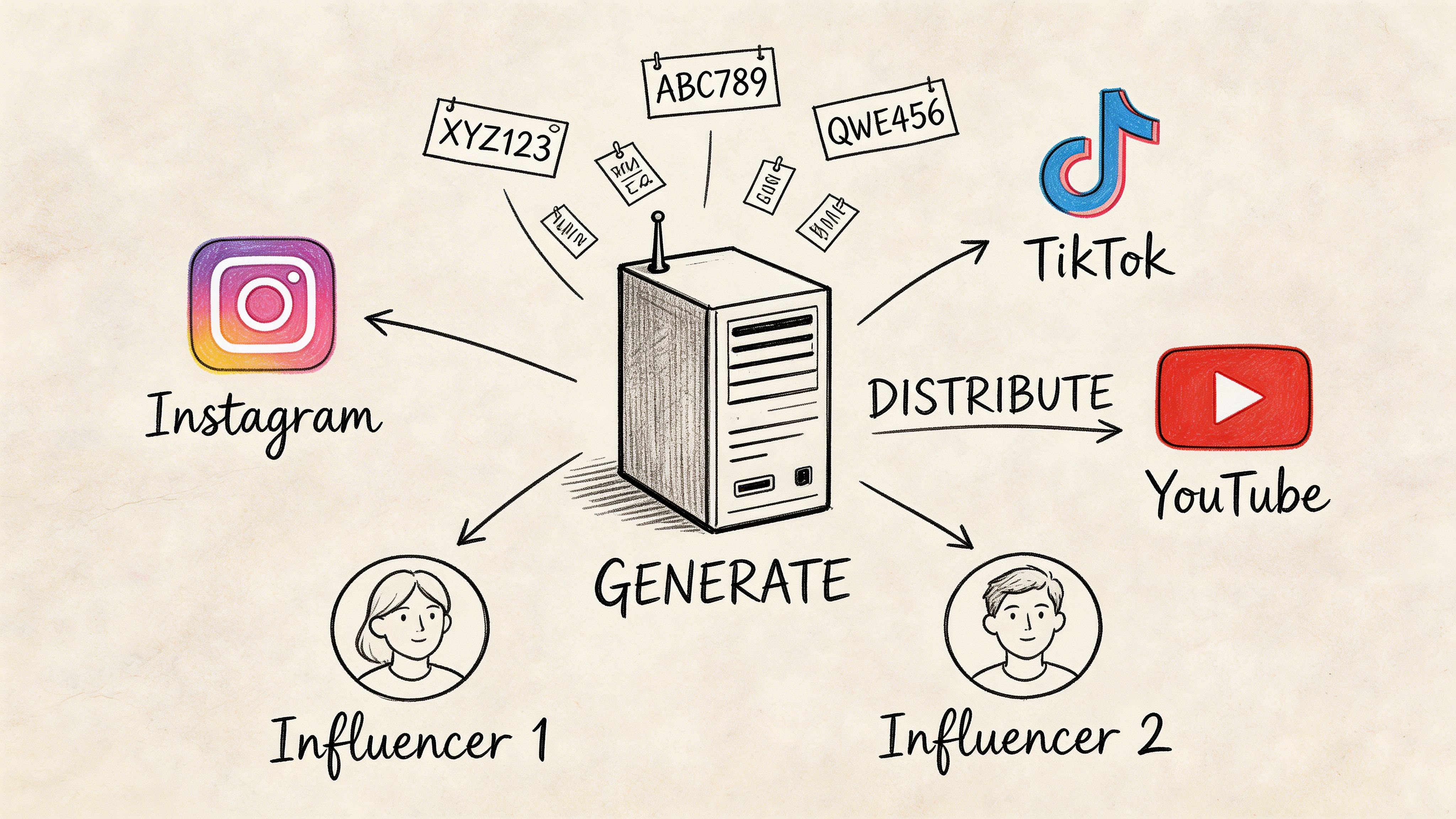
The manual route versus an automated workflow
Manual code generation gives you control, but it creates predictable failure points:
- Codes get duplicated across creators or campaigns.
- Naming drifts when different team members improvise.
- Influencers receive outdated offers because briefs and sheets fall out of sync.
- Reporting lags because someone has to reconcile orders against creator lists.
An automated workflow removes a lot of that friction. Platforms can generate unique codes, attach them to campaign records, pair them with UTM links, and push redemption data into a reporting layer. Sup is one example of that approach. It assigns unique promo codes and UTM links per creator inside the campaign workflow, so the team isn’t managing code logic in separate sheets.
The trade-off is straightforward. Manual setup is cheaper in software terms but expensive in team time and error risk. Automation costs more upfront but usually protects the data quality that scaling depends on.
A practical rollout process
The simplest way to keep code generation clean is to treat it like campaign operations, not creative admin.
Use a checklist like this:
- Create the campaign record first Lock the offer, redemption window, and creator list before generating anything.
- Generate one code owner per record If you want creator-level attribution, don’t share codes across a cohort.
- Pair each code with a destination URL Even if the code is the primary tracker, the link should still carry campaign metadata.
- Store the final code in one source of truth That can be your influencer platform, CRM, or campaign ops sheet. Not scattered DMs.
- Send creators one final version only Multiple revisions create old-code usage and reporting mistakes.
Brief creators like conversion partners
A code doesn’t perform just because it exists. The creator has to place it where people notice it and understand how to use it.
The best briefs are painfully clear. Include the exact code, the exact formatting, where it should appear, and whether it needs to be spoken, shown on screen, or repeated in the caption.
Tell creators things like:
- Use the code in the first frame or opening lines when the content format moves fast.
- Keep the code visible on screen long enough for a viewer to process it.
- Repeat it in the caption so users can copy it later.
- Add it to the bio link destination language so the offer matches the click.
If a creator is driving mobile-first traffic, link placement matters too. Some teams test landing page paths, but often the bigger win is making access easier with the right Link in Bio Tools, especially when one creator is promoting multiple brands or offers.
The code should appear wherever a customer might decide to buy later, not just where the brand wishes they’d click now.
Prevent avoidable creator confusion
Most misuse comes from ambiguity, not bad intent.
A few fixes help:
- Send a one-page activation brief rather than burying the code in a long email thread.
- Show examples of correct placement in Stories, Reels, TikToks, and captions.
- Confirm the exact text string creators should use, including capitalisation if relevant.
- Explain expiry clearly so old content doesn’t keep circulating with dead offers.
When teams skip this, they end up blaming attribution when the core issue was distribution discipline. The code architecture can be excellent and still fail if the creator receives vague instructions.
Integrating Codes to Capture Redemptions
A creator posts on Friday, sales come in over the weekend, and Monday’s report still cannot tell you which orders came from which person. That is the operational failure promo codes are supposed to prevent.
A working setup does more than accept a discount at checkout. It attaches each redemption to a creator record, campaign, offer, channel, and order so finance, growth, and partnerships are all reading the same result.
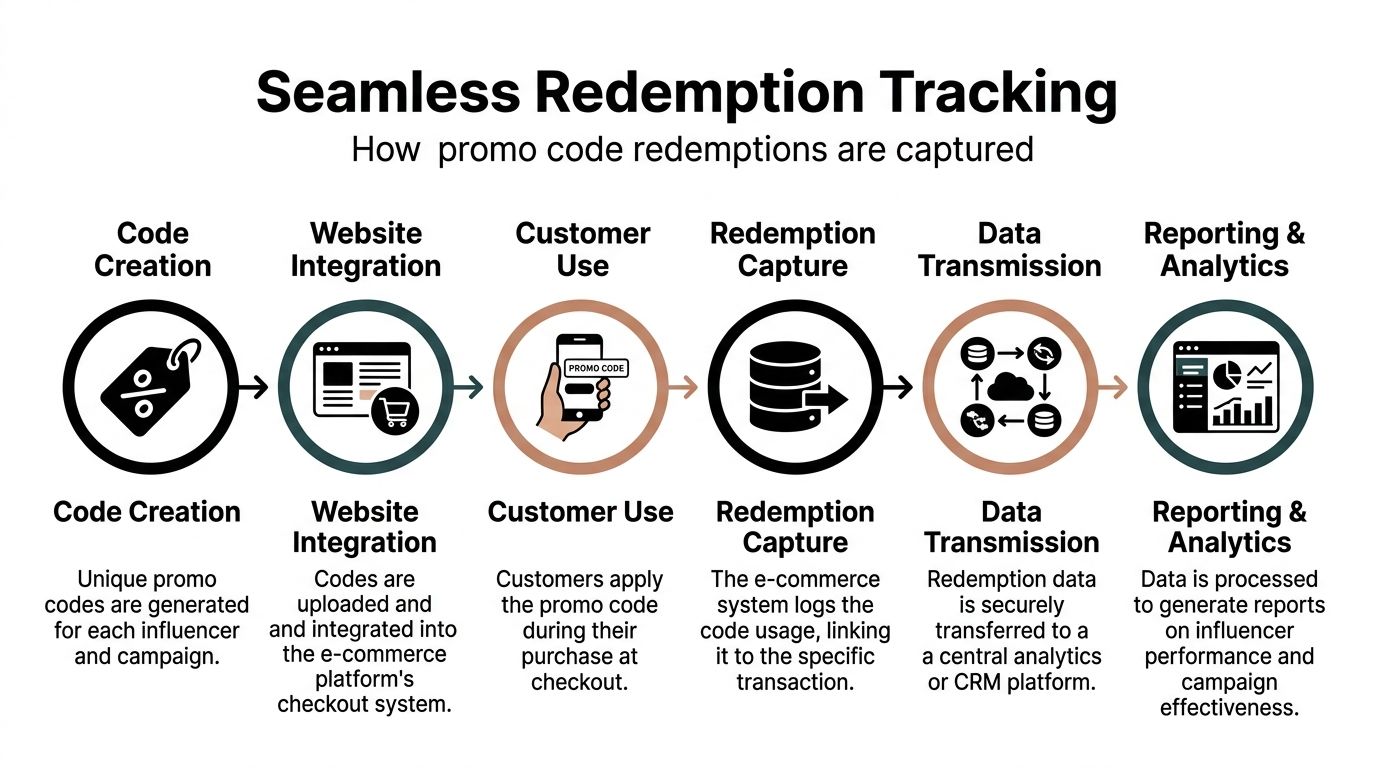
How ecommerce integrations work
For online stores, the flow is simple. The code is entered at checkout, stored on the order, matched to the creator who owns it, and passed into reporting.
The hard part is the mapping layer. If EMMA15 lives only inside Shopify as a discount code, it helps the customer but tells your team very little. If that same code is tied to a creator ID, campaign ID, offer type, and timestamped redemption event, you can connect content to revenue without relying on the click.
That matters because promo codes often close attribution gaps that links miss. Customers save a post, search later, buy on desktop after watching on mobile, or mention the code in store. Your stack needs to catch those paths instead of treating them as unattributable traffic.
What to configure in Shopify or WooCommerce
Good integration starts with boring discipline. Keep the code data structured from day one.
In Shopify
Set up four things properly:
- A unique discount object for each creator code
- A reliable mapping between the code and your creator or campaign record
- Order exports or webhooks that include the applied discount
- A destination for redemption events, such as your CRM, BI tool, influencer platform, or internal reporting layer
Shopify supports this through its discount and order data model. Shopify’s developer documentation explains how discount applications and orders are stored, which is the field-level detail your ops team needs if you are building this in-house: https://shopify.dev/docs/api
In WooCommerce
WooCommerce can handle the same job, but the setup varies more because plugin stacks differ.
Focus on:
- One coupon per creator
- Consistent coupon naming
- Order records that retain the coupon at purchase
- A sync into analytics, CRM, or your reporting database
I have seen WooCommerce programmes fail for one boring reason. Different plugins write coupon data into different places, and no one checks the export until the campaign is over. Test one live order per path before creators go live.
Offline tracking for restaurants and venues
Offline redemptions need their own attribution map. A restaurant, salon, clinic, or retail chain cannot rely on web checkout logic when the conversion happens at a till or front desk.
Two models usually work:
| Model | How it works | Good fit |
|---|---|---|
| Manual POS entry | Staff enter the influencer code during checkout | Smaller venues with limited integration |
| Integrated POS sync | Redemption data from the till passes into a central dashboard | Multi-location or higher-volume operations |
Manual entry is cheaper to launch and easier to test. It also creates more reporting cleanup and more staff error. Integrated POS sync takes longer to set up, but it gives cleaner data once volume rises.
For hospitality and retail, consistency matters more than sophistication. If one location applies codes as discounts and another writes them into notes, your reporting breaks before attribution analysis even starts.
Keep the handoff between staff and systems tight
Offline tracking is usually won or lost at the counter.
Train staff on three actions:
- Where to enter the code
- When to ask for it
- How to handle partial or misremembered codes
Keep the process short. A one-page cheat sheet beats a long training deck every time.
A short explainer helps if your team needs to see the flow visually:
Where platforms earn their keep
Manual tracking works at small scale. It also creates hidden costs fast. Someone has to create codes, map them to creators, test checkout behavior, reconcile orders, chase missing redemptions, and clean exports before reporting.
That is usually manageable for a handful of creators. It becomes fragile once you are running multiple campaigns across ecommerce and offline locations.
Platforms such as Sup reduce that operational load by keeping code creation, creator mapping, redemption capture, and reporting in one system. If you are weighing in-house workflows against software, this guide on choosing between influencer marketing platforms is a useful reference point.
The best setup is the one your team can keep accurate under real campaign volume. Clean attribution beats clever architecture that no one maintains.
Validating Attribution and Measuring True ROI
A creator posts on Friday. Orders come in all weekend. By Monday, three teams want to claim the revenue: paid social because the customer clicked a retargeting ad, ecommerce because the sale happened on site, and influencer because the checkout used a creator code.
That argument gets expensive fast unless attribution rules were set before the campaign launched.
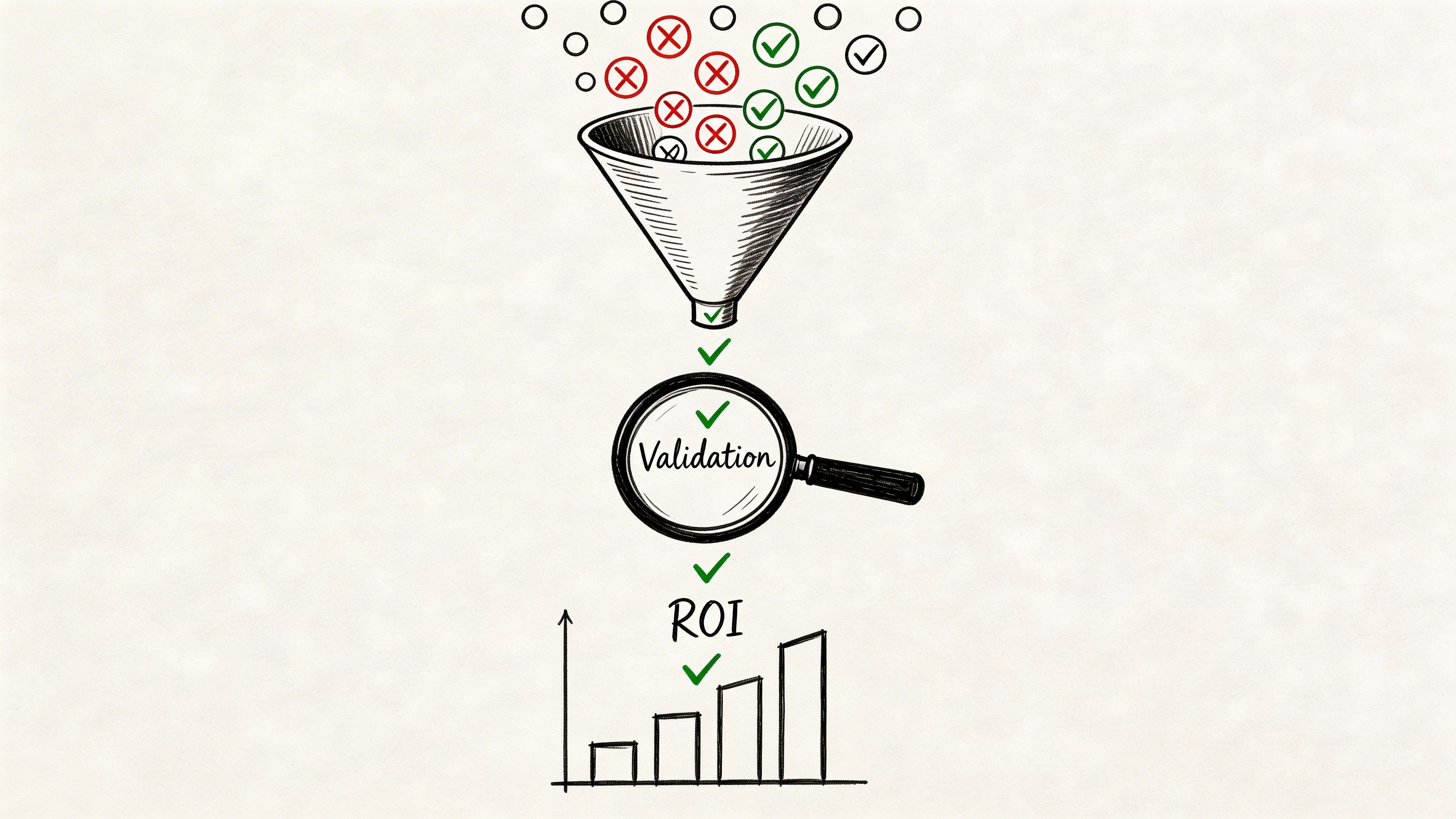
Promo codes are useful because they capture demand that never shows up as a clean click path. They also create false confidence if teams treat every redemption as self-explanatory. A code tells you that a conversion happened with an offer attached. It does not settle every question about influence, incrementality, or channel priority on its own.
Validate the code against the customer journey
The cleanest setup maps codes to a predefined attribution rule. That rule should answer one question clearly: what gets credit when code data and click data disagree?
That happens all the time:
- A customer clicks one creator’s tracked link, then checks out with a different creator’s code.
- A customer sees a Reel or TikTok, searches the brand later, and buys direct with the code.
- A customer hears the code in a restaurant video, visits in person, and redeems it through POS with no web session attached.
For performance reporting, many teams treat a creator-specific code as the conversion key because it reflects the final purchase trigger. For channel analysis, they still review UTM and session data to understand the path that led to that sale. Both views matter. If you collapse them into one metric, you lose the difference between demand creation and demand capture.
Clickless influence needs its own measurement logic
Influencer campaigns often drive remembered intent, not immediate clicks. That is common in creator formats where the content is consumed passively, shared in group chats, or acted on later in store.
This is why code architecture matters more than generic reporting advice admits. A creator-specific code linked to the right campaign, offer, channel, and redemption environment gives you a practical attribution layer for online checkout and offline sales. Without that mapping, teams end up debating screenshots, coupon exports, and assisted-conversion reports that were never designed to handle creator-led demand.
The operational question is simple. Are you measuring the customer journey you have, or the one your analytics stack can see most easily?
The KPIs that help you allocate budget
Raw redemptions are a starting point. Budget decisions need a tighter view.
Track metrics that connect creator activity to commercial outcome:
- Attributed revenue Revenue tied to a creator-owned code or a validated conversion path based on your attribution rules.
- Cost per acquisition Useful when comparing creators across fixed fees, affiliate payouts, gifting, or hybrid deals.
- Return on ad spend or media efficiency Helpful if you are comparing creator content against paid amplification or other acquisition channels.
- New customer rate Shows whether the campaign is bringing in first-time buyers or recycling existing demand through a discount.
- Average order value and margin after discount Important because a high redemption count can still be weak economics if discount depth is too aggressive.
- Repeat purchase rate by code cohort Separates creators who drive one-off bargain hunters from those who bring in customers worth keeping.
Use attribution to make decisions, not defend the channel
The point of measurement is budget allocation.
A creator with average reach and strong margin-positive revenue is often more valuable than a creator with high views and weak conversion quality. A creator who drives offline redemptions may deserve a different benchmark from one pushing ecommerce only. Teams that scale well usually split creators into roles early: awareness partners, conversion partners, and hybrids. That keeps reporting honest and stops every campaign from being judged against the same last-click standard.
Manual validation can work if the programme is small and the rules are strict. Once there are multiple creators, multiple offers, and both ecommerce and POS redemptions, spreadsheets start hiding edge cases instead of resolving them. Platforms such as Sup reduce that failure point by tying code ownership, redemption capture, and reporting logic together in one workflow.
If you want a deeper framework for judging channel contribution and campaign economics, this guide on how to measure influencer marketing ROI in a way that reflects business impact is useful.
Troubleshooting and Scaling Your Programme
A programme can look under control at five creators and fall apart at fifty. The failure usually is not content volume. It is code governance, exception handling, and whether your attribution rules still hold once codes move across ecommerce, retail, and POS.
That is the point where promo codes stop being a discount mechanic and become an attribution system.
Code leakage is usually a design problem
If a creator code ends up on coupon sites, in group chats, or reused long after the post lost relevance, redemptions keep coming in but the signal gets worse. Revenue still lands. Trust in the reporting does not.
The fix starts with code architecture, not manual policing. Set code rules by channel and risk level:
- Use short validity windows for high-share offers, especially for flash promotions and local activations
- Assign one code owner per creator, location, or campaign objective so redemption mapping stays clean
- Separate ecommerce and in-store code families so staff exceptions do not pollute online reporting
- Flag unusual redemption spikes for review instead of letting them flow straight into payout calculations
The trade-off is operational overhead. Shorter windows and tighter ownership rules create more admin if the programme runs in spreadsheets. They also give cleaner attribution and fewer payout disputes.
Offline programmes need tighter controls
Restaurants, gyms, salons, and retail stores run into a different set of problems than pure ecommerce brands. Staff may honour an expired code. Customers may say a code aloud and get it entered incorrectly. A code tied to one creator can spread fast inside a local area and still look legitimate in the till data.
That does not mean offline tracking is unreliable. It means the setup has to match the environment.
A practical approach looks like this:
| Risk | Better control |
|---|---|
| Staff manually accepting expired offers | Create an exceptions bucket and review those redemptions separately |
| One creator code reused across locations | Map codes to both creator and location where possible |
| Spoken codes entered incorrectly at POS | Keep codes short, distinct, and easy to hear |
| In-store sharing after the campaign ends | Use tighter campaign windows and deactivate codes on time |
For in-store campaigns, I usually prefer shorter campaign periods and stricter code expiry than the brand first asks for. Evergreen codes feel simpler. They also make offline attribution much harder to trust.
Set attribution rules before edge cases hit
Once multiple creators are live, overlap is guaranteed. A customer might watch one TikTok, click another creator's link a week later, then redeem a third creator's code in store. If there is no written rule, the team ends up arguing case by case and the numbers lose credibility.
Write the policy before launch and keep it boring.
| Scenario | Sensible rule |
|---|---|
| One creator’s link, another creator’s code | Credit the creator whose code was redeemed |
| Multiple exposures, no click, creator code redeemed | Credit code owner |
| Shared campaign code used in store | Credit campaign, not creator |
| Expired code manually honoured by staff | Log separately as exception traffic |
No rule set handles every edge case perfectly. Consistency matters more than trying to win every attribution debate after the fact.
Scaling breaks manual workflows first
Manual tracking works for a small programme with strict rules, limited offers, and one sales channel. It gets fragile once creators need replacement codes, store teams need POS guidance, and finance wants payout logic tied to verified redemptions.
The warning signs show up early:
- Reconciliation takes longer than campaign optimisation
- Code requests live across email, DMs, and spreadsheets
- Naming conventions drift by market or account manager
- Redemption data arrives too late to adjust spend while the campaign is live
At that stage, the issue is not whether the team can keep the programme running. It is whether they can still trust the mapping between creator activity and revenue.
Platforms such as Sup help by keeping code creation, ownership, redemption capture, and reporting logic in one place. That reduces the common spreadsheet failures: duplicate codes, broken naming rules, missing expiry dates, and manual payout errors. The trade-off is less flexibility for one-off workarounds, but that is usually a good exchange once the programme is large enough to affect budget allocation.
Scaling well means treating promo codes as infrastructure. If the architecture is clean, you can add creators, locations, and offers without losing attribution quality. If it is not, growth just creates more noise.
Frequently Asked Questions on Promo Code Tracking
Should every influencer get a unique code
Yes, if you want creator-level attribution. Shared codes are fine for broad campaign discounts, but they blur performance data and make optimisation harder.
Should I use promo codes and UTMs together
Yes. The UTM helps you understand traffic source and click behaviour. The promo code captures conversion intent at checkout, including clickless journeys. They solve different parts of the attribution problem.
What’s the best code format for TikTok
Keep it short, easy to read on screen, and easy to say out loud. If the creator’s name is memorable, using it can help. If the code will be spoken in a fast video, avoid strings that can be misheard.
How do restaurants track redemptions properly
Use codes that staff can enter quickly, train staff on one logging method, and keep campaign windows tight enough to limit leakage. If possible, route redemptions from your POS into the same reporting layer you use for creator performance.
What if an influencer posts the wrong code
Correct it fast and log the exception. Don’t overwrite the issue in reporting. If orders come through on the wrong code, flag them and decide whether they should count toward that creator’s payout or sit in an exceptions bucket.
Are promo codes enough on their own
Sometimes, but not always. They’re strong for conversion tracking, especially in clickless environments. If you also care about path analysis, assisted conversions, or landing page behaviour, pair them with UTM links and order-level reporting.
Turn Your Influencer Programme into a Growth Engine
Influencer marketing gets easier to scale once every creator has a clear path to attribution.
That starts with code architecture. Then it depends on disciplined distribution, clean ecommerce or POS integration, and reporting rules that hold up when customer journeys get messy. Teams often don’t struggle because promo codes are complicated. They struggle because the codes were treated like a quick discount mechanic instead of a measurement system.
Used properly, promo codes connect content to revenue online and offline. They help ecommerce brands understand which creators convert. They help restaurants tie local creator activity to footfall. They help agencies defend budget decisions with something stronger than screenshots and engagement totals.
This is not optional anymore. If influencer spend is material to your business, attribution has to be built into the programme from day one.
If you want a system that handles creator sourcing, outreach, promo codes, UTM links, content tracking, and revenue attribution in one workflow, take a look at Sup. It’s built for teams that want influencer marketing to run like a measurable growth channel instead of a spreadsheet-heavy side project.
More on tracking
See how many creators post about you and your competitors
Type in your brand's Instagram handle and we count the creators who post about you and about your five closest competitors. It takes about a minute and it is free. Or request a demo and we will show you the creators in your niche and walk you through the dashboard.
 Book a call