24 March 2026
How to Run an Influencer Campaign for a Restaurant on a £500 Budget
Running a successful influencer campaign for your restaurant with just £500 isn't a pipe dream. In fact, it's one of the savviest marketing decisions you can make. The secret lies in skipping the big-name celebrities and focusing on local nano and micro-influencers: creators who offer genuine content and incredible engagement without the hefty price tag.
This playbook is your complete guide to making it happen.
Your Blueprint for a £500 Restaurant Influencer Campaign
If you think influencer marketing is out of reach for your restaurant's budget, I'm here to tell you to think again. A £500 investment, when used strategically, can create serious local buzz, drive real footfall through your doors, and give you a bank of content to use for months.
The trick is to forget about huge follower counts and focus on genuine, local influence. Your real power players aren't the macro-influencers with six-figure audiences; they're the food lovers and community voices right in your own backyard. By working with a handful of carefully chosen nano and micro-influencers (creators with under 50,000 followers), you tap into tight-knit local communities who truly trust their recommendations. They aren't seen as advertisers, but as friends giving an honest tip on a great place to eat.
In the competitive UK restaurant scene, this strategy is more crucial than ever. While research shows only 11% of diners find new spots directly from a creator's post, a massive 45% discover new restaurants through social media channels in general. Local influencers are the perfect bridge to that audience. You can dive deeper into these findings by exploring the full 2026 UK restaurant trends report.
The aim of a £500 campaign isn't to go viral across the country. It's to get local customers to book a table. Your real return is measured in filled seats and redeemed promo codes, not just likes and views.
So, how do you actually spend that £500? A smart budget allocation is the foundation of your campaign. It’s not just about paying fees; it’s about balancing gifted meals with paid partnerships to maximise your output.
Here’s a practical example of what that could look like:
Sample £500 Influencer Campaign Budget Breakdown
| Item | Allocation | Description & Notes |
|---|---|---|
| Influencer Fees (4 Creators) | £300 | Paying 4 micro-influencers a modest fee of £75 each for a dedicated Reel or multi-photo post. This formalises the partnership and guarantees deliverables. |
| Comped Meals (4 Pairs) | £160 | Budgeting £40 per creator for a meal for two. This covers the cost of food and drink, creating an authentic dining experience for them to capture. |
| Admin & Buffer | £40 | A small contingency for any unexpected costs, last-minute changes, or even a small performance bonus for a top-performing creator. |
| Total | £500 |
This budget structure allows you to partner with multiple creators, diversifying your reach and content style without breaking the bank. Each element is a calculated investment designed to generate a tangible return.
Your Campaign at a Glance
So, what does this process look like in practice? We’ve distilled it into a simple, repeatable workflow. Following this framework ensures your £500 is put to work intelligently.
This infographic breaks down the core stages of your campaign.
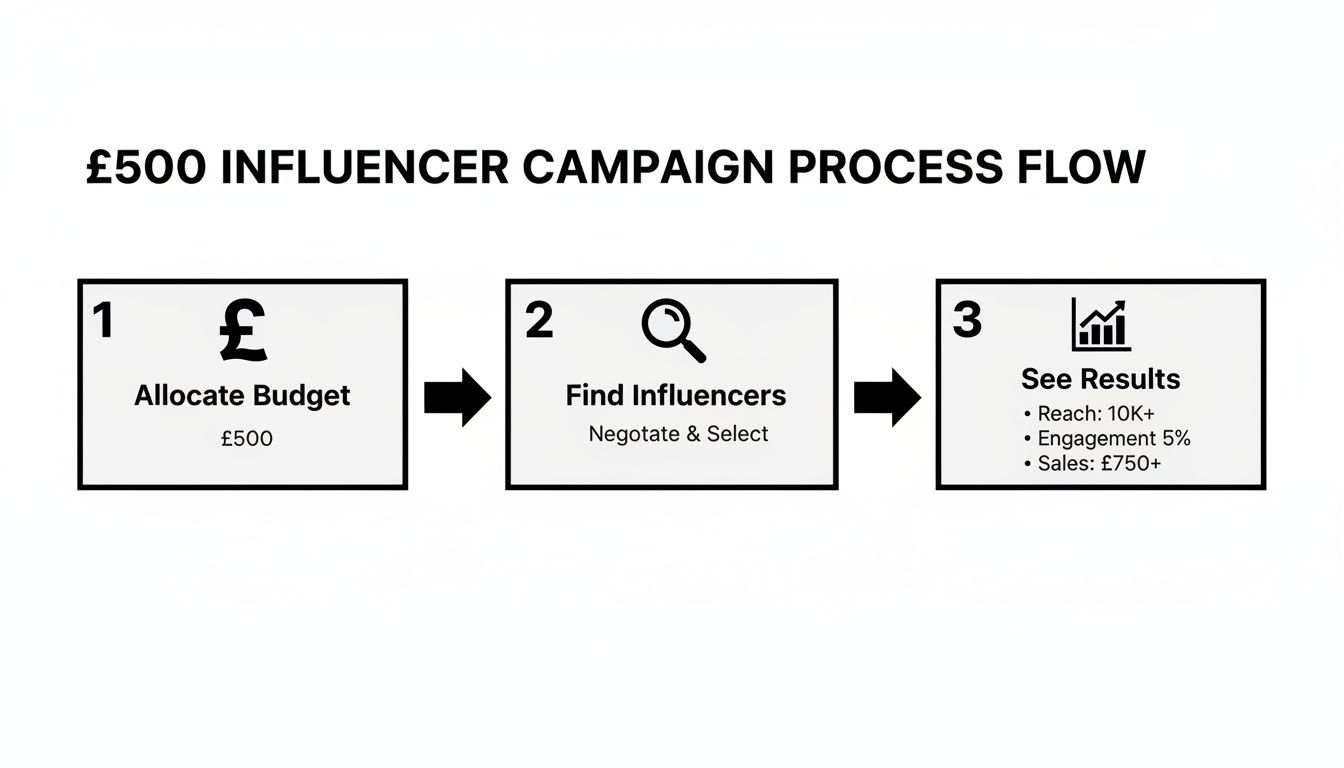
As you can see, a successful, budget-friendly campaign starts with smart financial planning, moves into targeted creator discovery, and finishes with measuring what matters. With a modest budget, every single step needs to be deliberate.
Think of your £500 not as a simple marketing expense, but as a strategic investment in:
- Authentic Content: Getting a library of high-quality, user-generated photos and videos you can repurpose across your own channels.
- Targeted Local Reach: Putting your restaurant in front of thousands of potential customers right in your service area.
- Direct Business Impact: Driving measurable bookings, online orders, and foot traffic that you can track.
Finding and Vetting the Right Local Food Influencers
Let's be blunt: your entire £500 campaign lives or dies by who you choose to partner with. Forget the big-name accounts with bloated follower counts. On this budget, your secret weapon is the local nano or micro-influencer.
These are the creators whose followers are actual neighbours, not just distant admirers. They have the power to drive real footfall because their recommendations feel like a tip from a friend who knows all the best spots in town.
Smart Discovery Tactics
Finding these local gems isn't about blind luck; it's about being a savvy digital detective. You need to think like a local foodie on the hunt for their next great meal.
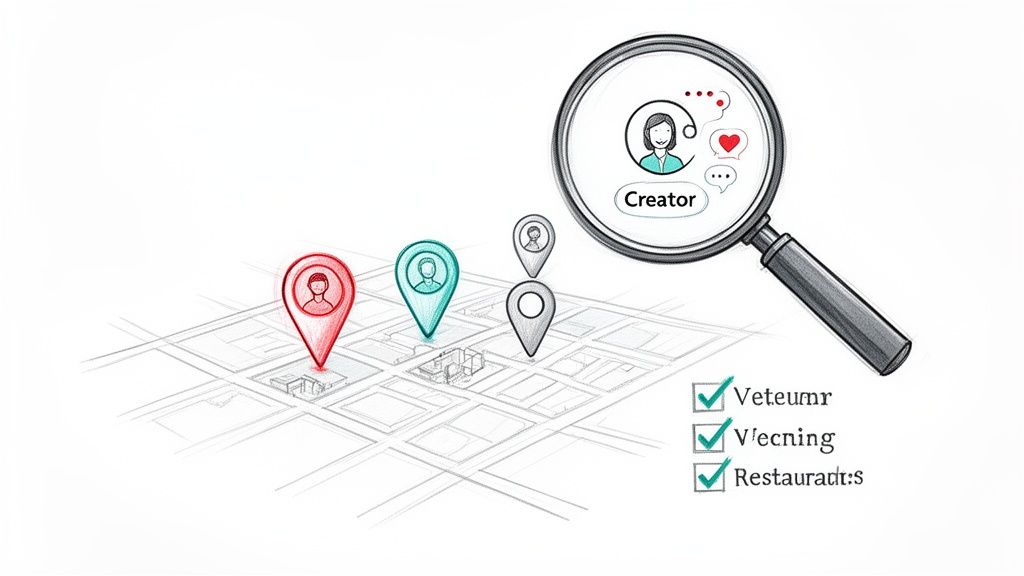
A great place to start is right on Instagram, using its location features. Look up your own restaurant, your street, and even your entire neighbourhood. Who's already posting about the businesses around you? These people are your low-hanging fruit: creators already active and influential in your immediate area.
From there, get specific with your hashtag research. Forget generic terms and dig into the hyper-local tags people genuinely use to find new places to eat. Think along the lines of:
- #manchesterfoodie
- #bristoleats
- #birminghamrestaurants
- #londoncheapeats
These hashtags are absolute goldmines for finding creators whose content is laser-focused on your city. You can even check out the tagged photos of your most popular competitors (the cool independents, not the big chains) to see which creators are already active on the local scene.
Vetting Beyond the Follower Count
Once you've got a shortlist, it's time to put on your critic's hat. A big follower number can easily be a smokescreen for low engagement or a scattered, irrelevant audience. With a tight budget, every pound has to count, so genuine influence is what we're after.
A crucial first step is learning how to spot fake engagement. It’s a skill that will save you from pouring money into accounts propped up by bots and vanity metrics.
Here’s a practical checklist for vetting potential partners:
- Check the Engagement Rate: Don't just glance at the likes. Do a quick calculation: (Likes + Comments) ÷ Followers x 100. For a micro-influencer, a healthy rate is somewhere between 3-6%. If it’s drastically lower, something’s probably off.
- Read the Comments: Are people having real conversations? Or is it just a wall of fire emojis and generic "Looks delicious!" comments? Real engagement means specific questions, inside jokes, and genuine discussion that shows people are actually paying attention.
- Eyeball the Audience: You might not have access to their analytics, but you can get a good feel by clicking on the profiles of people who regularly comment. Do they seem like they live locally? Do they fit the profile of your ideal customer?
Key Takeaway: An influencer with 5,000 local, engaged followers is infinitely more valuable to your restaurant than one with 50,000 followers scattered across the country.
Working with UK food micro-influencers is becoming a go-to strategy for restaurant campaigns under £500, and for good reason. Creators like @northlondonbites or @plateandpint, who focus on local reviews and specific niches like pub grub, are perfect for driving footfall. In fact, 47% of UK marketers now prioritise authenticity over sheer reach, making micro-influencers the most sought-after tier. You can explore more insights from these UK influencer marketing statistics.
Finally, trust your gut on their content style. Does their photography and tone match your restaurant’s brand? If you’re a quiet, fine-dining spot, a creator who only posts blurry, late-night takeaway reviews probably isn’t the right fit, no matter how good their numbers are. You're looking for a partner whose personal brand genuinely complements your own.
For a deeper dive into finding the perfect local partners, check out our guide on how to find local food influencers in your city.
Crafting Outreach That Actually Gets a Response
So you've found a strong shortlist of local food creators. Great. Now for the part that really matters: the first message. This is your one shot to stand out in an inbox that's probably flooded with lazy, copy-pasted requests. Firing off a generic "Hey, wanna collab?" is a surefire way to get ignored.
The secret? A little bit of genuine effort. These creators are running a business. Show them you've done your homework and actually appreciate what they do. A compelling first message has to be concise, personal, and completely transparent about what’s on the table.
The Anatomy of a Winning First Message
Your initial DM or email needs to hit three key notes. Nail these, and you'll instantly separate yourself from the noise and come across as a professional partner worth working with.
- Start with a real compliment. This means referencing a specific post. Don't just say "Love your page." Try something like, "That reel you did at The Corner Bistro was fantastic. We loved how you captured the lighting." It proves you’re a genuine fan, not a bot just scraping for names.
- Make a crystal-clear offer. Don’t be coy. Tell them exactly what you’re providing. For example: "We'd love to invite you in for a complimentary meal for two (up to an £80 value) and offer a £100 fee for your time and content."
- Be specific about your 'ask'. What do you need them to do? Lay it out plainly. Something like: "In exchange, we'd ask for one Instagram Reel and three Stories, posted within a week of your visit."
This direct approach respects their time and sets a professional tone from the get-go. It immediately frames the conversation as a business proposal, which is exactly what serious creators want to see. You'll also quickly learn where different creators stand; some nano-influencers might be thrilled with a gifted meal, whereas most micro-influencers will rightly expect a fee for their work. If you're curious about this, it's worth reading up on why smaller creators can drive a bigger ROI.
Formalising the Agreement Without the Lawyers
Once a creator agrees in principle, it's vital to get the terms down in writing. This doesn’t mean calling up a solicitor or drafting a stuffy contract. All you really need is a simple, clear email that summarises everything, making sure you're both on the same page.
Think of your email agreement as your single source of truth. It protects you both by removing any doubt about deliverables, deadlines, and payment, heading off misunderstandings before they can start.
This confirmation email is just a recap of what you've already discussed. It's a friendly handshake in written form that solidifies the partnership. Using a platform to manage these agreements can centralise all your communications and make tracking each collaboration a breeze.
For instance, this screenshot from Sup shows how you can build campaign templates with the deliverables and fees already set, making the whole process fast and repeatable.
Having a predefined structure like this means every influencer gets the same professional brief, which saves you a ton of time on back-and-forth messages.
Your agreement email should cover these key points:
- The Full Offer: Restate the value of the complimentary meal and the agreed-upon fee.
- The Exact Deliverables: List the content you expect (e.g., 1 Reel, 3 Stories, and any specific tags or handles to include).
- Key Timelines: Confirm the window for their visit and the deadline for posting the content.
- Content Usage Rights: Be clear on how you can use their content. For example, "We reserve the right to reshare your content on our own social channels with full credit for the next 12 months."
Finish the email with a simple call to action, like, "Please reply to this email to confirm you agree to these terms." Their response creates a written record, formalises your collaboration, and sets you up for a smooth and successful campaign.
Hosting Your Influencers: Turning a Visit into Great Content
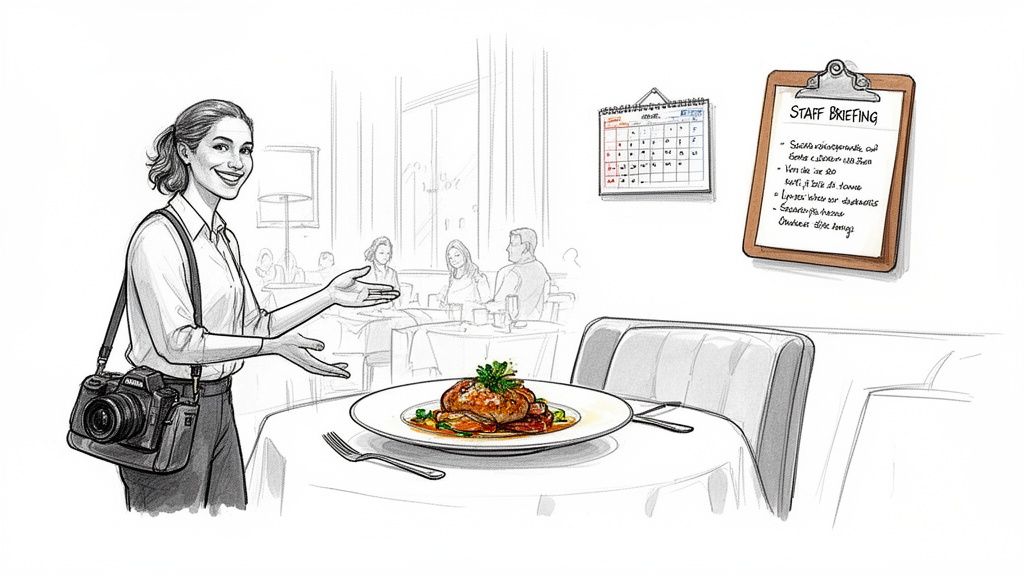
You’ve got your creators lined up and the agreements are signed. Now for the most important part: delivering an experience that makes them want to shout about your restaurant from the rooftops. With a tight £500 budget, your goal isn't just to get a few posts; it's to create genuine fans who can't wait to share their experience.
This is where your planning meets reality. Juggling visits from 3-5 creators can get messy fast if you don't have a solid game plan. The key is to make their visit smooth, professional, and genuinely fun, because that’s what leads to authentic, glowing content.
Pick Your Timings Wisely
First, let's get the scheduling right. I’ve seen this go wrong so many times. Whatever you do, don't book an influencer for 7 PM on a Saturday. Your team is already flat out, the kitchen is under pressure, and the creator will be fighting for space and attention. The whole experience will feel rushed, and the content will show it.
Instead, think about when your restaurant is at its best, but not at its busiest. These are your golden hours:
- Mid-afternoon on a weekday (think 2:30 PM - 4:00 PM): This is the sweet spot. Natural light is still great for photos, the lunchtime rush is over, and they can move around freely without disturbing other diners.
- Early in the week (Monday or Tuesday evening): These nights are often quieter, meaning your team can give the creator a bit more TLC. It sets a much better scene for a relaxed and personal experience.
Getting the timing right shows you respect the creator’s job and your own team's sanity. It's a win-win.
Get Your Team Onboard
Your front-of-house staff are the heart of your hospitality, and for this campaign, they’re your most important ambassadors. A quick, clear briefing before the influencer arrives is an absolute must.
Pull your team aside for a five-minute huddle and run through the essentials:
- Who’s coming: "We have a food blogger, [Creator's Name], visiting today at 3 PM. Their Instagram handle is [@handle] if you want to see their work."
- What's the deal: "They are our guest today. Their meal and drinks are on us, up to the agreed amount. Just make them feel welcome."
- Why they're here: "Their job is to take photos and share what makes us special, so let's make it easy for them. If they need to move a plate for better light, that's totally fine."
This simple chat makes all the difference. When the creator walks in and is greeted by name, they feel like a valued partner, not an inconvenience. That positive vibe is contagious and will absolutely come through in their content.
The experience is the product you're offering them. When a creator feels genuinely looked after, they don't just capture photos of your food; they capture the feeling of your restaurant.
Keep the Communication Flowing
With several creators on the go, staying organised is crucial. A little bit of proactive communication goes a long way in making you look professional and keeping everything on schedule. I find a simple checklist for each creator is the easiest way to keep track.
Think of it as a mini-project plan for each person:
- Booking Confirmed: As soon as you agree on a date, pop a confirmation email over with all the details.
- Friendly Reminder: The day before, send a quick text or DM: "Hey [Name], looking forward to having you in tomorrow at 3 PM!"
- Post-Visit Thank You: The next morning, a simple "Thanks so much for coming in, it was a pleasure to host you! Can't wait to see the content" works wonders.
- Deadline Nudge: If the posting date is getting close, a gentle reminder is perfectly acceptable. "Just a friendly check-in, your post is due on Friday as we discussed. Let me know if you need anything from us!"
This isn’t about micromanaging; it’s about being a great partner. It prevents mix-ups, ensures you get what you agreed on, and builds a relationship that could lead to more collaborations down the line.
Measuring Your Campaign and Maximising ROI
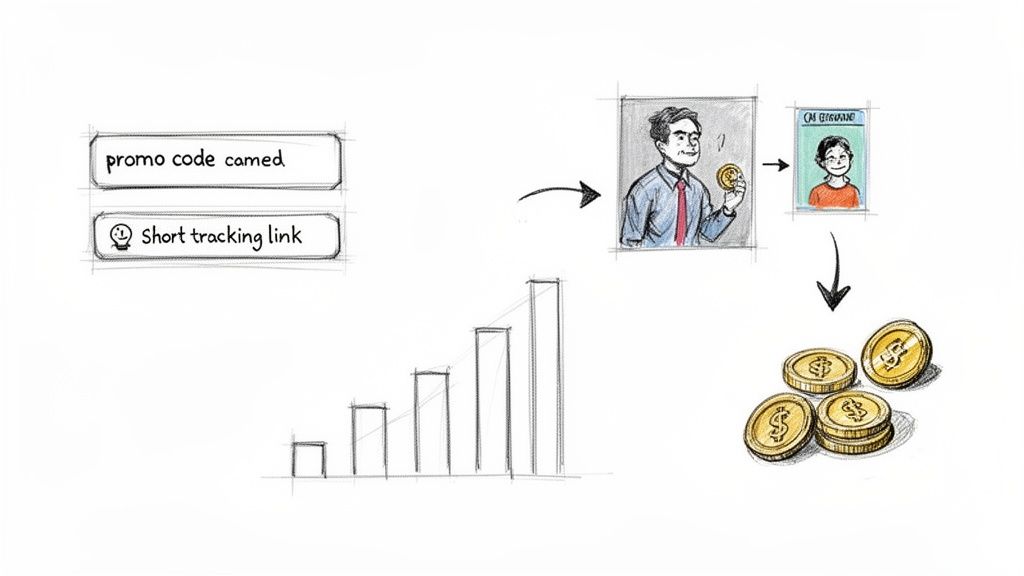
The content is live, the influencers are posting, and your restaurant is buzzing. But here's the crucial question: how do you know if your £500 investment actually paid off? This is where so many restaurants stumble, getting distracted by vanity metrics like likes and shares instead of focusing on what really matters, bums on seats.
Success isn’t just about making noise; it’s about turning that noise into tangible business. To do that, you need to know how to properly measure social media ROI. This means getting a rock-solid tracking system in place from the very start.
The single most effective way to prove ROI is by giving each influencer their own unique, trackable codes and links. Honestly, this is non-negotiable if you want to see what’s truly working.
Assign Trackable Codes and Links
Giving every creator their own digital breadcrumb trail is the only way to attribute real sales directly to their efforts. It’s surprisingly simple to set up.
- Unique Promo Codes: Assign each influencer a distinct discount code for your online ordering or booking system (think CHLOE15 or SAMBITES). This allows you to see exactly who is driving sales and how much revenue they're generating.
- Custom UTM Links: For online bookings, use a free UTM builder to create a special tracking link for each creator's bio or stories. This feeds data directly into your Google Analytics, showing you exactly how many clicks and confirmed reservations came from their specific content.
These simple tools transform your campaign from a vague "brand awareness" exercise into a measurable sales machine. You'll know precisely which creator is sending you the most valuable customers.
Don't just give every influencer the same generic "10% off" code. A unique identifier like SOPHIEEATS or LIAM20 is essential. It's the key to knowing who is actually driving business, not just creating pretty pictures.
The data backs this up. With the UK influencer market forecasted to grow by 29.5% annually from its $2.36B valuation in 2024, the opportunity is huge. Given that 69% of UK consumers have bought something after seeing an influencer post, using promo codes and UTMs is how you claim your piece of that pie and turn views into verifiable bookings. You can see even more about UK food influencer trends on sproutsocial.com.
Focus on KPIs That Matter
Likes feel good, but they don't pay your suppliers. When you're looking at the results, it’s vital to focus on Key Performance Indicators (KPIs) that reflect genuine business impact.
Here's a breakdown of the metrics that truly count for a restaurant campaign, moving beyond the fluff to what actually affects your bottom line.
Key Performance Indicators for Your Restaurant Campaign
| KPI | What It Measures | How to Track It |
|---|---|---|
| Promo Code Redemptions | The direct revenue and number of new customers brought in by a specific influencer. This is your top metric. | Your Point of Sale (POS) system or online ordering platform. |
| UTM Link Clicks & Conversions | The number of people who clicked to your site and, more importantly, completed a booking. | Google Analytics under Campaigns. |
| Post Saves | How many users saved the post for later. This is a very strong signal of future purchase intent. | Instagram Insights on the specific post. |
| Cost Per Acquisition (CPA) | How much it cost you to get one new customer. Calculated as Total spend ÷ Number of redemptions. | A manual calculation using data from your other tracked KPIs. |
Tracking these gives you a crystal-clear picture of what worked. Maybe one influencer drove a lot of clicks but few redemptions, while another drove fewer clicks but more actual sales. These are the insights that will make your next campaign even more profitable. For a deeper dive, check out our complete guide on how to measure influencer marketing ROI.
Multiply Your ROI by Repurposing Content
The campaign isn’t over when the final post goes live. A huge mistake I see restaurants make is letting all that beautiful, authentic content die on the creator’s feed. You’ve invested in getting it made. Now it's time to put it to work for you.
Make sure your agreement includes the rights to repurpose their content (always with credit, of course). This content is a goldmine.
- Fuel Your Social Feeds: Use their high-quality photos and videos to fill your own content calendar for weeks to come.
- Upgrade Your Website: Add their vibrant lifestyle shots to your gallery or homepage to show real people loving your food.
- Power Your Ad Campaigns: Turn their best-performing video clips into targeted social media ads. A real customer enjoying your signature dish is infinitely more powerful than a sterile stock photo.
By reusing this content, you stretch the value of your initial £500 investment far beyond the original campaign. You're not just paying for a one-off post; you’re acquiring a library of powerful marketing assets that will keep driving business for months.
Common Questions About Running a Restaurant Influencer Campaign on a Budget
If you're thinking about putting £500 into an influencer campaign, you've probably got a few questions swirling around. That’s a good thing. Getting clear on the details is what separates a smart investment from wasted cash. Let's walk through some of the most common sticking points for restaurant owners.
Should I Pay Influencers or Just Offer a Free Meal?
This is the big one, and from my experience, the best answer for a tight budget is a hybrid model.
Purely 'gifting' a meal can sometimes work, especially with nano-influencers (those with under 10,000 followers) who are just starting out and keen to build their portfolio. But if you want to guarantee specific posts and professional-looking content, you really need to include a fee.
Think of it this way: the complimentary meal covers their time and experience at your restaurant. The fee, however, pays for their actual work: the shooting, the editing, writing a compelling caption, and engaging with their audience in the comments. It’s the work that happens long after they’ve paid the bill.
Adding even a small fee of £50-£150 completely changes the dynamic. It professionalises the arrangement, turning a casual favour into a proper business agreement. This gives you the standing to set clear expectations for the content, deadlines, and how you can use their posts later on.
A fee secures your investment. Without one, you have very little leverage if a creator doesn't post or delivers sloppy content. With a fee, you're buying a guaranteed service.
For a £500 campaign, your best bet is to allocate a portion of your budget to paying fees for 2-3 key micro-influencers who you can see have a genuinely engaged local following. You can then supplement this by offering gifted-only collaborations to a handful of smaller nano-influencers to broaden your reach and get more content.
How Do I Write a Simple Contract for an Influencer?
You can relax on this one. You absolutely do not need a solicitor or some dense, jargon-filled document. For campaigns of this size, a straightforward email that both parties agree to is all you need. It’s perfectly sufficient and acts as your single source of truth if any confusion comes up later.
Think of your agreement email as a simple checklist. To make sure everyone’s on the same page, here's what it needs to cover:
- Who's Involved: State your restaurant's name and the influencer's full name and social media handle (@username).
- The Full Offer: Spell out exactly what you're providing. For example: "We're pleased to offer one complimentary meal for two (up to a value of £80) plus a fee of £100."
- The Content Deliverables: Be precise. Don't just say "a post"; specify what you need. For instance: "The collaboration includes one Instagram Reel (at least 60 seconds) and three consecutive Instagram Stories." Also, be sure to list any accounts they must tag or hashtags they need to use.
- The Timeline: Lock in the dates. State the agreed-upon date for their visit and, most importantly, the deadline for when all content must be published.
- Content Usage Rights: This is crucial for you. Define how you can use their work. A standard and fair clause is: "We reserve the right to reshare your content on our own social media channels and website with full credit for up to 12 months."
Just finish the email with a clear call to action, like: "Please reply to this email to confirm you agree to these terms." Once they reply with a "yes," you have a binding written record of your partnership. It's that simple.
What ROI Can I Realistically Expect From a £500 Campaign?
The return on your £500 should be measured in more than just likes and comments. A well-planned campaign delivers value across several areas, and you need to track them all to see the full picture.
A realistic return on investment (ROI) from a £500 spend breaks down like this:
- Direct, Trackable Revenue: This is the clearest win. By giving each influencer a unique promo code or booking link, you can directly attribute sales. Even 10-15 redemptions on an average bill of £30 recoups a big chunk of your initial spend right away.
- A Bank of High-Value Content: Let's say you partner with four creators and each provides four pieces of content (e.g., one Reel, three Stories). You’ve just landed 16 unique marketing assets. Think about what it would cost to hire a professional photographer and videographer to produce that volume of content. It would easily top £1,000. You can then repurpose these authentic photos and videos on your social media, your website, and even in digital ads for months to come.
- Hyper-Targeted Brand Awareness: A good campaign will put your restaurant in front of tens of thousands of local foodies. While this is harder to put a number on, tracking the total views, impressions, reach, and shares gives you a solid measure of how much your visibility has grown within your target demographic.
- Powerful Social Proof: Each post from an influencer is a third-party endorsement. These authentic reviews build trust in a way that your own advertising never can. When potential customers search for your restaurant on Instagram or TikTok, they’ll find genuine, positive content from real people, which is incredibly persuasive.
When you add up the direct revenue, the money saved on content creation, and the value of targeted awareness and social proof, a successful £500 influencer campaign can easily generate over £1,500 in total value for your restaurant.
Ready to stop juggling spreadsheets and DMs? Sup is the done-with-you growth engine that makes launching and managing restaurant influencer campaigns effortless. From finding verified local creators to tracking real-time ROI with unique codes and links, Sup handles the entire process so you can focus on what you do best: running your restaurant. See how it works at https://sup.co.
More on industries
- How to Run Influencer Campaigns for Multiple Restaurant Locations in 2026
- How to Run a Restaurant Influencer Campaign (Step-by-Step): A Practical Guide
- How to Run Influencer Campaigns for Seasonal Restaurant Promotions: How to Run I
- How to Run a Restaurant Grand Opening with Influencers: 7 Actionable Tips
See how many creators post about you and your competitors
Type in your brand's Instagram handle and we count the creators who post about you and about your five closest competitors. It takes about a minute and it is free. Or request a demo and we will show you the creators in your niche and walk you through the dashboard.
 Book a call