29 May 2026
How to Become an Ambassador for a Brand: A 2026 UK Guide
You're probably in the stage where you've posted consistently, people do ask what you use, and you've seen other creators announce ambassador deals that look far more serious than a free hoodie and a discount code. That's usually the moment the question shifts from “How do I get gifted?” to how do I become an ambassador for a brand in a way that pays and lasts?
The answer is less glamorous than most social posts make it look. Brands don't hire ambassadors because someone looks good holding a product. They hire people who can represent the brand well, stick to guidelines, communicate like a professional, and help move measurable activity.
If you treat ambassadorship as a business function rather than a status symbol, you'll make better decisions earlier. You'll choose stronger brand fits, pitch with evidence, negotiate cleaner terms, and avoid getting trapped in underpaid long-term deals that eat your content calendar.
Understanding Modern Brand Ambassadorship
A creator signs a 6-month ambassador deal, posts the first reel, collects the discount code, and assumes the hard part is done. Two months later, the brand asks for usage rights, performance numbers, and an extra round of edits that were never discussed. That is where many new ambassadors learn the difference between a casual collaboration and a commercial role.
The business case matters. In the UK, the creator economy was estimated at £1.9 billion in 2023, and the wider UK influencer market was valued at £1.3 billion in 2024, according to UK creator economy and ambassador market data. Brands put budget into ambassador programmes because they expect reach, trust, and sales support they can measure.
What the role involves
Modern ambassadorship usually means a longer-term agreement with defined deliverables, approval steps, disclosure requirements, and some form of reporting. In practice, that often runs across several months, with enough structure that you need to manage it like client work.
The role usually includes four jobs at once:
- Audience translation. You turn a brand message into content your audience will trust and respond to.
- Commercial support. You drive action through links, codes, launches, product education, and repeat exposure.
- Brand representation. Your tone, reliability, and compliance reflect on the company.
- Account management. You handle briefs, deadlines, revisions, permissions, and post-campaign updates.
This is why contracts matter early.
A serious ambassador agreement can cover content quantity, usage rights, exclusivity, payment timing, cancellation terms, and what happens if the brand wants extra edits or paid amplification. If those terms are vague, the deal can become expensive for the creator very quickly. Free product rarely covers the cost of a packed content calendar, especially if the brand expects priority access to your audience.
Practical rule: Brands hire ambassadors who can deliver on brief, on time, and with evidence the partnership worked.
What brands assess before they offer a deal
Follower count still gets attention, but it is rarely enough on its own. A niche creator with clear buyer intent and clean communication is often easier to justify internally than a bigger account with weak fit.
A strong ambassador candidate usually shows:
| What brands want | What weak applications focus on |
|---|---|
| Clear niche relevance | Generic “I can promote anything” claims |
| Reliable delivery | Random posting with no system |
| Professional communication | Casual DMs with no context |
| Audience trust | Inflated self-description |
| Measurable results | Vanity metrics only |
The strongest candidates also understand how the brand sells. A DTC skincare company may care about code redemptions and saves. A software company may care more about lead quality, demo interest, and category authority. If you want to work with service or SaaS brands, a solid B2B LinkedIn connection strategy can matter as much as short-form content because the buying journey is longer and more relationship-driven.
If you need a clear primer on role types, what brand ambassadors do is a useful reference before you start pitching.
Creators who build sustainable ambassador income treat the role like part marketing, part client service, and part performance media. That mindset changes how you price, what terms you accept, and how you prove your value after the first post goes live.
Build Your Professional Creator Foundation
Before you contact a single brand, fix the parts of your creator presence that still look personal rather than professional. Most failed outreach starts long before the pitch email. It starts with a profile that doesn't tell a brand who you help, what you make, or why your audience listens.
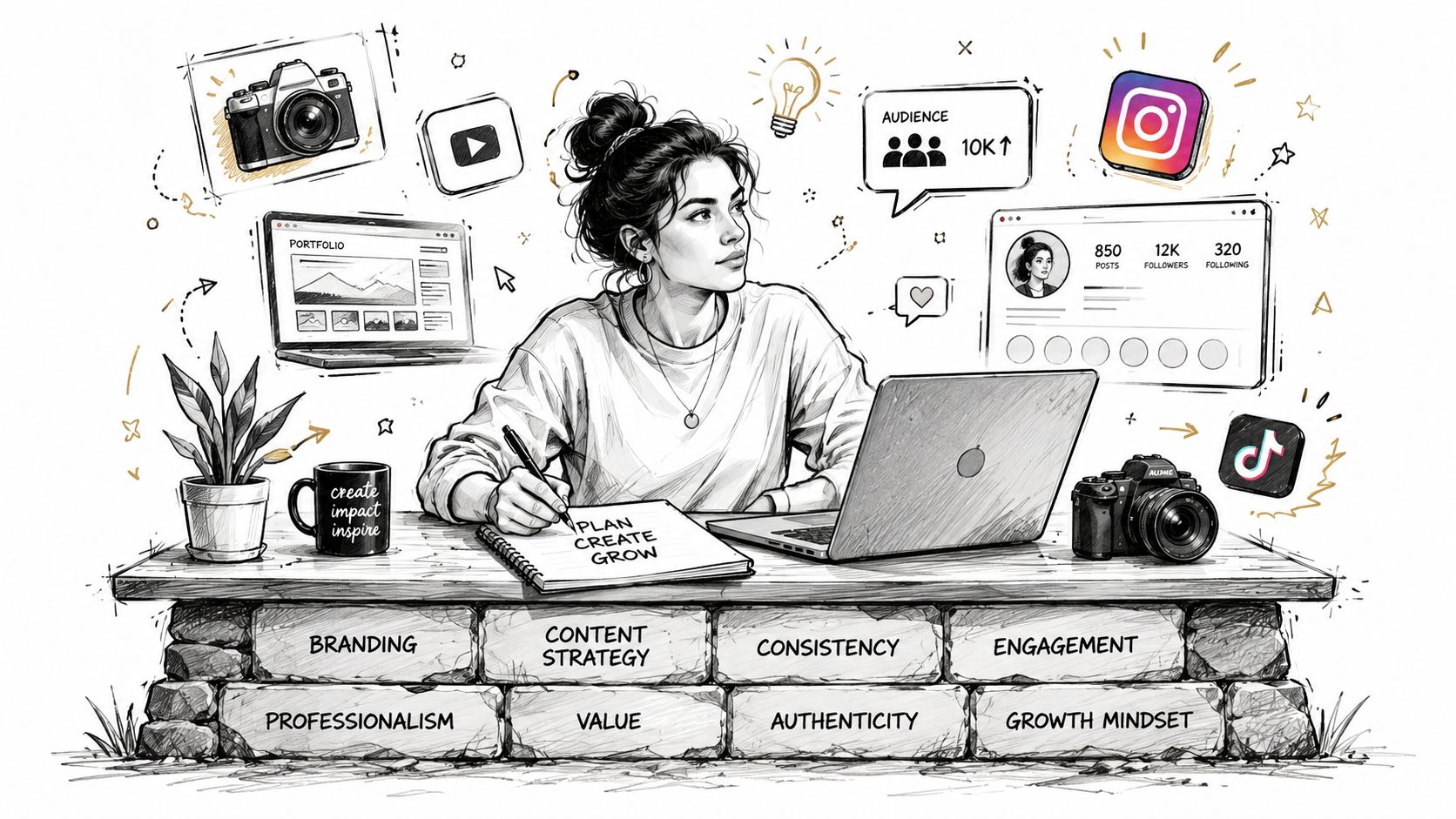
Pick a niche you can defend
“Niche down” gets repeated so often that creators stop hearing it. But in ambassador work, niche is how a brand assesses fit quickly.
If you create content about skincare one day, meal prep the next, then budget travel, then gym wear, a brand manager can't tell what kind of recommendation power you have. Broad interests are fine. Broad positioning is harder to sell.
Choose a lane that answers these questions:
- What do people already trust me on
- What products or services appear naturally in my content
- What buyer mindset does my audience have
- Which UK-facing brands would see a clear overlap
That last point matters. If your audience relevance is local or national, say so and show it. UK brands want confidence that your content reaches people they can serve.
Clean up your public profile
Your Instagram or TikTok profile is not just social presence. It's a landing page.
A usable profile usually includes:
- A clear bio that states your niche and the type of content you make
- A recognisable profile image that looks consistent with your content style
- Pinned posts that show your strongest brand-friendly content
- A contact route through email or a creator contact form
- Visual consistency so a brand can understand your tone in seconds
A weak profile forces the brand to work too hard. A strong one answers obvious questions before they ask.
Here's a simple self-audit:
| Profile element | Good sign | Bad sign |
|---|---|---|
| Bio | States niche and value clearly | Vague slogan only |
| Feed or grid | Consistent topics and visuals | No discernible pattern |
| Reels or videos | Product storytelling feels natural | Content looks forced when branded |
| Contact info | Easy to find | Hidden or missing |
Build content that proves commercial readiness
You don't need a paid deal to show that you can sell a product naturally. You do need examples.
Create content that demonstrates:
- Review ability by explaining what you like and why
- Demonstration skill by showing use cases, not just aesthetics
- Opinion with restraint because hard-selling everything kills trust
- Narrative structure so the product fits the story instead of interrupting it
The best pre-brand content often looks like a soft portfolio. It shows a creator can integrate products without sounding scripted.
This also applies to your outreach habits outside social. If you're building brand relationships through professional networking, the same principles matter. Clear positioning, relevance, and a personalised message are what make a connection request worth answering. The same logic shows up in this guide to B2B LinkedIn connection strategy.
A creator foundation isn't exciting work. But it's the part that makes every later step easier. Better profile, better media kit. Better media kit, better outreach. Better outreach, better negotiating position.
Craft a Media Kit That Gets Noticed
Your media kit is not a decorative PDF. It's your sales document.
When a brand manager opens it, they should understand three things fast. Who you are, who you reach, and what kind of commercial value you can create. If the document is vague, over-designed, or packed with unsupported claims, it works against you.
What to include
Think of the kit like a creator CV with evidence attached.
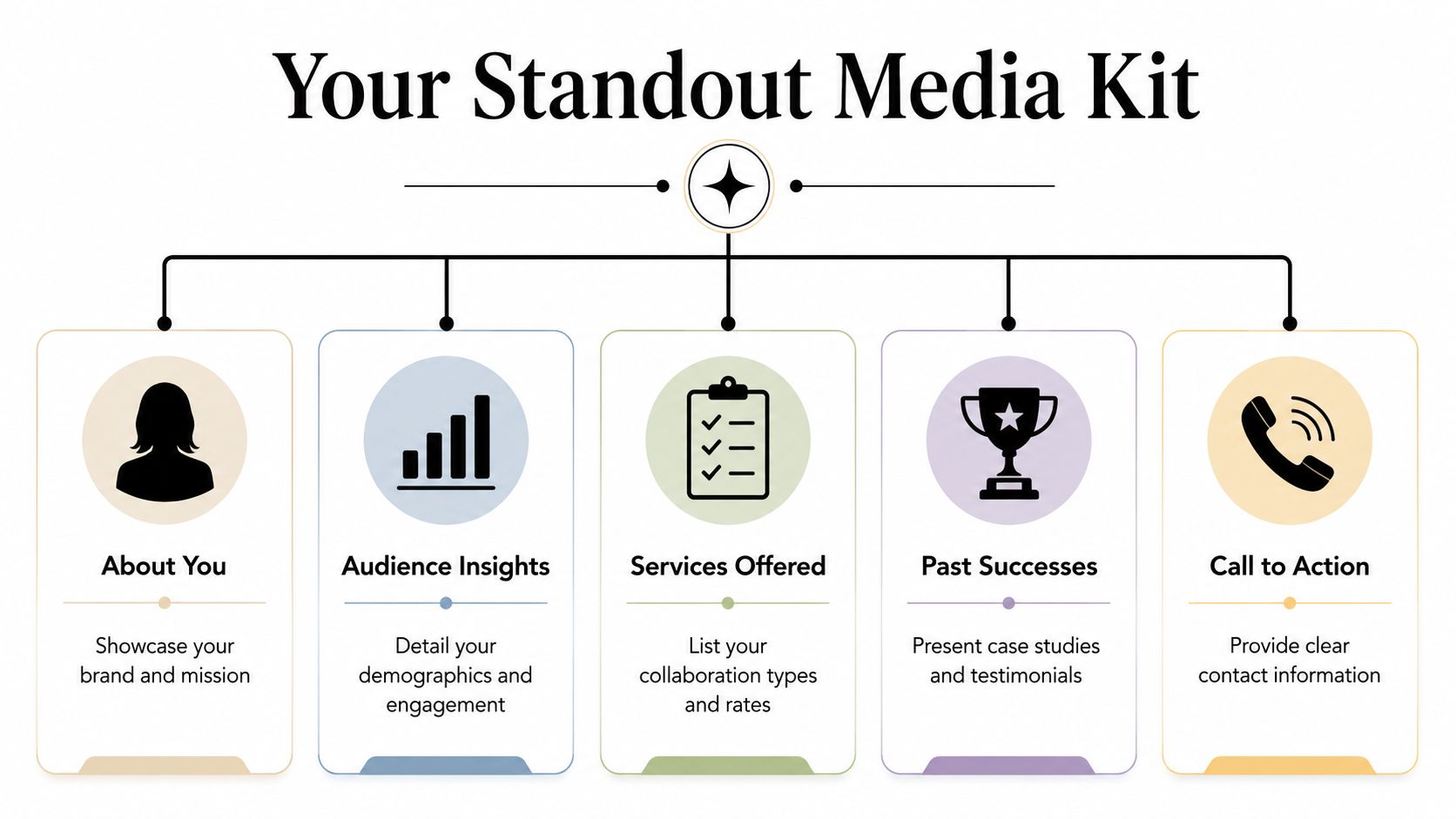
At minimum, include:
- A short positioning statement that explains your niche, tone, and audience
- Platform overview covering the channels where you actively create
- Audience insight with location relevance, interests, and any platform-native analytics you can verify
- Content examples that show both quality and range
- Previous collaboration results including unpaid or gifted work if you can show tracked outcomes
- Contact details so the next step is obvious
If you have previous brand work, don't just show logos. Show what happened.
Bad: “Worked with beauty brands.”
Better: “Created short-form tutorial content, product demo clips, and story sequences with tracked link activity.”
What makes a media kit credible
Most weak kits fail because they read like self-promotion instead of operational proof. Brands are trying to reduce risk. Your job is to make the hiring decision easier.
Use this filter before you send anything:
| Include this | Remove this |
|---|---|
| Verifiable platform data | Inflated claims with no proof |
| Specific content formats you offer | Generic “I do everything” language |
| Audience relevance to a niche | Empty statements about being passionate |
| Prior measurable outcomes | Screenshots with no context |
If you don't yet have paid campaign history, use your own content as evidence. Show a product-focused post, explain why it performed well, and describe the audience response in concrete terms.
Format it for fast review
Brand teams don't study media kits line by line. They scan.
So make it skimmable:
- Lead with fit. Your opening line should tell the brand what category you belong to.
- Put audience relevance early. Don't bury who you reach on page four.
- Use screenshots carefully. Only include them if they support a point.
- Make contact easy. One click should get them to your email or booking route.
A media kit should answer objections before a call happens. If a manager still has to ask what your audience looks like or what content you actually make, the kit isn't doing its job.
A strong media kit doesn't need to impress everyone. It needs to make the right brand think, “This creator understands the assignment.”
Master the Art of Brand Outreach
Most creators lose here because they confuse activity with quality. Sending fifty generic emails doesn't make you proactive. It makes you ignorable.
The better approach is targeted outreach built on fit, timing, and proof. Guidance on becoming a brand ambassador through tailored outreach consistently recommends researching compatible brands, tracking them in a spreadsheet, and following the brand's application workflow where one exists. That's far more effective than mass applications that say the same thing to everyone.
Build a shortlist, not a wish list
Start with brands you can explain in one sentence.
Good fit sounds like this: “I create practical running content for UK beginners, and this brand sells products that already appear naturally in that routine.”
Weak fit sounds like this: “I love this brand and would be honoured to collaborate.”
Admiration is nice. Commercial fit is what gets a reply.
Track your outreach in a simple sheet with columns such as:
- Brand name
- Category
- Why the fit makes sense
- Application page or contact route
- Past campaign notes
- Date contacted
- Follow-up status
That system keeps your outreach clean and stops you from sending the same vague pitch repeatedly.
Lead with value, not desire
The strongest technical benchmark for selection is not raw audience size but tracked performance. Programme success is commonly evaluated with ROI-linked metrics such as click-throughs or code redemptions, according to brand ambassador KPI guidance. That's why your outreach should lead with evidence that you can produce measurable action.
If you have prior collaboration data, mention it. If you don't, point to content patterns that suggest strong product storytelling and audience trust.
Here's a simple outreach structure that works well by email:
Hi [Name], I'm a UK creator focused on [niche], and I've been following [brand] because [specific reason tied to product, campaign, or audience]. My content focuses on [brief description], and my audience responds well to [relevant format or topic]. I think there's a strong fit between your brand and the kind of practical content I already make. I'd love to discuss a brand ambassador partnership centred on [content angle]. I've attached my media kit, which includes audience details and examples of previous product-led content. If helpful, I can also suggest a few campaign ideas tailored to your current priorities. Best, [Name]
That email works because it does three things. It proves relevance, signals professionalism, and makes the next step easy.
Follow up like a professional
A follow-up should add context, not guilt.
Try this:
Hi [Name], Following up in case this is relevant for an upcoming campaign window. I've also included one additional content example that shows how I approach [category] storytelling in a way that feels native to my audience. Happy to tailor ideas if your team is currently looking for ambassador partners in the UK.
Short. Useful. No begging.
If you want to know how to become an ambassador for a brand, remember this: outreach works best when it feels like business development, not fan mail.
Negotiate Your Ambassadorship Like a Pro
At this point, hobby thinking has to stop.
A lot of creators finally get interest from a brand, panic about losing it, and agree too fast. That's how you end up in a long-term arrangement with unclear deliverables, broad usage rights, soft payment language, and exclusivity that blocks better deals.
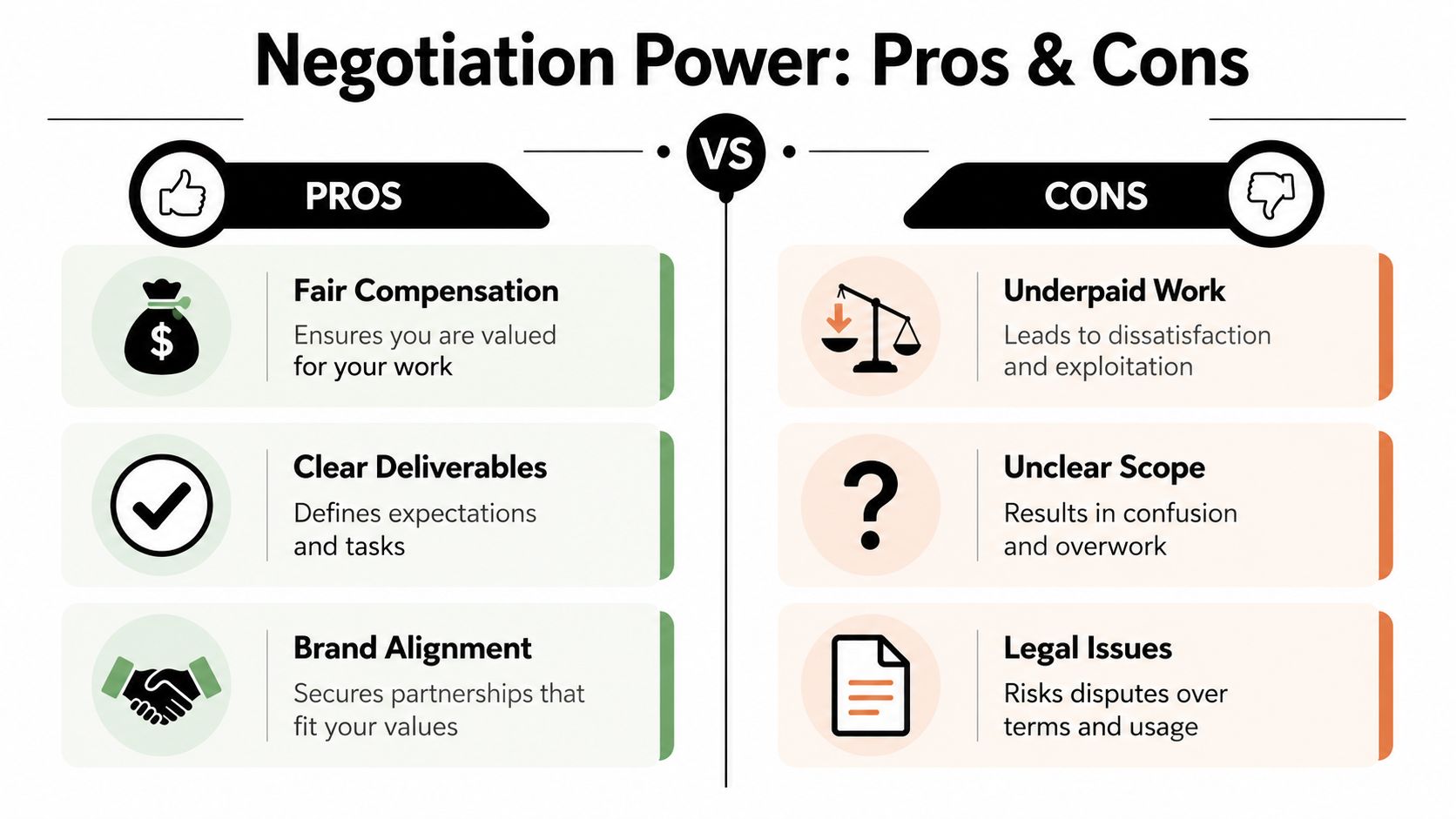
A major gap in creator advice is judging whether an ambassador role is financially worthwhile. The UK influencer market was estimated at about $2.5 billion in 2024, and because ambassador roles often imply a longer-term relationship, creators need to ask about deliverables, content ownership, and termination terms upfront, as outlined in this guide to the financial side of ambassadorship.
Know the payment structure before you say yes
Not all ambassador deals are bad. Not all are good. The structure decides a lot.
Here's a practical comparison:
| Model | When it can work | Main risk |
|---|---|---|
| Gifting only | Early portfolio-building with a brand you genuinely want to feature | You do unpaid work that looks professional enough to deserve pay |
| Commission only | You already know your audience converts in that category | You carry all performance risk |
| Flat fee | Clear deliverables and controlled scope | Brand may ask for extra usage or revisions without extra pay |
| Hybrid | Ongoing ambassador work with both content output and tracked sales | Terms can get messy if attribution rules aren't clear |
For long-term ambassadorships, hybrid deals are often worth exploring because they reflect both creative labour and commercial upside. But only if the mechanics are spelled out.
The clauses that matter most
Don't focus only on money. Focus on the full commercial package.
Ask about:
- Deliverables. How many reels, stories, posts, appearances, or review rounds are included?
- Usage rights. Can the brand repost your content organically, or run it in paid ads too?
- Exclusivity. Which competitors are restricted, and for how long?
- Term length. Is this campaign-based or ongoing?
- Payment timing. When are invoices paid?
- Termination. What happens if the partnership ends early?
If you want a useful reference point for contract language, this overview of influencer contracts and agreements is a solid starting point.
Here's a script that keeps the tone professional:
Thanks for sending this across. I'm interested, and before confirming I'd like to clarify the scope so we're aligned on deliverables, usage, exclusivity, and payment terms.
Here's another when the usage ask is too broad:
I'm happy for the brand to repost the content on owned channels. If you'd like paid usage or extended licensing, I'd price that separately because it increases the commercial value of the asset.
That one sentence will save you a lot of regret.
A useful walkthrough on mindset and deal framing is below.
Don't negotiate like you're asking for a favour
You are not being difficult by asking questions. You are reducing ambiguity.
Ask for the scope in writing before you discuss enthusiasm. Excitement without clarity is how creators get overcommitted.
A strong negotiation stance sounds calm, specific, and evidence-based. It doesn't sound defensive. It doesn't overexplain. It doesn't apologise for having terms.
If a brand pushes back on basic clarity, pay attention. That's not a negotiation issue. That's a preview of the working relationship.
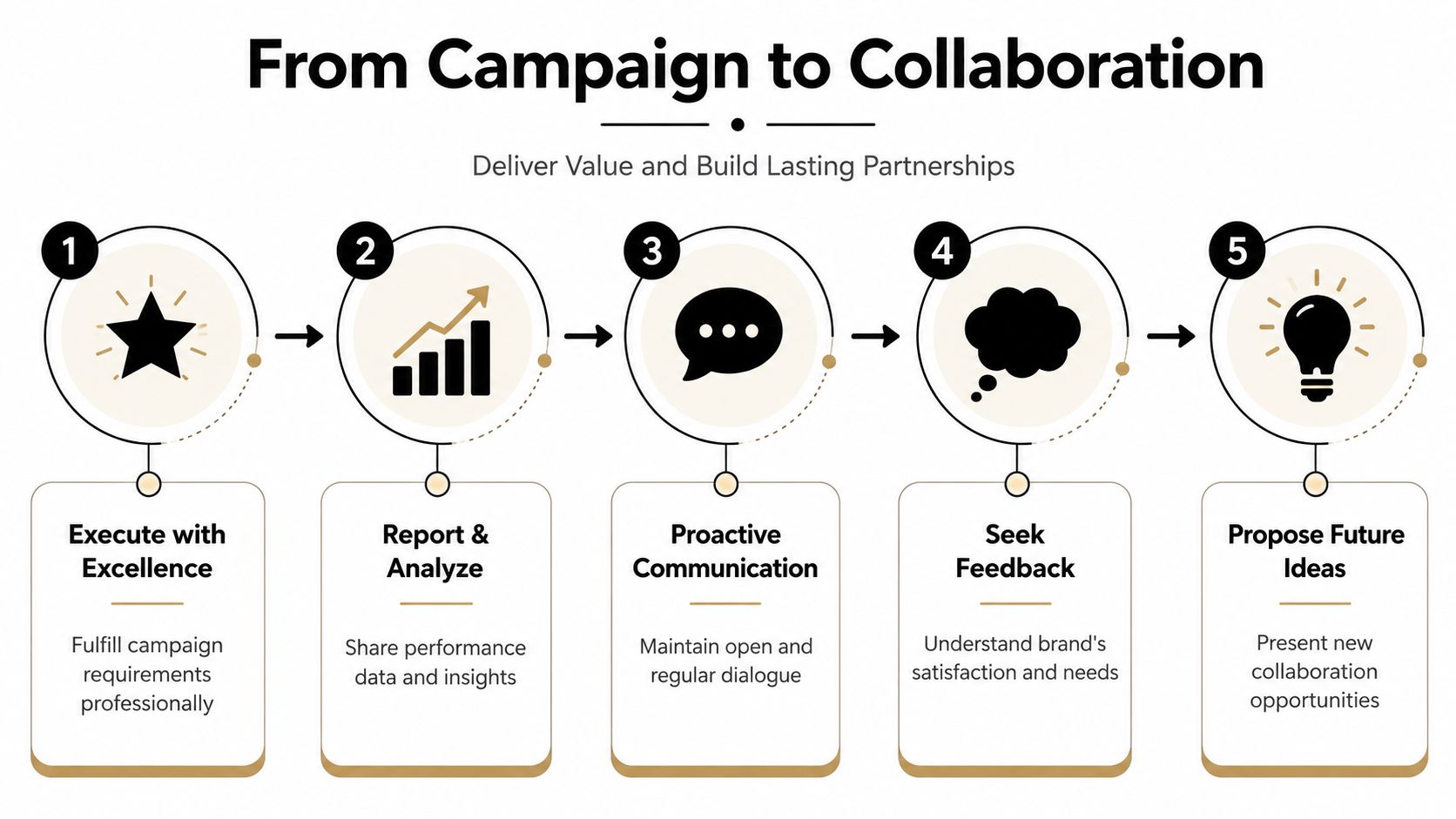
Deliver Value and Build Lasting Partnerships
Landing the deal isn't the finish line. It's the test.
Plenty of creators know how to get a yes. Fewer know how to become the person a brand wants to renew, expand, and recommend internally. That comes from operational discipline as much as creative quality.
Do the basics properly
A reliable ambassador does the obvious things well:
- Meets deadlines without needing repeated reminders
- Follows the brief while still making the content feel native
- Sends files cleanly with captions, links, and approvals where needed
- Communicates early if a timing or production issue comes up
That baseline matters more than creators think. Brands remember who made the process easier.
Prove value with tracking and reporting
In the UK, the Advertising Standards Authority has required since 1 November 2021 that paid-for online ads are clearly identifiable, and ambassador programmes commonly use unique UTM links or promo codes to attribute traffic and sales, according to UK guidance on brand ambassador professionalism and disclosure. That same guidance notes spreadsheets become insufficient once a programme reaches about 50 ambassadors, which tells you how operational this work has become.
For you as a creator, the takeaway is simple. Track what you can and report it back clearly.
A useful post-campaign summary can include:
| Reporting element | What to include |
|---|---|
| Content delivered | Links or screenshots of published assets |
| Audience response | Comments themes, saves, shares, or story replies |
| Attributed activity | Link clicks, code use, or other agreed indicators |
| Creative insight | What angle or hook appeared to resonate best |
You don't need a giant dashboard to do this well. But you do need organised evidence. Some brands run this manually, and some use platforms that handle outreach, creator management, UTM links, promo codes, and attribution in one place. Sup's overview of brand ambassador programmes is useful if you want to understand how those programmes are structured from the brand side.
Compliance is part of performance
Disclosure is not an admin detail. It's part of the job.
If a post is paid for or incentivised, the label needs to be clear enough that people can tell it's advertising. Creators who handle this well protect both audience trust and the brand relationship.
The creators who get renewed don't just make strong content. They make the partnership easy to defend internally because the work is compliant, organised, and attributable.
The final step is proactive thinking. If a campaign performed well, don't wait to be asked back. Send ideas for the next one. Suggest a seasonal angle, a new content format, or a stronger conversion hook based on what you observed.
That's how one campaign turns into a retainer mindset. Not by asking for loyalty, but by making the business case obvious.
If you're building or joining ambassador programmes and want the operational side to run cleanly, Sup helps brands and teams manage creator outreach, tracking, codes, attribution, and reporting in one workflow. It's built for businesses that want ambassador partnerships to function like a measurable growth channel, not a spreadsheet-heavy side project.
More on programs
See how many creators post about you and your competitors
Type in your brand's Instagram handle and we count the creators who post about you and about your five closest competitors. It takes about a minute and it is free. Or request a demo and we will show you the creators in your niche and walk you through the dashboard.
 Book a call