25 March 2026
Food Influencers in Manchester: A Guide for Restaurant Owners
Collaborating with food influencers in Manchester can completely change the game for your restaurant. It’s about more than just a few nice photos; it’s a direct line to new customers, helping you build trust and get a real edge in a competitive city. By working with authentic, local voices, you can showcase your unique dining experience and turn their online credibility into actual footfall and revenue.
Why Manchester Food Influencers Are Your Restaurant's Secret Weapon
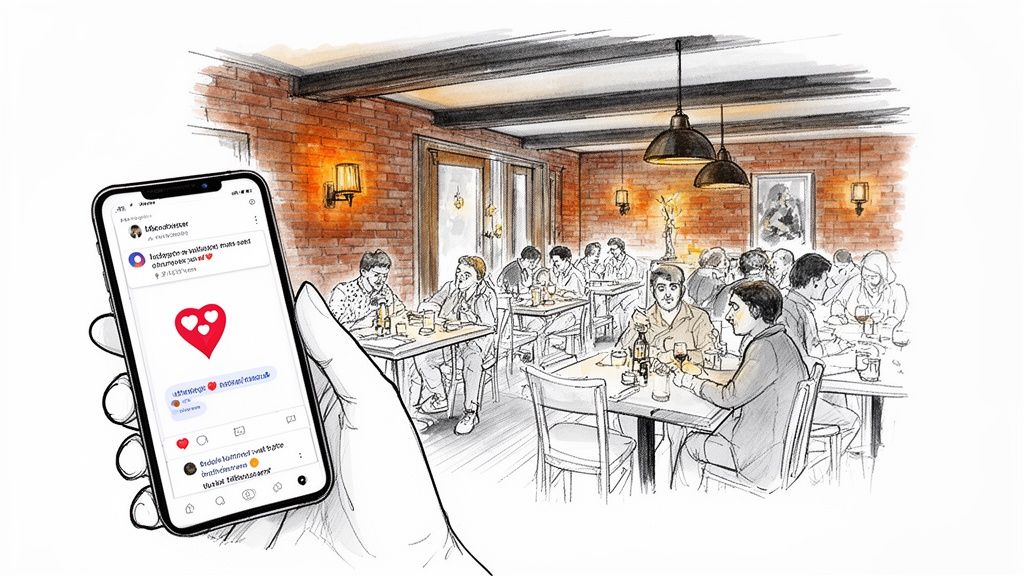
Let's be honest, traditional advertising can feel like shouting into the void. Manchester’s food scene thrives on genuine conversation and word-of-mouth, and local food influencers are right in the middle of it all. These aren't distant celebrities; they're passionate Mancunians who have earned a loyal following by sharing their real dining experiences.
When a local foodie raves about the flat white at your Northern Quarter cafe or the Sunday roast at your Didsbury bistro, their audience pays attention. Why? Because it feels like a recommendation from a trusted friend, not a faceless corporate ad. It's this authenticity that makes all the difference.
The Power of Being Hyper-Local
The real impact often comes from micro and nano-influencers. While their follower counts might seem smaller, their audiences are incredibly engaged and, crucially, local. A glowing review from a creator known for covering the Ancoats food scene speaks directly to people who are actively looking for a great meal in that exact neighbourhood.
This kind of targeted exposure brings real, measurable results:
- Authentic Storytelling: Influencers don't just post a picture; they tell the story of your restaurant, from the atmosphere to the care that goes into every dish.
- Building Social Proof: A steady stream of positive posts from different creators acts as powerful social proof, reassuring potential diners that your spot is a must-visit.
- Driving Direct Bookings: Their posts can cause an immediate spike in profile clicks, website visits, and reservations, especially when they include a clear call-to-action.
Key Takeaway: The aim isn't just to get a pretty picture on Instagram. It’s about plugging into a trusted local network that turns online buzz into paying customers sitting at your tables.
The Proof Is in the Pudding
This isn't just guesswork; the data backs it up. Across the UK, 46% of food and drink brands are already working with 11-49 influencers each year. With spending on UK influencer marketing expected to hit £2.9 billion by 2026, it's clearly a core business strategy, not just a passing fad.
Instagram is the platform of choice, proving effective for 57% of campaigns. And considering that 69% of consumers trust recommendations from influencers, a single, well-placed post can genuinely lead to a fully booked service.
This strategy isn't just for the big chains, either. The rise of nano-influencers makes it incredibly accessible and cost-effective for independent restaurants. These partnerships also generate fantastic user-generated content (UGC) that you can share across your own marketing channels, saving you time and money on content creation.
Of course, to get these creators excited, what you put on the plate has to look the part. Remember, influencers eat with their eyes first. Nailing an unforgettable food presentation is every bit as important as the flavour when it comes to getting their attention and making sure they create content that people can't help but share.
How to Find and Vet the Right Manchester Foodies
Finding the right local foodies isn't about chasing massive follower counts. It's about uncovering the creators who genuinely connect with the people you want sitting at your tables. The real goal is to build a handpicked list of authentic partners who get your brand, not just a random spreadsheet of names.
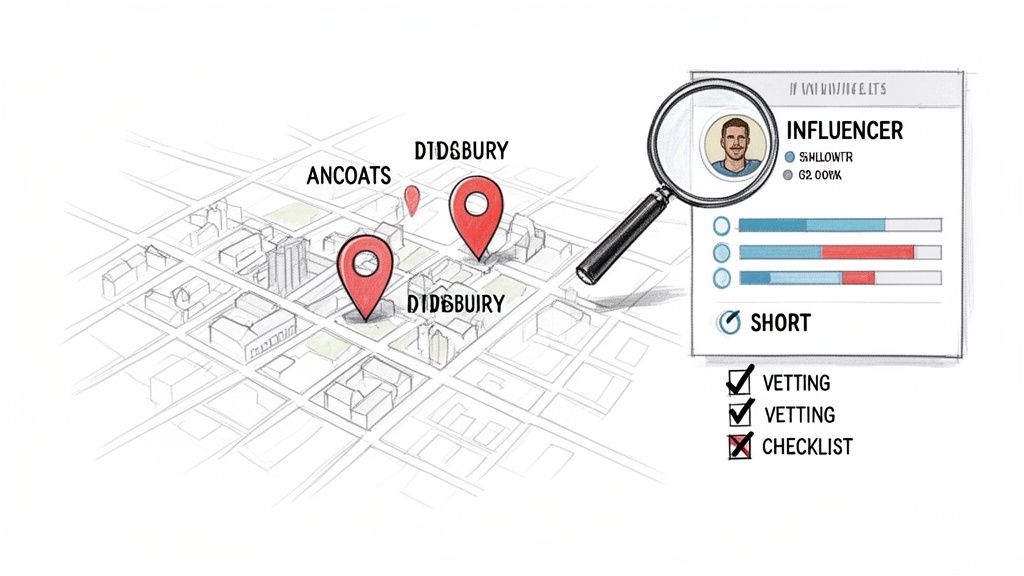
To do that, you need to think like a local diner. Forget generic searches like #manchesterfood. You have to get more specific. Hop on Instagram and TikTok and use their location features to explore posts tagged in key foodie hubs like Ancoats, Didsbury, Chorlton, or the Northern Quarter. This is where you’ll find creators who are already active in your neck of the woods.
Discovering Authentic Local Creators
Drilling down into specific postcodes is your first move. See who's posting about the restaurants, cafes, and pubs on your street. Pay close attention to the creators who consistently champion local independents. They're the ones with a loyal, local following.
Your search should zero in on a few key areas:
- Hashtag Combos: Get creative by mixing terms like #mcrfoodie with location-specific tags. Think #ancoatsfood or #didsburyeats. This will surface the most relevant, hyper-local content.
- Geotagged Posts: Regularly check your restaurant’s tagged photos, but also look at who’s tagging popular venues nearby. You might find a nano-influencer has already visited and loved your neighbour's spot.
- A Bit of Friendly Recon: See which influencers other successful, non-competing restaurants in your area have worked with. Who is tagging them, and what does the content they create actually look like?
Manchester's food scene is buzzing with creators. Across the UK, there are over 98,000 Instagram accounts with more than 5,000 followers, and that number is always climbing. For a Manchester restaurant, the sweet spot is often with nano and micro-influencers. In fact, research shows that a massive 89% of food brands prefer working with micro-influencers (those with 10k-100k followers) for their targeted reach and fantastic engagement. With 74% of UK food companies planning to increase their influencer partnerships by 2026, finding the right local voices is non-negotiable if you want to stay ahead.
Separating Green Flags from Red Flags
Once you’ve got a longlist of potential partners, it's time for the most important part: vetting. This is where you separate the genuine creators from the ones with fluff-filled follower counts. Think of it as quality control for your brand.
A creator’s profile tells you everything you need to know. Look for obvious signs of authenticity. Are they actually replying to comments? Are their followers asking real questions about the food? These are strong signals of a real, tight-knit community. Our deep dive on how to find local food influencers offers even more tips for this part of the process.
A Pro Tip from the Trenches: An engagement rate of 3-6% on Instagram is the gold standard for a micro-influencer. If you see a big follower number but the engagement is much lower, it might be a sign of a passive audience that won't translate into bookings.
Before you even think about sending a DM, create a simple checklist. It helps to analyse their profile for both positive and negative signals.
Vetting Checklist: Green Flags vs. Red Flags
| Green Flags (Signs of a Great Partner) | Red Flags (Reasons to Be Cautious) |
|---|---|
| High-quality, original photos and videos. | Blurry images or generic, repetitive content. |
| Meaningful replies to comments from their followers. | A comments section filled with bots or generic "nice pic" remarks. |
| Consistent posting about Manchester’s diverse food scene. | Sudden, unexplained spikes in follower numbers. |
| A clear niche (e.g., vegan eats, brunch spots, cheap eats). | A feed that is almost exclusively 'gifted' or 'ad' posts. |
| A balanced follower-to-following ratio. | Following thousands more accounts than they have followers. |
Using this structured approach takes the guesswork out of it. You'll end up with a solid shortlist of high-potential food influencers in Manchester who can become true advocates for your restaurant and, most importantly, help you get more bums on seats.
Crafting a Pitch That Gets a 'Yes'
You’ve done the hard work and found a handful of creators who feel like a perfect fit for your restaurant. Now comes the moment of truth: the outreach.
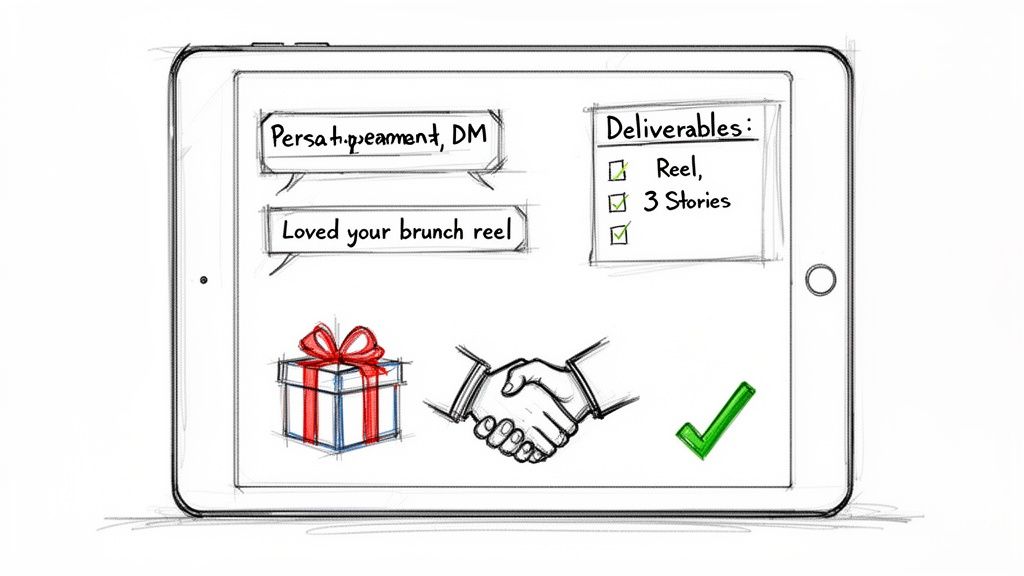
Let's be blunt. An influencer’s inbox is a battlefield. A lazy, copy-pasted "we'd love to offer you a free meal" message will get you nowhere. It’s the digital equivalent of shouting into a crowded room. To cut through the noise, your pitch needs to be personal, professional, and immediately show them what’s in it for them.
The best outreach I've ever seen always starts with genuine appreciation. It shows you’ve actually paid attention, and that single detail can be the difference between getting a reply and being left on ‘read’.
The Art of the Personalised Opening
Your first sentence is everything. Don't waste it. Dive straight in by referencing something specific you loved about their work. It proves you see them as a creative, not just an advertising channel.
Did their recent Reel on Northern Quarter small plates make your mouth water? Was the photography style in their latest brunch post just brilliant? Tell them!
Here’s what that looks like in practice:
- "Hi [Creator Name], I'm [Your Name] from [Your Restaurant]. Just had to message you: your recent Reel on the best Sunday roasts in South Manchester was fantastic. Your editing is spot on!"
- "Morning [Creator Name]! We're huge fans of your page over here. We all loved your post about the new cafe in Chorlton and how you captured that cosy atmosphere."
This approach instantly builds a bit of rapport. It changes the dynamic from a cold pitch to a warm conversation, and it sets a collaborative tone from the very first message.
Crucial Tip: Get their name right. Always. Double-check their bio for their name and spell it correctly. Getting this wrong is an immediate sign that you’re just spamming a list, and it kills your credibility instantly.
Putting a Clear Offer on the Table
Once you've broken the ice, it's time to get down to business. Be upfront about what you're proposing. There’s no need to be mysterious; clarity is professional. The kind of collaboration you offer will usually depend on the creator's following and your own campaign goals.
You've got a few common options to consider:
- Gifted Experience: This works well for nano-influencers (usually under 10k followers). You offer a complimentary meal for two in exchange for them sharing their honest experience. It's a great way to generate authentic buzz without a huge budget.
- Paid Partnership: As you move into working with micro-influencers and above (10k+ followers), a fee is standard. This model involves a gifted experience plus a payment for their time and creative work, especially if you need specific deliverables like a high-quality Reel.
- Ambassadorship: This is a long-term game. If you find a creator you absolutely love working with, you can bring them on as a brand ambassador. This usually involves a paid contract for multiple posts over several months, creating a really strong and consistent message for your restaurant.
When you make your pitch, be specific. For a gifted meal, you could say, "We'd love to invite you and a guest to try our new tasting menu on us." If it’s a paid project, be direct: "We have a budget for this and would love to discuss your rates for creating one Reel and two Stories about the experience."
Talking about money doesn’t have to be awkward. In fact, professional food influencers in Manchester expect it. Being transparent about payment shows respect for their work. If you're new to this, it's worth reading up on how to get food influencers to promote your restaurant to better understand standard practices and expectations.
Creating a Simple and Effective Brief
To make sure everything runs smoothly, a clear brief is your best friend. It’s not a legal document, but it’s a vital tool for setting expectations and making sure everyone is on the same page. A good brief prevents any "I thought you meant..." conversations later on.
Your brief should clearly cover these key points:
- The Offer: State it again. What will they receive? (e.g., "A complimentary three-course meal for two with a bottle of house wine, plus a fee of £250.")
- The Deliverables: Be precise. Don't just say "a post." Specify what you need, like one Instagram Reel showcasing the main courses and three Instagram Stories showing the restaurant's atmosphere.
- The Message: What’s the one thing you want their followers to know? Is it your new seasonal menu? Your unique cocktails? Your dog-friendly patio? Keep it simple. Let them be creative with how they say it.
- Content Usage: Be clear about how you’ll use their photos and videos. For example: "We'd love to reshare your content on our Instagram feed and Stories (with full credit, of course) for up to 6 months."
- The Timeline: Give them a timeframe. Suggest a few potential dates for their visit and a deadline for when the content needs to be published.
This structured approach does more than just keep things organised. It shows the creator that you're a professional who values their time and talent. It removes all the guesswork, which almost always leads to better content and a stronger, more respectful partnership right from the start.
Right, you’ve found your influencer and agreed on the collaboration. Now for the important part: turning that handshake deal into a campaign that actually puts bums on seats.
Getting this stage right is what separates a flash-in-the-pan post from a partnership that genuinely grows your restaurant. It all starts before they even walk through the door.
Nail the Welcome: Briefing Your Team
Once the booking is in the diary, your first job is to get your front-of-house team ready. This isn’t about rolling out a red carpet, but about making sure the experience is seamless and shows off what you do best. A quick chat during the pre-shift briefing is all it takes.
Make sure your team knows:
- Who’s coming: Pull up their Instagram or TikTok profile so your staff can put a face to the name. It’s a small touch that makes a big difference.
- Why they’re here: Briefly explain that the person is creating content to help spread the word about the restaurant.
- What’s been agreed: Crucially, the manager and server need to know exactly what’s being gifted. This avoids any cringeworthy moments when the bill arrives.
This simple prep work helps the influencer feel expected and valued, not just like another random booking. It also empowers your staff to deliver that brilliant service you want everyone to see, making the whole thing feel natural and well-run.
A Pro Tip From Experience: Always assign a single point of contact for the visit, usually the manager on duty. Having one person to greet them, check in, and say goodbye adds a layer of professionalism that creators really appreciate. It just smooths out all the edges.
With the visit sorted, your attention needs to turn to tracking. A gifted meal is an investment, and you need to know what you're getting back. So many restaurants drop the ball here, but it's where the real value is proven.
See What’s Working: How to Track Your Results
You have to look past the 'vanity metrics' like likes and comments. The real goal is to draw a straight line from their content to your bottom line, whether that’s bookings, takeaway orders, or event enquiries.
There are two brilliant, straightforward tools for this:
- Unique Discount Codes: This is the cleanest way to track direct sales. Create a simple, memorable code just for them (e.g., FOODIEHANNAH15 for 15% off). It’s undeniable proof of how many of their followers came to you because of their recommendation.
- UTM-Tracked Links: A UTM is just your normal website or booking link with a bit of tracking code on the end. When an influencer pops this in their bio or story, you can see exactly how many people clicked through from their profile. It’s perfect for measuring direct traffic and interest.
Using these turns a hopeful marketing shot into a measurable sales channel. You’re not guessing anymore; you’re gathering real data on what works.
Keep the Conversation Going
Stay in touch, but don't be a pest. A quick, friendly message the day after their visit to say thanks goes a long way and keeps the good vibes going.
If a week or so passes and you haven't seen any content, it's completely fine to send a polite nudge. Something simple like, "Hey [Name], just wanted to check in and see if you needed anything else from our side for the content. We're really excited to see it!" usually does the trick.
In a competitive food city like Manchester, getting a shout-out from the right local voice can be a game-changer. Think of someone like Plate & Pint (@plateandpint), who has become a go-to for pubs wanting to showcase their food and craft beer. With a dedicated following of over 25,000 on Instagram, they connect directly with Manchester’s pub-loving crowd. And the data backs this up: micro-influencers (10,000-100,000 followers) can hit engagement rates of 15.2% on TikTok. When you consider that 69% of UK consumers trust influencer recommendations on where to eat, you can see how this drives real footfall.
Once their post or video is live, jump on it. Share it to your own stories, thank them in the comments, and answer any questions their followers ask. This boosts the post and shows everyone that you’re a great partner to work with.
Measuring ROI and Repurposing Content for Long-Term Value
Once an influencer's post about your restaurant goes live, your job isn’t done. In many ways, it's just getting started. This is the point where you move from hoping for the best to actually measuring what works, turning a single post into a marketing asset that keeps delivering.
Tracking your Return on Investment (ROI) is non-negotiable. It’s what separates a random expense from a predictable growth strategy. Without good tracking, you’re just guessing. With it, you get a clear picture of what’s actually bringing customers through your doors.
Calculating Your Direct Return on Investment
The clearest way to see if a collaboration worked is to track the money it brought in. This is where those unique discount codes and UTM-tracked booking links really shine. They draw a straight, undeniable line from the influencer's post right to your till.
Calculating your basic ROI is straightforward. Just use this simple formula:
(Revenue Generated - Cost of Campaign) / Cost of Campaign * 100 = ROI%
The "Cost of Campaign" is everything you spent, including any fee for the influencer plus the cost of their gifted meal. The "Revenue Generated" is the total value of all sales made using their specific discount code.
For example, let's say a campaign cost you £350 (£250 fee + £100 meal cost). If that influencer’s unique code brought in £1,050 in sales, your ROI is a fantastic 200%. That's a solid return you can directly attribute to that one partnership.
Looking Beyond Direct Sales
But ROI isn’t just about immediate cash flow. A brilliant collaboration sends ripples across your entire brand, boosting awareness and growing your audience in ways that pay off down the line.
These are the key performance indicators (KPIs) I always tell restaurant owners to watch:
- Website Clicks: How many people actually clicked the booking link in the influencer’s bio or story? Your UTMs will give you the exact number.
- Follower Growth: Did your restaurant's Instagram or TikTok profile get a noticeable bump in followers right after the content dropped?
- Engagement Rate: Take a close look at the likes, comments, shares, and especially the saves on the post. High engagement means their audience was genuinely hooked.
- Social Mentions: Are other people now tagging your restaurant in their own posts after seeing the influencer's content?
Of course, knowing what to measure also means understanding what can go wrong. Familiarising yourself with the common reasons for not seeing ROI on Instagram can help you sidestep those pitfalls. For a deeper dive into the numbers, we've also put together a guide on measuring influencer marketing ROI.
This whole process (from briefing your team to seeing the results) needs to be seamless.
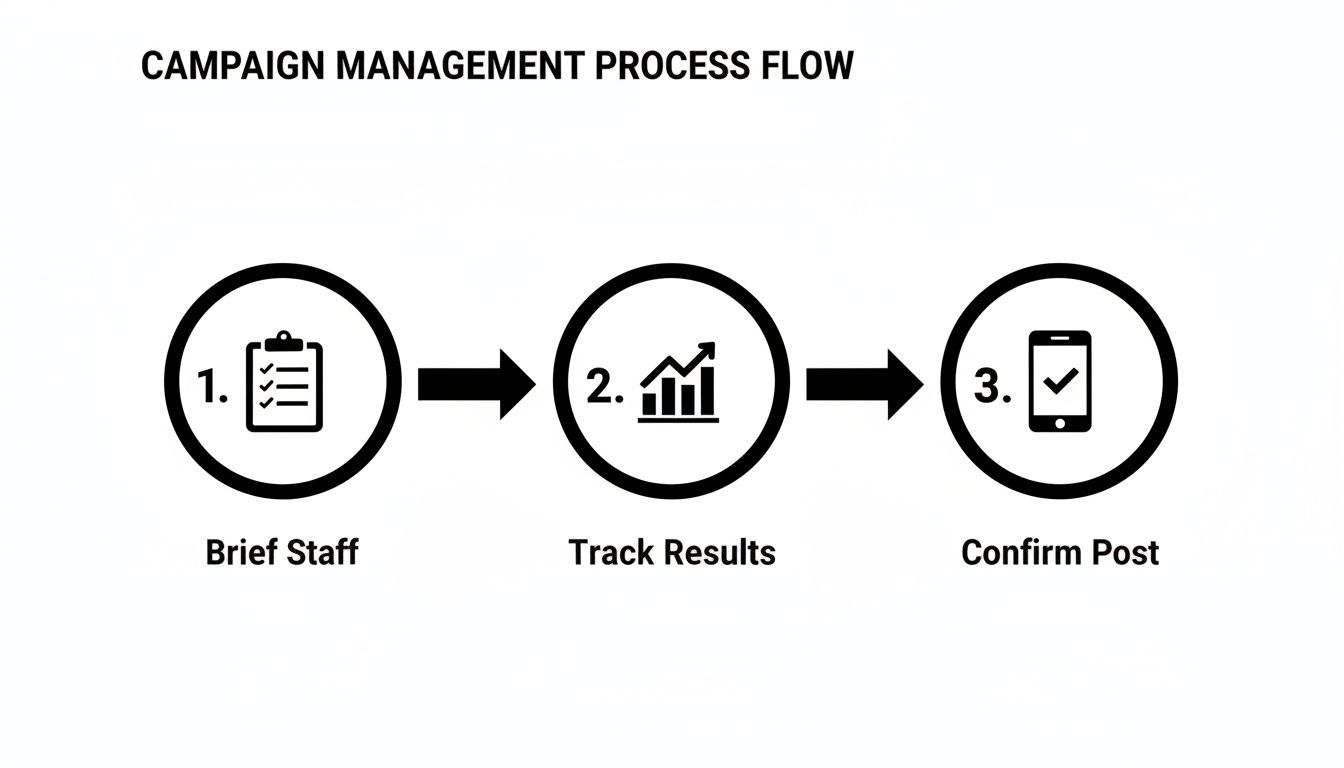
Getting those first steps right is what allows you to track results effectively and prove the campaign was worth it.
A Masterclass in Repurposing Content
Those beautiful photos and slick videos from the influencer? They are marketing gold. As long as you secured permission in your initial agreement, you can and absolutely should reuse this content everywhere. This is how you stretch the value of one collaboration for months to come.
Think of it as building your own library of authentic, high-quality marketing assets, without booking a separate, expensive photoshoot.
Here are a few powerful ways I’ve seen Manchester restaurants repurpose influencer content:
- Fuel Your Social Feed: Immediately reshare their best shots on your Instagram grid and feature their videos in your Reels and Stories.
- Upgrade Your Website: Swap out tired stock photos for their stunning food shots on your homepage or gallery. It shows your dishes in a real-world, appealing context.
- Boost Your Booking Page: An authentic photo of people genuinely enjoying a meal right on your reservations page can seriously increase conversions.
- Enhance Email Newsletters: Drop influencer photos into your emails when announcing new menus or special offers to make them more visually compelling.
- Power Your Paid Ads: User-generated content (UGC) often crushes traditional ads because it feels more trustworthy and less like a sales pitch.
- Create Physical Menus or Flyers: If the images are high-resolution, why not use them in your printed materials for a touch of social proof?
By strategically repurposing their content, you turn a single influencer visit into a continuous stream of marketing power. You fill your content calendar, build a stronger brand, and ensure every single pound you spend on food influencers delivers maximum, long-term value.
Your Questions About Food Influencers Answered
Diving into influencer marketing for the first time can feel like walking into a party where you don’t know the rules. How much do you pay? Is a free meal ever okay? What if you don't like their photos? It’s completely normal to have these questions.
Getting these details sorted from the very beginning is the secret to building great, respectful relationships with local foodies that actually get results. Let's clear the air on some of the most common queries we hear from Manchester restaurant owners.
How Much Should I Pay a Food Influencer?
This is always the first question, and the honest answer is that it really varies. While payment isn't a given for every single collaboration, it’s standard practice when you're working with established creators who have a genuinely engaged audience. Their rates will depend on their follower numbers, how much their audience interacts with their content, and what you’re actually asking them to create.
Here's a rough idea of what you can expect on the Manchester scene:
- Nano-Influencers (1k-10k followers): For creators in this bracket, a gifted experience (like a complimentary meal for two) is often all that's needed. They're keen to build their portfolio, and a fantastic meal in a great spot gives them valuable content. You usually won't need to pay a fee unless you're making very specific creative demands.
- Micro-Influencers (10k-50k followers): This is where payment starts to become the norm. A gifted meal is still part of the deal, but you should expect to pay a fee on top. This could be anywhere from £150 to £500+, depending on whether you're after a permanent grid post, a polished Reel, or a series of Stories.
- Macro-Influencers (50k+ followers): Think of these creators as small media businesses. Their fees will likely start in the high hundreds and can easily run into the thousands, especially if you're looking for a full content package.
Never be afraid to talk about money. Asking, "What are your usual rates for a partnership like this?" is a completely normal and professional question.
Is a Free Meal Ever Enough?
Yes, absolutely! For nano-influencers or those who are just getting started, a "gifted collaboration" is a common and perfectly fine arrangement. They get brilliant content for their feed, and you get some authentic exposure.
Crucial Insight: The trick is to be completely transparent from your very first message. Make it crystal clear that you're proposing a gifted experience. This manages expectations from the get-go and avoids any awkward chats down the line. If they reply asking for a fee, you can then make a call on whether their stats are worth the investment.
The moment you start giving specific directions (like asking for a video with three transitions, a particular call-to-action, or a post on a specific day), you've moved beyond a simple gift. That's a job, and offering payment is the right and professional thing to do.
What If I'm Not Happy with Their Content?
This is a real worry for many, but it's mostly avoidable if you've provided a solid brief. When you clearly outline your key messages, what you expect them to deliver, and the general vibe you're after, you dramatically reduce the chances of being disappointed.
But sometimes things just miss the mark. Maybe the photo quality is poor, or they’ve got a key detail about your restaurant wrong. It’s okay to say something, as long as you do it politely.
- For small mistakes (like a typo): Just send them a friendly message asking for a quick edit. Most influencers will be happy to fix it in seconds.
- For bigger issues (like poor quality): Frame your feedback as a collaboration. Try something like, "Thanks so much for sending this over! We love the caption. For the main image, would it be possible to use one of the brighter shots? That one you took by the window was fantastic."
At the end of the day, they want you to be happy. A good relationship could mean more work for them in the future. The goal isn't to assign blame, but to work together to get the best result.
Who Owns the Photos and Videos They Create?
This is a big one, so pay close attention. Unless you have a written agreement that says otherwise, the creator owns the copyright to all the content they produce. When they post about you, they are essentially giving you a licence to be featured on their feed.
Your initial agreement or brief needs to spell out exactly how you're allowed to use their content. We call this "usage rights."
Be specific in your brief:
- What you can do: "We'd love to reshare your content on our own Instagram feed and Stories (always with full credit, of course)."
- Where you can use it: "We would like to feature your photos on our website's gallery page."
- How long you can use it: "We request usage rights for up to one year for use on our organic social media channels and in our email newsletters."
If you want to use their photos in paid advertising (like boosting a post or running a Facebook ad), you will almost always have to pay an extra "ad usage" fee. This is a commercial use that goes way beyond a simple reshare. Always, always get this permission in writing.
Ready to stop the guesswork and start launching influencer campaigns that deliver real results? Sup combines smart technology with a human team to find your perfect Manchester foodies, manage outreach, and track every booking and sale in real-time. Learn how Sup can save you 95% of your time and drive measurable growth.
More on recruitment
See how many creators post about you and your competitors
Type in your brand's Instagram handle and we count the creators who post about you and about your five closest competitors. It takes about a minute and it is free. Or request a demo and we will show you the creators in your niche and walk you through the dashboard.
 Book a call