24 March 2026
Food Influencers in London: How Restaurants Work With Them
Working with London's food influencers isn't just another marketing box to tick; it's become one of the most powerful ways to grow. It’s about getting creators to share genuine, exciting content (like Instagram Reels or TikToks) about their experience at your restaurant. Done right, this brings in a flood of local, engaged customers and gets your name on everyone's lips.
Why Your London Restaurant Can't Ignore Influencer Marketing
Let's be honest, London’s food scene is brutal. Having incredible food and a great atmosphere is the baseline, not the secret to a packed house. Word-of-mouth has moved online, and today's diners trust what they see on social media more than almost anything else. This is where partnering with the right food influencers can transform you from a hidden gem into a booked-out destination.
Think about it. When a potential customer sees a creator they follow gushing about your Sunday roast or your new cocktail menu, it’s not an ad. It’s a genuine recommendation from a trusted source. That's the kind of social proof that builds instant credibility and gets people reaching for the ‘Book Now’ button.
It's More Than Just a Free Meal
A successful influencer campaign isn’t a simple swap of a free dinner for a post. It's about building real relationships with creators who actually fit your restaurant's vibe.
Often, a nano-influencer with a few thousand dedicated followers in your neighbourhood (someone who focuses on, say, #EastLondonFood) will drive more actual bookings than a huge macro-influencer whose audience is spread all over the country.
The best partnerships deliver concrete results:
- A real spike in bookings and footfall as followers are inspired to visit.
- A library of high-quality photos and videos (user-generated content) you can use on your own social channels, menus, and website.
- Direct access to your ideal customers: people actively searching for their next great meal in London.
The game has changed. This isn't about chasing trends; it's a fundamental shift in how people discover where to eat. Restaurants that get this right are building loyal communities and seeing measurable growth, all thanks to these trusted voices.
And the industry data backs this up. A recent study found that 74% of UK food and beverage brands are planning to work with more influencers in 2026. What’s more, a massive 70% are increasing their budgets specifically for these partnerships. It’s clear this is no longer an experiment but a core part of modern marketing. You can explore more on these industry-wide budget shifts and see exactly why micro-influencers are becoming the preferred choice for smart, targeted campaigns.
Finding the Right London Food Influencers for Your Brand
Choosing the right partner is the single most important decision you'll make when working with Food Influencers in London. It's so easy to get fixated on big follower numbers, but honestly, that's mostly a vanity metric. Real success, the kind that fills tables on a Tuesday night, comes from finding creators whose audience is a perfect match for your ideal customer.
Forget the big, famous names for a second. Think smaller, think local. A micro-influencer with 15,000 genuinely engaged followers who all live and work in your borough will almost always drive more business than a macro-influencer with 200,000 fans scattered across the globe. You’re not just looking for a megaphone; you need a real advocate who can spark genuine local buzz.
This is all about a direct line from their content to your bottom line.
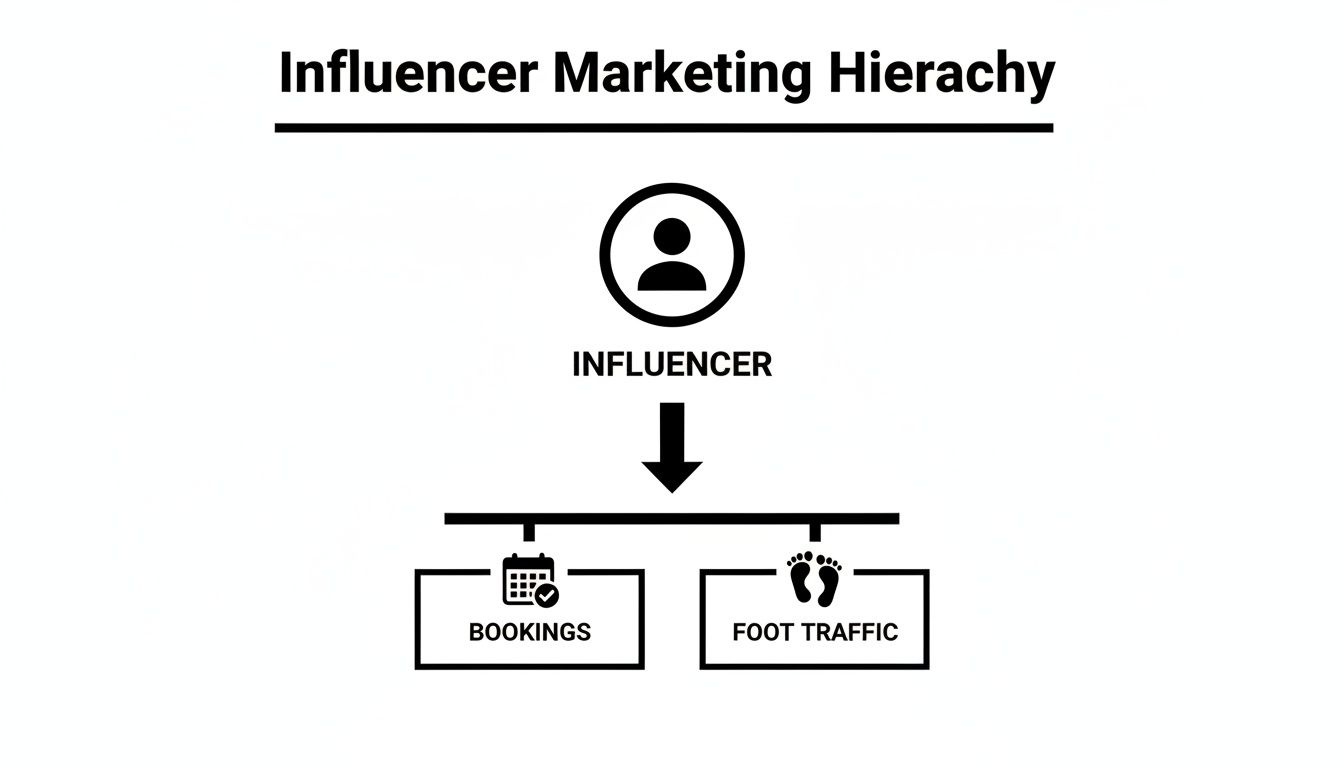
As you can see, it’s a simple but powerful flow: the right creator influences their followers' behaviour, which leads directly to tangible results like more online bookings and walk-in customers.
Choosing Your London Food Influencer Tier
To help you get started, it's useful to think about influencers in different tiers. Each tier offers distinct advantages, and the "best" one for you really depends on your specific goals, whether that's broad awareness or targeted footfall.
| Influencer Tier | Typical Follower Range (London) | Primary Benefit for Restaurants | Best For |
|---|---|---|---|
| Nano | 1,000 to 10,000 | Hyper-local authenticity and high engagement rates. | Launching a neighbourhood-specific offer or building community trust. |
| Micro | 10,000 to 50,000 | A strong balance of reach and niche-specific credibility. | Driving footfall for a specific menu item or event. |
| Mid-Tier | 50,000 to 500,000 | Broader brand awareness across London and beyond. | Announcing a new opening, major menu overhaul, or city-wide campaign. |
| Macro/Mega | 500,000+ | Maximum reach and association with a well-known personality. | High-budget brand campaigns or securing major press coverage. |
Ultimately, a mix can be powerful. A few carefully chosen nano-influencers can create a groundswell of authentic chatter, while a single micro-influencer can amplify that message to a wider, yet still relevant, audience.
Mastering Your Search Tactics
Finding these hidden gems takes a bit of digital detective work on Instagram and TikTok. You need to move beyond obvious searches and get granular.
Here’s how we find the best partners:
- Scour Location Tags: First, check who’s already posting from your restaurant. Then, and this is the crucial part, see who is posting from your direct competitors. This is a goldmine of creators who are already active in your area and clearly interested in your type of cuisine.
- Drill Down with Hashtags: Think like a hungry Londoner searching for their next meal. Instead of #londonfood, search for things like #shoreditcheats, #londonbrunchguide, #claphamfoodie, or #nottinghillrestaurants. The people using these tags are actively trying to reach a geographically specific audience.
- Analyse their Audience: Once you find someone promising, dig into their profile. Who is actually commenting on their posts? You want to see genuine-looking accounts that seem to be based in London. High engagement from an audience that actually lives and dines in the city is worth far more than thousands of likes from people who will never visit.
A creator with a passionate, niche following who regularly posts about "the best pasta in Soho" is an absolute dream for an Italian spot in the West End. Their recommendation feels like a trusted tip from a friend, not a faceless ad.
London's food scene is buzzing with creators. With over 98,000 UK-based Instagram accounts having more than 5,000 followers, there's a huge pool of potential partners out there. We've seen well-aligned collaborations with creators like @londonfoodwalks or @northlondonbites drive footfall increases of 20-30% for partner restaurants. It really works.
The key is to look past the follower count and focus on authenticity and a clear, undeniable connection to the local food scene. For a deeper dive into the practical steps, you can learn more about how to find local food influencers in your city.
Crafting Outreach That Actually Gets a Response
That first message you send to a London food influencer? It’s make-or-break. A generic, copy-and-paste DM saying "Hi, love your content, want to visit?" is a one-way ticket to being ignored. Trust me, their inboxes are flooded with those.
To get noticed, you need to ditch the marketing-speak and connect on a human level. Creators are savvy professionals; they can smell a lazy, mass-sent email a mile off. Your outreach has to prove you’ve actually paid attention and aren't just trying to tick a box.
Standing Out in a Crowded Inbox
The real secret here is to approach them as a fan first and a potential partner second. This simple switch in mindset builds immediate rapport and makes your offer feel like an exciting invitation, not just another business transaction.
Before you even think about hitting 'send', spend a few minutes on their profile. Then, mention something specific you genuinely enjoyed. Don't just say you "loved their recent Reel."
Try something with a bit more substance: "Your Reel on the best pasta spots in Soho was fantastic; the way you captured the al dente texture of the cacio e pepe was spot on." That kind of detail shows you’ve invested time and see them as a unique creator, not just an account with a certain number of followers.
"When a restaurant emails me and mentions my recent visit to another specific café or a detail from one of my captions, I know they actually see the value in what I do. It makes me 100% more likely to reply and collaborate."
That level of personalisation makes your message feel exclusive and respectful, a powerful combination. If you're looking for more ways to fine-tune your approach, you can learn how to get food influencers to promote your restaurant with strategies that work.
Negotiating the Win-Win Collaboration
Once you've got a conversation going, it's time to talk specifics. Being clear and upfront about what you're offering (and what you'd ideally like in return) is absolutely crucial. Any ambiguity now will only lead to disappointment later.
Your offer should be fair and reflect the influencer's tier and the value they bring to the table. Here’s a rough guide to how it usually breaks down in the London scene:
- Complimentary Experience: For nano-influencers (under 10k followers), a gifted meal for two is often a perfectly fair exchange for a few authentic Instagram Stories and maybe a grid post.
- Set Menu + Drinks: For micro-influencers with a strong, engaged following, elevating the offer to a curated three-course set menu with a welcome drink shows extra consideration. This is usually paired with a request for more substantial content, like a high-quality Reel.
- Gifted Experience + Fee: For established micro-influencers (25k+) or those with exceptional engagement rates, a paid fee on top of the complimentary experience is standard. This fee can range from £150 to £750+, depending on the deliverables. A well-produced, dedicated Reel takes a lot of effort, justifying a higher fee.
Always remember to frame your proposal as a collaboration. Don't dictate the terms; open a dialogue.
A great way to start is: "We'd love to invite you in for our tasting menu. In return, would you be open to creating one Reel and a few Stories sharing your experience?" This approach is respectful and paves the way for a genuinely successful partnership.
The Campaign Brief: Your Blueprint for Great Content
Right, you’ve found the perfect London foodie to work with, and you’ve agreed to a collaboration. Fantastic. But a casual chat in the DMs isn’t going to cut it. To get the kind of content that makes people book a table, you need a proper campaign brief.
Think of it as your roadmap for the entire project. It’s a simple document that makes sure you and the creator are on the same page about everything before they even walk through your doors. It prevents those awkward conversations later on and turns a vague idea into a concrete plan.
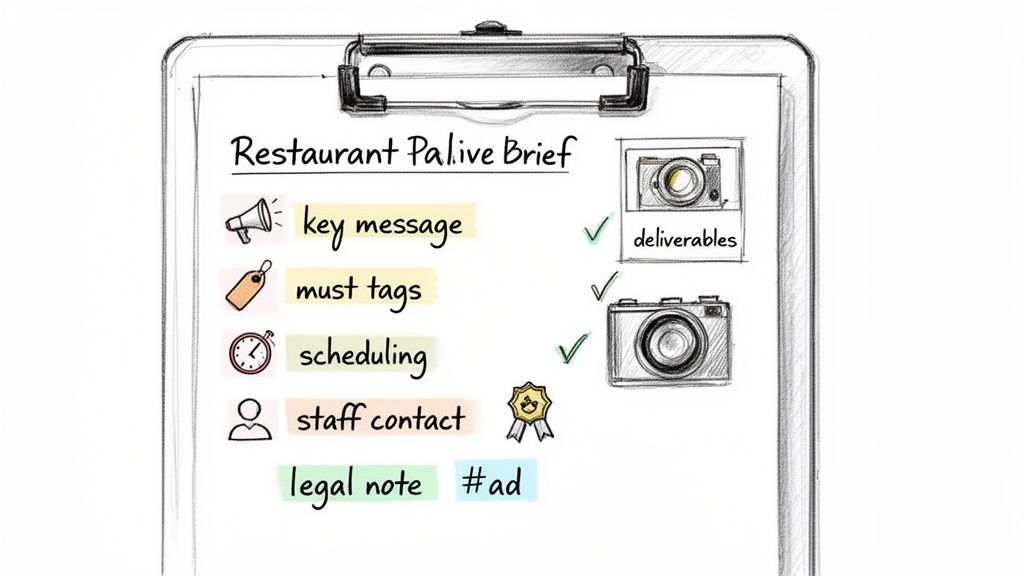
Honestly, a good brief is the best way to protect your investment, whether you're offering a complimentary meal or paying a fee. It helps the influencer understand your vision, giving them the freedom to be creative within a framework that still hits your business goals.
What’s the Story? Nailing Your Core Message
First things first, what are you actually trying to achieve? What’s the main thing you want people to remember after they see the post? Vague goals like "promote the restaurant" won't get you very far. You need to be specific.
For example, instead of a generic goal, you could focus on:
- Launching our new weekend brunch menu, with a big focus on the bottomless prosecco offer.
- Getting the word out about our new vegan tasting menu, showing off our commitment to plant-based food.
- Boosting our quiet Tuesday nights with a special "two-for-one" deal on main courses.
- Showcasing the amazing atmosphere of our new outdoor terrace just in time for summer.
This core message becomes the narrative. It gives the creator a story to tell, which always results in content that’s far more engaging and effective than a simple "the food was nice" review.
Your brief is your chance to direct the narrative. If you want to be known for your incredible handmade pasta, then make sure "handmade pasta" is a key part of your brief. Don't leave it to chance.
The Nitty-Gritty: Deliverables and Creative Details
This is where you spell out exactly what you expect to receive. Getting this wrong is where collaborations often fall apart, so being crystal clear from the start is crucial.
You need to be precise about the deliverables:
- What content are you expecting? Be specific. For instance, one Instagram Reel and three Instagram Stories with a link sticker.
- Are there any "hero" shots? Mention any dishes or drinks you absolutely have to see. "Please make sure the ‘Smoked Old Fashioned’ cocktail makes it into the Reel."
- How should they tag you? Specify your handle (@yourrestaurant) and ask to be tagged in the caption and on the photo/video itself.
- What about hashtags? Give them a short, clear list. Always include your brand hashtag (#YourRestaurantName), maybe a campaign-specific one (#YourBrunchLaunch), and a couple of key local ones like #LondonEats or #CoventGardenFood.
- The legal bit. This is non-negotiable. The UK’s Advertising Standards Authority (ASA) has clear rules. Any gifted experience or paid post must be clearly disclosed. Insist on #ad or #gifted being visible in the post.
To make this even clearer, we've put together a checklist of what every good brief should contain. Think of this as your template for success.
Essential Campaign Brief Checklist
A solid brief is the foundation of any successful influencer collaboration. Use this table to ensure you've covered all the essential components, leaving no room for confusion and setting your campaign up for success.
| Component | Description | Example |
|---|---|---|
| Campaign Goal | The single most important objective. What's the "why" behind this collaboration? | "To drive bookings for our new Weekend Brunch by showcasing the menu and vibrant atmosphere." |
| Core Message | The key story you want the influencer to tell their audience. | "Our new bottomless brunch is the best way to spend a Saturday in Shoreditch, great food, great drinks, great vibe." |
| Target Audience | A brief description of the customer you're trying to reach. | "25-40 year olds in East London who are looking for fun, high-quality weekend dining experiences." |
| Content Deliverables | The exact number and type of content pieces required. | "1 x Instagram Reel (min. 30 seconds), 3 x sequential Instagram Stories with a link to our booking page." |
| Key Visuals/Features | Specific dishes, drinks, or atmospheric elements that must be included. | "Must feature: The 'Full Shoreditch' breakfast, the 'Sunrise Mimosa' cocktail, and a shot showing the natural light in the dining room." |
| Tags & Mentions | The required social media handles to be tagged. | "Please tag @YourRestaurant in the caption and directly on the Reel/all Stories." |
| Required Hashtags | The list of hashtags to include in the caption. | "Required: #YourRestaurantBrunch, #YourRestaurantName Suggested: #LondonBrunch, #ShoreditchEats, #LondonFood" |
| Tone of Voice | Guidance on the desired mood and style of the content. | "Fun, energetic, and aspirational. Focus on the experience, not just the food. Keep it authentic to your style." |
| Disclosure Requirement | The mandatory legal disclosure. This is a crucial, non-negotiable point. | "All content must be clearly marked as an advertisement by including #ad at the beginning of the caption, as per ASA guidelines." |
| Timeline | The deadline for posting the content. | "Content to be posted on Saturday, 25th May, between 11:00 AM and 2:00 PM." |
| Offer/Compensation | A clear summary of what the influencer will receive in return. | "Complimentary brunch for two people from the full menu, including one bottomless drinks option each. Total value up to £120." |
Putting these expectations down in writing creates a clear, professional framework. It shows you respect the creator’s work and ensures your marketing goals are met, making the whole process smoother for everyone.
Measuring Success and Proving Your ROI
So, the influencer's post is live and the likes are pouring in. Job done? Not even close. Now comes the most critical part of the whole process: finding out if any of this actually worked. Measuring your success isn't just a vanity exercise; it's about proving a return on your investment (ROI) and making smart decisions for your next marketing budget.
The real win here isn't found in vague metrics like 'reach' or 'impressions'. It's about connecting an influencer’s content directly to bums on seats and orders at the till. This is where a bit of forward planning makes all the difference, turning a hopeful campaign into a measurable one.
Tracking Direct Conversions and Bookings
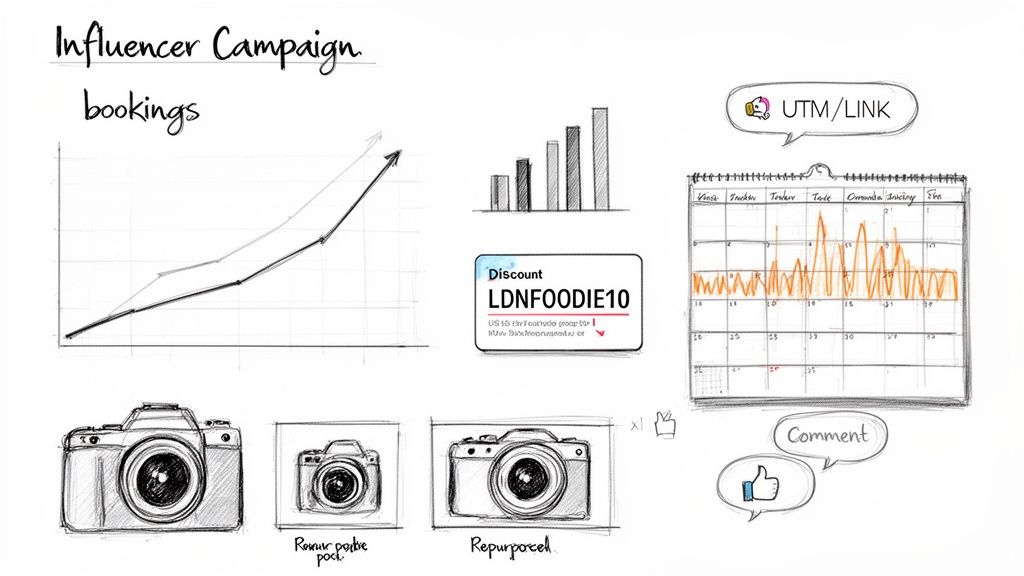
Your ultimate goal is to draw a straight line from their Instagram Story to your cash register. A general spike in bookings after a post is great, but it's not concrete proof. You need attributable data, and there are a couple of tried-and-true methods we always recommend.
First, give each influencer a unique discount code. Keep it simple and memorable, like ‘CITYFOODIE10’ for a 10% discount. Your point-of-sale (POS) system can then track every single time that code is used, giving you a precise number of customers driven directly by that creator.
Another fantastic tool is using custom booking links with UTM parameters. These are special URLs that look normal but have tracking tags baked in. When an influencer shares this link in their bio or Stories, your analytics software (like Google Analytics) can tell you exactly how many people clicked through and, more importantly, how many completed a reservation.
By assigning a unique code or link, you transform influencer marketing from a guessing game into a measurable performance channel. You're no longer asking, "Did it work?" but rather, "How many covers did @cityfoodgal drive for us this month?"
Analysing Quantitative and Qualitative Data
While hard numbers are the foundation of proving ROI, don't dismiss the softer, qualitative wins. A truly successful collaboration with a London food influencer delivers both tangible results and powerful social proof. Getting a handle on how to measure marketing campaign success gives you a solid framework for tracking both sides of the coin.
Here’s a practical breakdown of what you should be looking at:
- Quantitative Metrics (The Numbers):
- Discount Code Redemptions: The total number of times their unique code was punched into your till. This is your most direct ROI metric.
- UTM Link Clicks & Conversions: How many clicks and, crucially, confirmed bookings came from their specific link.
- Booking Spikes: Keep an eye on your reservation system for any unusual jumps in bookings in the 24-48 hours after their content goes live.
- "How did you hear about us?" data: This is old school, but it works. A simple question from your front-of-house team can uncover mentions of an influencer that your digital tracking might miss.
- Qualitative Metrics (The Vibe):
- Comment Sentiment: What are people saying on the post? Look for genuine excitement: comments like "We have to go here!" or "Added to the list for date night!" are golden.
- Follower Growth: Did your restaurant's own Instagram profile see a bump in new, relevant followers right after the post?
- Content Quality: Did they produce absolutely stunning, on-brand photos and videos? High-quality content is a massive asset in itself.
Extending the Value Through Content Repurposing
The partnership's value doesn't evaporate once the post slips down the Instagram feed. That beautiful content they created is an asset you can, and absolutely should, use again. Repurposing this content stretches the ROI of your initial spend much further. For a deeper dive into this, check out our guide on influencer marketing ROI in our dedicated guide.
Think about all the places you can reuse their gorgeous photos and engaging videos:
- Feature them on your own social media feeds (always with credit!).
- Pop them into your email newsletters to showcase a popular dish.
- Add them to your website's gallery or even next to menu items.
- Use them in your paid social media ads to add a layer of authenticity that stock photos can never match.
By tracking both the hard data and the qualitative feedback, while also repurposing the content you’ve gained, you can paint a complete picture of your campaign's impact. This is how you accurately measure your work with London food influencers and build a powerful case for doing it all again.
Common Questions About London Food Influencer Marketing
Once you start exploring influencer marketing for your restaurant, a few key questions always come up. It's completely normal to wonder about payments, how to handle the endless stream of 'collab' DMs, and the legal stuff you need to know. We’ve been there. So, here are the straight-talking answers to the questions we hear most from London restaurants.
How Much Should I Pay a Food Influencer in London?
This is probably the number one question we get, and the honest answer is that it really does vary. There's no single price list.
For a nano-influencer (think under 10,000 followers) with a genuine, local following, a complimentary meal for two is often a perfectly fair starting point. This is usually referred to as a ‘gifted’ experience. It’s a low-risk way to begin building relationships and see what kind of content they produce without a big cash investment.
Things change once you start working with micro-influencers (those with 10k-100k followers). At this level, many will expect both the gifted experience and a fee on top. In London, that fee can be anywhere from £150 to over £750 per post or Reel. The final figure really depends on their engagement stats, the quality of their photography, and what you’re asking for. A polished, edited Reel, for example, will always command a higher price than a couple of quick Stories.
Do I Have to Work with Influencers Who Ask for Free Food?
Absolutely not. It's your restaurant, your brand, and you call the shots. While it's true that plenty of great collaborations begin with an influencer reaching out directly, you should treat every single request as a business pitch, not a demand for a freebie.
Think of it like this: you wouldn't buy an ad in a local magazine without checking its readership first. You need to apply that same critical eye to every influencer who slides into your DMs.
Take a good look at their profile. Is their audience actually in London? Do they look like your ideal customer? Does their engagement seem real? If anything feels off, it is completely fine (and very good business sense) to politely say no. A bad collaboration can do more harm than no collaboration at all.
What Are the Legal Rules for Gifted Meals and Ads?
This part is non-negotiable. In the UK, the Advertising Standards Authority (ASA) has crystal-clear rules about transparency. The moment you provide any kind of payment in exchange for a post, that content becomes an advertisement. And yes, a free meal absolutely counts as payment.
The influencer is responsible for making this relationship clear to their audience. They must use obvious labels like #ad or #gifted, and these can't be buried in a sea of other hashtags. They have to be easy to spot. Instagram's own "Paid Partnership" tool is also a great way to handle this. As the restaurant, it's also on you to make sure your partners follow the rules, so always include this as a requirement in your campaign brief.
Juggling all of this (from finding the right people to tracking results) can quickly start to feel like a full-time job. With Sup, we automate the whole process for you. Our platform helps you discover vetted local creators, handle all the back-and-forth, and actually measure your return on investment with unique tracking links and discount codes. You can save up to 95% of your time. Turn influencer marketing into a predictable growth channel by visiting Sup.
More on recruitment
See how many creators post about you and your competitors
Type in your brand's Instagram handle and we count the creators who post about you and about your five closest competitors. It takes about a minute and it is free. Or request a demo and we will show you the creators in your niche and walk you through the dashboard.
 Book a call