27 May 2026
7 Top Food Critics UK: Your 2026 Restaurant Guide
Your dining room is busy, the pass is sharp, and the regulars already know they've found something good. The problem is scale. Local momentum doesn't automatically turn into national attention, and most operators learn that too late.
That's where the right critic matters. In the UK, restaurant coverage still shapes decisions because eating out remains widespread behaviour. Mintel reports that in 2025, 90% of Britons still eat in restaurants and 84% order takeaway, even as restaurant and café prices have risen sharply over the long term in its indexed data on prices and inflation in the market UK eating out market review. If you want to turn a full Friday night into a bigger reputation, you need a plan for how food critics UK work.
This guide is built for that moment. Not a fan list. Not empty flattery. A practical breakdown of seven critics who can still move perception, plus what to pitch, what to leave out, and how to make your restaurant easier to discover before any national review lands. While you're building that visibility, make sure the basics are fixed too, starting with how customers find you on search and maps. If you haven't done that properly, add your restaurant to Google Business Profile.
1. Grace Dent
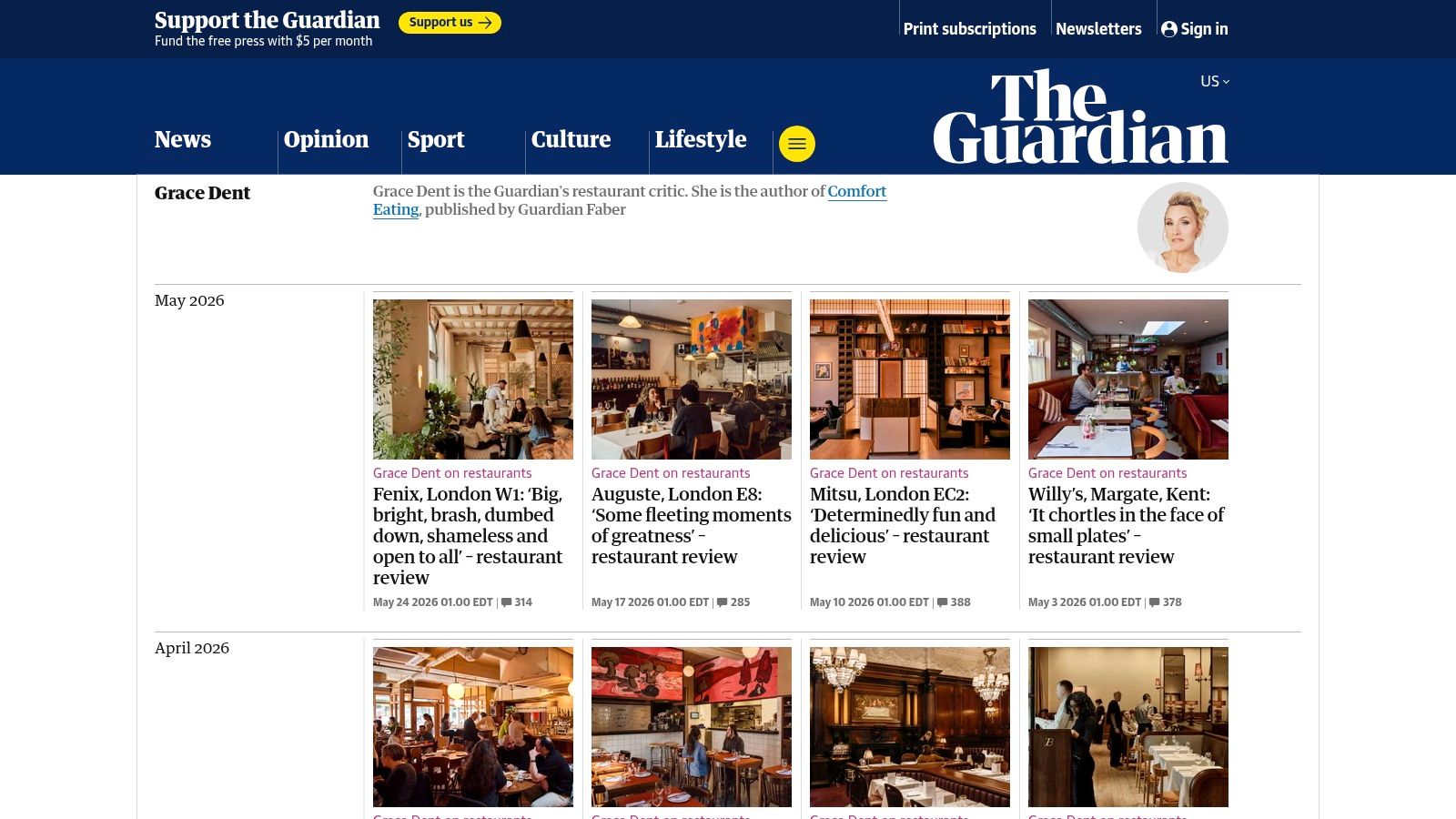
Grace Dent is one of the most useful names in food critics UK if you want broad public visibility rather than narrow trade prestige. Her work for The Guardian is accessible, widely read, and easy for casual diners to find because it isn't hidden behind a paywall. That matters if your goal is actual bookings, not just industry applause.
Her writing style also rewards clarity. Restaurants that photograph well but explain themselves badly tend to struggle with critics like Dent. If the concept, menu logic, and hospitality style aren't obvious on the ground, she's unlikely to rescue them with generous interpretation.
How to pitch Grace Dent
Pitch a restaurant with a clear point of view and a room that feels alive. Don't pitch “refined small plates” unless there's something concrete underneath it. A sharp opening story, a recognisable cooking identity, and a menu that reads well in one pass are more persuasive than PR adjectives.
Use your own channels to make the restaurant legible before you pitch. Strong creator seeding can help diners, journalists, and editors understand what you are without you overselling it. If you need a process for that, this guide to restaurant influencer marketing in 2026 is a sensible starting point.
Practical rule: Dent is a bad target for vague luxury. She's a good target for places with energy, honesty, and a menu people can imagine ordering from.
- Do pitch openings with momentum: New restaurants, buzzy relaunches, and places people are already discussing have a better chance of surfacing.
- Do make the basics impeccable: Lighting, music level, pacing, and front-of-house warmth all matter because her reviews read the full experience, not just the plate.
- Don't send inflated copy: If your press note sounds more ambitious than the meal, that gap becomes the story.
- Don't expect soft handling: If the restaurant isn't ready for frank criticism, wait.
Dent is especially valuable for independents outside the usual inner circle. That said, UK criticism still skews hard towards the capital. Vittles found that 83% of the restaurant reviews in the main UK food-media ecosystem it studied focused on London, which is why regional operators with a strong local identity should keep pushing for visibility rather than assuming they're automatically in the mix analysis of London-centric restaurant criticism.
2. Giles Coren
Giles Coren sits at the prestige end of food critics UK. A review connected to The Times carries status, and status still matters for investors, landlords, chefs, and a certain kind of diner who uses elite media as a filter. If you run a serious destination restaurant, Coren belongs on the target list.
He's not the right fit for every venue. Coren's reviews are personality-led, and the tone can become part of the story as much as the food itself. That works in your favour if the restaurant has conviction. It works against you if you're still hiding behind borrowed trends.
What earns his attention
Coren is easier to picture at restaurants with ambition. That doesn't have to mean formal fine dining, but it does mean there should be intent in the room. Menus built from committee language usually fall flat. Restaurants with a strong chef voice, a distinct service style, and enough confidence to stand behind their choices are more plausible targets.
If your restaurant already has a local following, focus your outreach on narrative rather than pleading for a visit. Show why this opening changes something in its category, area, or cuisine. Don't tell him you're “award-winning” unless the award itself means something on its own.
Here's the supporting reality. The public doesn't only care about flavour. The Food Standards Agency's Food and You 2 Wave 6 found that among adults in England, Wales and Northern Ireland, concerns among those who had concerns focused most on food prices, food waste and food quality, while many also reported high concern about affordability and food safety and hygiene Food and You 2 Wave 6 key findings. A critic with a big platform can shape whether diners see your restaurant as worth the spend.
If you're pitching Coren, your restaurant needs a point of view that survives scrutiny. Clever branding won't do that on its own.
A practical move before any press outreach is building a visible base of independent chatter. This playbook on how to get food influencers to promote your restaurant is useful because it helps create proof that people care before national media enters the picture.
3. William Sitwell
William Sitwell is useful when you want more than a one-off review. Through William Sitwell's website, his Telegraph work, broadcasting, and supper club presence, he sits in the overlap between criticism, events, and affluent food culture. That gives operators more routes in than a standard “please review us” email.
He's a strong fit for restaurants with a story attached to place, tradition, produce, or wine. If your concept is rooted in heritage, tableside confidence, or destination dining, Sitwell can be a better strategic match than a critic who mostly rewards novelty.
Best use of Sitwell
Think beyond the review column. If you run a room that can host, partner, or participate in food-led events, Sitwell's wider ecosystem matters. That could mean chef dinners, collaborations, moderated conversations, or appearances tied to a menu launch. A lot of PR teams miss that because they pitch him like a generic press contact.
- Do lead with substance: Mention the chef, the provenance story, the wine thinking, or the reason the restaurant belongs in its location.
- Do treat the room seriously: Service polish matters more here than trendiness.
- Don't oversell youth culture cues: If the pitch leans too hard on hype language, it can feel mismatched.
- Don't force a collaboration too early: A weak event idea is worse than no event idea.
If you're building London creator buzz in parallel, be selective. A flood of poorly matched invites can cheapen the positioning of a more premium venue. Better to use a tighter local creator mix and reserve the broad push for openings, menu shifts, or seasonal moments. This guide to working with food influencers in London is a useful complement if your PR plan needs both prestige and local visibility.
Sitwell tends to suit operators who know exactly who they are. He's less useful for restaurants that are still trying to decide whether they're neighbourhood casual, polished brasserie, or social-media set piece.
4. Tim Hayward
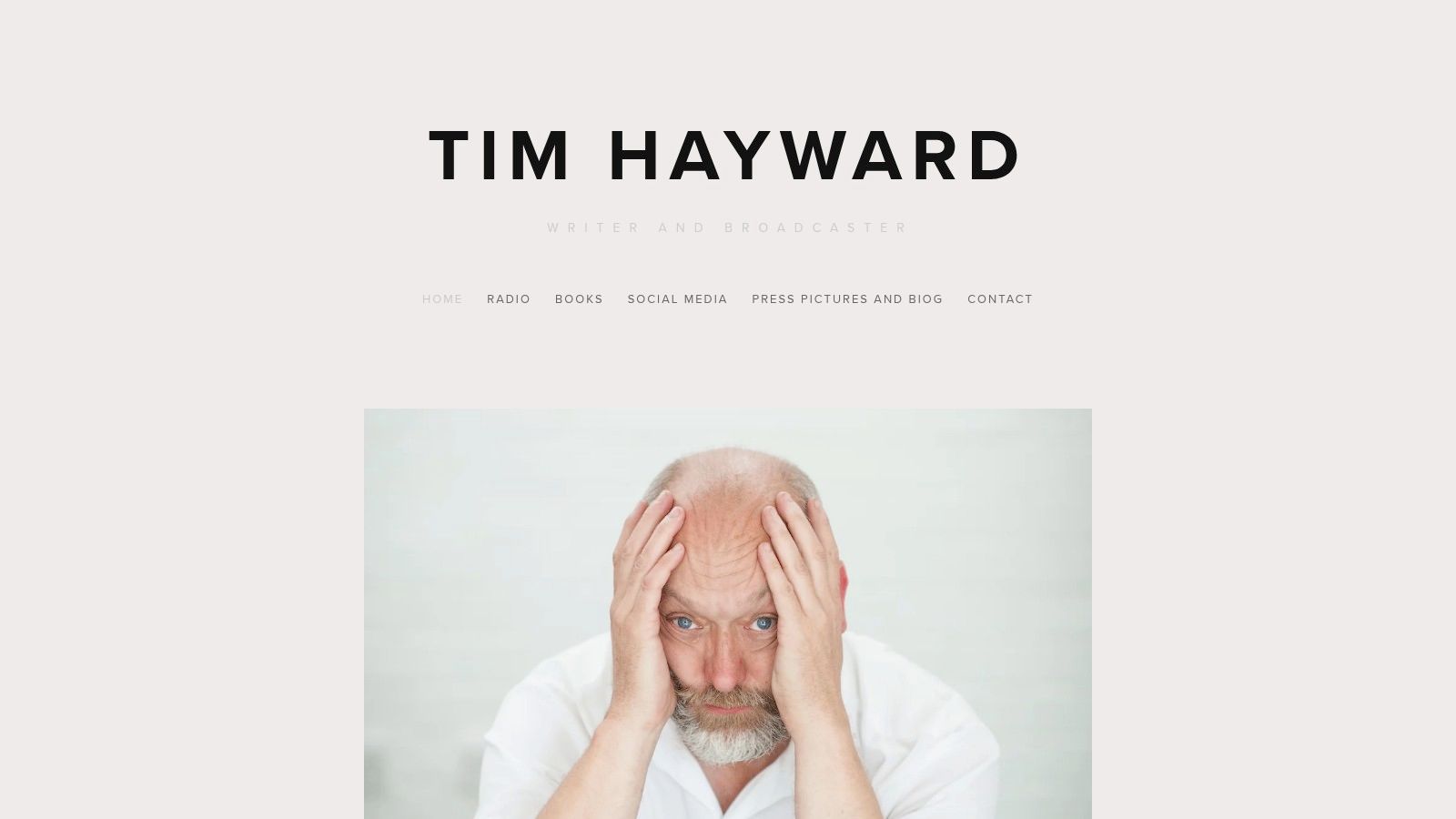
Tim Hayward is one of the critics chefs often respect most, even when they fear the verdict. Through Tim Hayward's website and his Financial Times presence, he brings operational literacy to criticism. He notices technique, but he also notices systems, tooling, room logic, and whether hospitality choices make sense.
That changes how you should approach him. Hayward isn't the critic to chase with mood-board language. He's the critic to target when your restaurant works as a machine, not just as a visual idea.
What to send and what to avoid
Pitch the craft. If your bakery programme is unusual, your grill setup is integral, your menu structure solves a real service problem, or the chef has a technically interesting point of difference, say so plainly. He's more likely to engage with competence than theatre.
Don't write a release full of fashion vocabulary. “Immersive”, “refined”, and “playful” tell him very little. Instead, explain what happens in the kitchen, why a dish belongs on the menu, and how service is designed to carry the food properly.
Worth remembering: Hayward can appreciate a modest room if the thinking is exact. He won't be distracted by expensive surfaces.
This also makes him relevant for operators beyond central London. In a market where criticism has often clustered in the capital, a critic who values substance over scene can be a better route for regional restaurants with serious cooking and coherent hospitality.
A good Hayward target usually has these traits:
- Clear operational logic: The menu feels built for the room, the team, and the guests who use it.
- Technical confidence: Dishes show judgement, not just garnish.
- Hospitality with intent: Service style fits the format. It doesn't imitate another category.
- No PR smoke: If there's a weak point, address it before inviting attention.
If your restaurant is still ironing out consistency, wait. Hayward is better once the systems are stable enough to hold up under a close read.
5. Fay Maschler
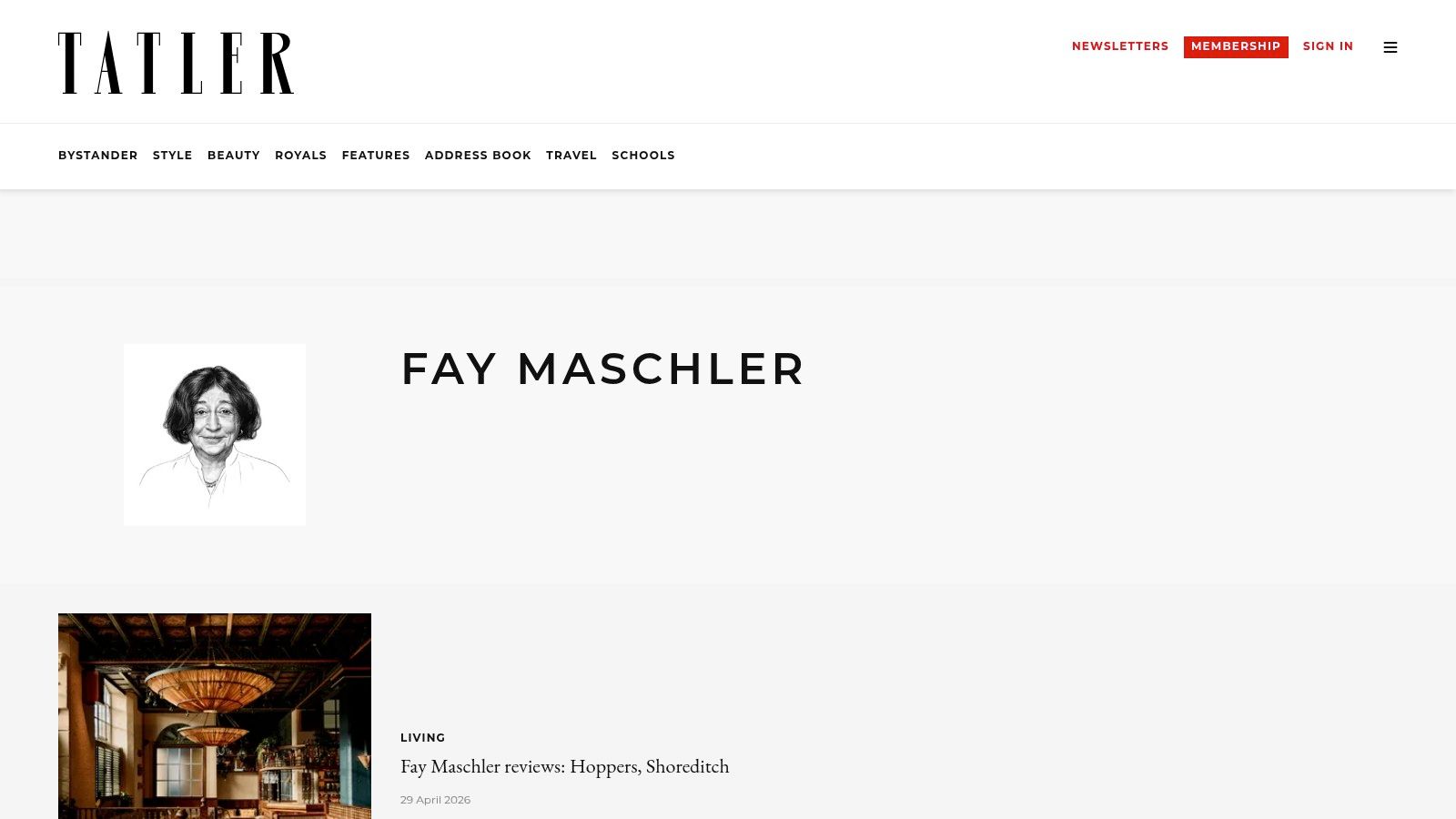
Fay Maschler brings a different kind of weight to food critics UK. Through Tatler's Fay Maschler profile, she reaches a luxury and society readership that cares about where to be seen as much as what to eat. For the right restaurant, that halo is valuable.
This is not the pitch for every operator. If your appeal is affordability, utility, or high-volume casual dining, Maschler is unlikely to be your best strategic target. If you run a polished London restaurant with style, continuity, and confidence, she becomes much more relevant.
How to approach Maschler
Lean into context. Maschler's authority is partly historical, so pitches that situate a restaurant within London dining culture tend to land better than ones that present every opening as a revolution. If your chef has a notable background, the site has a story, or the room revives a format people miss, say that clearly.
The setting matters. Luxury critics don't only assess the plate. They read comfort, tone, and whether the experience feels complete. A room can lose credibility fast if the service feels improvised or the details look expensive but function badly.
A practical way to think about Maschler:
- Best fit: London institutions, premium openings, elegant neighbourhood rooms, well-resourced relaunches.
- Weak fit: Budget launches, concept-first fast casual, restaurants still adjusting their identity.
- Pitch angle: Heritage, precision, hospitality standards, confidence in execution.
- Avoid: Overclaiming cultural significance after a few weeks of trade.
Maschler is also one of the clearest reminders that not all coverage is meant to do the same job. Some critics drive broad awareness. Others confer legitimacy inside a narrower but influential circle. If your business model depends on affluent diners, private clients, celebratory spend, or social cachet, that narrower circle can matter a great deal.
6. Tom Parker Bowles
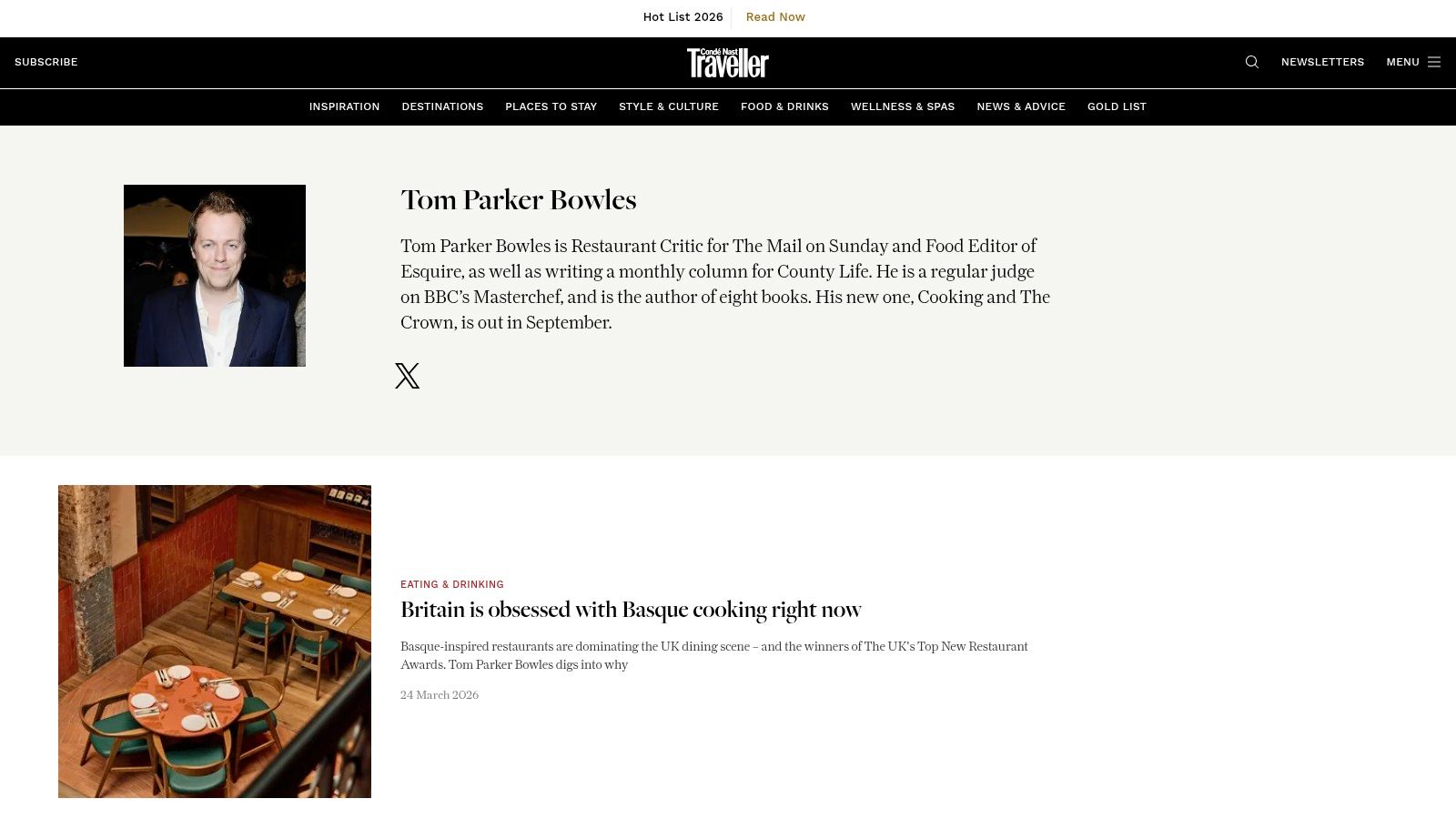
Tom Parker Bowles is one of the more practical names in food critics UK for operators who want mainstream reach. Through Tom Parker Bowles at Condé Nast Traveller and his wider media presence, he brings recognition beyond the core restaurant-media crowd. He's particularly relevant if your restaurant has a travel, regional, or heritage angle.
That regional angle matters because not every important restaurant story should be filtered through London. If you run a countryside pub with serious food, a coastal dining room, or a city restaurant grounded in place, Parker Bowles can be a stronger fit than a critic whose audience expects metropolitan fashion first.
Where he's strongest
He tends to work well for restaurants with warmth and character. Food can be ambitious, but it shouldn't feel bloodless. Venues that connect cooking to local produce, family history, the land, or British food culture often have more to offer him than slick but interchangeable launches.
The market backdrop supports that focus on convenience and scale too. Mordor Intelligence projects that the UK quick service restaurant market will reach USD 48.56 billion by 2031 from USD 37.64 billion in 2026, with delivery projected as the fastest-growing channel at a 6.71% CAGR and chained operators holding 58.75% of revenue in 2025 UK quick service restaurant market forecast. For PR teams, that means mainstream food visibility increasingly intersects with digital ordering, recognisable formats, and regional discoverability.
A useful Parker Bowles pitch has roots. It tells him why the restaurant belongs exactly where it is.
- Do pitch regional identity: Local produce, local history, and strong sense of place help.
- Do make the menu emotionally legible: Sunday readers respond to dishes they can picture wanting.
- Don't overcomplicate the concept: Dense theory weakens an otherwise attractive story.
- Don't neglect photography and search presence: Mainstream discovery often starts before the article itself.
He's a strong choice when you want reach without having to pretend your restaurant is part of a tiny insider club.
7. Jay Rayner

Jay Rayner is no longer just a weekly newspaper critic story. He's a broader media figure, and that makes him useful in a different way. Through Jay Rayner's official website, books, podcasts, appearances, and live events, he still shapes how people think about restaurants, even when the route isn't a standard review.
That distinction matters. If you pitch Rayner as though he's merely waiting to be sent a press release about a new opening, you're behind the market. He's more valuable when your restaurant can participate in a wider cultural conversation.
The smart way to use Rayner
Think events, ideas, and public-facing storytelling. If your chef can speak intelligently, your restaurant has a strong social or cultural angle, or your venue can host a talk, supper, or live-format collaboration, there may be a path. This is less about chasing a star-making review and more about association with a trusted food voice.
Rayner is also a reminder that restaurants need layered media plans. You can't rely on one article from one critic. You need a base of local advocacy, guest reviews, creator content, and then selected high-touch outreach.
A sensible Rayner approach looks like this:
- Lead with substance: A thoughtful chef, a culturally resonant concept, or a serious discussion point.
- Respect his time: Don't send generic opening notes copied to twenty media contacts.
- Use events carefully: The format needs to stand on its own, not exist as a disguised promo night.
- Accept the trade-off: His influence is broad, but his attention is split across multiple formats.
Rayner works best for restaurants that can sustain attention beyond one service. If your room has depth, he can help frame it. If it's all launch-week sparkle, he's not the target.
7 UK Food Critics: Comparative Snapshot
| Critic | Implementation complexity 🔄 | Resource requirements ⚡ | Expected outcomes 📊⭐ | Ideal use cases 💡 | Key advantages ⭐ |
|---|---|---|---|---|---|
| Grace Dent | Low, standard press pitches; no guaranteed timing | Low, routine PR and timely news hooks | High discoverability and SEO; broad free audience (⭐⭐⭐) | Independents, new openings, boosting search visibility | Large open-access reach; plain‑spoken copy; timely reviews |
| Giles Coren | Medium, high-profile, polarizing; requires strong pitch | Medium, targeted PR, quality offering required | High prestige impact; can materially affect bookings (⭐⭐⭐⭐) | Fine dining, prestige-driven concepts | Strong industry awareness; opinion-led influence |
| William Sitwell | Medium, multi-channel opportunities and events | Medium, collaboration/event resources and networking | Strong affluent reach; useful for partnerships (⭐⭐⭐) | Brand tie-ins, wine-focused venues, events | Supper clubs and broadcast reach; wine/history expertise |
| Tim Hayward | Medium, craft-focused access; less frequent cadence | Medium, chef access and depth for informed reviews | High credibility with chefs and serious diners (⭐⭐⭐⭐) | Technical cuisine, decision-makers, craft-led restaurants | In-depth technique coverage; industry credibility; multi-platform |
| Fay Maschler | Low, selective features; not weekly | Low, targeted luxury PR | Strong luxury/premium halo for London venues (⭐⭐⭐) | Upscale restaurants, London institutions, heritage venues | Decades of authority; resonance with premium audiences |
| Tom Parker Bowles | Low, regular Sunday column, broad mainstream reach | Low, standard PR for weekend exposure | Good mainstream weekend impact; travel/heritage boost (⭐⭐⭐) | Regional concepts, travel-led dining, mass weekend readership | Broad mainstream audience; travel and heritage angle |
| Jay Rayner | Medium, varied cadence; requires event/book tie-ins | Medium, appearances, podcasts, live events resources | High name recognition and cultural framing (⭐⭐⭐) | Cultural framing, events, storytelling campaigns | Strong storytelling; long-standing public profile; multi-format reach |
From Pitch to Print A Modern Outreach Strategy
Securing attention from top food critics UK takes patience. Most restaurants overestimate the importance of the first email and underestimate the importance of the months before it. Critics respond to restaurants that already look coherent in public. That means consistent service, clear positioning, easy-to-find information, and visible proof that diners care.
National criticism is still worth pursuing because restaurant choices remain mainstream, not niche, and public concern around value, quality, and food standards gives strong restaurant writing real relevance. But no operator should build a growth plan around waiting to be discovered. That's too passive, and it leaves too much to timing.
The better approach is layered. First, get your foundations right. Search visibility, Google presence, current menus, strong photography, and a booking journey without friction. Then build a bedrock of social proof through genuine guest reviews and a steady pipeline of local creator visits. After that, use bespoke, selective outreach for critics whose audience and style match your restaurant.
Many teams waste time. They treat every media contact the same, send the same release to everyone, and then wonder why nothing lands. Dent, Coren, Hayward, Maschler, Parker Bowles, Sitwell, and Rayner each need different framing. A sharp regional story works for one. Technical depth works for another. Luxury polish matters for another. If the pitch doesn't match the critic, it reads as noise.
Nano and micro-influencer activity helps bridge that gap. It creates regular content, surfaces authentic reactions, gives your team reusable assets, and shows momentum before a major critic ever visits. It also helps with the day-to-day commercial reality. You still need bookings this week while you pursue press that may or may not arrive next month.
That's why the most effective restaurant PR now combines high-touch critic outreach with scalable creator operations. One builds prestige. The other builds proof. Used together, they give your restaurant a far better chance of turning local success into sustained national attention.
If you want that creator layer to run without endless DMs, spreadsheets, and manual follow-up, Sup is worth a serious look. It helps restaurants source local micro and nano creators, launch campaigns fast, track bookings and revenue with codes and UTM links, and keep all outreach in one place so your team can focus on the higher-stakes work of pitching the right critics well.
More on recruitment
See how many creators post about you and your competitors
Type in your brand's Instagram handle and we count the creators who post about you and about your five closest competitors. It takes about a minute and it is free. Or request a demo and we will show you the creators in your niche and walk you through the dashboard.
 Book a call