28 April 2026
Why Your Influencer Campaign Failed (And How to Fix It)
You launched the campaign. The creators posted on time. The content looked decent. People liked it, maybe even commented. Then the team meeting happened and someone asked the only question that matters.
What did it do?
That’s where most influencer campaigns fall apart. Not because influencer marketing can’t work, but because the campaign was built like a content exercise instead of a measurable acquisition channel. If you’re reading this after a disappointing launch, the fix isn’t to abandon creator marketing. It’s to run a proper post-mortem, tighten the operating system behind it, and rebuild with attribution at the centre.
Campaign failure is a common occurrence. In the UK, 48% of influencer marketing campaigns fail to deliver measurable ROI, with poor influencer selection and fake engagement playing a major role. The same analysis also found that 15% of Instagram influencers had purchased followers, which helps explain why campaigns can underperform by 30-50% in genuine engagement rates when brands choose creators based on surface metrics instead of real audience quality, according to Dotts Media House’s summary of the UK findings.
That doesn’t mean your next campaign is doomed. It means you need a system.
The Campaign Post-Mortem A Diagnostic Checklist
A failed campaign feels personal because it usually comes after weeks of planning, approvals, product sends, chasing creators, and internal optimism. Then the reporting lands and the numbers are fuzzy, the sales impact is unclear, and nobody can agree on whether the campaign worked.
Treat that moment like an operator, not a disappointed buyer. The point of a post-mortem isn’t to find one villain. It’s to identify where the system broke.
Start with the six failure points
Most weak campaigns break in one or more of these areas:
- Strategy. The team never defined one primary outcome, so the campaign tried to do awareness, traffic, content creation, community building, and sales at the same time.
- Creative. The brief was either too loose to guide the creator or too rigid to let them sound credible to their audience.
- Targeting. The creator’s audience looked adjacent to your customer, but adjacency isn’t the same as fit.
- Compensation. Payment structure encouraged posting, not performance.
- Tracking. Links, codes, landing pages, and analytics were either missing or inconsistent.
- Relationships. The creator was treated like a one-off media buy instead of a partner who needed context, fast feedback, and support.
Practical rule: If you can’t point to one primary conversion path for the campaign, the campaign wasn’t set up to be measured properly.
That’s why post-mortems need structure. Without it, teams default to saying things like “the content didn’t resonate” or “the audience wasn’t converting”, which usually means nobody isolated the actual failure point.
Use this checklist before you brief the next campaign
| Area | Check | Yes / No |
|---|---|---|
| Strategy | Did we define one primary business goal before selecting creators? | |
| Strategy | Did we choose KPIs tied to that goal rather than broad engagement metrics? | |
| Creative | Did the brief explain the product, audience pain point, and desired action clearly? | |
| Creative | Did the creator have room to adapt the message to their own format and tone? | |
| Targeting | Did we verify audience fit by niche, geography, and buying intent? | |
| Targeting | Did we assess whether the creator had a history of authentic brand integrations? | |
| Compensation | Did the payment structure reward quality or outcomes, not just deliverables? | |
| Tracking | Did every creator get a unique UTM link, code, or trackable destination? | |
| Tracking | Could we see clicks, redemptions, bookings, or revenue in one reporting view? | |
| Relationships | Did we communicate quickly during the live campaign and resolve issues fast? | |
| Relationships | Did we debrief creator performance after posting instead of just closing the task? |
If you tick “no” on more than a few of these, the campaign didn’t fail by accident. It failed by design.
Look at symptoms, not assumptions
A lot of brands misread the evidence. High likes with low sales often trigger the conclusion that “influencer marketing is top of funnel only”. Sometimes that’s true. Often it’s cover for missing attribution or poor creator fit.
Use the symptoms to guide the diagnosis:
- Strong views, weak clicks usually points to creative or call-to-action issues.
- Strong clicks, weak conversion often points to landing page mismatch, weak offer, or poor traffic quality.
- No confidence in results at all points to tracking failure.
- Good content, wrong audience response points to targeting and positioning.
- Messy execution across multiple creators usually points to relationship management and process gaps.
This matters even more on channels where discovery and purchase happen close together. Brands trying to grow through creator-led commerce often run into the same issue on social storefronts. If that’s part of your mix, this guide to strategies for TikTok Shop growth is useful because it frames performance around operational readiness, not just content output.
Ask the questions most teams avoid
The best post-mortem questions are blunt:
- Did we choose creators because they looked impressive, or because they matched the buyer?
- Did we know what success looked like before launch?
- Did the content ask the audience to do something specific?
- Could we attribute any action confidently?
- Would we run the exact same campaign again?
If the answer to the last question is no, don’t patch the edges. Rebuild the foundation.
A campaign that “looked busy” but can’t show commercial movement isn’t a near miss. It’s missing infrastructure.
That distinction matters because it changes the fix. You don’t need louder creators. You need tighter systems.
Rebuilding Your Strategy From Vanity Metrics to Value
The strategic mistake shows up early. A team says they want an influencer campaign, then immediately starts discussing creator shortlists, follower counts, posting dates, and content formats. None of that should come first.
The first decision is simpler and harder. What single business result should this campaign create?
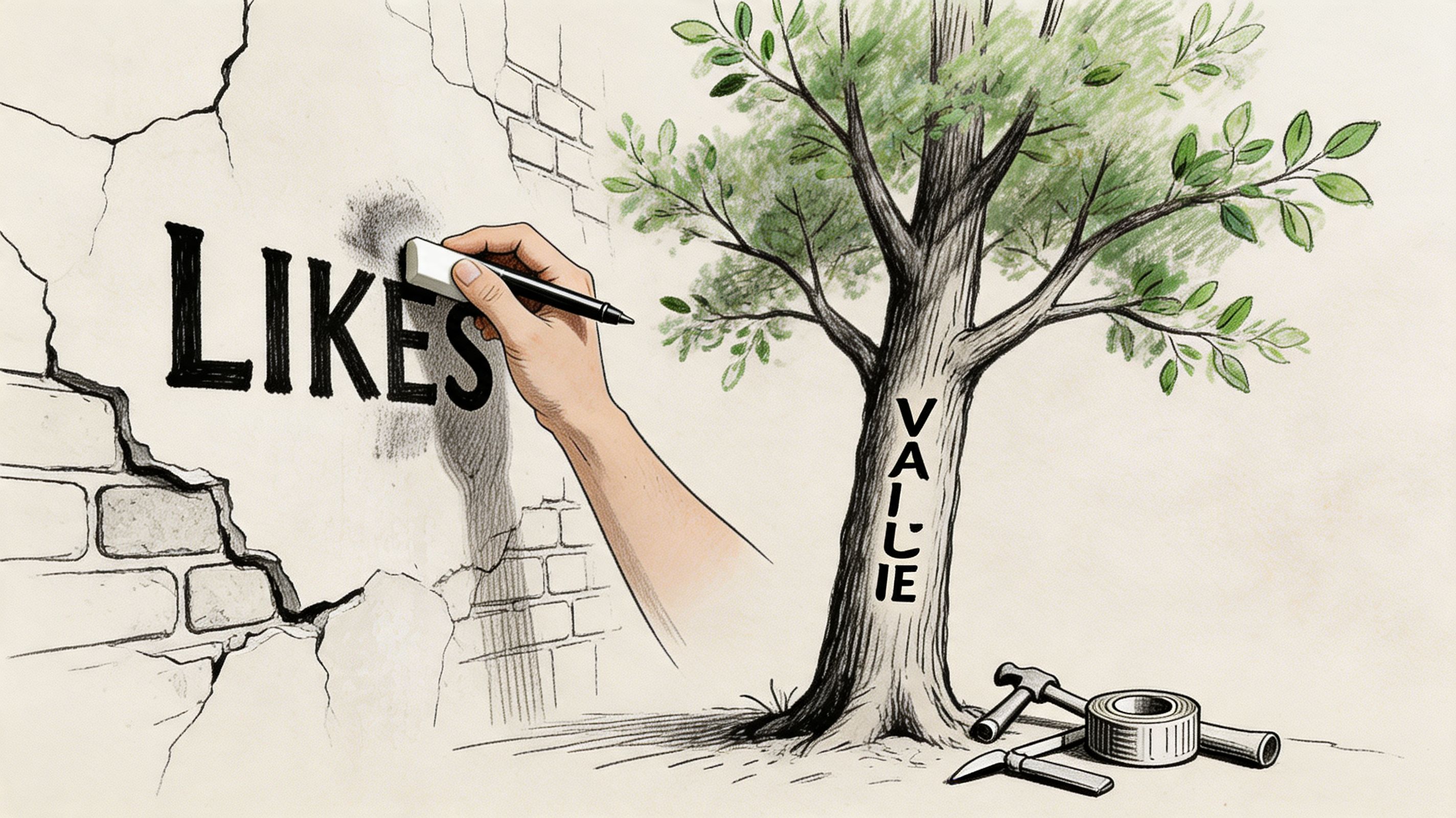
If you don’t answer that properly, you’ll end up optimising for whatever is easiest to see. Likes. Views. Shares. Comments. Those metrics can be useful, but they’re not business value on their own. They’re signals, not outcomes.
Choose one objective and force trade-offs
A proper strategy starts by narrowing the job:
- Ecommerce brand. Is the campaign supposed to drive first-time purchases, repeat orders, or content you can reuse in paid media?
- Restaurant group. Is the goal bookings, walk-ins, local awareness, or review generation?
- Multi-location chain. Is success national reach, or location-level action in specific postcodes?
- Agency. Are you proving concept for a client, or building an always-on programme?
The mistake isn’t wanting several outcomes. The mistake is trying to give one campaign all of them at once. When that happens, the brief gets vague because everyone wants a different result from the same creator post.
A cleaner strategy works backwards from the business event you want to influence. If the goal is bookings, the campaign needs local creators, a clear offer, a booking path, and content built around intent. If the goal is new customer revenue for Shopify, product education and purchase friction matter more than broad visibility.
For operators trying to tie creator activity to storefront performance, this breakdown of influencer marketing strategies for Shopify is a practical reference because it keeps the planning anchored to commerce, not just exposure.
Audience alignment is not optional
Poor fit kills campaigns even when the content is polished. Misalignment between brand values and influencer audience caused 37% of UK influencer campaign failures in 2024, and campaigns with over 70% audience alignment saw 4.2x higher conversion rates, at 12.1% versus 2.9%, according to Impact’s summary of the UK data.
That should change how you write briefs and how you approve creators.
A creator can be talented, professional, and popular, and still be wrong for the campaign. If their audience expects entertainment and you need purchase intent, you have a mismatch. If your product sits in a premium category but the creator’s audience responds best to bargain framing, you have a mismatch. If your brand voice is understated and the creator’s style is chaotic, you have a mismatch.
The right creator isn’t the one who can mention your brand. It’s the one whose audience will accept the recommendation without friction.
Build a brief that protects authenticity
Most bad briefs fail in one of two ways. They’re either too shallow, giving the creator no usable direction, or too controlling, forcing language that sounds like legal copy pasted into a social caption.
A useful brief includes:
- The commercial goal. One sentence. Clear and measurable.
- The audience context. Who you want to reach and what matters to them.
- The product angle. Why this offer matters now.
- The mandatory elements. Disclosure, key claim boundaries, booking or purchase path, timing.
- The creative freedom zone. What the creator can change so the content still feels native.
Here’s the test. If the creator could remove your brand name and the script still sounds like something they’d naturally post, you’re probably close. If it reads like internal marketing language, start over.
Replace vanity reporting with decision-making metrics
Strong strategy makes reporting easier because it narrows what matters. A value-focused campaign doesn’t ask whether people “engaged”. It asks whether the audience took the intended next step.
Useful campaign metrics vary by objective:
| Goal | Better metric focus |
|---|---|
| Ecommerce sales | Clicks to product page, code use, attributed purchases |
| Restaurant footfall | Booking clicks, reservation mentions, local code redemption |
| UGC production | Number of reusable assets, content quality, usage rights readiness |
| Local awareness | Profile visits, map clicks, location-specific engagement patterns |
That shift sounds obvious, but it changes creator selection, briefing, offers, landing pages, and reporting discipline. Once you move from vanity to value, weak campaigns become easier to spot before they launch.
Building Your Attribution Engine to Prove ROI
A campaign without attribution creates the worst kind of internal debate. Marketing thinks it worked. Finance isn’t convinced. The founder wants proof. The social team has screenshots of comments and reach. Nobody has a clean answer.
That’s not a reporting problem. It’s an infrastructure problem.
A staggering 73% of UK influencer campaigns fail to show measurable ROI due to inadequate attribution, while campaigns that implement unique promo codes and UTM parameters achieve 4.2x higher conversion attribution rates, according to Launchpoint’s write-up of the UK benchmark findings.
What your attribution engine needs to do
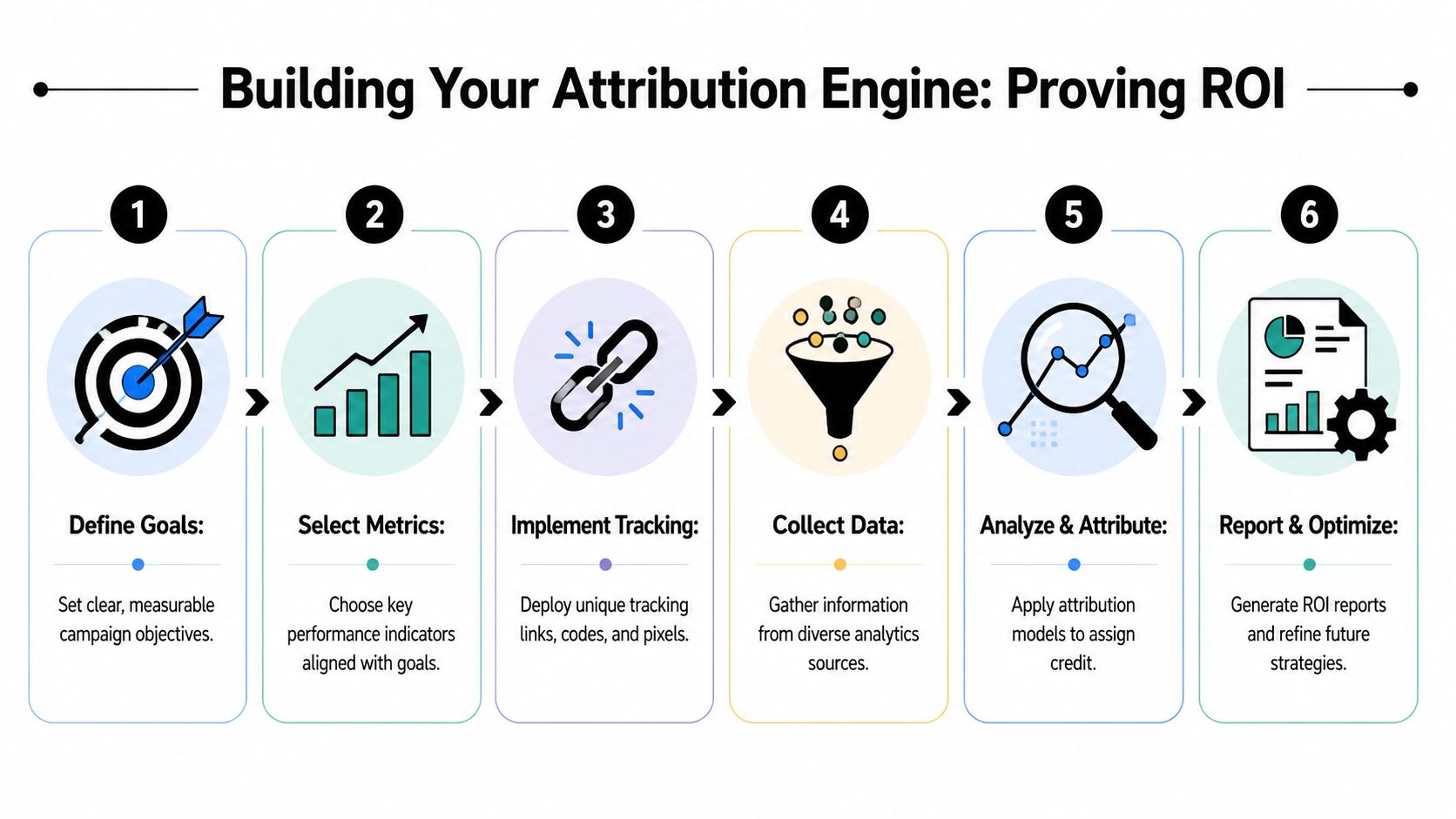
You don’t need perfect measurement. You need a consistent system that tracks the campaign from content to commercial action closely enough to support decisions.
That means every creator should have their own:
- Trackable link
- Trackable code
- Defined landing destination
- Clear reporting window
- Single place where campaign data is reviewed
If any of those are missing, your campaign becomes harder to diagnose. If most of them are missing, you’re guessing.
Build it step by step
Define the conversion event
Start with the action that matters most. Purchase. Booking. Lead form completion. Menu view followed by reservation click. Don’t build tracking around broad engagement if the business needs revenue evidence.
Write down the exact event before the campaign starts. Then ask one operational question. Can a user go from creator content to that event through a path we can observe?
If the answer is uncertain, fix the path first.
Create unique UTM links for every creator
A proper UTM setup gives each creator a unique source and campaign reference. The exact naming system matters less than consistency. What matters is that each link clearly maps back to one creator and one campaign.
A simple convention works well:
- source = creator name or handle
- medium = influencer
- campaign = campaign name
- content = platform or asset variation
Send creators the final links yourself. Don’t ask them to build their own. Manual creator-side setup is one of the fastest ways to create messy data.
For teams that need a practical grounding in the mechanics, this guide on understanding marketing performance for e-commerce is helpful because it explains attribution logic without turning it into analytics theatre.
Assign creator-specific promo codes
Promo codes do two jobs. They improve conversion by giving people a reason to act, and they create a second attribution layer when direct click data is incomplete.
Good code design is simple:
- easy to say in video
- easy to type
- clearly tied to one creator
- tied to one defined offer window
Don’t reuse generic codes across multiple creators if you want clean learning. The moment several people share the same code, you’ve reduced your ability to know who moved the customer.
Match links to landing pages
Most campaigns waste intent by sending people to a generic homepage. If the creator talked about one product, one location, or one offer, the landing page should continue that exact story.
That continuity matters more than many teams realise. The audience clicked because the creator made a specific case. If they land on a broad page and have to search, a measurable share of that intent disappears.
Better attribution starts before analytics. It starts with a clean path from recommendation to action.
Decide how you’ll read the data
You need one reporting view that combines creator activity and business outcome. That can be your analytics stack, an internal dashboard, a spreadsheet if the programme is small, or a platform that generates campaign links and codes in advance.
One option is Sup’s guide to measuring influencer marketing ROI, which outlines how to connect creator content to clicks, conversions, and revenue through a central reporting setup.
The key is not the interface. The key is operational discipline. One campaign. One source of truth.
What to review after launch
Once content goes live, review campaign data in sequence:
| Layer | What to check |
|---|---|
| Exposure | Did the post actually go live as agreed and reach the expected audience type? |
| Traffic | Did people click the creator-specific link? |
| Offer response | Did they use the code or proceed on the landing page? |
| Conversion | Did the intended action happen? |
| Comparison | Which creators drove action efficiently and which only drove noise? |
When influencer marketing begins behaving like a growth channel instead of a creative black box, you stop asking whether the campaign felt active. You ask which creators, offers, and content paths created movement you can prove.
Finding Creators Who Drive Action Not Just Applause
Creator selection is where many campaigns often fail before they even launch. The brand sees a polished grid, a healthy follower count, and a few past partnerships that look familiar. The creator gets approved. Weeks later, the campaign produces attention without action.
That outcome is predictable when selection is based on appearance rather than evidence.
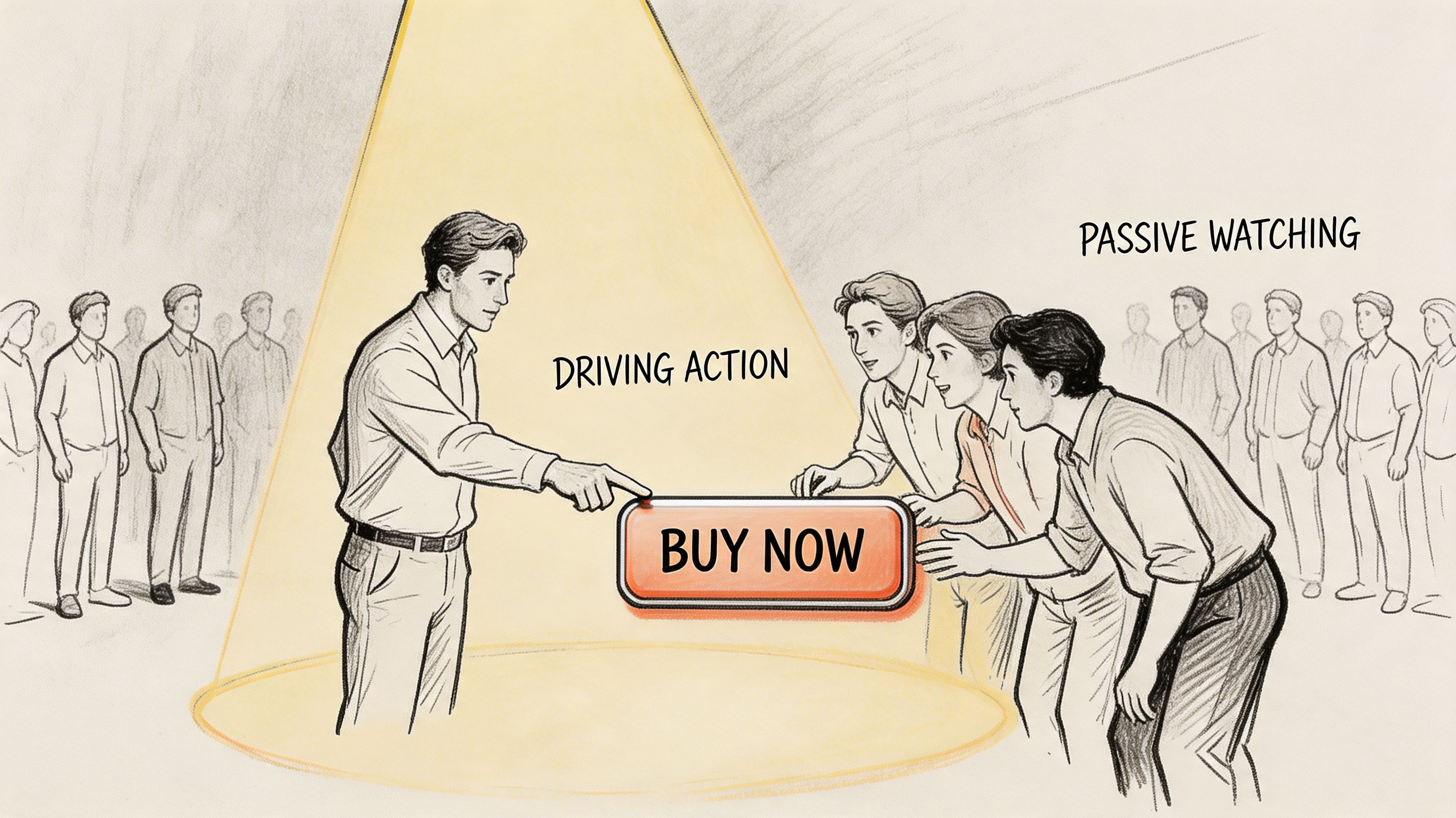
For local and footfall-driven brands, the gap gets even wider. For UK multi-location chains and restaurants, 68% report untracked footfall from TikTok collaborations, while micro-creators yield 3.2x higher footfall ROI for UK cafes, according to The Exposure’s summary of UK data.
That should immediately change who makes your shortlist.
What real influence looks like
A creator who drives action usually has three things:
- Audience trust. Followers treat recommendations as useful, not intrusive.
- Context fit. The creator already posts in situations where your product makes sense.
- Action habits. Their audience has shown it will click, book, save, visit, or buy.
Follower count doesn’t tell you any of that.
A large audience can still be cold, distracted, poorly matched geographically, or trained to consume content passively. A smaller creator with a tighter local following can outperform because their audience sees them as a real source of recommendations, especially when the purchase decision is nearby and practical.
For a deeper breakdown of why smaller creators often outperform on commercial outcomes, this analysis of why micro-influencers outperform macro-influencers with data is worth reviewing.
How to vet creators properly
Good vetting is part qualitative judgment, part pattern recognition. It isn’t glamorous, but it saves budget.
Use this process.
Check audience relevance before aesthetics
Look at where the audience is, what else the creator talks about, and whether the comments suggest real familiarity. A restaurant chain in Manchester doesn’t need a creator with broad UK visibility if most useful viewers are elsewhere. A skincare brand doesn’t just need beauty content. It needs a creator whose audience already accepts recommendations tied to routine, trust, and repeat purchase.
Review past sponsored content closely
Don’t just ask whether the creator has done brand deals. Ask how they handled them.
Look for:
- Natural integration. The product appears in a believable context.
- Audience reaction. Comments reference the recommendation, not just the creator’s appearance.
- Consistency. Sponsored posts don’t feel like a completely different personality took over the account.
If a creator’s branded content always performs awkwardly, believe the pattern.
Watch for false positives
Some accounts look strong because they’ve learned how to stage surface-level performance. That’s why you should compare multiple signals:
| Signal | Healthy sign | Warning sign |
|---|---|---|
| Comment quality | Specific reactions and questions | Generic praise or repetitive comments |
| Content fit | Brand mention feels native to their format | Sponsorship feels bolted on |
| Audience geography | Matches your trading area or target market | Reach is broad but commercially irrelevant |
| Creator behaviour | Consistent posting and responsive communication | Delays, vague answers, poor process hygiene |
A creator can be influential in culture and still be weak in conversion. Those are different jobs.
Treat outreach like the start of a partnership
Once you’ve shortlisted creators, the first message matters. Most outreach is either too transactional or too vague. Both create problems later.
A stronger opening sounds like this:
Hi [Name], we’re planning a campaign focused on [specific outcome] for [brand]. We think your content fits because of [specific observation about audience or format]. We’d like to explore a collaboration built around [product or location], with clear tracking and a straightforward brief, while leaving room for your own voice. If it’s relevant, we can share the concept, timeline, and deliverables.
That message does three useful things. It shows you actually reviewed their content. It frames the campaign around fit and outcome. It signals professionalism.
A little later in your planning, it helps to see how practitioners discuss creator evaluation in the field. This video is a useful companion while building your shortlist.
What works versus what doesn’t
Here’s the practical trade-off.
What works
- Local, niche, or routine-based creators whose recommendations influence a defined audience
- Creators whose content already sits close to your product use case
- Operators who can follow a brief, deliver on time, and work with tracked links or codes
What doesn’t
- Big reach with weak audience intent
- Creators selected because competitors used them
- One-off approvals based on a media kit and a hunch
When you choose creators this way, “influencer marketing” stops being a broad category and becomes a series of measurable partnerships with specific commercial jobs.
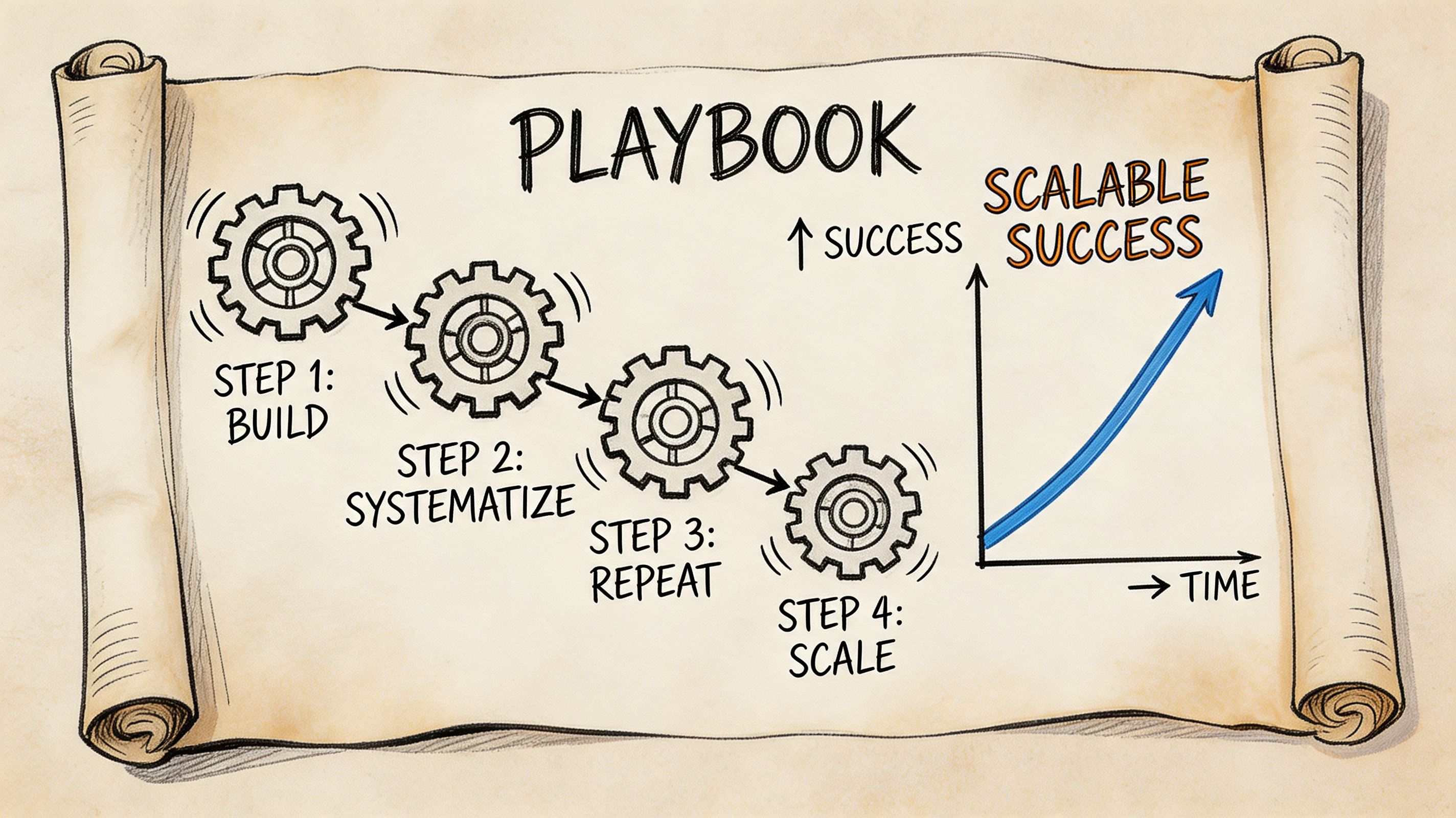
The Playbook for Scaling Repeatable Success
A campaign becomes valuable twice. First when it performs. Then again when you can repeat the conditions that made it perform.
Most brands never reach the second stage because they run creator work as a string of isolated campaigns. New shortlist every time. New brief every time. New tracking logic every time. The team keeps paying the learning cost from scratch.
Repeatable success comes from turning campaign lessons into operating rules.
Keep the winners and formalise why they won
After each campaign, sort creators into three groups:
- Scale now. They drove clear action, communicated well, and produced reusable content.
- Test again with changes. The fit is promising, but something in the offer, format, or timing needs adjustment.
- Don’t renew. They posted, but the partnership didn’t create enough commercial value or process reliability.
That sounds simple, but many teams avoid it because they don’t want to close doors. The result is a bloated creator roster with no quality threshold. Strong programmes do the opposite. They keep standards visible.
Create a basic scorecard with criteria such as:
- commercial outcome
- audience fit
- content quality
- ease of collaboration
- reuse potential
You don’t need a complicated model. You need enough structure to stop the team from making the same subjective decisions repeatedly.
Turn one-off creators into ongoing partners
Creators usually perform better when they understand the brand, product nuances, seasonal context, and what kind of messaging moves their audience. That learning compounds over time.
Longer relationships also improve content quality because the creator no longer sounds like they’ve just discovered the brand that morning. The audience notices that. Familiarity increases credibility when it’s genuine.
Many teams should move from “campaign planning” to programme management. Build creator tiers, define who gets repeat briefs, and decide what earns a deeper relationship. If you’re expanding volume, this guide on how to scale influencer marketing from 5 to 500 creators offers a useful framework for keeping growth operationally sane.
The best creator roster isn’t the biggest one. It’s the smallest one that can reliably produce revenue, content, and learnings you can reuse.
Build a content library, not just a campaign archive
One of the easiest ways to improve overall ROI is to stop treating creator content as single-use output. Strong UGC should keep working after the original post.
That means collecting assets in a way that makes them usable across:
- paid social ads
- landing pages
- product pages
- email campaigns
- local social accounts
- review and testimonial flows
A good content library needs labels, rights clarity, creator names, campaign tags, and notes on what each asset was meant to do. Without that structure, valuable content gets buried in email threads and cloud folders.
Use attribution to decide what scales
Scaling doesn’t mean adding more creators immediately. It means increasing investment where the system has already shown you credible evidence.
A practical scaling sequence looks like this:
| Stage | Operational move |
|---|---|
| Proof | Confirm which creators, offers, and formats produced action |
| Consolidation | Repeat with the top performers and remove weak links |
| Expansion | Add adjacent creators, locations, or formats using the same tracking structure |
| Amplification | Repurpose the strongest UGC in other channels where rights allow |
This is also the point where a platform can help if your team is stuck in spreadsheets and manual follow-ups. Tools that centralise outreach, creator coordination, code and UTM generation, and asset collection reduce operational drag and make repeatability possible. The key benefit isn’t convenience. It’s consistency.
When the system is stable, influencer marketing stops acting like an experiment. It starts acting like a managed growth channel.
Frequently Asked Questions About Influencer Campaigns
How much should I budget for a micro-influencer campaign?
Start with the outcome you need, not a flat market assumption. Budget has to cover creator compensation, product or experience cost, tracking setup, internal management time, and any content usage rights you need afterward.
A small test is fine if the campaign is designed to learn. What doesn’t work is underpaying creators while expecting polished content, fast turnaround, strong performance, and broad usage rights. Scope the job realistically.
What if the creator delivers poor-quality content even with a clear brief?
Don’t post weak content just because the deadline arrived. Review the contract and the approval terms first. If revision rights were included, use them quickly and specifically.
Feedback should be concrete:
- what needs changing
- what stays
- what the content must achieve
- when the revision is due
If the creator still can’t deliver to standard, treat it as a vetting lesson and tighten your future approval process.
Should every influencer campaign use promo codes?
Not every campaign needs them, but most performance-focused campaigns benefit from them. Codes can help attribute action when someone doesn’t click immediately and returns later.
Use them when the audience can realistically act on an offer and when the checkout or booking flow can capture the code cleanly. Skip them if they distort brand positioning or if the actual goal is content generation rather than direct response.
What should I do if sponsored posts get negative comments?
First, separate normal scepticism from a real issue. A few comments questioning whether a post is sponsored isn’t a crisis. Confusion about pricing, misleading claims, or a visibly poor fit needs a response.
Handle it like this:
- review the comments fast
- identify whether the issue is accuracy, fit, or tone
- align with the creator on a response
- correct factual problems clearly
- document what triggered the reaction so the next brief improves
Silence is rarely the right move if the confusion affects trust.
How long should I test a creator before deciding whether to continue?
One post usually isn’t enough to judge the full relationship, but one post can reveal whether the basics are there. Look at audience fit, content quality, professionalism, and whether the creator can drive the intended next step.
If those foundations are weak, don’t keep spending just to gather more disappointment. If the fit is good but the offer or format was off, run a second test with one meaningful adjustment.
What if my campaign produced engagement but no clear sales?
Don’t jump straight to “it failed”. Check the path. Was the call to action clear? Did the landing page match the content? Were links and codes set up correctly? Did the audience have buying intent?
If all of that was solid and sales still didn’t materialise, then the campaign may have been better suited to awareness or content creation than conversion. That’s still useful learning, provided it was accurately measured.
Can restaurants and local businesses really make influencer marketing measurable?
Yes, but only if the campaign is built around local action. Use creator-specific booking links, reservation prompts, redeemable offers, and location-level reporting wherever possible.
The common mistake is running local creator activity with ecommerce-style assumptions but without any local tracking. If the goal is footfall, the measurement has to match that reality.
If your team is tired of chasing creators in DMs, piecing together spreadsheets, and trying to explain unclear results after the fact, Sup gives you a structured way to run creator campaigns with sourcing, outreach, tracking links, promo codes, reporting, and content collection built into one workflow. It’s a practical fit for ecommerce brands, restaurants, agencies, and multi-location teams that want influencer marketing to behave like an accountable growth channel rather than a guessing game.
More on strategy
See how many creators post about you and your competitors
Type in your brand's Instagram handle and we count the creators who post about you and about your five closest competitors. It takes about a minute and it is free. Or request a demo and we will show you the creators in your niche and walk you through the dashboard.
 Book a call