20 March 2026
What Is Creator-Led Commerce? The Future of Brand Marketing: A Growth Playbook
So, what exactly is creator-led commerce? Put simply, it’s where influencer marketing grows up. It moves beyond one-off sponsored posts and treats creators as genuine, integrated sales channels for your brand, not just temporary endorsers.
This is a fundamental shift. We’re moving away from fuzzy metrics like ‘impressions’ and towards authentic, long-term partnerships that directly link content to actual revenue. It’s a smarter way to do business because it prioritises trust and delivers results you can actually measure.
From Influencers To Integrated Sales Channels
Let's be honest: the old way of doing influencer marketing often felt like a bit of a gamble. Brands would pay for a post, cross their fingers, and hope for the best, with little more than likes and comments to gauge success. That era is thankfully behind us.

Think of it like this: traditional influencer marketing was like buying a billboard on a busy motorway. You paid a lot for visibility, hoping the right people would drive past and notice your ad. Creator-led commerce, on the other hand, is like having a trusted friend personally recommend a product they genuinely use and love, complete with a story about why it’s so good.
This change is being driven by two massive forces: audiences are demanding authenticity, and brands are demanding real, measurable results.
The Rise Of The Authentic Partner
Today's customers are savvy. They’re tired of polished, impersonal advertising and can spot a disingenuous paid post from a mile off. The data backs this up, with studies showing that 69% of consumers trust recommendations from creators: a level of faith that most traditional advertising can only dream of.
This is because the role of a creator has evolved far beyond being a simple megaphone. They are now:
- Authentic Storytellers: Weaving products naturally into their daily lives and personal narratives.
- Trusted Curators: Vetting products for their audience and only recommending what they truly believe in.
- Direct Sales Channels: Driving actual sales through shoppable content, unique discount codes, and direct links.
The best creators aren't just posting branded content anymore. They are actively engaging with their community, answering questions, and guiding followers to the right products. They have transformed from one-time advertisers into genuine partners who build lasting brand affinity.
From Vague Metrics To Real Revenue
The second major driver is the need for accountability. Why pour money into a campaign with no clear return on investment? Brands now rightfully expect to see exactly how their marketing spend translates into sales.
As creators become fully integrated sales channels, understanding how they can effectively monetize Instagram and turn a profile into income is the key to unlocking this potential. This is the very core of creator-led commerce: every piece of content becomes a potential point of sale that can be tracked and measured. It's a strategy built for a world where every pound spent on marketing must be justified.
This new model isn’t just a minor improvement; it’s a fundamental reorganisation of how brands and creators should work together, setting the stage for a much more effective and profitable era in marketing.
Understanding The Core Pillars Of Creator-Led Commerce
It’s easy to mistake creator-led commerce as just a new name for influencer marketing, but that would be missing the point entirely. This is a fundamental shift in strategy, built on three pillars that completely separate it from the old, often disconnected, ways of running campaigns. When you understand how these pillars work together, you can build a marketing engine that doesn't just get seen. It builds trust, drives real sales, and creates predictable growth.
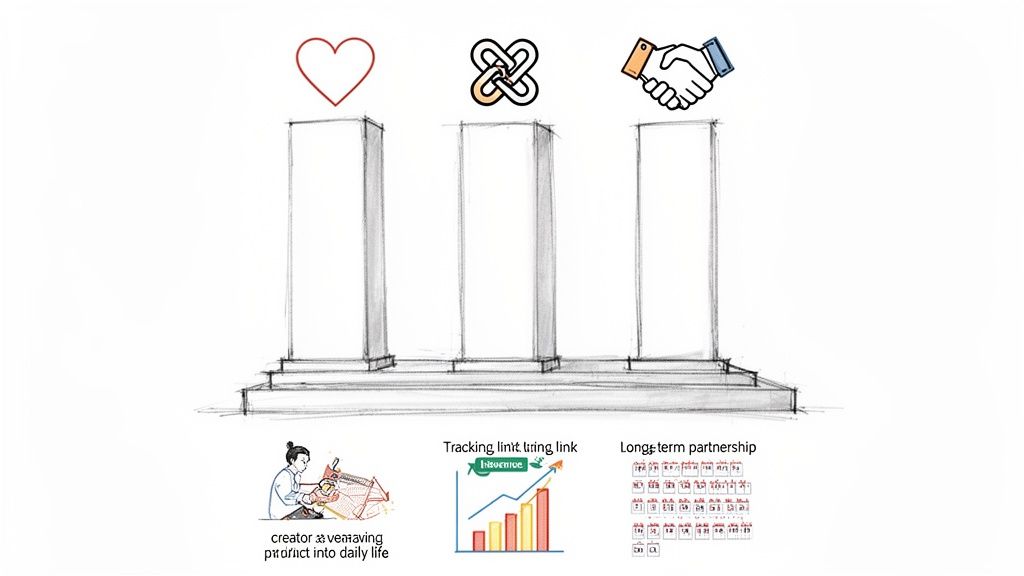
This isn’t about just paying for posts anymore. It’s about building a genuine ecosystem where authenticity, clear measurement, and true partnerships are the essential ingredients for success.
Deep Authenticity Is Non-Negotiable
The first and most important pillar is deep authenticity. We're talking about something that goes miles beyond a creator simply holding up a product for a quick photo. Real authenticity happens when a product is naturally woven into a creator’s life and content, becoming a believable part of their story.
Think about a local food blogger visiting a new restaurant. They aren't just there for a free meal; they're sharing the whole experience. You'll see them post about the booking process, the atmosphere, their favourite dish, and exactly why they plan on going back. This creates a genuine narrative that their followers trust infinitely more than a polished advertisement.
That trust is your most valuable asset. Modern consumers, particularly younger ones, are searching for real connections, and the data backs this up. With 69% of consumers saying they trust recommendations from creators, that belief translates directly into brand credibility.
Direct Attribution Turns Content Into Performance
The second pillar, direct attribution, finally solves one of marketing’s oldest headaches: proving return on investment. For years, brands were stuck with vague metrics like impressions and reach, which looked good on paper but rarely told you anything about actual sales.
Creator-led commerce changes all of this by making every single piece of content a trackable performance asset. This is done with a few simple but incredibly effective tools:
- Unique Promo Codes: A creator-specific code like "SOPHIE15" lets you track every sale, whether in-store or online, that came directly from that person’s recommendation.
- Trackable Links (UTMs): Custom URLs allow you to measure every click, website visit, and online conversion generated by each creator’s post or story.
Think of it this way: instead of just knowing how many people saw an ad, you now know exactly how many people acted on it. This data allows you to calculate precise metrics like Return on Ad Spend (ROAS) for every single creator you work with.
This is what elevates marketing from a cost centre to a predictable profit centre. For a closer look at how this content drives sales, our guide on getting UGC for ecommerce that converts offers more practical tips.
Long-Term Partnerships Drive Sustainable Growth
The final pillar is the strategic move away from one-off campaigns and towards long-term partnerships. Instead of treating creators like short-term assets for a single product launch, smart brands are building ongoing, collaborative relationships.
This approach builds powerful brand advocacy over time. When a creator features your brand again and again, their audience starts to connect your product with the creator's identity. This continuous exposure builds familiarity and deepens trust, making every future promotion even more effective.
For the brand, it means far less time spent constantly sourcing and onboarding new talent. For the creator, it provides stable income and a much deeper connection to a brand they genuinely believe in. Together, these three pillars create a powerful, self-reinforcing cycle that is defining the future of how brands connect with customers.
Why This Strategy Is A Game-Changer For Brands
Let's be clear: creator-led commerce isn't just another marketing tactic to try. It’s a fundamental shift in how brands can achieve real, measurable growth. Forget vague benefits. We’re talking about a strategy that delivers tangible, bottom-line results for everyone, from online stores to the local restaurant down the street. It’s about turning your marketing spend into a predictable profit centre.
For any e-commerce or direct-to-consumer (DTC) brand, the most immediate win is a huge boost in conversion rates. When a creator they trust genuinely recommends a product, it cuts straight through the noise of traditional ads. Their followers arrive at your checkout with a much higher intent to actually buy.
Driving Real Business Outcomes
The value of creator-led commerce isn’t theoretical; you see it in sales figures, footfall, and happy clients. The outcomes are tailored to what your business actually needs.
- For E-commerce and DTC: Brands get higher conversion rates and sales they can directly attribute to a specific creator. These creators effectively become your most authentic and trusted sales channels.
- For Restaurants and Local Chains: This approach drives measurable footfall. Think localised promotions and authentic reviews that genuinely fill tables and create a real community buzz around your venue.
- For Agencies: It offers a scalable, ROI-driven service for your clients. You can move beyond vanity metrics and deliver clear performance reports that clients not only love but actually understand.
This approach is proving especially powerful in markets like the United Kingdom, which is leading Europe’s adoption of creator-led commerce. The momentum is undeniable when you see that 81% of UK brands plan to increase their influencer budgets by 2026, with the market forecast to hit £1.3 billion by 2029. This growth is being fuelled by the 78% of consumers who trust creator recommendations, turning authentic content directly into revenue.
Slashing Costs And Building A Content Library
One of the biggest (and most overlooked) perks of creator-led commerce is the constant stream of high-quality, authentic user-generated content (UGC) you get. Every single collaboration leaves you with photos, videos, and testimonials that your brand can repurpose across all your marketing channels.
This steady flow of fresh creative can dramatically cut your production costs. Instead of dropping thousands on a professional photoshoot, you get a diverse library of assets that resonate deeply with your audience because they come from real people.
This isn't just about saving money; it's a strategic asset. By featuring creator content in your ads, on your website, and across your social media, you amplify authenticity and build social proof at a fraction of the traditional cost.
One of the core reasons brands get on board with creator-led commerce is its raw effectiveness in driving reach and engagement, which is essential for brand growth. Learning more about effective strategies to increase brand awareness can provide extra context on why this is so key.
This content engine transforms a marketing expense into a repeatable growth machine. While many partnerships will drive immediate sales, their true long-term value is in building a library of trusted content that continuously fuels your marketing funnel. For a deeper look into the numbers driving this shift, our analysis of the latest influencer marketing statistics for 2026 offers crucial insights. By integrating creators as true partners, brands aren't just renting an audience. They're building a sustainable and profitable growth engine for the long haul.
Your Roadmap To A Successful Creator Program
Getting started with creator-led commerce can feel like a mountain to climb. But with a solid roadmap, you can turn what often becomes manual chaos into a predictable growth engine for your brand. This is about moving past fuzzy goals like 'raising awareness' and building a practical system that delivers real, measurable results.
Let’s get into the nitty-gritty of launching a program that actually works.
It all begins with setting clear, measurable goals. You need to know exactly what success looks like for your business. Instead of just hoping for "more buzz," get specific with your targets.
For instance, a strong goal could be:
- Generate 100 new online orders within the next quarter.
- Drive 50 in-store bookings for a new menu item.
- Collect 200 pieces of user-generated content (UGC) to use in future ads.
Having these concrete objectives gives you a clear benchmark to measure performance against. It’s how you turn a creator campaign into a reliable part of your growth strategy.
Find The Right Creators For Your Niche
Once your goals are set, it’s time to find the right people to partner with. The real power in creator-led commerce rarely comes from big-name celebrities with millions of followers. The magic actually happens with nano-creators (1k-10k followers) and micro-creators (10k-100k followers).
These creators have built hyper-engaged, niche communities that genuinely trust their recommendations. A local food blogger with 5,000 loyal followers in Manchester will drive more people to a restaurant there than a national celebrity ever could. The trick is to find creators whose audience is a perfect mirror of your ideal customer.
The UK market is particularly fertile ground for this approach. An incredible 93% of UK marketers now favour micro-influencers (the highest rate in Europe) precisely because they drive such targeted sales. With the market projected to hit £1.2 billion by 2026 and a pool of over 98,000 Instagram accounts with more than 5k followers, it's easier than ever to run effective, hyper-local campaigns. You can find more fascinating insights into these UK creator marketing trends on marcommnews.com.
Equip Creators For Success And Attribution
With your partners chosen, you need to give them the tools to succeed and, just as importantly, to track their impact. This goes way beyond sending a simple brief; it’s about providing them with assets that are ready to perform from day one.
Your goal is to make it incredibly easy for creators to promote your brand and for you to measure the results. Every piece of content should be a trackable sales channel.
Give every creator:
- A Unique Promo Code: Something like CHLOE20 gives their followers a discount while telling you exactly who drove that sale.
- A Trackable UTM Link: This lets you monitor clicks, web traffic, and online conversions coming directly from their content.
- A Clear Brief: Outline the campaign goals and key messages, but always give creators the freedom to be authentic. Their audience follows them for a reason.
This simple setup is the engine for growth, no matter what kind of business you run.
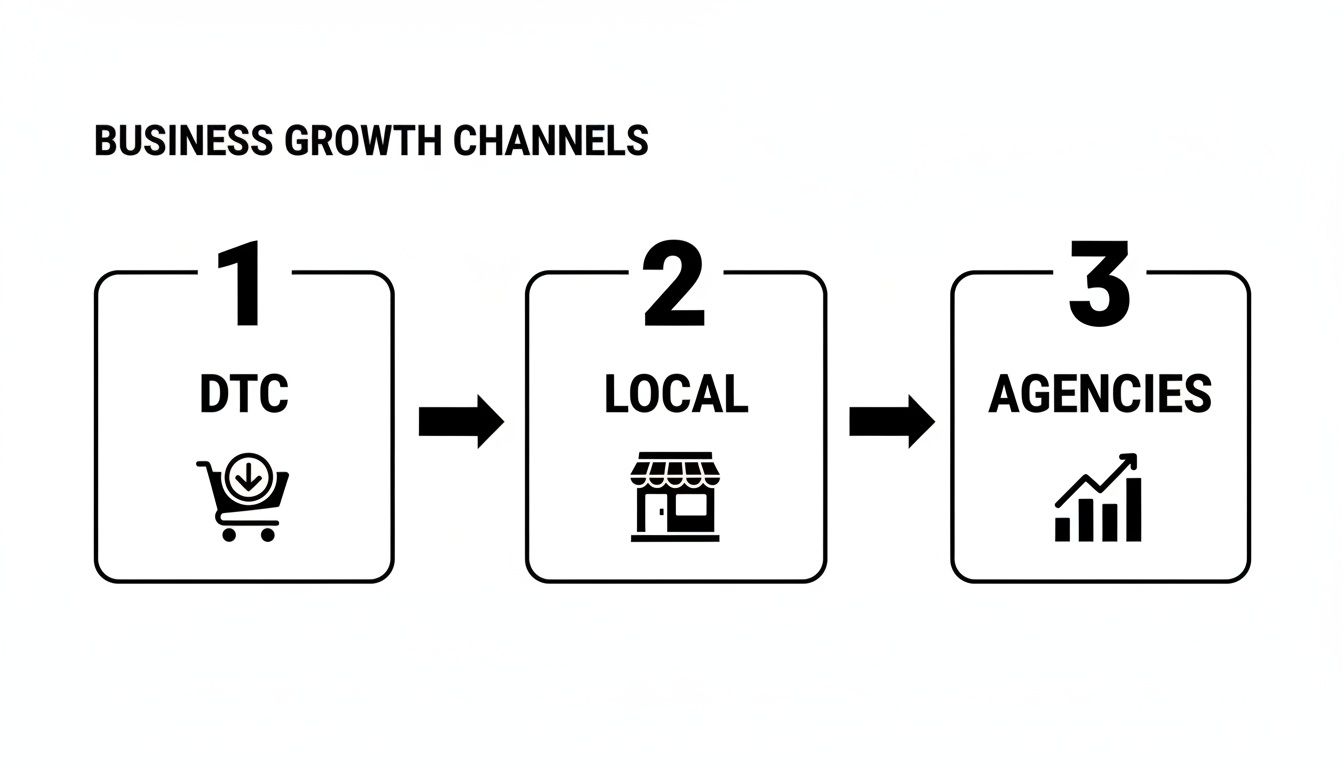
As the visual shows, whether you’re a direct-to-consumer brand, a local shop, or an agency managing multiple clients, the core principle of empowering and tracking creators is what fuels genuine growth.
Manage Logistics Without The Headache
Finally, you have to manage all the moving parts. Trying to handle outreach, negotiations, product shipping, and reporting across dozens of creators is a recipe for burnout. Spreadsheets and endless email chains quickly become a time-sucking nightmare.
This is where a dedicated platform becomes essential. A creator management tool like Sup automates these repetitive, administrative tasks, freeing up your team to focus on the bigger picture. It centralises communication, tracks performance in real-time, and helps you organise all that valuable UGC in one place. By automating the admin, you can scale your programme efficiently and prove its value with clear, data-backed reports.
Measuring The KPIs That Actually Matter
So, how do you know if your creator-led commerce efforts are actually working? It’s easy to get sidetracked by vanity metrics. Likes and comments are nice to see, but they don't tell you the whole story and certainly don't pay the bills.
To really get this right, you need to shift your mindset. The most successful brands treat their creator programme like any other performance marketing channel. This means focusing on the key performance indicators (KPIs) that connect content directly to your bottom line and prove the undeniable ROI to anyone who asks.
Primary KPIs That Drive The Bottom Line
These are the numbers that your finance team really cares about. They measure the direct financial return from your creator collaborations, proving that your marketing spend is delivering a tangible result. Without tracking these, you’re essentially just guessing.
Let's break down the most important ones:
- Attributed Revenue: This is the big one. It's the total value of sales generated directly from a creator’s content, tracked via their unique promo codes or UTM links. It’s the clearest signal of a creator’s power to convert their audience into your customers.
- Return on Ad Spend (ROAS): This simple calculation tells you exactly how many pounds you’re earning for every pound you spend. You get it by dividing the attributed revenue by the total campaign cost (including creator fees and any product costs).
- Customer Acquisition Cost (CAC): How much does it cost to bring in a new customer through your creator programme? If your CAC from creators is lower than from your paid ad channels, you’ve found a serious win.
Focusing on these hard numbers makes it easy to spot your top-performing creators and build a solid business case for investing more into this channel. For a deeper dive, check out our guide on how to measure influencer marketing ROI effectively.
Secondary KPIs That Tell The Full Story
While revenue is king, it's not the only metric that matters. Secondary KPIs provide crucial context and help you understand the why behind the sales figures. They’re your diagnostic tools, helping you spot issues and optimise your campaigns for even better results.
Imagine a creator has a sky-high engagement rate but very few sales. That doesn't automatically mean the partnership failed. It could point to a problem with your landing page, a confusing checkout process, or an offer that just isn't compelling enough. This data lets you troubleshoot the entire customer journey, not just the creator’s post.
Here are the key secondary metrics to keep an eye on:
- Engagement Rate: This is the percentage of a creator’s audience that interacts with their posts (likes, comments, shares, saves). High engagement suggests a strong, loyal community that trusts what the creator has to say.
- UGC Volume: This measures the amount of high-quality, reusable content you get from your collaborations. This is a massive strategic asset, saving you thousands in production costs and giving you a constant supply of authentic content for your own marketing.
- Click-Through Rate (CTR): This shows how many people actually clicked the trackable link in a creator’s post or bio. It’s a fantastic indicator of how well their call to action resonated with their audience.
By combining primary and secondary KPIs, you get a complete, 360-degree view of your programme’s performance. This allows you to move beyond surface-level observations and make smart, data-driven decisions that turn your creator partnerships into a predictable and profitable growth engine for your business.
Creator-Led Commerce in Action
It’s one thing to talk about the theory, but seeing creator-led commerce actually work is where it all clicks. This isn't just a strategy for one type of business. The core ideas (authenticity and direct attribution) can be put to work to drive real growth for local venues, online shops, and even the agencies that support them.
Let's look at how this plays out in the real world.
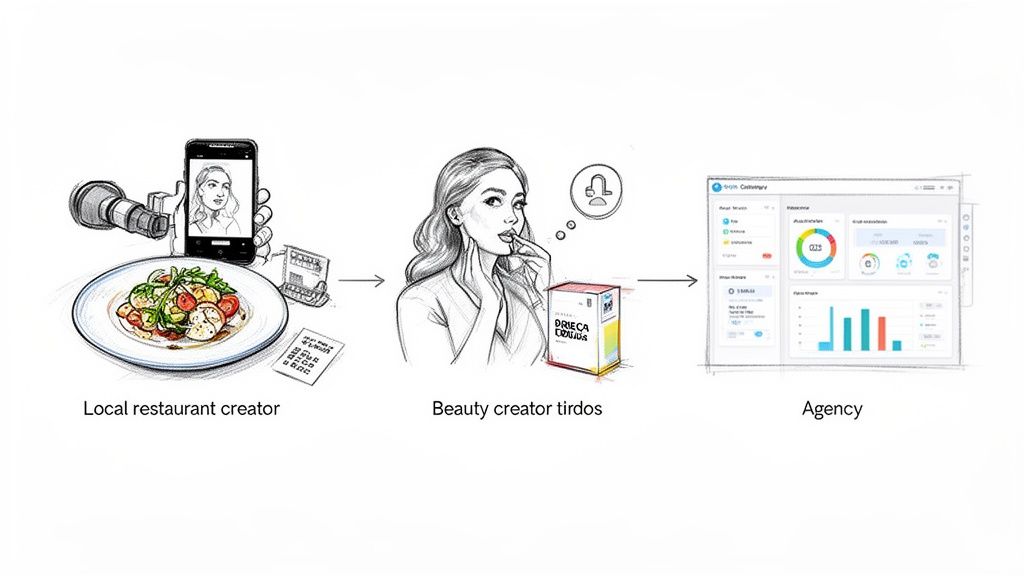
These examples aren't just about getting a brand's name out there; they show how businesses used creator partnerships as a direct line to generating results they could actually measure.
Driving Bookings for a Local Restaurant
A local restaurant chain needed to get people excited about its new seasonal menu and, more importantly, get them through the door. The usual advertising routes felt flat and they needed to inspire actual bookings, not just rack up a few likes online.
Their solution was brilliantly simple. They teamed up with a hand-picked group of 25 local nano-creators who genuinely loved food. Each creator was given a unique promo code that offered their followers a complimentary appetiser when they booked a table.
The creators didn't follow a script. They simply shared their real dining experiences through Instagram Stories and Reels, calling out their favourite dishes and capturing the restaurant's atmosphere. Their content felt less like an ad and more like a genuine tip from a friend.
And the results? By tracking how many times each unique code was used, the restaurant could see exactly which creators were driving bookings. The campaign fired on all cylinders, leading to a 30% increase in online bookings in the first month alone. It was proof that local, trusted voices could have a direct impact on the bottom line.
Generating Sales for a DTC Beauty Brand
A new direct-to-consumer (DTC) beauty brand was launching its flagship skincare product into a very crowded market. To stand out, they had to build trust and show people that their product actually worked, but in a way that felt completely authentic.
They turned to TikTok, finding 50 micro-creators known for their honest, tutorial-style beauty content. Instead of giving them a strict brief, the brand simply asked them to weave the product into their daily routine and share what they really thought.
To connect content to commerce, each creator received a unique affiliate link. This allowed the brand to track every single click that turned into a purchase, effectively turning each video into its own mini-storefront.
The content wasn't just a sales pitch; it was a collection of authentic testimonials. Creators showed before-and-after results, shared application tips, and answered follower questions in the comments, building immense social proof for the product.
The campaign resulted in hundreds of authentic video tutorials, which the brand was then able to repurpose for its own social ads. But the real win was the data. The direct attribution from the affiliate links revealed a massive 4x Return on Ad Spend (ROAS), transforming a brand awareness push into a seriously profitable sales machine.
Scaling ROI for a Marketing Agency
Picture a marketing agency juggling creator campaigns for a dozen different clients, from local cafés to growing e-commerce stores. They were drowning in spreadsheets, manually trying to track performance and struggling to show each client a clear, consolidated report on their return on investment.
To fix this, the agency brought a platform like Sup on board to centralise their entire operation. This move allowed them to launch campaigns for multiple clients at once, with each client having their own set of unique promo codes and trackable links.
Suddenly, everything was streamlined. From a single dashboard, the agency could see real-time performance for every client: code redemptions, link clicks, and attributed revenue. They could finally give their clients professional, easy-to-understand ROI reports that proved the value of their work. This new efficiency didn't just save them time; it allowed them to scale up, take on more clients, and cement their reputation as a results-driven agency.
Common Questions About Creator-Led Commerce
Diving into creator-led commerce is a big step, and it’s completely normal to have questions. It's a real shift from the marketing playbooks we're used to, so a bit of hesitation or needing more detail is part of the process. We've heard them all, so let's tackle the most common queries and hurdles head-on.
These aren't just academic questions; they're the practical things marketers are asking themselves every day as they think about where their brand is heading.
How Is Creator-Led Commerce Different From Affiliate Marketing?
This is a big one, and the distinction is crucial. On the surface, they look similar: both often use special links and codes to track sales. But dig a little deeper, and you'll find their core philosophies are worlds apart. Affiliate marketing is usually a numbers game, a sales channel focused on driving as many transactional clicks as possible, with little thought given to the brand's story or reputation.
Creator-led commerce, on the other hand, is built from the ground up on community trust and genuine partnership. You're not just renting an influencer's audience for a quick post. You're choosing creators for their authentic voice and the real connection they have with their followers. They become genuine ambassadors, weaving your products into their content in a way that feels helpful and true, not just like an advert.
Think of it like this: affiliate marketing is hiring a commission-only salesperson. Creator-led commerce is building a lasting relationship with a passionate brand advocate. One is chasing clicks, the other is building a brand.
Is This Strategy Only For Big Brands With Huge Budgets?
Not at all. In fact, you could argue that creator-led commerce is a genuine superpower for small and medium-sized businesses, especially local ones. The secret is to look beyond the big-name, expensive macro-influencers. The real magic happens with nano-creators (1k-10k followers) and micro-creators (10k-100k followers).
These creators are not only far more affordable, but their audiences are incredibly engaged and often tightly focused on a specific niche. A local restaurant, for instance, could see a huge spike in footfall by working with a few trusted foodies in their city. That's an impact a national celebrity could never deliver with the same authenticity or for the same price. It’s how smaller brands can punch well above their weight on a modest budget.
How Do I Ensure The Creators I Work With Are Authentic?
Authenticity is the absolute foundation of this entire approach. Get it wrong, and the whole thing falls apart. It all starts with smart sourcing and proper vetting. A massive follower count means nothing if there's no real connection. You need to look for creators whose values, existing content, and audience profile are a natural match for your brand.
Compliance is also a non-negotiable part of this. In the UK, advertising bodies like the ASA are very clear that paid partnerships must be transparently disclosed using identifiers like #ad. This isn't just about ticking a legal box; it's fundamental to maintaining the trust of the audience you're trying to reach.
This is where a good creator management platform really proves its worth. It not only helps you find creators who are a perfect fit but also has compliance checks built in. This protects your brand, protects the creator, and keeps the whole relationship transparent and trustworthy.
How Much Time Does It Take To Manage A Creator Programme?
If you try to run a creator programme manually using spreadsheets and DMs… the honest answer is: a ton of time. The admin involved in outreach, negotiations, contracts, shipping products, and tracking performance can easily become a full-time job, especially as you start to work with more creators.
This is precisely the kind of logistical headache that technology was made to solve.
A dedicated platform can automate up to 95% of these administrative tasks. It takes what was once a chaotic mess of different documents and inboxes and turns it into a single, streamlined process.
Suddenly, you can manage dozens or even hundreds of creator relationships from one central dashboard. By cutting out all that tedious admin, your time is freed up to focus on what actually moves the needle: building brilliant relationships and thinking strategically about your brand's growth. That efficiency is what makes scaling a creator programme truly possible.
Ready to turn creator marketing into a predictable, ROI-proven growth channel? Sup combines smart technology with a human team to help you launch, manage, and scale creator campaigns that deliver measurable results. Get started with Sup today and see how we can save you 95% of your time while driving more collabs, sales, and reviews.
More on insights
See how many creators post about you and your competitors
Type in your brand's Instagram handle and we count the creators who post about you and about your five closest competitors. It takes about a minute and it is free. Or request a demo and we will show you the creators in your niche and walk you through the dashboard.
 Book a call