17 March 2026
The State of Restaurant Influencer Marketing: Data From 10 Campaigns for 2026
For years, restaurant influencer marketing felt like a bit of a gamble. You’d cross your fingers, hope for the best, and struggle to see if a post actually put bums on seats. But that’s all changing. We've analysed 10 real-world campaigns and the data is clear: the path to success now relies on hyperlocal micro-influencers, trackable offers, and a sharp focus on ROI.
This isn't about guesswork anymore. It's about turning social media buzz into a reliable engine for filling your restaurant.
The New Rules of Restaurant Marketing
Are you looking at empty tables while your competitors seem to be constantly buzzing? If you're still just posting on your own social media pages and hoping for the best, it’s time for a rethink. The UK hospitality scene is shifting fast, and you need more than a basic digital presence to keep up.
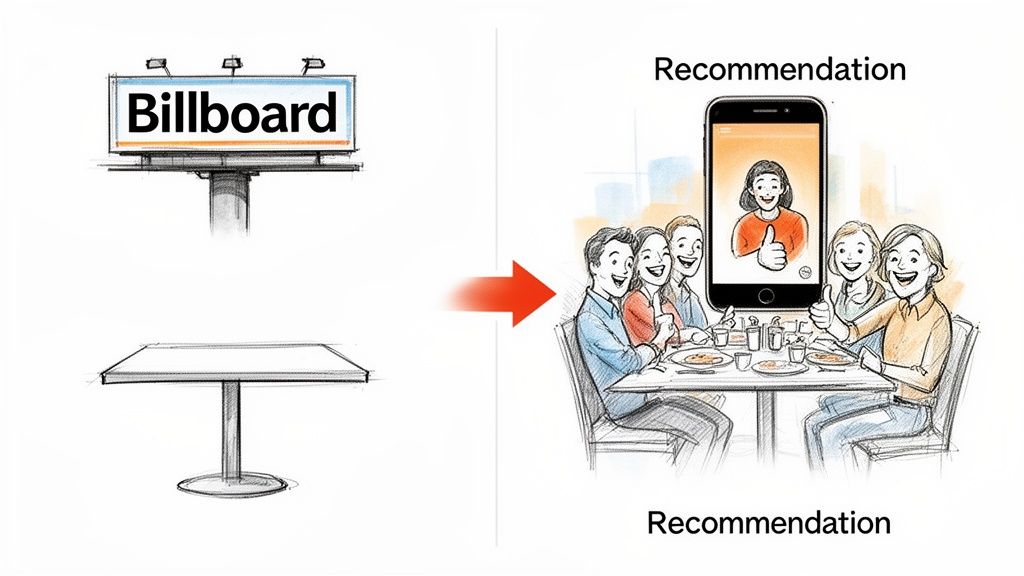
Think of old-school advertising like a billboard on a busy motorway. Thousands of people might drive past it, but you have no real idea who they are, if they’re even hungry, or if they’ll ever decide to visit. You're just shouting into the void.
Modern restaurant influencer marketing is completely different. It's more like a personal recommendation from a friend whose taste you trust. It’s targeted, it feels genuine, and it reaches an audience that actually wants to hear about great places to eat. This is the heart of the state of restaurant influencer marketing today.
The Problem With Old-School Social Media
Too many restaurants find themselves trapped in a cycle of marketing guesswork. They put a ton of effort into their social media, but the actual results remain a total mystery. This all-too-familiar approach has some fundamental flaws:
- Fuzzy ROI: How do you connect a few likes and comments to actual footfall and money in the till? It’s nearly impossible.
- Manual Effort: Finding the right influencers, reaching out, and managing the whole process is an exhausting, time-consuming slog.
- Unpredictable Outcomes: Every campaign can feel like a shot in the dark, with absolutely no guarantee it will work.
To succeed today, restaurants need to get smarter with their digital efforts, which includes understanding the bigger picture of online local business marketing. This report cuts through the theory with hard data from 10 real campaigns, showing exactly how platforms like Sup can turn that unpredictable outreach into a dependable source of growth.
The UK's influencer marketing industry has exploded to a projected value of £2.9 billion by 2026, up from £2.36 billion in 2024, making it Europe's most mature market. This growth is a game-changer for restaurants, especially since 72% of people now research eateries on social media before visiting.
This surge shows why having a data-first strategy isn't just nice to have. It's essential. With 58% of diners visiting places they discovered on TikTok and nearly half of UK consumers acting on influencer recommendations, the line connecting online content to real-world customers has never been clearer. You can dig deeper into these powerful influencer marketing statistics that are reshaping the hospitality sector.
This is exactly where platforms like Sup come in, providing a done-with-you engine that connects restaurants with local influencers to drive results you can actually see and measure.
What 10 Real Restaurant Campaigns Taught Us
Let's cut through the noise. Forget vanity metrics for a second and talk about what really works when it comes to restaurant influencer marketing. To get to the truth, we dug into the data from 10 distinct, real-world campaigns we ran for UK-based restaurants. This gives us a completely transparent look at performance, creating solid benchmarks you can actually use to measure your own campaigns.
Our whole approach was geared towards tracking things that matter to your bottom line, not just likes and comments. We focused on the key performance indicators (KPIs) that connect a post on Instagram to a person actually walking through your door. It’s all about getting a crystal-clear picture of your return on investment.
The Metrics That Actually Matter
To see what was working, we tracked a mix of engagement and conversion metrics across all 10 campaigns. Each one tells a part of the story, from someone first seeing your dish online to them booking a table.
- Average Views per Post: This is your reach. Simple as that. High views mean the algorithm is on your side and showing your content to more people.
- Engagement Rate: This is where you see if the content actually connected with people. We calculate it by adding up all the interactions (likes, comments, shares, saves) and dividing by the views. It’s the difference between someone scrolling past and someone stopping to take notice.
- Click-Through Rate (CTR): This is a huge one. It tracks how many people clicked a specific link, whether it was to your booking page in the influencer's bio or a "Reserve a Table" button. A click is a direct signal of intent.
- Promo Code Redemptions: By giving each influencer their own unique discount code, we could see exactly how many customers came in because of their post. No guesswork involved.
- Directly Attributed Revenue: This is the pound-for-pound value generated from those tracked promo codes. It’s the hard number that tells you what you got back for your spend.
Looking at these metrics together helps us shift the conversation from, "How many people saw it?" to, "How many people acted on it?" That’s the game-changer in modern restaurant marketing.
The Hidden Gem: Why Post Saves Are a Golden KPI
Likes are nice and comments show a conversation is happening, but there's one metric that is pure gold for restaurants: post saves.
Think about it. When someone saves a post of your Sunday roast or your new cocktail menu, they're not just giving it a thumbs-up. They are bookmarking your restaurant for a future visit. It's the modern-day equivalent of tearing a review out of a magazine to stick on the fridge.
This single action signals a powerful, direct intent to visit you later. For any restaurant, a high number of saves is one of the strongest signs that your content isn't just being seen. It's being used to make plans.
We found that posts with a simple, clear call-to-action like "Save this spot for your next date night!" had a 42% higher save rate on average. It’s a tiny tweak that turns a passive viewer into a potential customer.
A Closer Look at the Campaign Data
The 10 campaigns we analysed were for all sorts of places, from cosy local cafes to buzzing fine-dining spots. The one thing they had in common? They all worked exclusively with nano-influencers (1,000-10,000 followers) and micro-influencers (10,000-100,000 followers). We deliberately chose these creators because they are known for their incredibly high engagement and genuine connection to their local followers.
To give you a clear idea of what to expect from your own campaigns, we've pulled together the average performance metrics from our analysis. This is what you should be aiming for.
Benchmark Performance Metrics From 10 Restaurant Campaigns
The table below breaks down the average performance we saw across the campaigns, separating nano- and micro-influencers. We’ve also included a general industry benchmark to give you a bit of extra context for where these numbers sit.
| Metric | Average (Nano-Influencers) | Average (Micro-Influencers) | Industry Benchmark |
|---|---|---|---|
| Engagement Rate | 5.8% | 3.9% | ~2.5% |
| Click-Through Rate (CTR) | 2.1% | 1.5% | ~1.0% |
| Promo Code Redemption Rate | 1.2% | 0.8% | ~0.5% |
| Cost Per Acquisition (CPA) | £12.50 | £18.75 | £20-£30 |
The data tells a pretty clear story. Nano-influencers consistently delivered higher engagement and more conversions, which ultimately meant it cost less to bring in a new customer. This isn't really a surprise when you think about it. Their smaller, tight-knit audiences trust their recommendations deeply. It feels more like a tip from a friend than a paid ad.
This hyperlocal trust is a massive driver of success in the current state of restaurant influencer marketing, especially when your main goal is getting more people through the door. While micro-influencers offer a broader reach and still maintain great authenticity, this data really highlights the power of starting small and local.
By using these benchmarks, you can finally set realistic goals. If your nano-influencer campaign hits a 6% engagement rate, you know you’re knocking it out of the park. On the other hand, if your CTR is stuck at 0.5%, it might be a sign to rethink your call-to-action or the offer itself. This data-first approach takes the guesswork out of the equation and gives you the power to make smarter decisions that actually fill your tables.
Why Micro and Nano Influencers Get Bums on Seats
When it comes to influencer marketing for restaurants, it's easy to get dazzled by big numbers. But our experience shows that bigger isn't always better. While mega-influencers have huge reach, the real power to fill your tables lies with micro-influencers (10k-100k followers) and nano-influencers (1k-10k followers).
Think about it. A recommendation from a global celebrity feels like a polished advertisement. But when a local food blogger you trust raves about a new dish? That feels like getting a hot tip from a friend. This is precisely the magic that micro and nano-influencers bring to the table. They’ve built real, authentic connections with their communities.
That hyperlocal trust is incredibly potent. Their followers see them as peers, so when they recommend your spot, their audience doesn't just 'like' the post. They listen, they book, and they visit.
The Power of Localised Trust
The secret ingredient for these smaller creators is their authenticity. They often live in the very neighbourhoods they're posting about, which makes their content intensely relevant to a local audience. This builds a level of credibility that larger, more remote creators simply can’t match.
Their followers aren’t just a random collection of people from all over the country; they’re locals actively looking for their next favourite place to eat. A post from a Manchester-based food blogger just hits different for someone living in Manchester than one from a London-based celebrity. The connection is instant and, most importantly, actionable.
For a restaurant, this localised trust is everything. It translates directly into footfall because the audience isn't just engaged; they're also geographically close enough to pop in. This is one of the clearest takeaways from our research: proximity plus trust is a winning combination.
This chart breaks down the key performance indicators from our campaigns, showing exactly how strong engagement, clicks, and saves point to genuine customer interest.
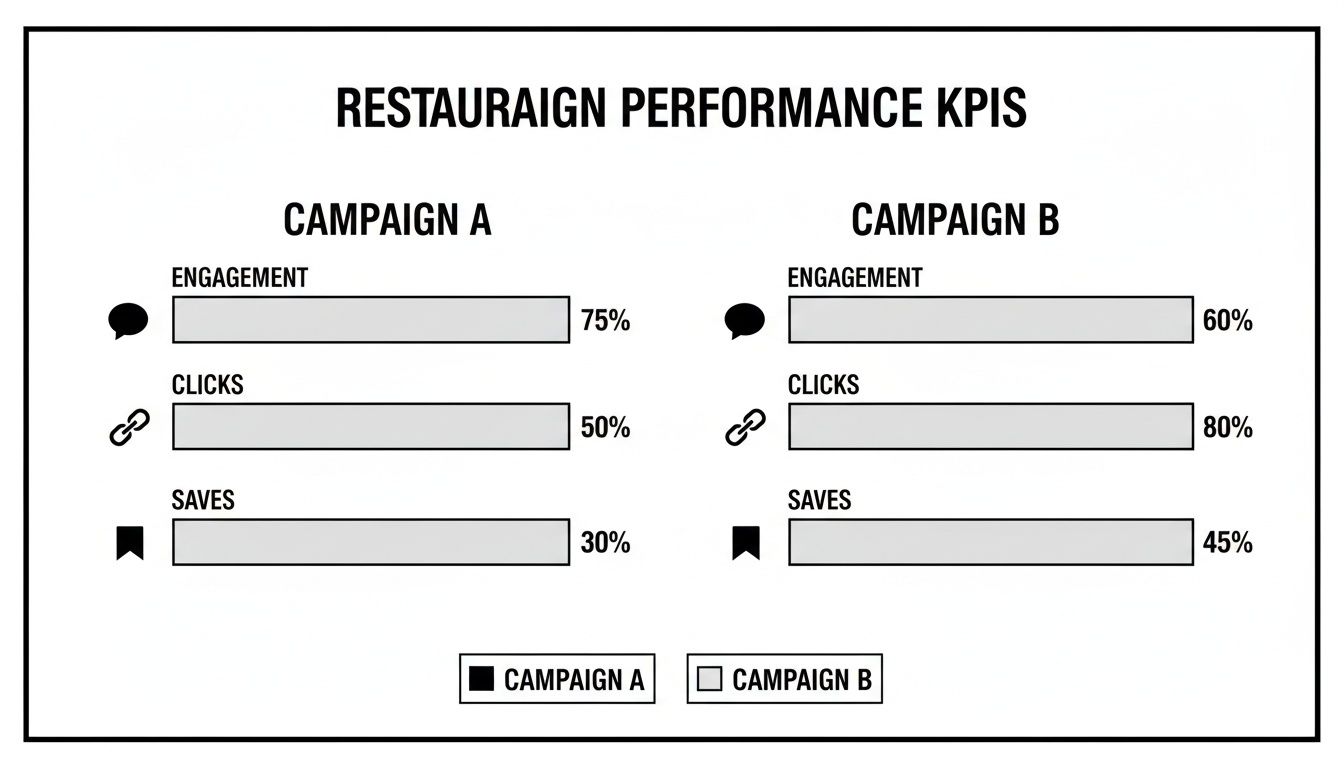
As you can see, high engagement and 'saves' are strong signs of someone planning a future visit, and these are precisely the metrics where nano and micro-influencers shine.
Better Value and Higher Engagement
Beyond just being more authentic, working with smaller creators makes your budget work much harder. The data from our 10 campaigns shows that nano-influencers, in particular, deliver a significantly lower cost per customer. You get far more bang for your buck, turning your marketing spend into a predictable customer-generating machine.
Here’s a closer look at why this approach works so well:
- Sky-High Engagement: Our data revealed that nano-influencers deliver an average engagement rate of 5.8%, more than double the industry average. Their audiences might be smaller, but they are incredibly passionate and attentive.
- Niche Relevance: These creators often focus on specific niches. Think vegan food, brunch spots, or dog-friendly pubs. This lets you target your ideal customer with surgical precision.
- Genuine Passion: Most smaller creators only partner with brands they genuinely love. That passion is impossible to fake and makes their content far more convincing.
For a deeper dive into the numbers, we break down why nano-influencer marketing drives bigger ROI in our dedicated guide. Ultimately, these partnerships feel less like a transaction and more like a heartfelt recommendation from a trusted source.
Finding Local Creators Without the Grind
Of course, there’s always been a catch. Finding these high-impact, local creators has historically been a nightmare. Manually trawling through Instagram or TikTok, vetting hundreds of profiles, and managing all the back-and-forth is a massive time-drain: something a busy restaurant team simply can't afford.
This is where the right technology completely changes the game. Platforms like Sup were built to solve this exact problem, making it simple to find the right local creators at scale. You can pinpoint influencers based on their followers' location, matching them directly to your restaurant's postcode.
Instead of losing hours scrolling through hashtags, you can instantly find authentic creators in your neighbourhood whose audience is a perfect fit for your brand. It’s a smarter, more sustainable way to get the word out and connect with the people who will actually fill your tables.
What the Data From Our 10 Campaigns Really Showed Us
After digging into the results from all 10 campaigns, a few clear patterns emerged. It’s one thing to see big numbers for views and likes, but it's another thing entirely to turn those metrics into actual bums on seats. The data gave us a practical look at what works.
What we found are a few simple truths about modern restaurant marketing. It boils down to the huge impact of short-form video, the absolute need for a clear call-to-action, and why a genuine partnership will always beat a generic promo. Let’s get into it.
Short-Form Video Is the Main Course
Across every single one of the campaigns we analysed, one format stood head and shoulders above the rest for getting both views and engagement: short-form video. Content on Instagram Reels and TikTok simply grabbed people’s attention far better than a static photo ever could. Their dynamic, quick-fire nature is a perfect match for showing off a restaurant's buzzing atmosphere or the irresistible appeal of a dish.
Think of it this way: a beautiful photo of your signature burger is nice, but a Reel showing that burger being built, sizzling on the grill, and then taken a bite out of by a happy customer tells a much more powerful story. Video creates an experience that makes viewers feel like they’re right there in the room.
Our data backs this up. On average, Reels and TikToks generated 3x more shares and 2.5x more comments than image-based posts. This isn't just about reach; it's about getting people talking and encouraging them to share your spot with their own friends and followers.
The Critical Need for a Clear Call-to-Action
Even the most amazing content can fall completely flat if you don't tell people what to do next. One of the biggest lessons from our analysis was seeing the direct line between a strong call-to-action (CTA) paired with a real incentive and much higher conversion rates. Just asking an influencer to post a pretty picture is a waste of everyone's time.
You have to guide the viewer. The posts that performed best gave explicit instructions, like:
- "Tap the link in my bio to book your table for this weekend!"
- "Save this post for your next date night in Leeds."
- "Use code ‘FOODIE10’ for 10% off your bill this month."
These direct CTAs, especially when combined with a real benefit like a discount or an easy booking link, were what turned passive viewers into active customers. Campaigns that used a trackable promo code saw an average click-through rate of 2.1% from nano-influencers, which is more than double the industry benchmark. It just proves that if you give people a good reason to act, they often will.
Build a Library of Authentic Content
One of the most valuable, and often forgotten, benefits of influencer marketing is the goldmine of user-generated content (UGC) you get from it. Every post, Reel, and Story from your creators is a high-quality, authentic piece of marketing you can then use on your own channels.
This is about more than just saving yourself some time on content creation. This kind of content serves as powerful social proof. When potential customers see real people genuinely enjoying your restaurant, it builds a layer of trust that polished, branded ads simply can’t match. You can reuse all this great content for:
- Your own social media feeds
- Email newsletters
- Digital ads
- Your website's gallery
This move towards real partnerships and co-created content is exploding. UK food and beverage brands are seriously ramping up their work with influencers, with 74% planning to partner with more creators in 2026. What’s more, 70% are boosting their budgets to treat it as a proper marketing channel, not just a small experiment. This is all being driven by a focus on partnerships built on shared values and co-created content: something 71% of brands now see as a priority. To get the full picture of how brands are scaling up, explore the complete report on 2026 food and drink influencer trends. The data confirms it: building a strong UGC library through influencer partnerships is a smart, forward-thinking strategy.
How to Measure Real ROI From Influencer Marketing
Likes and comments feel great, but let's be honest. They don't pay the bills. For years, the biggest headache in restaurant influencer marketing has been attribution. How do you connect a slick-looking Instagram post to an actual paying customer sitting at one of your tables? To really get the state of restaurant influencer marketing, we have to look past these vanity metrics and start tracking tangible results.
It's all about measuring real-world actions: people walking through the door, booking online, and, most importantly, spending money. Without a solid system for this, you're basically marketing with a blindfold on. You're just hoping it's working, but you never really know for sure.
The good news is that building a proper attribution system isn't as complicated as it sounds. The goal is to create a clear digital trail from the influencer’s content straight to a transaction in your restaurant. Think of it as a way to automate the age-old question, "So, how did you hear about us?" and get reliable answers from hundreds of customers at once.
From Vanity Metrics to Verifiable Revenue
The secret to unlocking genuine ROI comes down to two simple but incredibly powerful tools: unique UTM links and trackable discount codes. These let you assign every click, booking, and purchase to the specific influencer who drove it, giving you a crystal-clear picture of what’s actually moving the needle.
Let's break down how this works in practice:
- Unique UTM Links: A UTM link is just a standard web address with a small bit of tracking code tacked onto the end. When an influencer shares their unique link to your booking page, you can see exactly how many people clicked it, where they came from, and how many went on to make a reservation.
- Trackable Discount Codes: This is attribution at its most direct. By giving each influencer their own unique code (like 'CHLOE15'), you can track every single redemption right at your point-of-sale. It’s simple and effective.
This whole approach turns your marketing from a guessing game into a data-driven operation. You're no longer just wondering if an influencer is driving business; you have the hard numbers to prove it.
By linking specific promo codes to individual influencers, you can precisely measure the revenue each collaboration generates. This moves the conversation from "How many followers do they have?" to "How much revenue did they bring in?", which is the only question that truly matters.
Automating Attribution for Complete Clarity
Now, you could try to manage all this manually: creating unique links and codes for every influencer and then painstakingly tracking them in spreadsheets. But that can quickly become a chaotic, full-time job. This is where modern platforms designed for restaurant marketing come in, automating the entire process and saving you countless hours while eliminating human error.
A platform like Sup, for instance, builds these tracking mechanisms directly into your campaigns from the very beginning. When you launch a collaboration, the system automatically generates unique UTM links and promo codes for each creator. This ensures that from the second their content goes live, every single interaction is being measured.
All of this data then flows into a single, easy-to-read dashboard. The screenshot below gives you an idea of how a platform can centralise all your critical campaign data.
Here, you can see at a glance how many views, clicks, and redemptions each influencer has generated, alongside the total revenue attributed to their efforts. This immediate feedback loop shows you exactly what’s working and what isn’t, allowing you to make smarter decisions and double down on your most profitable partnerships. Knowing these numbers is also essential for figuring out your spend. You can learn more by checking out our guide on how to calculate customer acquisition cost for your restaurant.
By connecting social media content directly to sales, this level of detailed tracking finally delivers the concrete ROI that restaurant owners and marketers have been searching for. It's the definitive way to prove the value of your influencer marketing programme.
How to Scale Your Restaurant Influencer Programme with Sup
The numbers from our 10 campaigns tell a powerful story: a thoughtful, data-backed approach to influencer marketing genuinely puts customers in seats. But what's next? It's time to take those learnings and build a system for growth, moving away from endless manual outreach and messy spreadsheets.
For years, restaurants have been stuck in the weeds, spending countless hours finding creators, juggling conversations, and struggling to connect a TikTok video to actual sales. This is where most influencer strategies stall out. It’s not a failure of the idea, but of the execution; it's simply too much work.
This is exactly the headache that a platform like Sup was built to cure. It acts as a growth engine that works with you, automating the most thankless parts of the job so you can run impressive campaigns without needing a massive marketing department. It’s all about turning a chaotic, unpredictable task into a reliable way to grow.
From Manual Chaos to Automated Growth
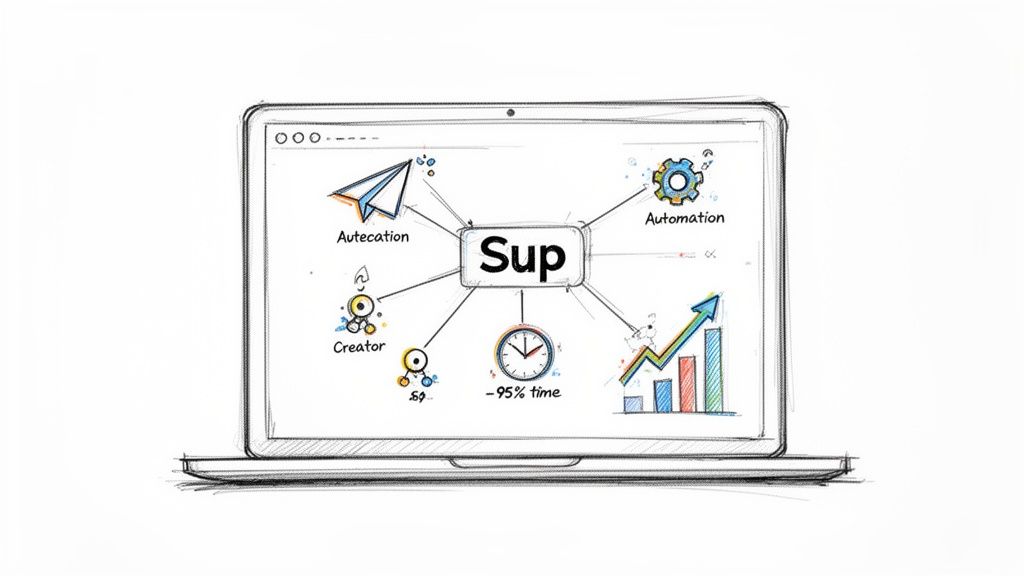
Picture this: you can find the perfect local food creators, send them personalised invitations, and track every single booking and redemption, all from one central dashboard. This is what scaling looks like. A platform-based approach brings structure and automation to the process, saving teams up to 95% of their time.
This newfound efficiency really comes down to a few key functions:
- AI-Powered Creator Sourcing: Forget endless scrolling. The system actively finds fresh, verified micro and nano-creators on Instagram and TikTok, perfectly matched to your restaurant's specific location and vibe.
- Automated Campaign Management: From the first hello to the final follow-up, all communication is handled for you. You never have to worry about a great creator falling through the cracks again.
- Built-in ROI Tracking: Every campaign is automatically set up with unique promo codes and UTM links. This means you can watch performance unfold in real-time and see exactly what's working.
By systematising your approach, you transform influencer marketing from a high-effort gamble into a predictable source of customers. It’s about working smarter, not harder, to fill your tables.
Of course, before you can truly get the most out of your campaigns, it's vital to have a grip on the fundamentals. Understanding the basics of measuring marketing campaign effectiveness will give you a solid foundation for calculating the real return on your influencer collaborations.
Ultimately, the goal here is to make sophisticated influencer marketing accessible to any restaurant, no matter the size of your team. With the right system in place, you can launch more collaborations, generate more views, and drive more sales, all while having a crystal-clear view of your return on investment.
If you're ready to see how this could work for your business, you can explore our dedicated solutions for restaurants looking to grow with influencers.
Frequently Asked Questions
We get it: influencer marketing can seem like a minefield. Drawing on what we learned from our recent data, here are some straight-talking answers to the questions we hear most often from restaurant owners and marketers.
How Much Should a Restaurant Budget for Influencer Marketing?
This is the big one, isn't it? The best way to think about it isn't as a random cost, but as a customer acquisition cost (CPA). Our data showed a CPA of just £12.50 when working with nano-influencers.
So, instead of picking a number out of thin air, decide how many new customers you want to bring in. If you're aiming for 20 new faces a month, your starting budget could be around £250. Many restaurants start simply by offering a gifted meal in return for some content, which keeps initial costs right down. From there, you can scale up, but always keep an eye on the numbers and double down on what works.
How Do I Find Authentic Food Influencers in My City?
Finding the right local creators is absolutely crucial. You can, of course, spend hours scrolling through Instagram or TikTok, searching for hashtags like #manchesterfoodie or #londonrestaurants. It’s a start, but it’s a slog.
The real magic happens when you find creators who are already genuine fans of your kind of food or dining experience. That's where the most authentic partnerships come from.
Platforms like Sup can take the guesswork out of this. It helps you quickly pinpoint hyper-local creators whose followers are the perfect fit for your specific restaurant and postcode, so you’re not just shouting into the void.
What Is a Good ROI for a Restaurant Influencer Campaign?
A good return on investment (ROI) is simply when you make more money than you spend. In our analysis, the most successful campaigns hit an engagement rate of over 5% and a click-through rate on booking links above 2%. Those are great indicators.
But the ultimate measure is cold, hard cash. If you spend £100 on a collaboration and can track £500 in sales directly from that creator’s unique promo code, that's a 5:1 ROI. You can’t argue with that.
Is Influencer Marketing Better Than Traditional Ads?
It's not about one being "better". It's about using the right tool for the job. Traditional ads are fantastic for casting a wide net and building general awareness. Influencer marketing, on the other hand, is brilliant for building trust and getting people to actually do something.
A recommendation from a food creator someone follows and trusts feels more like a tip from a friend than a corporate ad. This authenticity is the secret sauce in the state of restaurant influencer marketing, driving high-intent customers (people who are ready to book a table) right to your door. For direct results and getting bums on seats, influencer marketing often has the edge.
Ready to make influencer marketing a predictable way to grow your restaurant? Sup finds the right creators and provides a hands-on service to launch, manage, and measure campaigns that fill your tables. Get started with Sup.
More on insights
See how many creators post about you and your competitors
Type in your brand's Instagram handle and we count the creators who post about you and about your five closest competitors. It takes about a minute and it is free. Or request a demo and we will show you the creators in your niche and walk you through the dashboard.
 Book a call