5 March 2026
The Real Cost of Running Influencer Campaigns In-House: Revealed for 2026
When you tally up the cost of your influencer programme, what number do you focus on? For most brands, it's the creator fee. But in reality, that's just the tip of the iceberg. The real cost, the one that silently drains your budget, is the hundreds of salaried hours your team sinks into manual administration.
For many UK brands, this supposedly 'free' DIY approach quickly becomes a false economy. Once you factor in the operational drag, it often ends up being more expensive than using a dedicated platform. This hidden price tag covers everything from endless DMs and spreadsheet chaos to chasing follow-ups and struggling to prove ROI.
The Hidden Price of DIY Influencer Marketing
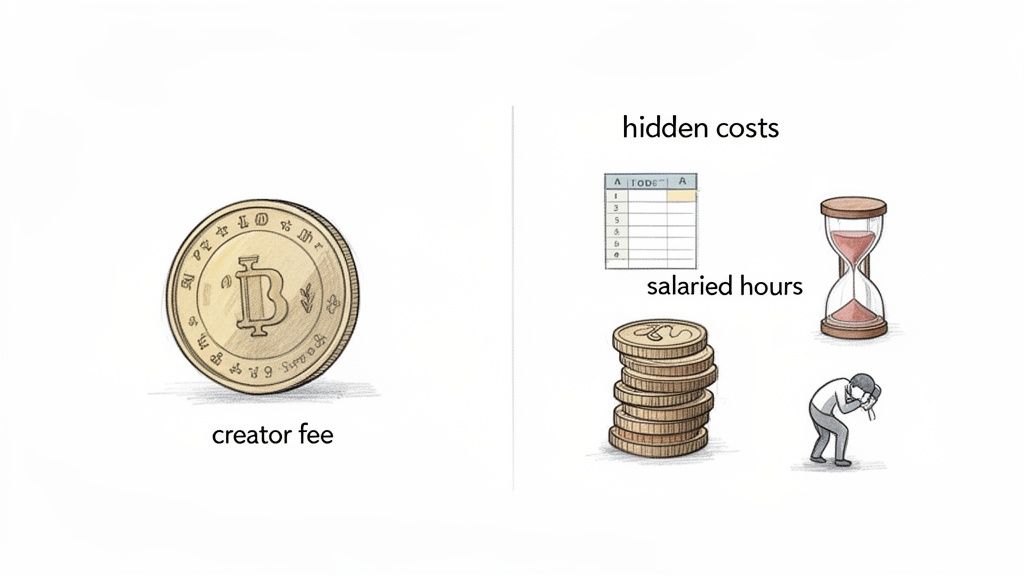
While managing influencer marketing internally seems like a smart way to save money, the strategy often masks significant operational costs that drain both time and budget. The problem isn't working with one or two creators; the issue is the manual workload that explodes the moment you try to scale.
The UK influencer market is booming, which only magnifies the challenge. The market value stood at $2.36 billion in 2024 and is projected to skyrocket to a staggering $24.15 billion by 2033. With ad spend hitting £930 million in 2024, it’s clear brands are all in.
Yet, with 89% of European brands managing these programmes internally, a huge number are wrestling with inefficiency. Without the right tools, this translates to countless hours lost to manual DMs on Instagram and TikTok, messy spreadsheets to track UTM links, and a relentless cycle of follow-ups. You can explore more UK influencer marketing statistics to see the full picture of this rapid growth.
The True Cost of Manual Management
This administrative burden is where the 'free' in-house approach becomes deceptively expensive. The real cost isn’t the fee you pay a creator; it’s the cumulative salary cost of your team spending their days on low-value tasks instead of high-impact strategy.
This leads to several very real financial drains:
- Wasted Salary Hours: A huge chunk of your marketing team's time gets diverted to repetitive tasks like creator discovery, outreach, negotiation, and content approval.
- Staff Burnout and Turnover: The constant, high-volume admin work is a recipe for frustration and burnout, which can drive up staff turnover and the associated hiring costs.
- Diluted ROI: Without clear, automated attribution, it’s nearly impossible to prove which influencers are actually driving sales. This leads to wasted spend and an inability to optimise future campaigns.
The greatest hidden cost is opportunity. Every hour your team spends wrestling with spreadsheets is an hour they aren't spending on creative strategy, market analysis, or scaling what actually works.
To really get a sense of the difference, let’s break down the time and cost implications of running campaigns manually versus with a platform.
In-House Campaign Costs vs Platform Efficiencies
The table below summarises the typical time drain for key tasks when managed manually compared to the efficiencies gained through an integrated platform. It’s a stark contrast.
| Campaign Task | Typical In-House Time and Cost | Platform-Assisted Time and Cost |
|---|---|---|
| Creator Discovery & Vetting | 10-15 hours per campaign (research, fake follower checks, outreach) | 1-2 hours (AI matching, verified creator database) |
| Outreach & Negotiation | 8-12 hours (manual DMs, email chains, contract back-and-forth) | <1 hour (automated outreach, standardised agreements) |
| Campaign & Content Tracking | 15-20+ hours (spreadsheet updates, manual link checks, chasing posts) | Real-time (automated tracking dashboard, content library) |
| ROI Attribution & Reporting | 5-10 hours (manual data collation, difficult to prove direct sales) | Instant (integrated promo codes & UTMs, clear revenue data) |
As you can see, the hours add up quickly. A single campaign can easily consume over 40 hours of manual work. That’s an entire working week for one person, spent on admin instead of growth.
Deconstructing the Manual Workload of In-House Campaigns
Running an influencer programme in-house without the right tools feels a lot like managing a modern warehouse with just a clipboard and pen. Sure, it’s possible, but the mountain of manual tasks quickly becomes a drag on your team’s time, energy, and your budget. The ‘real cost’ isn’t a single line item you can point to; it’s woven into every single phase of your campaign.
This manual grind is a classic case of "time theft." The money you think you're saving on platform fees gets quietly eaten up by huge productivity losses. When your team is spending their days bogged down in admin, the salary cost for those hours quickly dwarfs any upfront savings. In fact, studies show that up to 95% of a marketer's time can get diverted from high-value strategic work into just keeping the wheels turning.
The Endless Cycle of Discovery and Vetting
The first major time sink? Simply finding the right creators. This isn’t a quick Google search; it’s a full-blown investigation that can eat up dozens of hours.
- Manual Sourcing: Your team ends up endlessly scrolling through Instagram, TikTok, and YouTube, hunting for creators who match your brand’s look and feel.
- Audience Vetting: Finding someone who looks the part is just step one. Next comes the tedious job of checking their followers for bots and fake engagement to make sure you’re not throwing your budget away.
- Alignment Checks: You have to dig through their past content to ensure they’re brand-safe. You're looking for anything (a tone, a past partnership) that might clash with your own brand’s image.
This discovery phase alone can easily take 10-15 hours per campaign before you’ve even sent a single outreach message. And if you're a brand running multiple campaigns or trying to find niche creators, like a restaurant targeting local foodies, that time commitment multiplies fast. You can learn more about the nitty-gritty of this process in our guide on how to run a restaurant influencer campaign step-by-step.
The Back-and-Forth of Outreach and Negotiation
Once you have a shortlist, the communication marathon begins. This part of the process is infamous for its inefficiency, often devolving into messy email chains and a web of DMs that are a nightmare to track.
Managing chats with one or two influencers is doable. But when you try to scale up to five, ten, or even fifty creators a month (a volume many successful brands aim for) your inbox descends into chaos. Each negotiation is its own project, covering deliverables, timelines, and payment terms, all of which need to be meticulously documented.
"We try to keep this one-on-one contact with influencers... Just sharing a personal story. That’s what works best. Influencers talking straight to camera, sharing their personal journey, then connecting this to the app."
That personal touch is what creates authentic content, but it's a huge logistical headache to manage manually. The time spent on personalised outreach, follow-ups, and sorting out contracts for just one campaign can easily tack on another 8-12 hours of admin work.
The Grind of Content Management and Tracking
After the agreements are signed, the manual work only gets more intense. Your team effectively becomes a project management hub, juggling everything from content creation to performance analysis.
This involves:
- Briefing Creators: Clearly explaining campaign goals, key messages, and what you expect from the content.
- Reviewing and Approving Content: Checking every draft to ensure it meets brand guidelines and includes legal disclosures (like #ad) before it goes live.
- Monitoring for Live Posts: Manually checking creators' feeds to confirm that the content went up on the right date and at the right time.
- Tracking Performance: Piecing together data from all over the place: screenshotting story views, checking link clicks, and manually tallying comments and shares in a spreadsheet.
This is where spreadsheets really start to break. Without a central system, trying to track unique promo codes or UTM links for each creator becomes an error-prone mess, making it almost impossible to measure ROI accurately. To see just how much this burden can be lightened, it's worth seeing what technology can do. For example, looking into AI Creative Automation Platforms highlights the kinds of efficiencies you can gain by moving away from purely manual work.
Ultimately, the real cost of running influencer campaigns in-house is all this hidden labour: a steep price paid in lost strategy, missed opportunities, and a burnt-out team.
Analysing the Full Financial Impact of In-House vs. Platform
To get a real sense of the true cost of running influencer campaigns in-house, we need to put some numbers on the table. Let's walk through a common scenario: a UK ecommerce brand wants to work with 15 micro-influencers to launch a new product. We’ll compare the total cost of doing this in-house versus using a dedicated platform.
The obvious costs, like creator fees and product gifting, are just the tip of the iceberg. The biggest hidden expense for any in-house programme is almost always employee time. Even if you don’t hire a dedicated influencer manager, someone on your marketing team has to pick up the slack, pulling them away from other important work.
The In-House Cost Model Breakdown
Let’s calculate what that "free" management really costs. We'll use a conservative figure of £18 per hour for a UK marketing coordinator's time, which accounts for their salary and associated overheads.
- Campaign Management Hours (40 hours): This is a realistic estimate for all the manual work involved: finding and vetting creators, outreach, negotiating terms, writing briefs, approving content, and then manually tracking everything. At £18/hour, that’s £720 in salary costs alone.
- Product Seeding (15 creators x £40 product value): Gifting your product is a straightforward cost, coming to £600.
- Discovery & Analytics Tool Subscriptions: You'll need separate tools to properly vet creators and track some basic metrics. A modest budget for this would be around £150 per month.
- Creator Fees (5 paid creators x £150): Let's assume you're paying a small fee to some of the creators, which adds another £750.
When you add it all up, the total spend for a single campaign run in-house hits £2,220. What many teams think of as a cost-saving DIY approach actually carries £870 in operational and salary costs before you’ve even paid a single creator.
The Platform Cost Model Breakdown
Now, let's look at the same campaign managed through a platform like Sup. The financial model is much cleaner, with fewer variables to worry about.
- Platform Subscription: A typical monthly fee for a platform that handles everything from discovery to payment is about £400.
- Product Seeding (15 creators x £40 product value): This direct cost stays the same at £600.
- Creator Fees (5 paid creators x £150): This also remains constant at £750.
The total investment when using a platform comes to £1,750. This approach bundles management, analytics, and attribution into one predictable fee, getting rid of the hidden salary drain and the need to juggle multiple third-party tools.
In this direct comparison, the platform-based approach is over 21% cheaper than managing the campaign in-house. The perceived savings of going it alone are often completely erased by operational drag and hidden staff costs.
This financial reality is only getting more pronounced as the industry grows. With UK influencer ad spend projected to hit £930 million by 2026 and 86% of marketers now using creators, the manual workload is becoming unsustainable. Think of a hospitality brand trying to drive footfall with nano-creators. The high engagement on TikTok (15.2% for nanos) is appealing, but managing the sheer volume of relationships required is a monumental task without the right tools.
This chart shows you exactly where your team's time goes when you're stuck in a manual process.
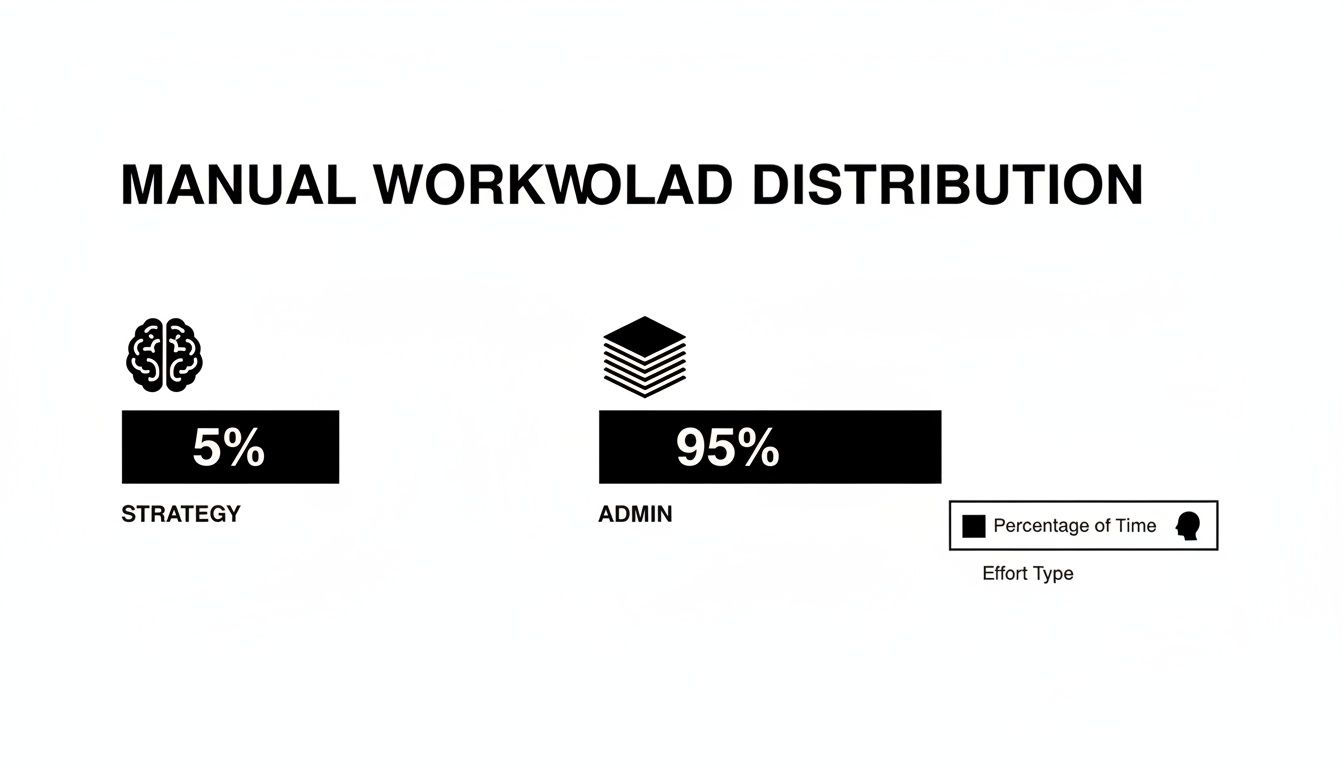
The data is stark: manual management forces teams to spend a staggering 95% of their effort on admin, leaving just 5% for strategy: the part that actually grows the business. It’s easy to see how a good ROI can be quickly eaten away by inefficiency. This is especially true for businesses with tight margins, like restaurants. You can learn more about this in our guide to influencer marketing costs for restaurants. The real financial hit isn't just the money you spend; it's the value you lose when your best people are trapped in spreadsheets instead of building your brand.
Understanding the Strategic Risks and Opportunity Costs
The direct expenses of an in-house influencer programme are one thing, but they're often just the tip of the iceberg. The real damage to your bottom line often comes from the strategic risks and massive opportunity costs that build up while your team is drowning in manual tasks.
Think about it. When your sharpest marketers are spending their days buried in spreadsheets or chasing creators for follow-ups, they aren’t focused on what truly moves the needle. That’s the real opportunity cost, all the high-impact strategic work that gets shelved.
The Hidden Cost of Neglected Strategy
Every hour your team spends on administrative grunt work is an hour they can't spend on activities that drive genuine growth. While you're bogged down in the day-to-day, you can bet your competitors are busy pulling ahead.
These are the kinds of critical initiatives that fall by the wayside:
- Creative Development: Actually brainstorming and developing fresh campaign concepts, formats, and messaging that resonate with your audience and deliver better results.
- Deeper Market Analysis: Getting under the skin of emerging consumer trends, properly analysing what your competitors are doing, and spotting new market segments ripe for the picking.
- Optimising Other Channels: Giving your paid social, SEO, or email marketing the attention they deserve, instead of letting them run on autopilot because influencer admin has taken over.
- Building Brand Community: Nurturing a loyal following by engaging directly with your audience, a task that requires strategic thought, not just administrative time.
The biggest risk of managing everything in-house isn't just wasted money; it's a stagnant strategy. When your team is constantly putting out fires, there's simply no headspace left for the proactive planning that fuels long-term growth.
This is a crucial point. Much of the analysis comes down to comparing manual effort against automation. You can see a parallel in the ongoing debate of AI transcription vs human and how it affects content efficiency and cost. The same principle applies squarely to every aspect of managing an influencer programme.
Navigating Compliance and Reputational Risks
Another serious risk for in-house teams is the potential for legal and reputational damage. In the UK, the Advertising Standards Authority (ASA) has very specific and constantly evolving rules for influencer marketing. For a team without dedicated legal support, just keeping up is a major challenge.
A single mistake, like an influencer forgetting the correct #ad disclosure, can have serious repercussions. We're talking formal warnings from the ASA, public call-outs, and a major blow to your brand's reputation. Consumers are savvier than ever about inauthentic ads, and a compliance slip-up can quickly undo years of trust-building.
The Crippling Effect of Poor Attribution
Perhaps the most damaging risk of a manual, in-house approach is the near impossibility of attributing results accurately. Without a proper system to track unique discount codes, UTM links, and resulting sales, your entire influencer programme is essentially operating in a black box.
This lack of clear data leads to a vicious cycle. You might see a general lift in sales, but you have no idea which creators or content actually drove it. It's a common problem. In fact, 55% of marketers say they see revenue growth but can't pinpoint the exact source.
Without reliable attribution, you simply cannot:
- Justify Your Budget: You can't walk into a meeting with clear ROI data, making it incredibly difficult to defend your budget, let alone ask for an increase.
- Optimise for Performance: You're left making decisions based on gut feelings rather than hard data, potentially throwing good money after bad.
- Scale Effectively: You have no repeatable formula for success. This makes it almost impossible to scale your programme from a handful of creators to the 50+ monthly collaborations that brands like Babbel use to drive consistent growth.
Ultimately, poor attribution turns your influencer marketing into a very expensive guessing game. The risk isn’t just wasted spend on a single campaign; it's the failure to build a predictable, profitable, and scalable growth channel for your business.
So, Which Path Is Right for Your Brand? A Decision Framework
Deciding between running influencer campaigns yourself or using a platform isn't about finding a one-size-fits-all "best" answer. It’s about figuring out what makes sense for your brand’s scale, budget, and goals right now. This framework is designed to give you that clarity, helping you make the smartest choice for your business.
The true cost of running your influencer programme in-house isn't always obvious on a balance sheet. While a DIY approach feels like the most frugal option at first, its value quickly diminishes as your ambitions grow. The trick is to be really honest about where your brand is today and where you plan on taking it.
When Sticking In-House Makes Sense
A manual, hands-on approach can be the perfect way to start, especially if you're just dipping your toes into the world of influencer marketing. When your strategy is small and focused on building genuine relationships, the operational side of things is still quite manageable.
You're probably fine sticking with an in-house model if this sounds like you:
- You're working with just 1-3 creators a month: Juggling a few collaborations with emails and spreadsheets is doable. The admin work hasn’t quite snowballed into a full-time job yet.
- Your focus is on local buzz: If you run a single-location restaurant or a small local shop, building deep, personal connections with a couple of creators in your community is far more valuable than trying to scale up.
- You don’t need to prove direct ROI: Your main goal is getting your name out there, and you aren't under pressure to link every campaign directly to a sale or booking. This means the need for complicated attribution isn't a top priority.
- Your team actually has the time: This is a big one. Your marketing team genuinely has the spare hours to find creators, handle outreach, and manage the campaign without dropping other important work.
Think of a new coffee shop collaborating with two local food bloggers. A simple spreadsheet and a few DMs are all they need. The goal is building a community vibe, not complex revenue tracking, which makes the manual effort a great investment in those personal relationships.
But the second your goals pivot towards growth and measurable results, the cracks in a manual system start to show. That’s the tipping point where a platform stops being a "cost" and starts becoming a strategic necessity.
When It's Time to Move to a Platform or Agency
As your programme grows, you'll hit certain walls that are clear signals your manual processes are holding you back. A platform becomes essential when you need to be more efficient, work at a larger scale, and actually prove what's working.
Here are the signs that it's time for an upgrade:
- You're scaling to 5-10+ creators every month: This is where the manual approach leads to burnout. Trying to track conversations, content approvals, and payments for that many people without a central hub is a recipe for chaos.
- You need to prove direct ROI: If you have to show that your influencer spend is driving sales, bookings, or sign-ups, then you absolutely need automated attribution. Platforms with built-in unique promo codes and tracking links are non-negotiable for this.
- You're managing multiple locations or clients: For franchises, businesses with several sites, or agencies, a platform provides the backbone to manage separate campaigns, creator lists, and reporting for each one without getting everything mixed up.
- You need a central content library: As you start collecting more great user-generated content (UGC), you need a proper system to gather, organise, and repurpose it for your social media and ads. A platform with a built-in content library solves this headache instantly.
Take a brand like Babbel, which manages over 50+ creator partnerships monthly. They simply couldn't operate at that scale without a powerful internal system that functions much like a dedicated platform. They depend on meticulous attribution to test what works, learn from it, and scale their efforts: proving that once you reach a certain volume, solid infrastructure is the only way to get a sustainable return.
A Quick Self-Assessment for Your Brand
Use this checklist to get a quick read on your situation. Be honest about your team's bandwidth and what you're really trying to achieve.
| Assessment Area | In-House Is Viable If... | A Platform Is Essential If... |
|---|---|---|
| Campaign Scale | You collaborate with fewer than 5 creators per month. | You plan to work with 5-10+ creators consistently. |
| Team Capacity | Your team has 10+ spare hours weekly for manual admin. | Your team is at full capacity and needs to focus on strategy, not admin. |
| Attribution Needs | Brand awareness is your main goal; direct sales tracking is not critical. | You must prove direct ROI through sales, bookings, or conversions. |
| Geographic Reach | You operate in a single location with a local focus. | You manage multiple locations, service areas, or run campaigns for different clients. |
| Content Management | You generate minimal UGC and have no plans for repurposing it. | You want to build a library of UGC to use in ads and social media content. |
When it comes down to it, the choice is a straightforward trade-off: time versus money. A DIY approach saves you a subscription fee but costs a fortune in salaried hours and missed strategic opportunities. A platform has a clear price tag, but it buys back your team's most valuable asset, their time, freeing them up to focus on the high-level work that actually grows the business.
How to Make Your Influencer Marketing Work Smarter, Not Harder
Whether you’re determined to keep your influencer programme in-house or you're weighing up a more automated approach, the end goal is always the same: turning all that effort into results you can actually measure. Getting your process right is the only way to move past the hidden costs of manual work and find real growth.
The path you take from here really depends on your resources and ambition. For teams sticking with the manual approach, it’s all about finding efficiencies. For those looking at a platform, the focus shifts to using it as a powerful engine for revenue.
Boosting In-House Efficiency
If you’re sticking to the in-house route, being organised is more than a good habit. It’s a survival tactic. Your main goal has to be cutting down the time you sink into repetitive admin tasks, just to claw back some hours for actual strategy.
You can bring in some immediate improvements by:
- Standardising Your Outreach: Create a set of go-to templates for your first messages, follow-ups, and key negotiation points. It reduces decision fatigue and keeps your communication consistent.
- Building Contract Templates: Get a legal professional to help you draft a master contract. Make sure it covers deliverables, content usage rights, and the UK-specific ASA disclosure rules. This stops you from reinventing the wheel with every creator.
- Creating a Simple Tracking System: A well-organised spreadsheet can be your command centre for contact details, agreement status, content links, and performance data. It’s not a perfect solution, but it’s a world away from hunting through DMs and email threads.
These steps help you build a basic system, bringing a little order to the chaos. But let's be honest, they don't solve the bigger problems of scaling your efforts or proving their worth.
Activating a Growth Engine with a Platform
For brands that are ready to grow and finally prove ROI, a dedicated platform like Sup isn't just a tool; it's a growth engine. It’s built specifically to automate the 95% of administrative work that gets teams stuck in the mud. This is how you change influencer marketing from a time-draining headache into a predictable, measurable sales channel.
The whole point of a platform is to give you your time back. It puts a system around the entire campaign process, from finding creators to tracking sales, so you can stop managing logistics and start focusing on strategy.
A purpose-built solution brings in capabilities that are almost impossible to build yourself. It directly tackles the biggest pain points of in-house management and turns your programme into a well-oiled machine.
Key Features That Drive Real Results
Here’s how a dedicated platform shifts your focus from manual labour to measurable impact:
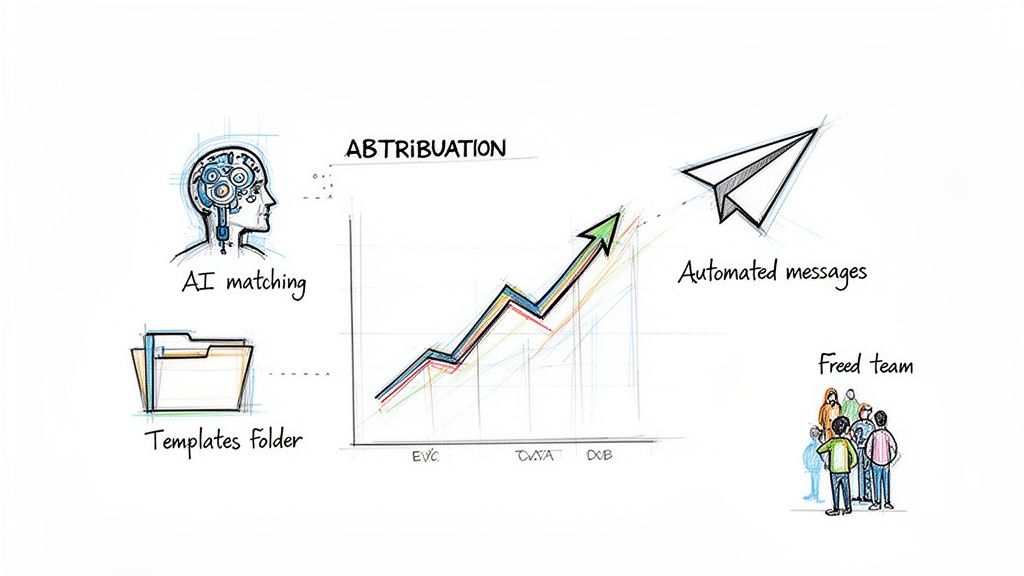
- AI-Powered Creator Matching: Instead of losing hours scrolling through social media feeds, AI can instantly find fresh, verified micro and nano creators based on their niche and location. This is a massive advantage for businesses needing to drive local footfall. You can read more on why smaller creators often deliver better returns in our guide to nano influencer marketing.
- Automated Communications: Imagine a world without endless DMs and email chains. The platform handles the outreach, scheduling, and follow-ups for you, freeing up your team from being full-time project managers.
- A Central Attribution Dashboard: This is the game-changer for proving ROI. Every creator gets a unique promo code and tracking link, automatically. You get a live dashboard showing everything from content views and clicks to actual sales, bookings, and customer reviews.
By automating these crucial jobs, a platform makes influencer marketing a repeatable process. You can launch, manage, and scale campaigns quickly, knowing that every action is tracked and every pound is accounted for. It's the ultimate solution to the real cost of running things in-house.
Your Top Questions Answered
When you're trying to pin down the real cost of influencer marketing, it's easy to get lost in the details. Let's clear up some of the most common questions we hear from UK brands about managing their own programmes.
What’s the Real Salary for an In-House Influencer Manager in the UK?
On paper, you’ll see an average salary for an Influencer Marketing Manager sitting somewhere between £35,000 and £55,000 in the UK. But that figure is misleading.
The true cost to your business is much higher. Once you factor in National Insurance, pension contributions, and other overheads, you're looking at an additional 20-30% on top. That’s a significant hidden expense to keep in mind when weighing up whether to hire internally or use a platform.
How Much Time Does a Single Micro-Influencer Campaign Really Take?
It’s surprisingly time-consuming. Managing just one micro-influencer campaign, from finding them to tracking the final post, can easily eat up 15 to 30 hours of manual work. That includes everything: discovery, vetting, negotiations, briefing, content approvals, and reporting.
Now, think about scaling that up. If you work with ten creators, you’re suddenly looking at over 150 hours of work. It quickly becomes clear how managing campaigns manually gets unmanageable and expensive without proper systems in place.
Can I Just Run Campaigns Using Spreadsheets and Emails?
For a tiny campaign with one or two creators, maybe. But as soon as you try to grow, that manual approach falls apart. It's not just inefficient; it's a recipe for mistakes, lost conversations, and missed deadlines.
The biggest problem? You can't properly track results. Trying to manage dozens of unique UTM links or discount codes in a spreadsheet is chaotic. Without clean data, you have no real way of attributing sales to specific creators, making it almost impossible to prove your ROI or figure out what’s actually working.
Ready to stop guessing and start growing? Sup combines AI with a human team to help you launch, manage, and scale creator campaigns with measurable ROI. Get started in 20 minutes and see the results for yourself.
More on strategy
See how many creators post about you and your competitors
Type in your brand's Instagram handle and we count the creators who post about you and about your five closest competitors. It takes about a minute and it is free. Or request a demo and we will show you the creators in your niche and walk you through the dashboard.
 Book a call