28 February 2026
Instagram Influencer Marketing for Restaurants: What Works in 2026
Let's be honest: what worked for restaurant influencer marketing a few years ago is completely obsolete now. In 2026, a successful strategy is all about hyper-local, ROI-driven partnerships that put real customers in your seats. It's time to stop chasing follower counts and start measuring what truly matters: booked tables, redeemed offers, and actual revenue. This is your definitive playbook for turning Instagram buzz into a bustling dining room.
The 2026 Playbook for Restaurant Influencer Marketing
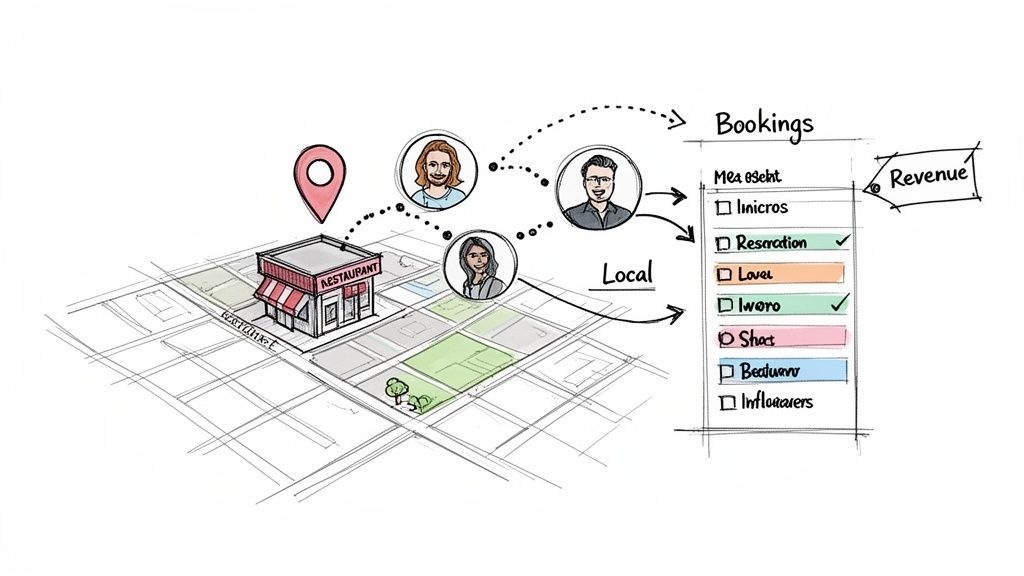
The marketing world for restaurants has changed. The days of putting all your faith in billboards or magazine adverts are well and truly over. Today, the most convincing recommendations aren't found in glossy publications; they come from trusted local creators sharing their genuine dining experiences on Instagram. Think of it as the new word-of-mouth, but supercharged for thousands of potential diners right on your doorstep.
The numbers don't lie. In 2026, the UK's restaurant influencer marketing scene has grown into a £2.9 billion powerhouse. This isn't just a trend; it's a fundamental part of how people decide where to eat. It reflects a major shift where diners are tuning out traditional ads in favour of authentic reviews. A personal shoutout from a local foodie just feels more like a hot tip from a friend than a corporate sales pitch.
In fact, 40% of UK diners now pick where to eat based on what they see on social media, and an incredible 57% have booked a table directly through an app after seeing a post. You can dig deeper into the data behind these restaurant marketing trends at sup.co.
To stay ahead, your approach needs a serious update. The table below breaks down the key differences between the old, ineffective methods and the new strategies that are delivering results in 2026.
2026 Instagram Marketing Shift for Restaurants
| Strategy Element | Outdated Approach (Pre-2026) | Winning 2026 Strategy |
|---|---|---|
| Influencer Choice | Chasing macro-influencers with huge, broad followings. | Partnering with local micro- and nano-influencers with highly engaged, geographically relevant audiences. |
| Campaign Goal | "Exposure" and vanity metrics like likes and follows. | Measurable actions like table bookings, promo code redemptions, and direct revenue. |
| Compensation Model | High, one-off cash payments for a single post. | A mix of gifted experiences, affiliate commissions, and long-term partnerships. |
| Content Style | Overly polished, ad-like photos and captions. | Raw, authentic video (Reels) and interactive Stories that feel like a real recommendation. |
| Measurement | Guesswork and hoping for a sales lift. | Using promo codes, UTM links, and platform analytics to track every click and booking. |
This shift is all about getting smarter and more focused. It's about building a predictable growth engine that really works for your specific location.
A New Strategic Framework
This guide is designed to give you a modern framework for building a scalable system that helps you dominate your local market. It’s about leaving behind the old 'pay-for-a-post' model and adopting a more intelligent, results-focused approach. Imagine it as swapping a shotgun for a laser beam: targeting the exact people who are most likely to become your next regulars.
The core idea is to move from broad, expensive campaigns to precise, community-focused collaborations that turn social media buzz into paying customers.
This new playbook is built on two pillars: authenticity and measurement. Success isn't defined by an influencer’s follower count anymore. It’s all about their ability to get people to take real-world action. The key components of this strategy are:
- Hyper-Local Targeting: Forget nationwide reach. Focus exclusively on micro- and nano-influencers whose followers live, work, and eat right in your neighbourhood.
- ROI-Driven Campaigns: Structure every collaboration with a clear, trackable goal. Whether it's bookings or redemptions, you need to know what's working.
- Authentic Partnerships: Build genuine, long-term relationships with creators who actually love your restaurant. Their content will be far more believable and effective.
- Content Repurposing: Take the fantastic content your partners create (user-generated content, or UGC) and use it across your own website, emails, and social media to get the most value from it.
By mastering these elements, you won't just attract new diners. You'll build a powerful library of marketing assets that will drive sustainable growth for your restaurant for years to come.
Why Instagram Still Dominates Restaurant Marketing
Even with a dozen new platforms vying for attention, Instagram is still the cornerstone of smart restaurant marketing. Looking ahead to 2026, it's about much more than just posting pretty food photos. The real game is turning that visual appeal directly into bums on seats, and this is where Instagram shines. Its unique mix of visual storytelling, direct booking tools, and hyper-local targeting makes it the best tool for converting followers into actual foot traffic.
Let's be honest, food is a visual feast. Instagram is the perfect stage to show it off. A potential customer can see the steam curling off a bowl of fresh pasta, feel the buzz of your dining room on a Friday night, and almost taste that signature cocktail, all through their phone. That kind of sensory connection is something no other marketing channel can truly match.
A Platform Built for Food Discovery
Think of Instagram as the new word-of-mouth, a digital restaurant guide people carry in their pockets. Users actively browse the app looking for their next meal, making it a discovery engine you simply can't afford to overlook. Each content format plays a unique part in guiding a diner's choice.
- Reels and Shorts: These snappy, dynamic videos are brilliant for capturing your restaurant's soul. They can show the organised chaos of a busy kitchen, the careful artistry of plating a dessert, or the electric energy of a live music night. It's an immersive preview that makes people feel like they need to be there.
- Stories: These are your go-to for creating a sense of now-or-never. Perfect for flash promotions, daily specials, and candid behind-the-scenes moments. The 24-hour expiry date creates a natural urgency, nudging followers to act before the opportunity is gone.
- Guides: This feature lets influencers (and your own restaurant) act as local experts. An influencer could create a "Best Brunch Spots in Manchester" Guide that features your café, instantly positioning you as a must-visit and creating long-lasting content for their audience.
By 2026, Instagram's dominance is clear. An incredible 57% of UK brands name it their number one platform for influencer campaigns, especially in the restaurant world where sizzling dishes and lively atmospheres are king. This isn't just a trend; 69% of UK consumers trust influencer recommendations far more than big-name celebrity endorsements. For restaurants, this means real results: a massive 75% of diners choose where to eat based on mouth-watering social media photos alone.
From Digital Views to Physical Touchpoints
While Instagram is your digital powerhouse, the smartest strategies connect the online world with the real one. You can reinforce your brand with physical items that customers see and touch, like beautifully designed custom printed paper cups. This integrated approach keeps your restaurant front-of-mind, whether a customer is scrolling their feed or sipping their coffee.
The real magic of Instagram for restaurants in 2026 is its ability to connect the dots between seeing and doing. A customer doesn't just see a delicious meal; they can act on that craving instantly.
Instagram has grown up. It's no longer just a digital photo album. It's a complete marketing engine. It takes a user from seeing a dish to booking a table in a few simple taps, making it essential for any modern restaurant.
Features like the "Reserve" button on your profile, link stickers in Stories that go straight to your booking page, and shopping tags for merchandise or meal kits eliminate any hassle. That smooth journey from inspiration to reservation is crucial. By turning passive scrolling into active booking, Instagram delivers what really counts: a measurable impact on your bottom line.
How to Find and Partner With Local Food Influencers
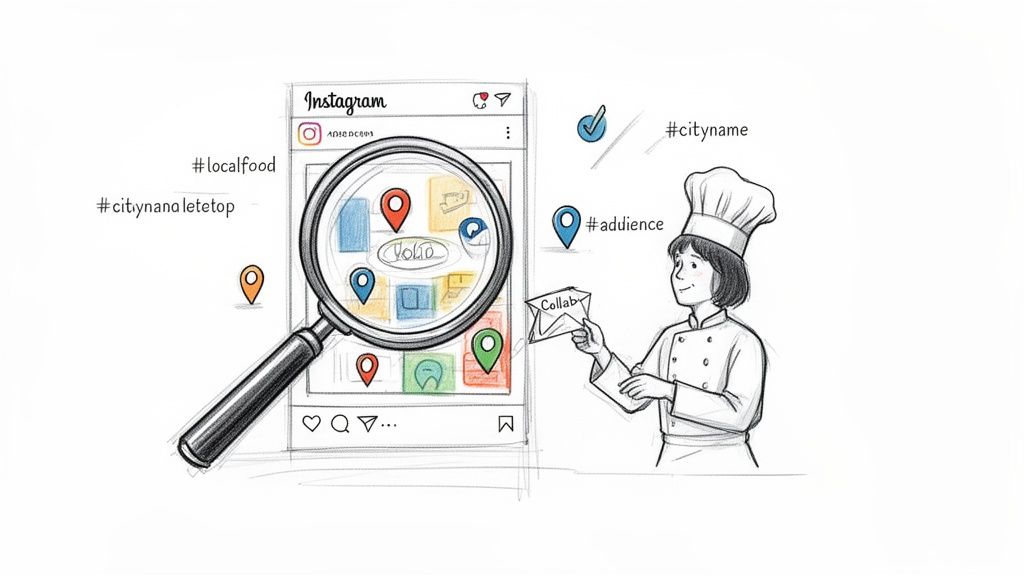
Forget chasing huge celebrity accounts. For restaurants in 2026, real success on Instagram comes from building genuine relationships with local creators: the micro-influencers whose followers are your actual potential customers. Think of it this way: a glossy national advert is one thing, but a trusted recommendation from a neighbour? That’s what gets people through your door.
These creators, who often have follower counts between 10,000 and 100,000, are the sweet spot. Their smaller, geographically-focused audiences mean you get much higher, more authentic engagement. A post from a Manchester-based food blogger hits the right people in Manchester; a London celebrity’s post reaches millions who will never eat at your restaurant.
The most powerful referrals come from the everyday person with whom a consumer can relate. These are individuals who have gained a substantial online following by being genuinely good at what they do: influencing others to eat where they eat.
Your mission is to find the right voices that truly match your brand and connect with the diners in your city. It takes a bit of digital detective work, but the payoff is enormous.
Where to Discover Local Creators
Finding these hyper-local influencers is actually easier than it sounds. Your primary search tool is Instagram itself. The trick is to stop scrolling your feed and start using the platform strategically to uncover your area's key voices.
Here are the most effective ways to start your search:
- Search by Location Tags: This is your most direct route. Head to Instagram's search bar, tap "Places," and type in your city or even your specific neighbourhood. Sift through the "Top" and "Recent" posts to see who is creating quality content right on your doorstep.
- Hunt Through Niche Hashtags: You need to think like a local foodie. Search for hashtags that mix your cuisine with your location, like #BristolFoodie, #LeedsVegan, or #GlasgowBrunch. This instantly surfaces creators who are already passionate about the food scene in your city.
- Analyse Your Competitors' Mentions: See which influencers are already working with other local restaurants or businesses (the non-competing ones, of course!). Check their tagged photos and mentions to build a list of creators with a proven track record of local partnerships.
This first stage is all about building a long list of possibilities. Once you have that, the real work begins: vetting. For a deeper dive into this process, our detailed guide on how to find local food influencers in your city has you covered.
Vetting Influencers for Authenticity and Fit
Once you have a list of potential partners, you need to make sure they’re the real deal. A big follower count can be a vanity metric; you need to look deeper to check for authenticity and make sure they align with your brand.
Before you even think about reaching out, analyse their profile for these tell-tale signs:
- Audience Quality: Take a good look at their comments section. Are people asking real questions about the food and the experience? Or is it just a sea of "great post!" comments? Authentic conversation is the hallmark of a trusting, engaged community.
- Content Alignment: Does their visual style and tone fit your restaurant’s brand? A creator who only posts about fine dining probably isn't the right fit for your casual pizza spot, and vice versa. The collaboration has to feel natural to their audience, otherwise, it just looks like a paid ad.
- Follower-to-Engagement Ratio: A good rule of thumb for micro-influencers is an engagement rate of 3-6%. You can work this out by adding up the likes and comments on their last few posts, dividing that number by their total follower count, and then multiplying by 100. A low rate can be a red flag for fake followers or a bored audience.
Mastering Your Outreach
Finally, how you approach an influencer sets the tone for the entire partnership. Generic, copy-and-paste messages are a complete non-starter. Personalisation is everything here.
Start by genuinely engaging with their content for a few days. Then, slide into their DMs with a message that proves you’ve done your homework. Mention a specific post you loved and explain exactly why you think a partnership would be a fantastic fit for both your restaurant and their audience. Your goal isn't just to get a single post. It's to build a lasting relationship with a powerful local brand ambassador.
Designing Campaigns That Drive Real Bookings
A beautiful influencer post is one thing, but a profitable one? That’s a total game-changer. Looking ahead to 2026, the real goal of Instagram marketing for restaurants isn't just about creating a bit of buzz; it's about driving tangible, measurable results. This means we have to move past the old-school "free meal for a post" swaps and start building campaigns designed to convert from the get-go.
Think of it like putting together a new menu. You wouldn't just toss a bunch of ingredients on a plate and hope people like it. You meticulously select each component to create a balanced, delicious dish that has customers coming back for more. Your influencer campaigns need that same thoughtful recipe for success, blending the right creators, clear goals, and smart tracking to turn their content into a reliable revenue stream.
At its heart, this approach is about building your campaigns around specific, concrete goals. Are you trying to launch a new brunch menu? Fill tables on a quiet Tuesday night? Or maybe sell out a special ticketed event? Each of these objectives calls for a slightly different campaign structure.
Crafting the Perfect Creative Brief
A brilliant creative brief is the blueprint for your entire campaign. It’s a delicate balancing act. You want to give influencers enough creative freedom to make content that feels authentic to them, but you also need to ensure your key messages and calls to action are front and centre. A vague brief leads to off-brand content, while a brief that's too rigid produces posts that feel like stiff, boring adverts.
Your brief should be a clear, concise guide, not a script. Here’s what it absolutely must include:
- Campaign Goal: Be laser-focused. Is it to drive bookings for your new set menu? Or to boost redemptions for a "Two-for-One Tuesday" offer? State the one key action you want followers to take.
- Key Messages: What are the 1-3 most important things you want the influencer to talk about? This could be the freshness of your local ingredients, the unique vibe of your dining room, or the great value of a special offer.
- Call-to-Action (CTA): This is non-negotiable. Tell the influencer exactly what to ask their followers to do. For example, "Book your table via the link in my bio!" or "Show this post to get your free dessert."
- Content Do's and Don'ts: Offer simple, helpful pointers. Think "Do capture the lively evening atmosphere" or "Don't use flash photography as it washes out the food's colour."
- Tracking Requirements: Explicitly state that they must use the unique promo code or trackable link you’ve provided. This is absolutely critical for knowing if your campaign actually worked.
For a deeper dive into structuring your collaborations, check out our guide on how to run a restaurant influencer campaign step-by-step.
Matching Campaign Types to Your Goals
Not all campaigns are built the same. The most effective Instagram influencer marketing for restaurants is about picking the right strategy for the right job. When you align your campaign type with a specific business need, you can focus your efforts and get a much better return.
The most successful restaurants don’t just run "influencer campaigns"; they run menu launch campaigns, event promotion campaigns, or mid-week traffic campaigns. This goal-oriented mindset is what separates vanity metrics from actual profit.
To make sure these campaigns bring real people through your door, you need to send them to high-converting destinations, like a dedicated landing page. You'll want to review these 10 actionable landing page design best practices for 2026 to get your conversion rates as high as possible. This ensures the journey from an Instagram post to your booking system is completely seamless.
Here are three common campaign models and when you should use them:
| Campaign Type | Primary Goal | Best For |
|---|---|---|
| Menu Launch Blitz | Generate immediate awareness and bookings for new items. | Introducing a seasonal menu, a new signature dish, or a weekend brunch offering. |
| Mid-Week Traffic Driver | Fill empty seats during typically slower periods (e.g., Mon-Weds). | Driving consistent revenue and increasing utilisation of your space and staff. |
| Event Promotion Push | Sell tickets or drive reservations for a specific date. | Promoting a wine-tasting night, a chef's table experience, or a holiday special. |
By thinking tactically about how you design your campaigns, you transform influencer marketing from a speculative expense into a powerful, measurable sales channel that directly boosts your bottom line.
Measuring the True ROI of Your Influencer Marketing
If you can't measure your marketing, you can't improve it. It’s an old saying, but it’s never been more true for restaurants in 2026. When it comes to Instagram, we have to move past simply counting likes and comments. The real question is: did that influencer’s post actually bring paying customers through your door?
Let's cut through the noise and talk about what really matters: proving the financial impact of your partnerships. The whole game hinges on attribution, which is just a fancy way of saying you can connect the dots between an influencer’s content and a real-world sale. Without it, you're just guessing. With it, you get a crystal-clear picture of what’s working, allowing you to double down on profitable collaborations and walk away from the ones that aren’t.
This simple flow shows how to design campaigns that are trackable from the very beginning.
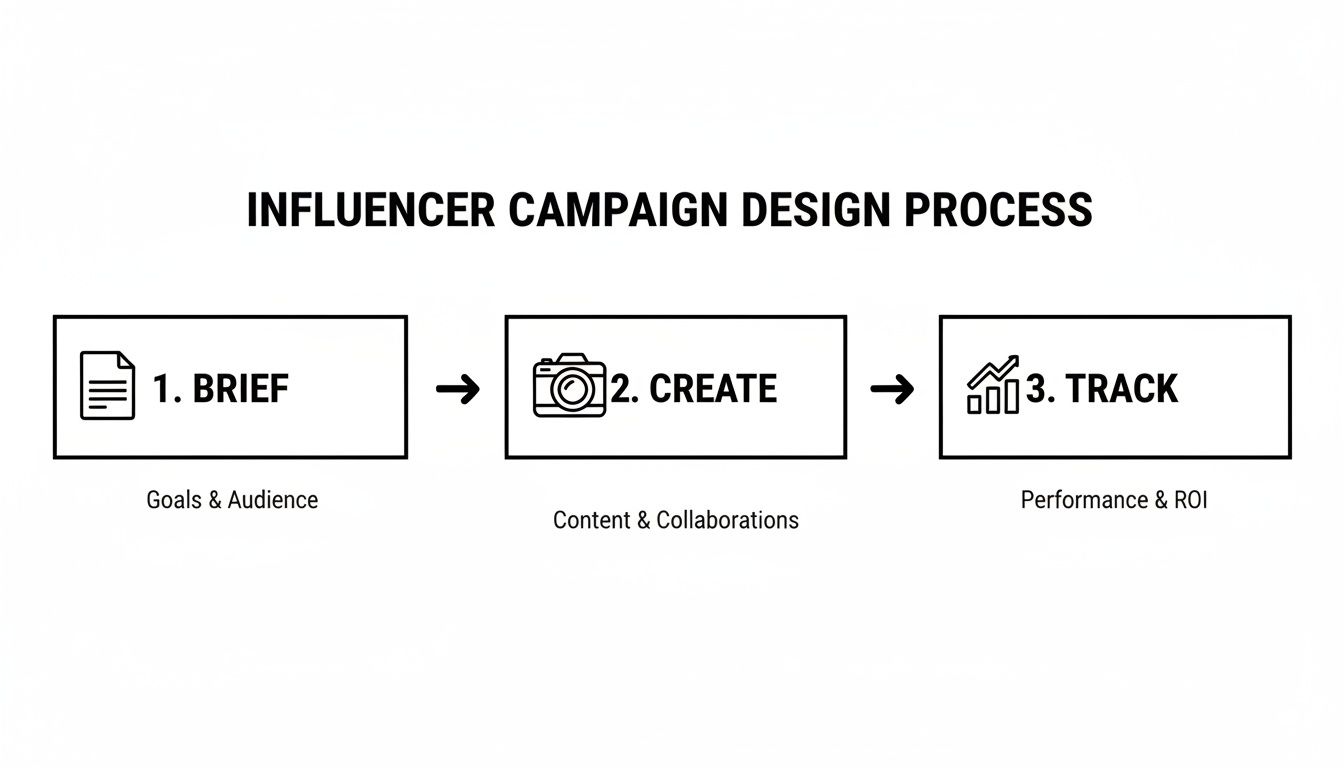
By following this Brief, Create, and Track model, you build measurement into your campaign's DNA. It's not an afterthought; it’s part of the plan.
Going Beyond Likes and Comments
To truly measure ROI, you need tools that create a clean, traceable path from a follower's screen straight to your till. Forget trying to guess if a random sales spike was down to that post last Tuesday. We need proof.
Here are the essential attribution tools every restaurant should be using:
- Unique Promo Codes: This is the most direct and effective method, hands down. Give each influencer a unique code (like 'CHLOE15') for their followers to use for a discount or a free drink. Your point-of-sale (POS) system then tracks every single redemption, giving you a hard count of the customers they sent your way.
- Trackable Links (UTM Codes): For driving online bookings, UTM codes are your best friend. These are small bits of code added to your booking page URL that tell you exactly who sent the traffic. When an influencer puts their unique link in their bio or a Story, you can see how many clicks and, more importantly, how many confirmed bookings they generated.
This level of tracking isn’t just ‘nice to have’ anymore. Think about it: by 2026, a staggering 40% of UK diners are expected to choose where to eat based on what they see on social media. Even more telling, 57% will book tables directly from platforms like Instagram. This data isn't just trivia; it proves that influencer content is a direct driver of both footfall and revenue, making solid attribution absolutely critical.
Calculating Your True Return on Investment
Once you have your data, figuring out the actual ROI is refreshingly simple. It’s all about comparing the revenue a campaign brought in against what it cost you to run.
To get a complete view of your campaign's performance, it helps to track a few key metrics. This table breaks down what you should be looking at to understand the full picture beyond just the final ROI percentage.
Essential Metrics for Restaurant Influencer Marketing ROI
| Metric Category | Specific KPI | What It Measures |
|---|---|---|
| Sales & Revenue | Promo Code Redemptions | Direct number of customers driven by the influencer. |
| Sales & Revenue | Revenue from Promo Codes | Total sales value directly attributed to the campaign. |
| Booking & Traffic | Clicks on UTM Link | Audience interest and engagement with the call-to-action. |
| Booking & Traffic | Online Bookings via UTM | Number of reservations made directly from influencer content. |
| Cost & Efficiency | Cost Per Acquisition (CPA) | How much it cost to acquire each new customer. |
These KPIs give you the granular detail needed to see what's truly driving results and where you can optimise for even better performance next time.
Let's walk through a real-world example.
- Campaign Cost: You paid an influencer £200 for a Reel and covered their meal, valued at £50. Your total investment is £250.
- Revenue Generated: Their unique promo code was used on 20 separate bills, with an average spend of £40 per table. That’s a total of £800 in direct revenue.
Now, let's do the maths:
(£800 Revenue - £250 Cost) / £250 Cost = 2.2
2.2 x 100 = 220% ROI
An ROI of 220% tells you that for every £1 you invested in this campaign, you got £2.20 back after covering your costs. This isn't just a number; it’s the proof you need to justify your marketing spend and helps you understand how much you should budget for influencer marketing for future growth. Armed with this kind of data, you can stop guessing and start investing confidently in partnerships that deliver real, measurable results.
How to Scale Your Influencer Programme for Long-Term Growth
Getting a great result from one influencer collaboration is a fantastic start. But the real game-changer is building a system you can rely on, month after month, to bring people through your doors. The aim is to shift from sporadic, one-off partnerships to a consistent strategy that predictably fills your tables. This is how you transform influencer marketing from a nice-to-have experiment into a core part of your restaurant's growth.
The secret to scaling lies in seeing your influencer partnerships as more than just a single post. They are a powerful engine for creating marketing content. Every time a creator shares something about your restaurant, they’re making authentic, high-quality assets. This influencer-generated content (IGC) is pure gold because it’s a real endorsement from someone your potential customers already trust. The key is to get the rights to reuse this content, which multiplies its value well beyond that first post.
Building Your Content Engine with IGC
Think of each piece of IGC as a Lego brick for your marketing. A brilliant Reel from an influencer shouldn't just get its 24 hours of fame on their feed and then disappear. With the right permissions in place, you can get so much more out of it.
Your agreement with any creator must be crystal clear about where and how you can reuse their work. This is an absolute must-have if you plan to scale up. Once you have that locked down, you can start putting their authentic photos and videos to work everywhere.
- Your Own Social Feeds: Repost their content on your restaurant's Instagram, TikTok, and Facebook pages. It's a fantastic way to keep your feeds fresh with genuine visuals without having to create everything yourself.
- Website and Booking Pages: Use their incredible food shots on your website's gallery or right next to your menu descriptions. That kind of social proof can make a real difference to your online booking conversion rates.
- Paid Social Ads: Take their best-performing Reels and turn them into punchy video ads. Content that has already proven its worth organically is far more likely to do well as a paid promotion, giving you a much better return on your ad spend.
By systematically collecting and reusing IGC, you’re not just paying for a single shout-out; you’re investing in an ever-growing library of marketing assets that builds trust and drives bookings over the long haul.
Managing Campaigns at Scale
As your programme expands from a couple of collaborations to dozens, trying to manage everything manually will quickly become a nightmare. Juggling DMs, tracking visits in a spreadsheet, and chasing creators for their content is a fast track to burnout and chaos. This is where technology steps in to save the day.
Modern influencer marketing platforms are built to handle the tedious, time-consuming tasks, freeing you up to focus on the important stuff: strategy and building genuine relationships. These systems become the central command centre for your entire programme.
For example, platforms like Sup can manage the whole process, from discovering vetted local creators to handling all the back-and-forth communication and tracking the results. This makes it possible to scale your efforts efficiently, whether you're a single independent restaurant or a national chain activating local influencers in different cities. An automated system like this can cut the time you spend on manual admin by up to 95%.
Empowering Local Teams with a Centralised System
For restaurant groups with multiple sites, consistency is everything. A centralised platform is the perfect solution. It allows you to empower your local managers to connect with influencers in their own communities while ensuring your brand's message and performance tracking stay consistent across the board.
This hybrid approach gives you the best of both worlds. You get local authenticity, but with central oversight on performance and ROI. A manager in Bristol can see exactly which creators are driving bookings for their specific restaurant, while head office gets a clear view of the total impact across the entire brand. It’s the ideal blend of local knowledge and scalable structure, turning your influencer programme into a reliable pillar of your long-term growth strategy.
Got Questions? We've Got Answers
Stepping into Instagram influencer marketing can feel like a minefield of unknowns. It's completely normal to have questions. Here, we’ll tackle some of the most common ones we hear from restaurant owners, giving you the clear, practical answers you need to build a winning 2026 strategy.
How Much Should I Actually Budget for This in 2026?
This is the big one, isn't it? The honest answer is that your budget should always mirror your goals. For 2026, the smartest way to start is with 'contra' deals, which just means offering a gifted meal to promising nano-influencers. It's a low-risk way to test the waters.
When you're ready to work with micro-influencers who have a solid local following and a history of getting people through the door, you can expect to pay anywhere from £100 to over £500 per post or Reel. The sweet spot is often a hybrid model.
Try earmarking a test budget of around £500-£1,000 a month. This gives you enough room to offer a few gifted experiences while also paying for a couple of collaborations with proven creators. You'll quickly learn what delivers the best bang for your buck.
The real game-changer is tracking. You have to know what's working. If you pay an influencer £200 and their unique promo code brings in £1,000 in sales, the return on investment speaks for itself. This data-driven approach means you can scale your budget with confidence, not just hope.
What’s the Difference Between a Good and a Bad Restaurant Influencer?
It’s all about genuine connection. A great restaurant influencer has a real, local community hanging on their every word. Look at their comments section: is it filled with people asking "What was your favourite dish?" or "Is it good for a date night?" That's the gold standard. Their visual style and general vibe should also feel like a natural fit for your restaurant.
On the flip side, some creators are all sizzle and no steak. Watch out for these red flags:
- Inflated Follower Counts: A huge follower number but a comments section that's a ghost town or filled with generic "great shot!" comments.
- Mismatched Audience: A high-fashion influencer suddenly reviewing your casual, family-friendly pizzeria. It just won’t land.
- Transactional Feed: Their profile reads like an uninspired catalogue of ads, with no real passion or personality behind the recommendations.
Before you commit, do your homework. Check out their past work and don't be shy about asking for a peek at their audience demographics. You need to know their followers are your potential customers.
How Do I Legally Use the Content an Influencer Creates?
This is a crucial detail that trips up a lot of restaurants. Just because you paid an influencer for a post doesn't mean you own the photos or videos they created. You're paying for them to post on their channel, not for the content itself.
Usage rights must be laid out in a simple, clear agreement before any content is created. No exceptions.
Your agreement should cover three key things:
- Where you can use the content (e.g., your own Instagram feed, your website, paid social ads).
- How long you can use it (e.g., for one year, or forever, known as 'in perpetuity').
- If you're allowed to edit it (e.g., cropping a photo or adding your logo).
Most professional creators will expect this. Using a dedicated platform like Sup often handles these agreements for you, making sure everything is properly licensed and saving you from potential legal headaches down the line. Always get it in writing.
Ready to stop guessing and start scaling your influencer marketing with a proven system? Sup combines smart technology with a human team to find local creators, manage your campaigns, and track every booking and sale. Discover how Sup can save you 95% of your time and deliver measurable ROI.
More on industries
See how many creators post about you and your competitors
Type in your brand's Instagram handle and we count the creators who post about you and about your five closest competitors. It takes about a minute and it is free. Or request a demo and we will show you the creators in your niche and walk you through the dashboard.
 Book a call