21 April 2026
Influencer Management Agency: A UK Guide for 2026
You’re probably here because influencer marketing has become messy.
A few creator partnerships turned into dozens. One spreadsheet became five. Someone on your team is chasing late content in Instagram DMs, someone else is checking whether promo codes were used, and when leadership asks what revenue the campaign drove, the answer is fuzzy at best. Reach looks decent. Likes look fine. Revenue attribution is where the conversation falls apart.
That’s the point where an influencer management agency stops sounding like a nice extra and starts looking like operational infrastructure. For UK brands, especially in hospitality and ecommerce, the significant shift isn’t just outsourcing the admin. It’s moving from creator activity you hope is working to creator campaigns you can reliably track, scale, and defend in a budget meeting.
From Spreadsheet Chaos to Strategic Growth
Organizations often don’t start with an agency. They start with hustle.
A marketing manager at a restaurant group might begin by gifting meals to local creators, tracking names in Google Sheets, and trying to match bookings against a handful of discount codes. A DTC brand does the same with product seeding, a notes app full of outreach templates, and screenshots of Stories that disappear before anyone logs them properly. It works for a while. Then volume kills it.
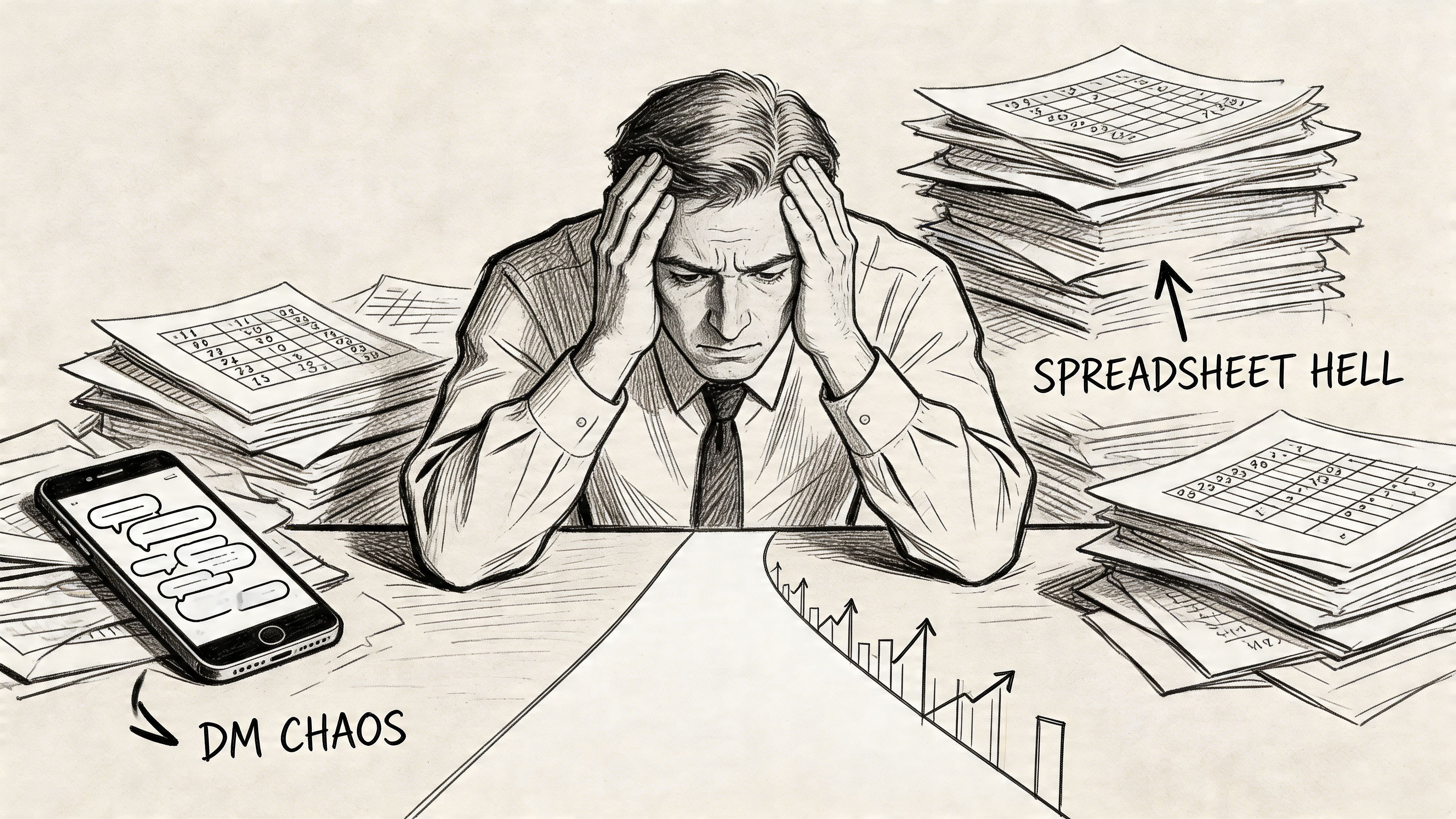
The main problem isn’t just time. It’s fragmentation. Creator discovery sits in one place, approvals in another, payments in another, and performance data nowhere reliable. Teams often realise too late that manual influencer management creates hidden operational cost long before it creates visible revenue, which is why a lot of brands end up reassessing the real cost of running influencer campaigns in-house.
You can survive with manual workflows at small scale. You can’t build a dependable growth channel that way.
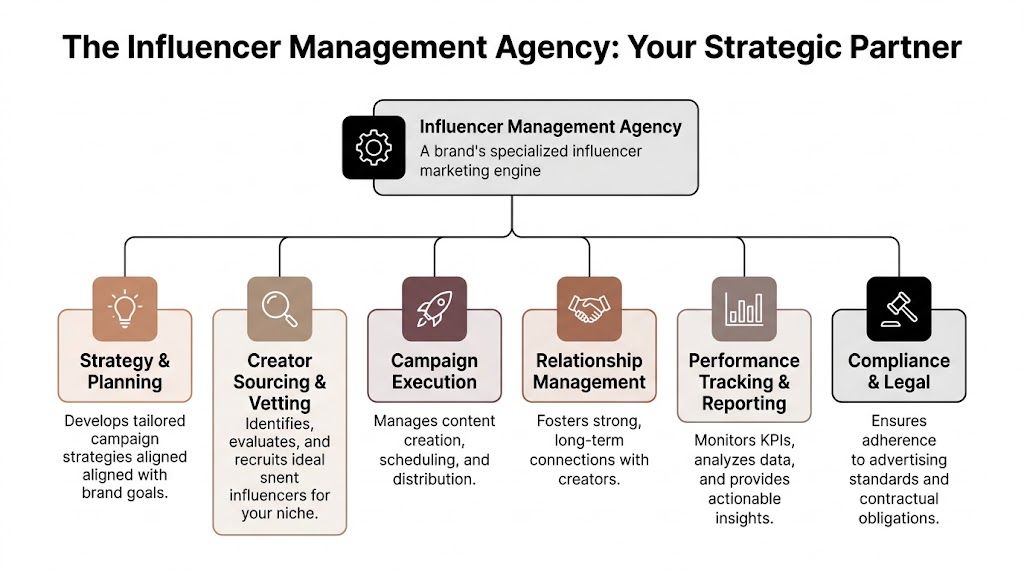
An influencer management agency gives structure to that chaos. Done properly, it turns disconnected creator activity into a repeatable system: strategy, sourcing, vetting, outreach, approvals, compliance, tracking, reporting, and follow-up. The best agencies don’t just “book influencers”. They run the channel like a performance function.
Where the shift usually happens
A team usually reaches for outside help when a few patterns show up at once:
- Outreach slows down: Your team spends more time sending reminders than launching campaigns.
- Content quality gets uneven: Some creators deliver strong UGC, others miss the brief or post late.
- Reporting becomes political: The campaign might be helping, but no one can prove how much.
- Local scale breaks the process: Multi-location brands need creator volume by area, not one-off partnerships.
That’s where strategic management starts to matter. Not because agencies are magical, but because operational discipline is.
What an Influencer Management Agency Actually Does
Think of an influencer management agency as your outsourced specialist team for creator marketing. Not a talent manager representing creators, and not just a software login. A good agency sits between strategy and execution. It translates brand goals into a campaign plan, then handles the moving parts that usually bog internal teams down.
That role matters more now because the UK market has matured fast. The UK influencer marketing sector is projected to reach £1.85 billion by 2025, with agencies handling over 60% of brand collaborations, and that professionalisation accelerated after the 2016 CMA guidelines on ad transparency led to a 45% increase in agency formations between 2017 and 2020, according to UK influencer marketing statistics compiled by Socially Powerful.
Strategy and campaign design
Weak agency work shows up first when the proposal is “we’ll find some creators and get content live”. That isn’t strategy. That’s labour.
Proper strategy work includes:
- Audience fit: Who are you trying to influence, and where are they most likely to convert?
- Creator tier choice: Do you need local micro-creators, niche product reviewers, or broader awareness talent?
- Offer design: What’s the conversion mechanism, promo code, booking incentive, product bundle, or content angle?
- Channel selection: Instagram and TikTok can both work, but they don’t behave the same in practice.
For UK hospitality and ecommerce, the strongest campaigns usually start with a narrow brief and a clear business action. Visit, book, redeem, click, purchase, review. If the action is vague, the reporting will be vague too.
Creator sourcing and vetting
This is the part most brands underestimate.
Finding creators isn’t hard. Finding creators who fit your niche, location, audience, content style, and posting reliability is harder. A decent influencer management agency should filter for more than follower count. It should review content quality, audience relevance, responsiveness, disclosure habits, and whether the creator can deliver the format you need.
Some agencies rely heavily on a static roster. That can be useful for premium talent, but it often limits fit for local and micro-scale campaigns. In practice, brands usually need a flexible pipeline, not just whoever happens to be “on the books”.
Campaign operations and execution
Once creators are chosen, the admin load starts.
Contracts, briefing, product or venue coordination, deadlines, content review, revision requests, scheduling, reminders, and payout tracking all sit here. Informal management of these elements often results in campaign failure. The issue isn’t effort. It’s process control.
A strong agency creates consistency around details like:
| Workflow area | What good looks like |
|---|---|
| Briefing | Clear deliverables, usage terms, timing, and disclosure requirements |
| Approvals | Fast review cycles without endless subjective edits |
| Scheduling | Content timed to trading windows, launches, or local peaks |
| Follow-up | Prompt chasing without damaging creator relationships |
Practical rule: If an agency can’t explain its workflow for late posts, failed deliverables, or off-brief content, assume you’ll be managing those problems yourself.
Reporting, attribution, and compliance
The agency either proves its value or hides behind vanity metrics.
Reporting should show what happened, what it cost, what each creator delivered, and what business outcome followed. For UK campaigns, compliance also matters. ASA rules and disclosure standards aren’t optional admin. They’re part of risk control.
A reliable influencer management agency should be able to answer basic questions without hesitation:
- Which creators drove clicks, redemptions, bookings, or sales?
- Which content formats produced the strongest response?
- Which locations or product categories performed best?
- What should be repeated, cut, or tested next?
If you don’t get those answers, you’re not buying management. You’re buying activity.
Understanding Agency Business Models and Pricing
Agency pricing gets confusing because two firms can describe similar services and structure the commercial model completely differently. That doesn’t mean one is wrong. It means you need to understand what incentives each model creates.
The biggest mistake brands make is comparing fees without comparing scope. A low management fee can still be expensive if your team has to handle approvals, gifting, creator chasing, and reporting gaps. A higher fee can be fair if the agency is removing meaningful operational load and producing clean attribution.
Retainers and project fees
A monthly retainer is the most common setup for ongoing creator programmes. You pay a fixed amount for management across a set scope. That usually suits brands running campaigns continuously, testing creators every month, or managing multiple locations or product lines.
The benefit is predictability. The downside is that some retainers become vague. If the contract doesn’t define deliverables, response times, reporting cadence, and revision limits, you can end up paying for “access” rather than output.
A one-off project fee works better when you want a single launch, seasonal push, or short test campaign. It’s simpler to approve internally and easier to benchmark. The trade-off is continuity. Creator learning, repeated use of winners, and long-term optimisation often suffer when every campaign starts from scratch.
Percentage of spend and performance deals
A percentage of spend model means the agency fee rises with your creator or media budget. This can work when campaign scope naturally scales with spend, but it can also create awkward incentives. You want efficiency. The agency may be rewarded when spending increases.
A performance-based commission sounds attractive because it promises alignment. In reality, it only works cleanly when attribution is agreed upfront. That means unique codes, UTM links, reporting rules, and a shared understanding of what counts as influenced revenue. Without that infrastructure, performance deals can turn into debates.
The pricing model matters less than the reporting logic behind it. If no one agrees on attribution, no commercial structure will feel fair for long.
What to ask before signing
Don’t just ask what the agency charges. Ask what sits inside the fee and what triggers extra cost.
Use a shortlist like this:
- Scope clarity: Does the fee include sourcing, outreach, negotiation, approvals, payments, and reporting?
- Creator costs: Are creator fees billed separately or marked up?
- Content rights: Are usage rights included, limited, or negotiated each time?
- Platform tools: Will you have dashboard access or only summary reports?
- Pilot terms: Can you start with a defined test before locking into a long contract?
The practical trade-off
Retainers usually suit brands that already know creator marketing matters and need execution discipline. Project fees suit one-off tests. Spend-based models can work when budget and complexity move together. Performance deals work only when tracking is strong enough to remove ambiguity.
Pricing isn’t just about cost. It’s about whether the commercial model supports the behaviour you want. Better creators, cleaner process, faster launch speed, and measurable revenue matter more than whichever pricing label appears at the top of the proposal.
Comparing Your Options Agency In-House Platforms and Managers
Most UK brands don’t choose between “agency” and “nothing”. They’re usually choosing between four operating models: a full-service agency, an in-house team, a talent manager, or a done-with-you platform. Each can work. Each breaks in predictable ways.
The decision gets easier when you stop asking which option is best in theory and start asking which one fits your campaign type, internal bandwidth, and need for attribution.
Influencer Management Model Comparison
| Approach | Best For | Typical Cost | Key Advantage | Key Disadvantage |
|---|---|---|---|---|
| Full-service agency | Brands that want strategy and execution handled externally | Higher management overhead than self-serve options | Strong guidance and operational support | Can be slower and less efficient for high-volume micro campaigns |
| In-house team | Brands with internal expertise and time | Staff cost plus tools and process overhead | Maximum control over brand and creator relationships | Heavy operational burden |
| Talent manager | Accessing specific creators or negotiating talent deals | Varies by talent and representation model | Useful for individual creator access | Not built to run a full brand-side growth system |
| Done-with-you platform | Brands that want scale, tracking, and operational support | Usually more structured than agency retainers, less manual than in-house | Better process visibility and campaign speed | Requires comfort with a more systemised workflow |
Full-service agencies
Traditional agencies are still a good fit when you need hands-on campaign thinking, strong creative oversight, or senior guidance. They’re particularly useful for brands launching influencer activity for the first time, or for larger campaigns where brand nuance matters more than creator volume.
The friction shows up when the model is asked to scale local micro-influencer activity. Manual workflows often creep back in. Outreach becomes labour-heavy. Reporting gets delayed. Teams spend more time coordinating than optimising.
That gap matters in the UK micro space. A 2025 UK report notes that 68% of London-based DTC brands and restaurants report under 20% attribution accuracy for manual micro-influencer campaigns, and that traditional agencies can increase time investment by 40% for unmanaged micro-creators, while AI-human hybrid models can save up to 95% on setup time, according to this UK-focused analysis of influencer agency operations.
In-house teams
In-house looks attractive because it promises control. You own the brief, the relationships, the approvals, and the data. For a small number of partnerships, that can work well. Especially if one person on the team already understands creator negotiation, content review, disclosure standards, and tracking setup.
The problem is that in-house often scales badly unless the company treats influencer marketing like a real channel, not an occasional side task.
Common friction points include:
- Creator volume: Ten active relationships can be manageable. Several local campaigns at once usually aren’t.
- Tool sprawl: Discovery, outreach, contracts, and reporting end up split across multiple tools.
- Single-point dependency: One team member often holds too much context, and campaigns wobble when they’re overloaded or leave.
Talent managers
A talent manager is not the same thing as an influencer management agency. They work for the creator, not the brand.
That distinction matters. If you’re trying to secure a specific creator, a manager can help move the deal faster. But they won’t build your campaign structure, run your tracking, or manage a broad roster across regions and niches. If your business goal is repeatable growth, relying only on talent managers usually creates a fragmented programme.
Done-with-you platforms
The market is trending in this way because it resolves a practical issue. Brands want agency-level help without inheriting agency-style process drag.
A done-with-you platform combines software and service. The system handles sourcing logic, workflow visibility, tracking structure, and reporting. A human team handles the outreach, follow-ups, campaign movement, and exception handling. That model is especially useful for restaurants, ecommerce brands, and chains that need lots of localised creators, not a small number of headline names.
If you’re weighing software-assisted models, this guide on how to choose between influencer marketing platforms is a useful companion to agency conversations because it forces the right questions around attribution, workflow ownership, and scale.
One example is Sup, which combines AI-assisted creator sourcing with a human team for outreach, campaign management, and attribution using promo codes and UTM links. That type of model tends to fit brands that want measurable micro-influencer campaigns without managing every DM and follow-up internally.
The right model depends less on your budget than on your operational tolerance. If your team hates admin, don’t choose a system that creates more of it.
How to choose without overthinking it
Use this filter:
- Choose a full-service agency if you need strategic leadership and high-touch execution.
- Choose in-house if you have a capable operator and limited campaign complexity.
- Use talent managers when creator access is the main challenge, not programme management.
- Use a done-with-you platform when you need scalable micro-creator execution, visibility, and cleaner attribution.
Most brands don’t fail because influencer marketing can’t work. They fail because they choose an operating model that doesn’t match the workload.
How to Find and Evaluate the Right Agency Partner
The shortlist stage is where a lot of brands get distracted by pitch polish.
Agency decks are full of creator grids, moodboards, and reach screenshots. None of that tells you whether the partner can run a disciplined campaign in your category. The right way to evaluate an influencer management agency is to interrogate process, not presentation.
A useful cross-industry reference is Studio Liddell’s guide on how to find and choose the right agency. It isn’t about influencer marketing specifically, but the core logic holds up well: define your needs clearly, compare delivery models, and pressure-test communication before you sign.
Questions worth asking in the first call
You’re not looking for perfect answers. You’re looking for specific ones.
Ask things like:
- Relevant category experience: Have they worked with hospitality, ecommerce, local retail, or multi-site consumer brands similar to yours?
- Creator selection method: How do they vet fit beyond follower count?
- Operational ownership: Who handles outreach, reminders, approvals, and payment follow-up day to day?
- Reporting detail: What will you see weekly or monthly, and how quickly can they spot underperforming creators?
- Compliance process: How do they handle ASA disclosure expectations and contract clarity?
If the answers stay broad, assume the delivery will be broad too.
What strong case studies look like
A useful case study shows decision-making, not just results slides. You want to understand why creators were chosen, what the offer was, how performance was tracked, and what changed during the campaign.
Look for evidence of:
| Good signal | Why it matters |
|---|---|
| Clear campaign objective | Shows they know what success was supposed to look like |
| Attribution method | Tells you whether performance claims can be trusted |
| Creator rationale | Proves they didn’t choose talent randomly |
| Learnings and changes | Shows they optimise instead of just report |
If every case study is mostly impressions, views, and vague “buzz”, be cautious. Awareness matters, but not as a substitute for business logic.
Red flags that usually lead to bad engagements
Some warning signs are obvious. Others only become expensive after the contract starts.
Watch for these:
- Guaranteed virality: No serious agency can promise that.
- One-size-fits-all creator lists: Different sectors need different creator behaviours.
- Opaque reporting: If the agency controls the data and only releases polished summaries, you’ll struggle to trust the programme.
- Weak contract language: Unclear usage rights, payment terms, and deliverables create avoidable friction.
- Over-focus on celebrity or macro names: That often signals style over fit, especially if your actual need is local or conversion-driven.
A good agency should make your workflow calmer within weeks. If the sales process already feels chaotic, the campaign probably will too.
How to run the final check
Before signing, ask for a sample reporting view, a draft workflow, and a realistic outline of how the first campaign will move from brief to launch. You’re checking whether they have an operating system, not just a sales narrative.
The best partner usually isn’t the loudest. It’s the one that can explain how work gets done when a creator goes quiet, a post misses the brief, or leadership asks for revenue numbers on short notice.
Measuring Success The KPIs That Actually Matter
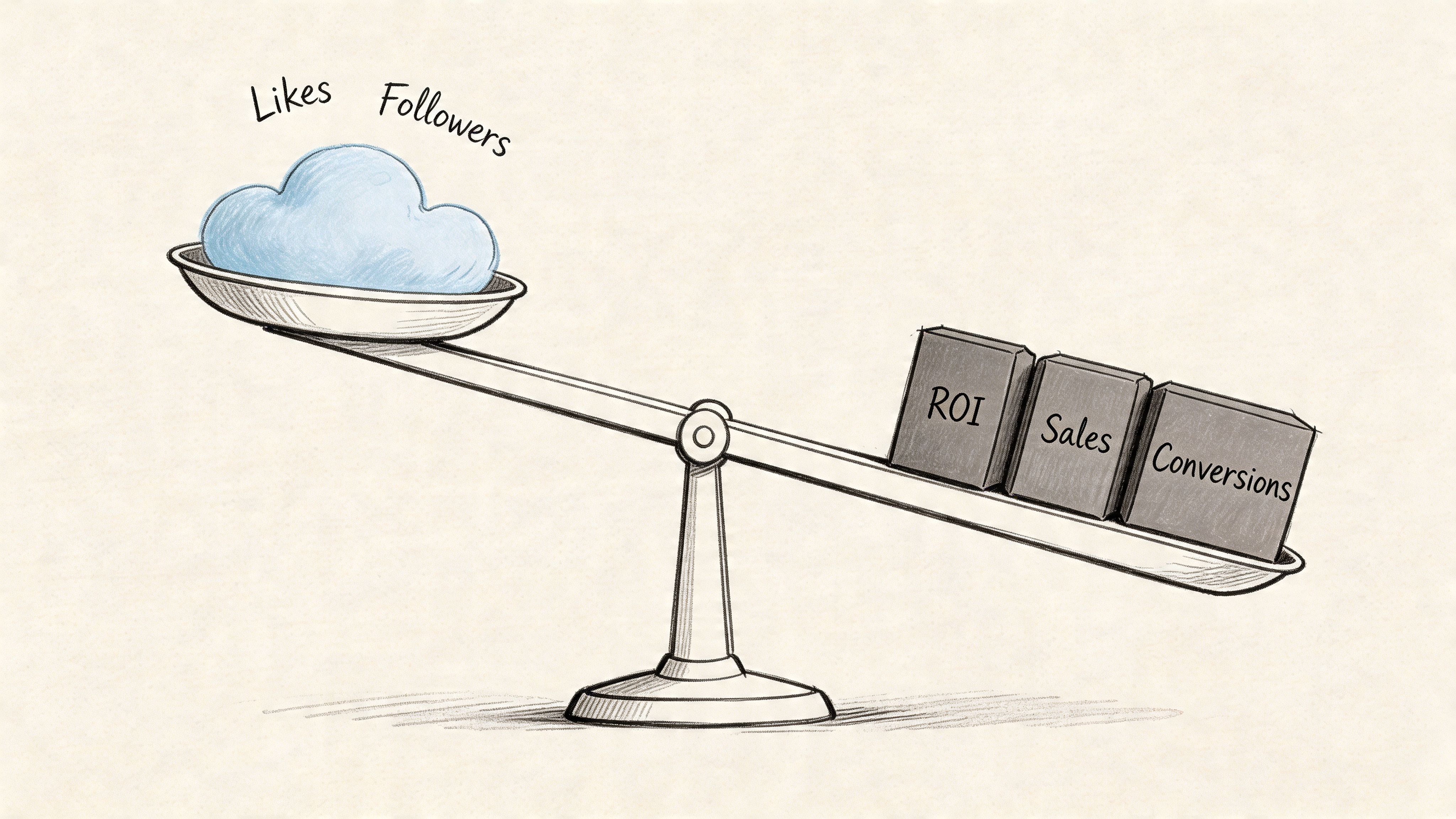
If your reporting still starts and ends with likes, reach, and follower count, you don’t have a performance channel. You have a content activity log.
That isn’t to say vanity metrics are useless. They can help diagnose whether a post had enough traction to deserve deeper analysis. But they are weak decision-making metrics on their own. Brands in hospitality and ecommerce need to know whether creator content drove bookings, footfall, clicks, code use, and sales.
The metrics that deserve attention
A proper influencer measurement setup usually rests on four practical inputs:
- Unique promo codes: Useful for online sales, bookings, and in-store or venue redemption.
- UTM links: Critical for seeing creator-driven traffic by source and campaign.
- Platform analytics: Good for context on views, saves, taps, and engagement quality.
- Conversion tracking: Needed to connect campaign traffic to checkout, booking, or lead outcomes.
When those systems are in place, you can evaluate real KPIs:
| KPI | Why it matters |
|---|---|
| ROAS | Shows revenue returned against spend |
| CPA | Shows how expensive each acquisition was |
| CTR | Shows whether content actually drove action |
| Redemption rate | Useful for offers, footfall, and promo-led campaigns |
| Revenue by creator | Helps you find repeatable winners |
The distinction between efficiency and profitability matters here. If your team needs a clear explanation of that difference, this breakdown of ROAS vs ROI is a good supplementary read because it separates ad return from broader business return in plain English.
What good attribution looks like in practice
UK agencies leveraging attribution models with unique promo codes and UTMs achieve an average ROAS of 5.2:1, and a 2025 IAB report found that using real-time dashboards for these metrics increases ROAS by 28% compared with manual spreadsheet tracking. The same source reports CTR benchmarks of 3.1% to 4.7% for micro-influencers on location-targeted posts, according to this KPI-focused influencer agency analysis.
That matters because a lot of “influencer reporting” still relies on screenshots and manual updates. Once you move to live dashboards and creator-level links, decision-making gets sharper very quickly. You stop asking whether the campaign felt busy and start asking which creators, offers, and locations moved revenue.
For teams building that framework, this guide on how to set influencer marketing KPIs that drive growth is useful because it forces KPIs back to business outcomes instead of platform vanity.
Hospitality and ecommerce examples
A restaurant campaign should not be judged like a beauty gifting campaign. The mechanics are different.
For a restaurant or bar, success often looks like:
- Bookings or walk-ins tied to a code
- Offer redemptions by location
- Review volume after campaign bursts
- Content that can be reused in paid social
For ecommerce, the cleaner indicators are usually:
- Sessions from creator links
- Checkout starts
- Code-based purchases
- Revenue and CPA by creator cohort
Here’s a practical point learned the hard way: attribution has to be built before creators post. Not after. If links, codes, and naming conventions are added late, the cleanest signal is already gone.
This short explainer is worth watching if you want a quick visual refresher on creator performance tracking and campaign structure.
Stop asking which creator had the nicest content first. Ask which creator drove the action you were paying for.
What doesn’t work
Several habits still waste budget:
- Using one generic discount code for all creators.
- Judging creators only by audience size.
- Relying on end-of-month manual reporting.
- Treating awareness and conversion campaigns as the same brief.
The winning setup is usually simpler than people think. Clear offer. Unique tracking. Tight creator match. Fast reporting. Repeat the winners.
Industry Use Cases for Driving Niche Growth
The value of an influencer management agency becomes obvious when you look at the operating reality by sector. Different industries don’t just need different creators. They need different campaign mechanics.
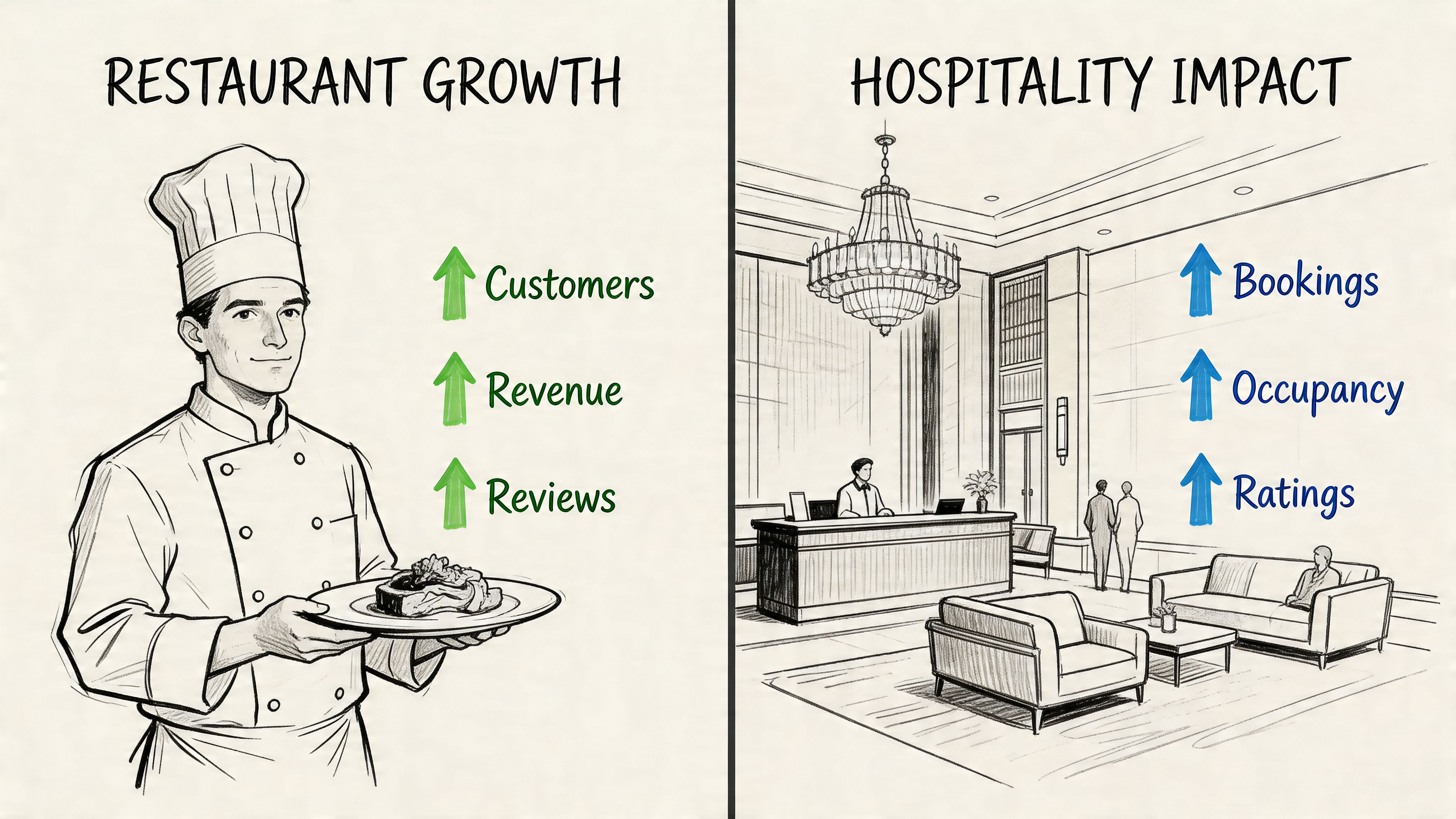
According to a 2025 benchmark study, 74% of UK agencies reported revenue growth in 2024, 42% expanded into AI-hybrid services, and agency-managed micro-campaigns delivered a 35% footfall uplift for restaurants and ecommerce brands, with agencies delivering an average 5.2x ROI versus traditional ads, according to the 2025 agency growth benchmark.
Restaurants and hospitality
A single-site venue usually doesn’t need celebrity reach. It needs local relevance.
The strongest campaigns tend to use nearby micro-creators who can make the venue feel current, credible, and worth visiting this week, not someday. The agency’s job is to match creator geography, manage timing around quieter trading periods, and ensure codes or booking links map back to the campaign.
A common pattern is simple: a venue has strong food and weak local awareness. Managed creator activity fills the top of funnel, but the main win comes from measurable visits and reusable UGC that the brand can keep using after the post.
Ecommerce and DTC
DTC brands often start with gifting because it feels low-risk. Then they realise free product alone doesn’t create a system.
An agency helps by tightening creator fit, aligning creative with the offer, and making each collaboration trackable. Value isn’t only immediate sales. It’s the ability to identify which creators deserve another round, which content can be repurposed, and which audience segments respond to which product angle.
Multi-location chains
Manual management typically breaks at this juncture.
A chain doesn’t need one “great influencer campaign”. It needs repeatable local execution across multiple sites, with enough consistency to compare performance and enough flexibility to match each area properly. That means local creator sourcing, local offers, local tracking, and one reporting layer above it all.
Without a structured management model, the central team ends up drowning in exceptions. One location forgets the brief. Another has no creators lined up. A third runs content with no trackable code. Scale exposes weak systems quickly.
Agencies adding influencer services
Marketing and creative agencies face a slightly different problem. Their clients increasingly want creator campaigns, but running them manually stretches account teams fast. A white-label influencer marketing partner runs the campaigns under the agency's name, so the account team keeps the client relationship.
Adding influencer management through an external partner or systemised workflow lets an agency offer the service without building every operational layer from scratch. That matters because the client doesn’t just want creator names. They want approvals handled, reporting clean, and outcomes visible.
The most useful influencer setup is the one that fits the actual buying journey in your sector. Local footfall, online checkout, bookings, and franchise growth don’t need the same campaign design.
Conclusion The Future is Scalable and Attributable
The old version of influencer marketing was built on optimism. Find creators, send product, get content live, hope something happens.
That approach still exists, but it doesn’t hold up under commercial pressure. UK brands now need a model that can survive scrutiny from finance, operations, and leadership. That means cleaner process, faster execution, better compliance, and attribution that goes beyond screenshots and vague post-campaign summaries.
A strong influencer management agency still plays an important role. Strategy, creator judgement, campaign handling, and compliance all matter. But the direction of travel is clear. The most effective setups combine human oversight with systems that remove manual drag and make performance visible in real time.
That’s especially true for hospitality, ecommerce, and multi-location businesses where micro-influencer campaigns can work brilliantly, but only if they’re structured properly. Scale without attribution becomes noise. Attribution without operational support becomes admin. The future sits in the middle.
Brands that win in 2026 won’t treat creator marketing like a side experiment. They’ll run it like a measurable growth channel. That means fewer vanity metrics, fewer spreadsheet bottlenecks, and a lot more confidence in what’s driving revenue.
If you want a more structured way to run creator campaigns without handling the manual chase yourself, Sup offers a done-with-you model for sourcing, managing, and attributing micro and nano influencer campaigns across hospitality, ecommerce, agencies, and multi-location brands.
More on tools
See how many creators post about you and your competitors
Type in your brand's Instagram handle and we count the creators who post about you and about your five closest competitors. It takes about a minute and it is free. Or request a demo and we will show you the creators in your niche and walk you through the dashboard.
 Book a call