28 May 2026
How to Become a Brand Promoter: Your 2026 Roadmap
Most advice about how to become a brand promoter is too soft. It tells you to post consistently, grow your following, and wait for brands to notice you. That's incomplete at best.
Brands don't hire promoters because someone looks popular. They hire people who can represent the brand properly, follow a brief, turn up on time, communicate clearly, and show what happened after the work went live. If you treat this as a business from the start, you'll move faster than people who only chase follower counts.
A good promoter thinks like a hybrid of salesperson, creator, campaign operator, and account manager. You need enough personality to get attention, enough discipline to execute, and enough reporting ability to prove you were worth the budget.
What a Brand Promoter Really Does in 2026
Follower count gets too much attention. Brands pay for outcomes they can use: credible representation, clean execution, useful content, and evidence that the spend produced something measurable.
That changes how the job works day to day. A promoter is often part field rep, part content producer, part client-facing operator. In many entry routes, practical experience in sales, retail, events, hospitality, or marketing carries more weight than a formal credential because the work depends on communication, timing, and judgment under pressure.
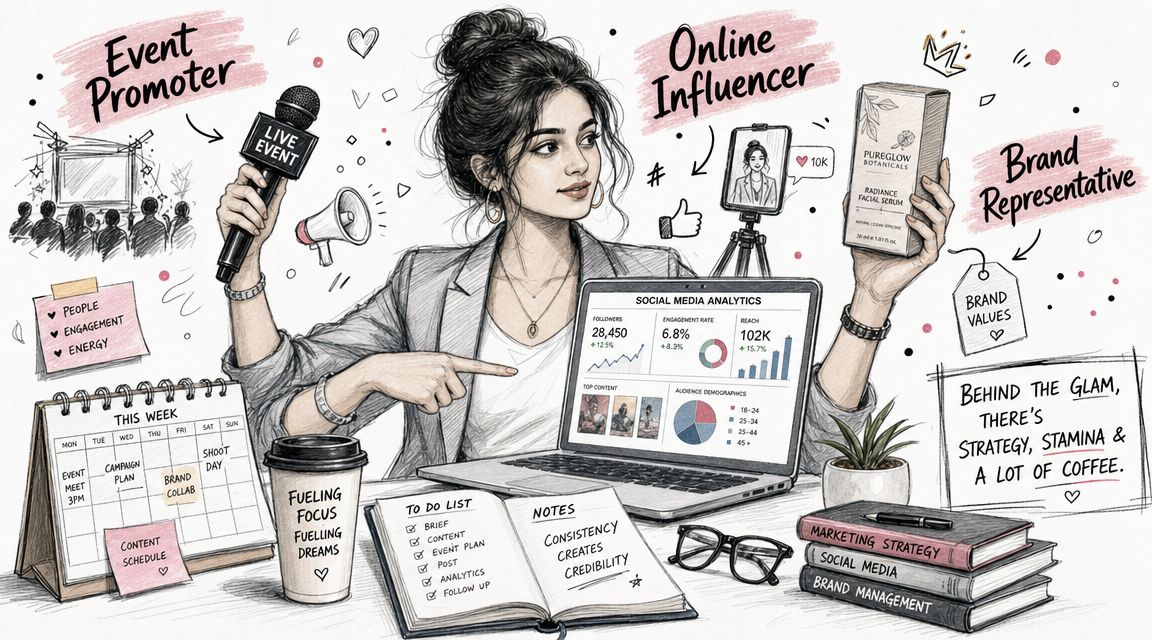
The role is now hybrid
A brand promoter may handle several functions in the same campaign:
- Event promotion: Sampling, retail activations, pop-ups, trade shows, and in-person demos.
- Online promotion: Social posts, short-form video, affiliate links, promo codes, and community engagement.
- Ambassador work: Ongoing representation of a brand across multiple campaigns, not just a one-off post.
The overlap matters. Someone might host a store demo in the afternoon, capture video clips during the event, post approved content later, reply to product questions, and send a recap to the brand the next morning. That workload rewards people who can follow a brief and protect the message while still sounding natural.
Automation can help with output volume. If you want to $automate influencer content with AI/$ to keep production moving, use it carefully. Brands still judge promoters on reliability, compliance, responsiveness, and whether the final campaign supports sales or awareness goals.
What employers screen for
New promoters often assume the hiring decision is based on visibility. In practice, employers and agencies screen for lower-level operational signals first.
A UK-relevant example is basic campaign readiness. Some employers care whether you can get to the venue on time, follow a dress code, use your phone for reporting, speak confidently with customers, and log practical details such as feedback, stock levels, or sample counts after an activation, as shown in $promoter role requirements from Velvet Luxe/$.
Practical rule: If a brand cannot trust you to follow instructions, audience size will not rescue the contract.
This is the part newcomers miss. Brand promotion sits close to revenue. If a promoter mishandles a message, misses a shift, or fails to report results, the brand loses more than a nice-looking post. It loses budget efficiency, sales insight, and confidence in the person they hired.
For a broader view of where this work fits, $this breakdown of influencer marketing careers/$ is useful because it shows how promoter work overlaps with creator partnerships, campaign coordination, and client service roles.
Who usually does well in this job
The strongest new promoters tend to share the same commercial habits:
- They stay organised: They confirm timings, keep briefs accessible, and submit deliverables without chasing.
- They take direction well: Brands often revise talking points, content angles, or compliance notes mid-campaign.
- They communicate clearly: A short, accurate update is more valuable than vague enthusiasm.
- They understand business goals: They know a campaign may be judged on leads, footfall, bookings, sales, redemptions, or reusable content.
Long-term promoters treat each job like paid client work. That mindset matters more than trying to look famous.
Building Your Promoter Portfolio and Niche
Your portfolio should answer one question fast: why should a brand trust you with its reputation and budget?
That's why “I can promote anything” is a weak position. The market responds better to specificity. “I create short-form content for vegan restaurants in Manchester” is more useful than “I'm into food.” “I help fitness brands with gym-floor demos and local social content” is more useful than “I love wellness.”
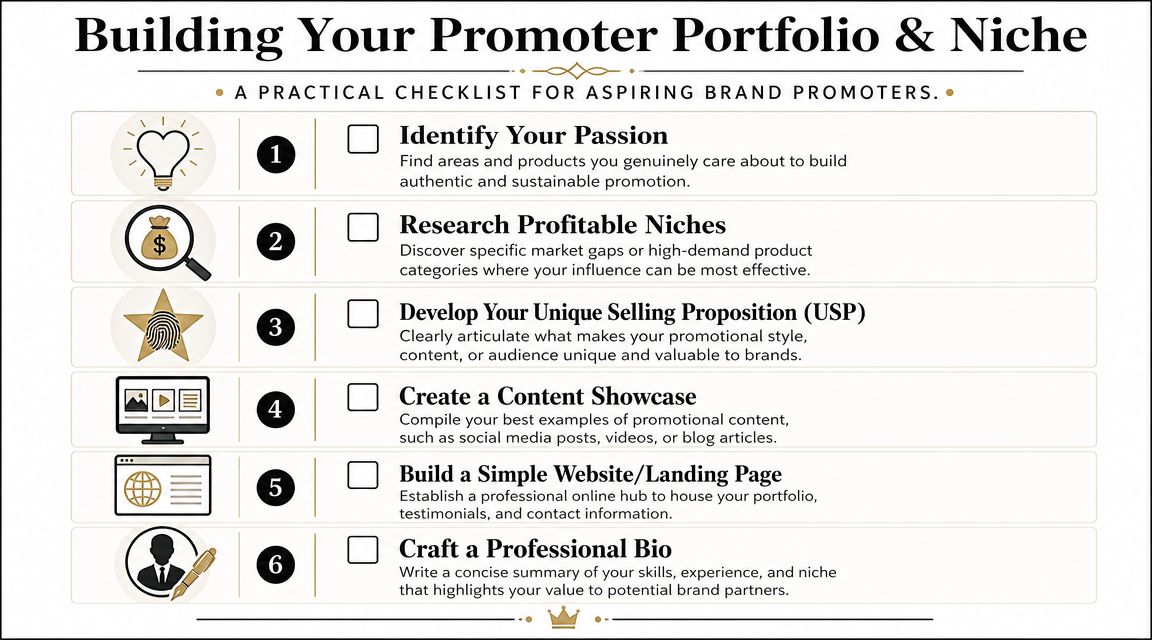
Pick a niche that creates clear fit
The technical approach is simple. Define your niche, build a media kit with audience demographics and engagement rates, pitch compatible brands with a customized message, and track every interaction in a spreadsheet so you can improve follow-ups and see which pitches convert best, as outlined in $Impact's guide to becoming a brand ambassador/$.
The mistake beginners make is choosing a niche that's too broad or too detached from how brands buy.
Try narrowing your position using these filters:
- Category knowledge What do you understand well enough to talk about naturally? Beauty, food, hospitality, gaming, fitness, parenting, local events, student life, or retail are all workable if you know the audience language.
- Format strength Some promoters are better on camera. Others are stronger at live demos, street sampling, or concise written recommendations. Build around what you can execute repeatedly.
- Commercial relevance Ask whether brands in that space need content, referrals, footfall, or direct response promotion. A niche is useful when it connects to a budget.
The fastest way to look amateur is to present yourself as generic. The fastest way to look hireable is to look easy to place.
Build a media kit before you feel ready
Many wait too long. You don't need a long list of paid collaborations to create a credible kit.
Your media kit should include:
- A short bio: Who you are, your niche, your tone, and the type of work you do.
- Audience information: If you have an online audience, include relevant demographics and engagement indicators.
- Content examples: Top-performing posts, short-form videos, event photos, product demos, or UGC samples.
- Partnership evidence: If you've never been paid, include self-initiated sample work for brands you are a good fit for.
- Contact details: Make it easy to reply, book, or request more information.
If you want to sharpen your positioning, this guide to $personal branding for career growth/$ is useful because it helps you turn your niche into a clear professional identity instead of a loose hobby profile.
A simple website or landing page helps too. It doesn't need to be fancy. It needs to be clean, current, and easy to scan.
This walkthrough adds a practical video example:
What to include if you have no paid experience
If you're starting from zero, create proof.
That can mean:
- filming a mock product demo
- writing sample promotional captions
- documenting a local venue visit as if it were a client brief
- producing before-and-after content ideas for a brand's existing campaign
- showing your ability to speak on-brand and follow a concept
Many newcomers get stuck thinking a portfolio must be historical. It doesn't. It has to be persuasive.
A strong beginner portfolio says, “I understand the audience, I understand the format, and I can execute this brief.” That's enough to start conversations.
How to Find and Pitch Brands for Paid Work
Most paid work doesn't come from waiting. It comes from targeted prospecting.
That means building a list, qualifying each brand, contacting the right person, following up properly, and keeping records. If you skip the tracking and rely on memory, your outreach gets sloppy fast.
Where to look first
The best early opportunities are often closer than people expect. Local brands, challenger ecommerce businesses, hospitality groups, event organisers, gyms, and niche consumer products are often easier to approach than household names.
Look in places where promotion already happens:
- Instagram and TikTok: Search local hashtags, location tags, and brand mentions.
- Brand websites: Check for ambassador, affiliate, creator, or partnership pages.
- Events and pop-ups: Meet staff, ask who runs local marketing, and follow up later.
- Creator marketplaces: Useful for exposure, but don't rely on them alone.
- Your own purchase history: Brands you already use are easier to pitch credibly.
A common concern is lack of experience. UK-relevant coverage shows inconsistent hiring standards. Some promoter application forms state that prior promotion experience isn't necessary, while others ask for Instagram follower counts and recent photos, which suggests that presentation signals can matter as much as formal qualifications in some cases, based on $this review of promoter hiring realities/$.
What a brand actually wants from your pitch
A weak pitch talks about you for too long. A strong one connects your fit to their goals.
Include four things:
- A reason for the fit Mention the product, audience, location, or campaign style that matches your work.
- Proof of capability Share your media kit, best examples, or a short note on the type of content or activations you handle.
- A concrete idea Suggest a format. For example, in-store sampling content, launch-day creator coverage, local food review videos, or code-based promotion.
- A simple next step Ask whether they're open to a short call, trial activation, or creator brief.
Don't send “I'd love to collaborate” and stop there. Brands can't buy enthusiasm on its own.
A practical outreach structure
Here's a simple DM or email format that works better than vague networking language:
| Part | What to say | Why it works |
|---|---|---|
| Opening | Mention the brand and a specific reason you're reaching out | Shows this isn't mass outreach |
| Positioning | Explain your niche and promotional style in one or two lines | Helps them place you quickly |
| Proof | Link your portfolio or media kit and mention a relevant content example | Reduces friction |
| Idea | Suggest one clear campaign angle | Makes the conversation concrete |
| Close | Ask a low-pressure question about fit | Easier to answer than a big ask |
Example:
Hi [Name], I promote local hospitality and food brands through short-form content and in-person campaign support. I've followed your recent launch and think your brand would suit location-based creator coverage and offer-led promotion. Here's my media kit and a few examples. If you're open to it, I'd be happy to send a tailored idea for your next campaign.
How to handle silence and rejection
Silence is normal. It doesn't always mean no. Sometimes the contact changed, the timing is off, or your message was too broad.
A better system is:
- send the first message
- follow up with a sharper angle
- log the outcome
- revisit later with better proof
That spreadsheet matters more than people realise. It shows you which niches reply, which pitch angles land, and where you're wasting time.
Negotiating Rates and Contracts Like a Pro
A lot of new brand promoters undercharge because they treat negotiation like a confidence test. It is an operations decision. Rates need to reflect scope, production time, audience access, usage rights, and the business result the brand expects.
A promoter who can drive footfall, redemptions, bookings, or qualified clicks should not price the same way as someone delivering a single awareness post. Sales experience helps here, but the core skill is simpler. Tie every number to a clear reason.
Brand Promoter Payment Models Compared
| Model | How It Works | Best For | Key Consideration |
|---|---|---|---|
| Flat fee | The brand pays a fixed amount for agreed deliverables | Clear one-off campaigns | Define revisions, posting dates, and scope |
| Commission | You earn based on tracked sales, leads, or conversions | Promoters with proven response-driven audiences | Tracking must be accurate |
| Gifting | Product or experience is exchanged for promotion | Beginners building proof | Product alone does not cover high-effort work for long |
| Hybrid | A mix of fee, commission, and perks | Ongoing relationships | Spell out which part depends on performance |
Flat fees are easier to manage. Commission can pay better, but only if attribution is clean and the offer already converts. Hybrid deals often work best in practice because they protect your time while giving the brand upside if the campaign performs.
If you want to get sharper at $calculating social campaign business impact/$, study how marketers separate reach from revenue. That skill changes the negotiation. You stop arguing about what a post "feels" worth and start discussing what outcomes the campaign is built to produce.
What to negotiate beyond price
Weak contract terms can wipe out a decent fee. A £400 post can become a bad deal fast if the brand gets unlimited ad usage, multiple edit rounds, and competitor exclusivity.
Check these terms before you agree:
- Deliverables State the exact number of posts, videos, stories, appearances, edits, and reporting requirements.
- Usage rights Clarify whether the brand can repost the content, use it on paid ads, place it on landing pages, or keep using it after the campaign ends.
- Exclusivity If the agreement blocks you from promoting competing brands, charge for that restriction.
- Payment terms Confirm deposit amount, invoice timing, payment window, and any late-payment terms.
- Cancellation and changes Set out what happens if the launch date moves, the brief changes, or the campaign gets cancelled after you have started work.
For a fuller checklist, this guide to $influencer contracts and agreements/$ is a useful reference.
One clause deserves special attention. Perpetual content rights. If a brand wants to turn your content into ads, retail screens, email creative, or sales assets for months, that is licensing work, not a casual repost.
When to say yes, no, or not yet
Early on, some lower-paid deals can make sense. A gifting campaign may be worth accepting if the product fits your niche, the brand is credible, and you can use the result in your portfolio. A commission deal can also work if the brand shares tracking access, conversion data, and a clear payout structure.
Bad-fit deals have patterns. Vague deliverables. Broad rights. No timeline. No owner on the brand side. Pressure to "just post and see what happens."
A professional counter is usually enough. Restate the scope, list the terms that need to change, and give two options. For example: a lower fee for organic usage only, or a higher fee that includes ad rights and one month of exclusivity. That approach keeps the conversation commercial instead of emotional.
Proving Your Value with Performance Tracking
The most commercially useful brand promoters do one thing better than the rest. They show what happened after the campaign.
That changes the whole relationship. You stop sounding like a creator asking for budget and start sounding like a growth channel that can be measured.
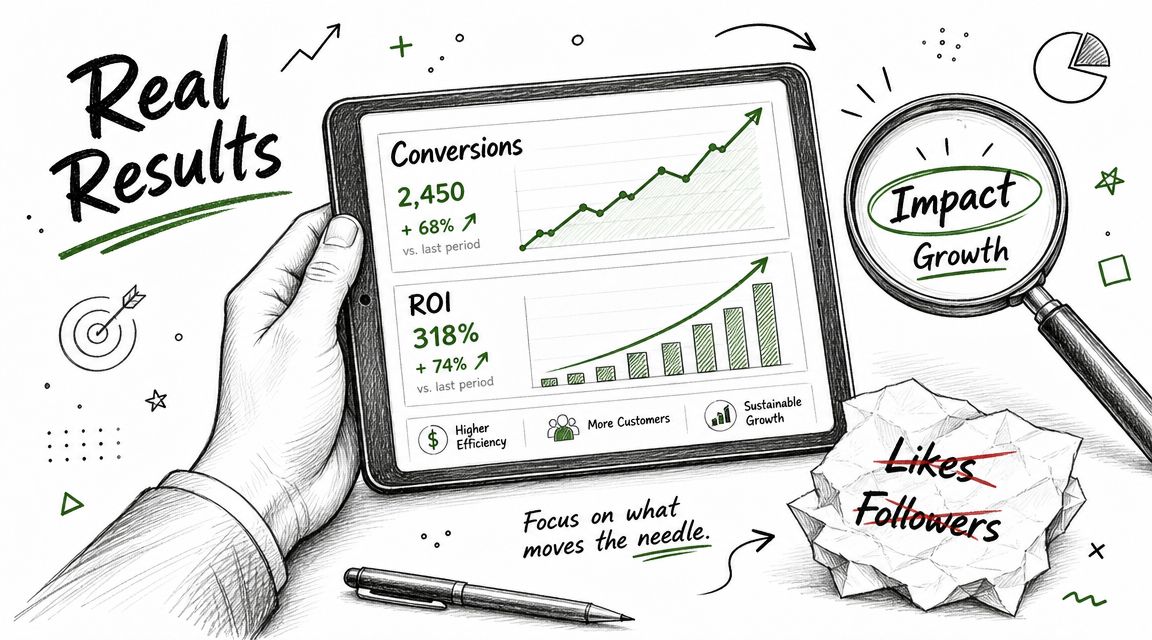
Vanity metrics won't carry you far
Likes and views can help tell part of the story, but they rarely settle the business question. A brand wants to know whether your work helped drive awareness, clicks, bookings, sign-ups, orders, reviews, or store visits.
A stronger campaign model is operationally structured from the start. Industry guidance for ambassador programmes recommends setting a specific objective, recruiting people already aligned with the brand, providing a written brief and launch assets, then monitoring performance with defined metrics and regular check-ins, according to OSI Affiliate's guide to launching a brand ambassador programme.
That approach matters because reporting starts before the campaign launches, not after.
Track what can be attributed
The simplest way to prove ROI is to attach your promotion to identifiable actions.
Useful tools include:
- Unique promo codes for direct redemptions
- UTM links to track traffic sources
- Campaign-specific landing pages for cleaner attribution
- Brief-based reporting notes so qualitative feedback isn't lost
- Regular check-ins with the brand to compare expectations against results
If you want a solid primer on the logic behind this, this article on $calculating social campaign business impact/$ is worth reading.
The promoter who can explain performance clearly usually gets the next campaign before the promoter who only says the content “did well”.
Build a reporting habit that brands trust
You don't need a complex analytics stack to look professional. You need consistency.
A useful post-campaign report can include:
| Area | What to include |
|---|---|
| Deliverables completed | What went live, where, and when |
| Direct response | Link clicks, code use, sign-ups, or tracked actions |
| Audience response | Comments, questions, saves, reposts, and qualitative sentiment |
| Operational notes | What people asked, what objections came up, and what sold interest |
| Recommendation | What you'd repeat, change, or test next time |
This is also where tools can replace admin. If you're managing creator work at scale, $Sup's influencer ROI tracking guide/$ explains the attribution side well, and Sup itself is one option for handling creator campaigns with unique promo codes, UTM links, outreach workflows, and a central dashboard for views, clicks, conversions, and payments.
That matters because manual spreadsheets eventually become a bottleneck. If you want to grow from occasional promoter gigs into repeat campaign work, your reporting process has to look dependable.
Why this affects your rates
Performance tracking isn't just for the brand. It strengthens your next negotiation.
When you can say, “Here's the brief, here's what went live, here's what people did, and here's what I'd improve next time,” you become easier to rebook. You also make it easier for the brand contact to justify using you again internally.
That's the business side of how to become a brand promoter. Not just getting attention, but proving contribution.
FAQs for Aspiring Brand Promoters
What's the difference between a brand promoter and a brand ambassador
A brand promoter is a broad term. It can include short-term event staff, online creators, retail activation workers, and campaign support talent.
A brand ambassador usually implies a longer-term relationship with more ongoing representation. In practice, the roles overlap. The key difference is often the deal structure and how consistently you work with the brand.
Do I need a big social media following
No. A large following can help in some cases, but it isn't the only route in.
Some roles care more about reliability, presentation, in-person execution, and reporting. Others care about niche fit and content quality. If a brand asks for follower count, treat that as one screening signal, not the whole market.
Can I become a brand promoter without experience
Yes, but you still need proof of readiness.
That proof can be a media kit, sample content, a clean online presence, a professional bio, or evidence that you understand how to follow a brief. Brands are more open to beginners when the beginner looks organised and easy to work with.
Should I work with multiple brands at once
Usually yes, but only if the categories don't clash and your workload stays manageable.
Working with multiple brands spreads your risk and broadens your portfolio. The downside is message overlap, scheduling pressure, and possible exclusivity conflicts. Read every agreement carefully before taking on competing partnerships.
Is gifting worth it when you're new
Sometimes. It depends on the effort required and the quality of the opportunity.
A gifted campaign can be useful if it gives you content, portfolio material, and a realistic route into paid work. It's less useful when the brand expects a lot of deliverables, broad usage rights, and polished production in exchange for a product you didn't ask for.
What's the fastest way to look professional
Three things make a big difference quickly:
- Respond clearly and on time
- Send a proper media kit or portfolio
- Report outcomes after the work
Individuals often focus too much on looking influential and not enough on looking dependable. Brands notice the difference.
If you want a more structured way to run creator campaigns, track promo codes and UTM links, and show measurable outcomes without managing everything manually, take a look at $Sup/$. It's built for brands and teams that want influencer and promoter activity tied back to real campaign reporting.
Book a strategy call today
We'll show you the creators in your niche, build a campaign plan, and walk you through the dashboard. All within 15 minutes, no commitment.