23 May 2026
7 Top Food Influencers UK for 2026 Brand Collabs
Beyond follower counts, the problem is usually workflow. You find a promising local creator for a launch, a menu drop, or a new product push. Then the next few weeks disappear into DMs, rate negotiation, scheduling, briefing, legal checks, and awkward follow-ups when the content still hasn't gone live.
That friction matters more now because creator marketing in Britain isn't a side experiment anymore. The UK influencer marketing market reached an estimated £2.9 billion in 2026, up from £2.36 billion in 2024, according to Charle Agency's UK influencer marketing statistics roundup. If you run a restaurant, food brand, or multi-site hospitality group, you're competing in a mature market where serious operators already treat creator partnerships as a standard channel.
If you want more than seven names, our ranked list of top food influencers in the UK shows each creator's followers, engagement rate and average views from live data. There is a separate list for food influencers in London.
The good news is that food influencers UK brands can work with aren't all the same. Some are media businesses with repeatable video formats. Some are trusted specialists with strong authority in nutrition or travel. Some are pure local discovery engines. The smart move is matching the creator type to the outcome you need, then building a campaign you can measure.
1. Sup
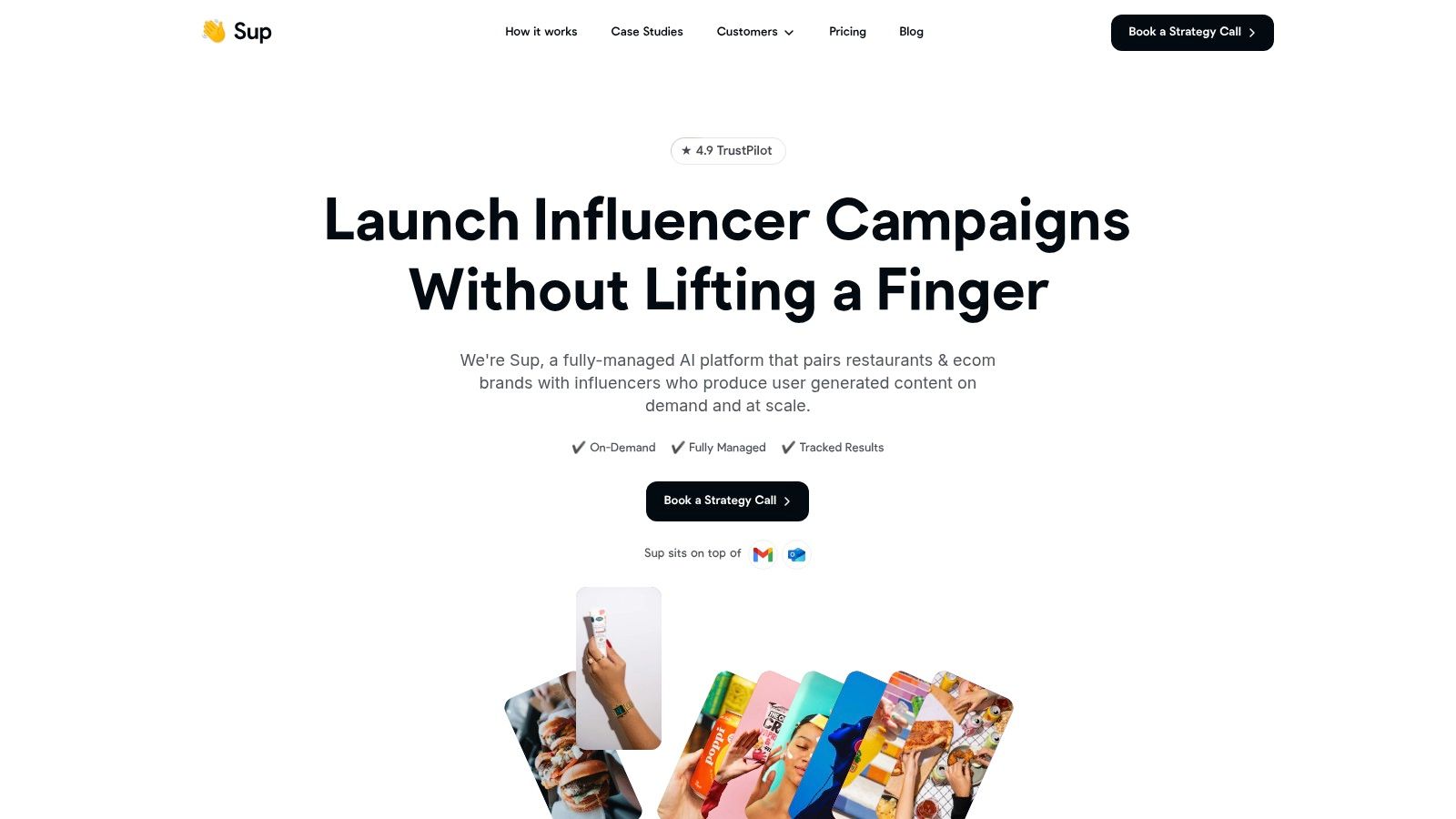
A common pattern in food influencer campaigns looks like this. The shortlist is built fast, the first replies come in, then the process slows to a crawl once outreach, contracts, scheduling, approvals, and reporting start piling up. For brands running local launches or multi-site activity, that operational drag usually hurts performance more than weak creative.
Sup fits into that part of the workflow. It is a platform with a managed service layer, not a food influencer, and it is most useful for brands that need to source creators and keep campaigns moving without handing the whole job to an internal team already stretched across paid social, CRM, and trade marketing.
The practical use case is clear. If the plan calls for ten to fifty local food creators across Instagram and TikTok, manual coordination gets expensive fast. Sup handles creator sourcing, outreach, scheduling, follow-up, compliance checks, and reporting in one process. That makes it easier to run repeatable campaigns instead of treating each collaboration like a custom project.
Where Sup adds value for food brands
Sup is strongest with micro and nano creators. That matters in hospitality because local relevance often beats broad reach. A restaurant opening in Manchester, a new brunch menu in Bristol, or a product sampling push tied to specific retail locations usually performs better with several credible local voices than with one expensive national name.
It also helps close the measurement gap that sinks a lot of food creator work. Brands can set up promo codes, UTM links, tracking codes, and reporting tied to views, clicks, conversions, bookings, revenue, or review generation. The right KPI depends on the campaign. A delivery brand may care about code redemptions. A restaurant group may care more about covers booked and review volume.
Practical rule: Tie each creator brief to one primary action. Bookings, purchases, code use, email sign-ups, or reviews. If the action cannot be tracked, the campaign is harder to judge and harder to improve.
Another useful feature is the UGC library. Good creator assets rarely stop working after the original post. Strong teams reuse that content in paid social, landing pages, email, organic reels, and location pages. That can improve the return from a campaign, especially when production budgets are tight.
Where it fits, and where it does not
What tends to work:
- Local launches: New openings, seasonal menus, limited-time offers, and city-specific pushes.
- Multi-site brands: Restaurant groups and food brands that need creator coverage market by market.
- Performance-focused campaigns: Programmes built around tracked links, codes, and measurable outcomes.
What tends to be a weaker fit:
- Celebrity-led campaigns: Brands looking for a TV chef, major publisher, or household-name face need a different route.
- Fast self-serve buying: Pricing is not listed publicly, so evaluation starts with a sales conversation.
For teams building local coverage at scale, this guide on how to find local food influencers in your city is useful background. It lays out the local-first approach that tends to work well for restaurant groups, venue launches, and regional food campaigns.
2. Sorted Food
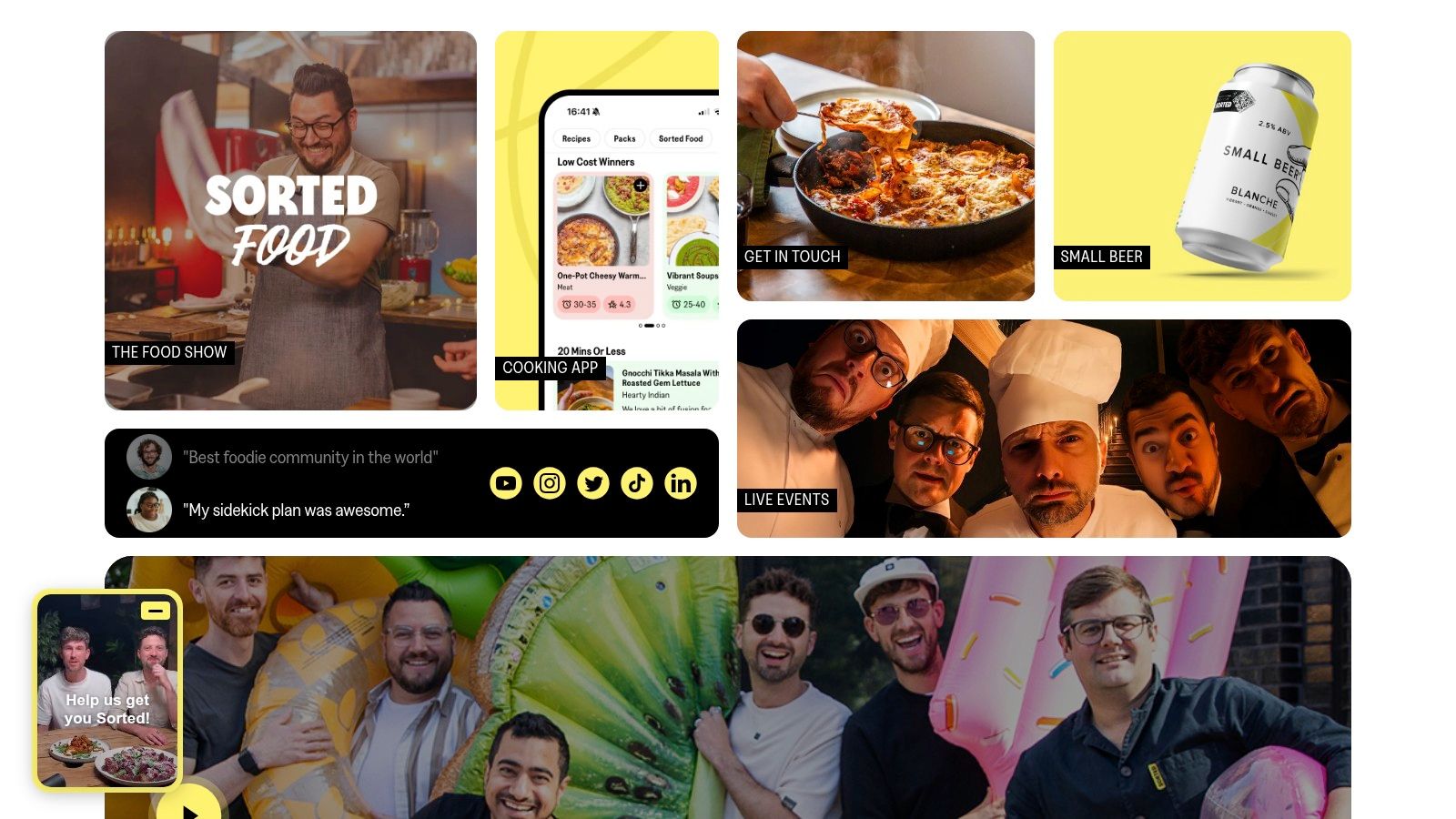
Sorted Food is less a single influencer and more a content machine. That changes how you should buy it. If you want one quick venue review, Sorted probably isn't the sharpest fit. If you want scalable awareness, product education, and content that can run across YouTube, social channels, and an owned app, it's much more compelling.
The advantage is format discipline. Sorted has repeatable content IP, which usually means fewer briefing headaches for brands. You're not asking them to invent a one-off ad concept from scratch. You're plugging into a structure their audience already understands.
Best use cases for brands
Sorted is strongest when the product needs demonstration. Meal kits, cookware, kitchen appliances, sauces, supermarket products, and recipe-led FMCG collaborations all make sense here. The audience comes expecting utility and entertainment together, which is ideal for products that need context.
Their Sidekick app also opens a different activation model. Instead of relying only on reach, a brand can think in terms of recipe inclusion, promo prompts, or sustained engagement around what people cook.
A practical brief for Sorted usually includes:
- A kitchen problem to solve: Speed, cost, convenience, prep reduction, storage, or flavour.
- A content arc: Hero video, cutdowns, supporting social, and app integration if relevant.
- A conversion path: Recipe pack, trial, code use, or retailer prompt.
Sorted is a strong choice when your campaign needs repeatability. Not just a flash of attention.
The trade-off is control and complexity. Because the ecosystem is broader, campaigns need tighter QA. If Sidekick is part of the activation, brands should make sure the route from content to action feels friction-light. If it feels like a detour, viewers drop off.
3. Mob
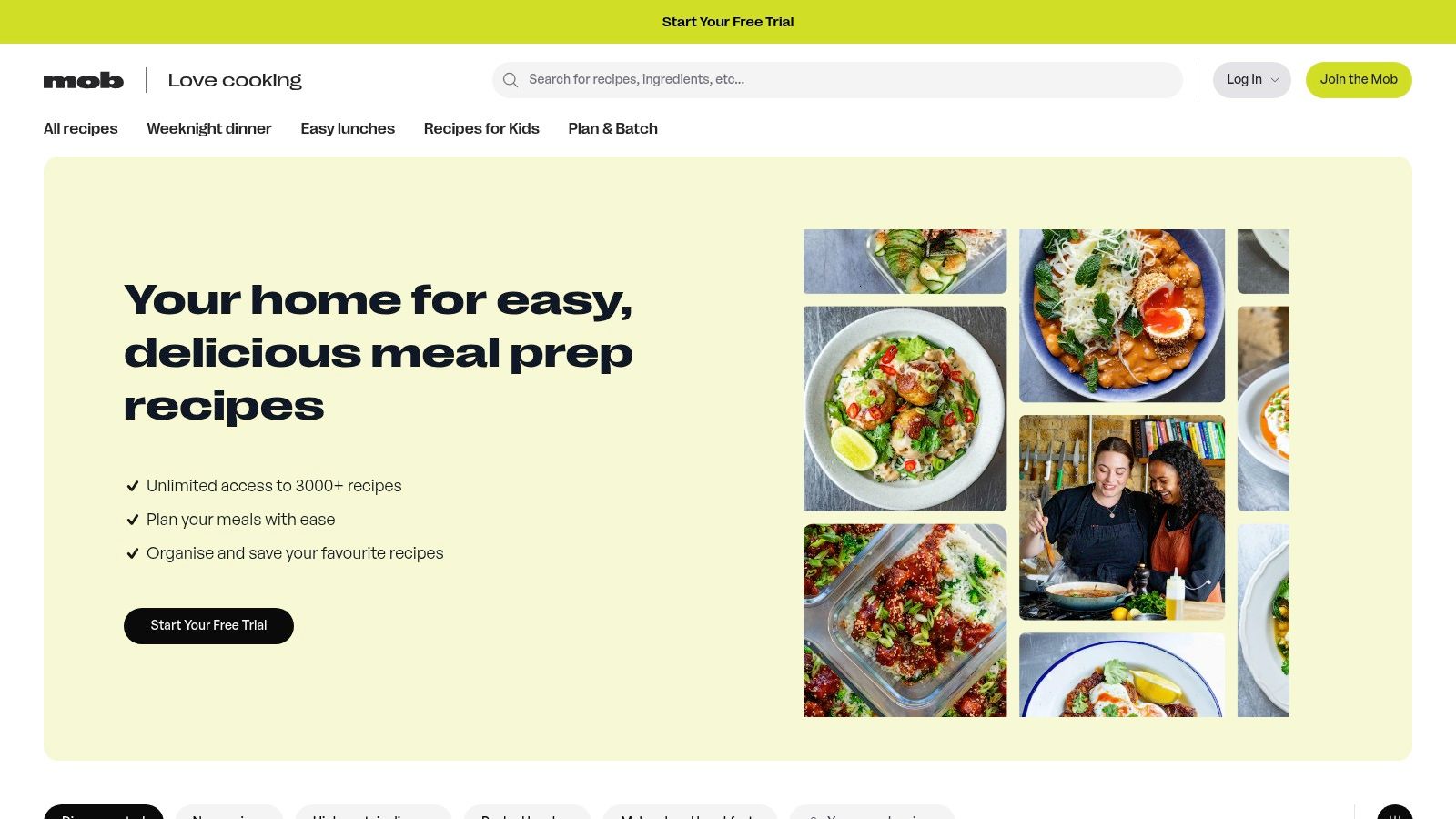
Mob sits in a useful middle ground between creator brand and recipe publisher. It has a clear editorial point of view, strong social-first execution, and a style that tends to resonate with younger UK home cooks who want food that feels current but still achievable.
That's why Mob works best when your offer is accessible. If you're selling ingredients, drinks, ready meals, kitchen tools, or grocery products that benefit from quick recipe storytelling, Mob gives you a natural environment. The content doesn't feel over-produced in a sterile way, but it still looks commercially ready.
How to partner with Mob well
The biggest mistake brands make with Mob-style publishers is overloading the brief. Keep it simple. One product benefit, one audience angle, one strong recipe or challenge format.
Good campaign angles include:
- Affordable weeknight cooking: Useful for staples and value-led products.
- Trend-aware recipes: Best for products with novelty or social appeal.
- Retail tie-ins: Especially where shoppers can act immediately after seeing the content.
If you're a restaurant trying to borrow from this playbook, the smarter move is often to think beyond a single review and build a local creator campaign with trackable offers. Sup's article on how to get food influencers to promote your restaurant captures that operational side well.
The trade-off
Mob is great at making food look easy, current, and worth trying. That's a strength for broad consumer appeal. It can be a weakness if your brand needs a more premium, technical, or expert-led frame.
The other point to watch is destination. If a campaign runs through a paid layer or app-based flow, test the user path carefully. Don't assume a strong recipe video automatically creates a smooth branded conversion journey.
4. Emily English
Emily English, known widely as Em the Nutritionist, is the kind of partner you choose when trust matters more than novelty. She isn't just another recipe creator. She brings professional nutrition credentials, mainstream media visibility, and cookbook-author authority.
That changes the commercial value. A nutrition-forward creator can help a food brand explain why a product belongs in someone's routine, not just how it looks on camera. For better-for-you CPG, cookware, meal planning products, or retail content, that's a serious advantage.
Where her value is highest
Emily suits campaigns that need education without sounding clinical. Think breakfasts with staying power, practical lunch ideas, credible recipe content for retailers, or kitchen tools tied to healthier home cooking habits.
This is also a strong fit for brands that need a media-safe spokesperson style creator. If your legal team checks every line and your product claims need careful wording, a creator with an evidence-aware voice is easier to work with than a pure hype account.
What to brief clearly: approved claims, forbidden language, ingredient proof points, and what “healthy” can and can't mean in your campaign.
For food and beverage brands building partnerships in this lane, Sup's guide to influencer marketing for food and beverage brands and CPG is a useful companion because it focuses on structuring campaigns around product education and measurable outcomes.
The trade-off
You're buying authority here, so sloppy marketing will backfire. If the brand wants exaggerated claims, dramatic before-and-after framing, or lazy wellness buzzwords, this isn't the right match.
Availability can also be a practical issue around media and publishing cycles. Brands that work well with talent like Emily usually plan earlier, tighten approvals, and avoid last-minute “can we post tomorrow?” thinking.
5. BeardMeatsFood
BeardMeatsFood is built for spectacle. If your venue, launch, or challenge concept needs attention fast, few UK food creators fit that brief better. The format is high-entertainment, road-tested, and naturally shareable.
This isn't subtle creator marketing. It's event-style content. That can be exactly right for hospitality groups, burger brands, challenge menus, and venues that want immediate buzz plus social proof people can talk about in person.
When this creator type wins
Use BeardMeatsFood when the physical venue is part of the story. New opening. Giant menu item. Timed challenge. Regional roadshow. Limited event. Those all work because the content gives people a reason to visit, not just admire the food from a distance.
There's also a practical paid-media angle. Challenge content often travels well beyond the initial upload because the hook is obvious, the stakes are visible, and the audience can understand the setup in seconds.
A strong campaign structure here usually includes:
- A venue moment: Something people can book, try, or film themselves.
- An offer window: A challenge period, special menu item, or launch weekend.
- A capture plan: Reposting, local PR, email, and in-venue signage tied to the feature.
The trade-off
This format isn't brand-neutral. Extreme eating can create awkward optics for brands focused on wellness, moderation, or premium restraint. It can also overshadow the subtler parts of a hospitality proposition if the whole campaign becomes “look how huge this is”.
Used well, though, this category can drive a very different outcome from recipe creators. Less education. More footfall energy.
6. Food Review Club
Food Review Club is one of the clearest examples of why regional relevance often beats polished reach. For chains, takeaways, independents, and hidden-gem venues, this style of creator can be far more commercially useful than a glossy national foodie account.
The review format feels closer to a recommendation from someone who turned up hungry. That matters for hospitality. People don't just want pretty shots. They want a sense of portion size, atmosphere, value, and whether the place is worth the trip.
Why local intent matters
A lot of coverage around food influencers UK brands should target still focuses on viral reviews and creator drama. The more useful question is audience fit. The category is heavily niche and micro-led, and creator directories reflect a broad spread of specialist accounts rather than only a few celebrity names, as shown in Modash's UK food influencer directory. For restaurants and food brands, that means city, cuisine, and intent are usually more important than headline fame.
Food Review Club fits this reality well. It's discovery-led, regional, and grounded in on-location proof.
A local creator with the right audience in the right catchment often outperforms a much larger account whose followers will never visit.
Best campaign setups
This creator type is strongest for:
- Regional openings: New branches, relaunches, or refurbishments.
- Menu hero pushes: One item people can immediately order.
- Social proof campaigns: Reviews, repostable clips, and credibility for your own channels.
The trade-off is message control. Candid review formats feel believable because they're less polished and less tightly scripted. If your internal team wants every line pre-approved, this style will feel uncomfortable.
That discomfort is often the point. Authenticity usually costs some control.
7. Leyla Kazim
Leyla Kazim at The Cutlery Chronicles plays in a different lane from the quick-hit review accounts. She's a strong option when a brand needs editorial credibility, premium tone, and thoughtful storytelling around food and travel.
That matters if you're promoting destination dining, boutique hospitality, regional tourism, food experiences, or higher-end restaurant concepts. Some campaigns need more than a reel and a discount code. They need context, photography, and a voice that makes the place feel worth planning around.
Where editorial creators outperform social-first accounts
Leyla is a better fit when the sale takes longer. Premium stays, special tasting menus, chef-led events, and food-led travel all benefit from depth. A strong written feature or evergreen site placement can support discovery long after a social post fades.
This kind of partnership also tends to be safer for brands that care about positioning. You get less of the chaos that sometimes comes with reaction-led creators and more of the considered tone that luxury and destination brands usually want.
A practical brief here should include:
- A narrative angle: Place, provenance, chef story, seasonal menu, or regional culture.
- Usable assets: Photography, quote approval process, and social cutdowns.
- A search role: What evergreen discovery value the campaign should support.
The real limitation
You're not hiring Leyla for mass-volume posting. You're hiring her for depth and brand fit. If you expect a flood of high-frequency viral clips, you'll be disappointed.
There's also a practical operations point for venue-based creators in busy UK hospitality settings. Professional filming access is becoming less informal. Borough Market's current rules require professional social creators to apply for permission, show approval to security, and avoid weekend filming, according to reporting on the venue's creator filming restrictions. That's a useful reminder that creator marketing now includes permissions, timing, and on-site coordination, not just content ideas.
If your restaurant is in London, our guide to London food bloggers goes deeper on the capital. For press coverage, see our guide to UK food critics.
Top 7 UK Food Influencers Comparison
| Solution | Implementation Complexity 🔄 | Resource Requirements ⚡ | Expected Outcomes ⭐📊 | Ideal Use Cases 💡 | Key Advantages |
|---|---|---|---|---|---|
| Sup | 🔄 Low, done-with-you setup (~20 min) and managed operations | ⚡ Low internal effort; vendor fees + creator budgets (pricing on request) | ⭐📊 Measurable ROI: attributed clicks, conversions, views, bookings; reusable UGC library | Local/niche micro‑influencer campaigns, footfall & attribution-focused programs | End-to-end attribution, high efficiency, fake‑follower checks |
| Sorted Food | 🔄 Medium, collaborative campaign planning and app integration | ⚡ Moderate, product seeding, creative briefs, possible app co‑development | ⭐📊 Nationwide awareness, repeatable video IP, first‑party cooking insights from Sidekick | Product education, nationwide awareness, integrated cross‑platform activations | Multi‑format publishing, owned app for ongoing engagement |
| Mob (Mob Kitchen) | 🔄 Low to Medium, social‑first, quick turnarounds | ⚡ Moderate, product samples, promo coordination, possible premium gating | ⭐📊 High short‑form engagement with Gen Z reach; retail tie‑ins perform well | Trendy, affordable recipe content; retail promotions and co‑branded giveaways | High‑volume, social‑native recipes; strong youth resonance |
| Emily English (Em the Nutritionist) | 🔄 Low, single‑creator collaborations; scheduling dependent on availability | ⚡ Low, product samples + talent fee; may need claim substantiation | ⭐📊 Credible product education and media pickup; trust metrics for better‑for‑you CPGs | Evidence‑based product content, cookware/health‑forward campaigns | Professional credibility, media‑friendly expertise |
| BeardMeatsFood (Adam Moran) | 🔄 Medium to High, stunt logistics and tour scheduling | ⚡ High, venue coordination, production, possible travel & staging | ⭐📊 Immediate buzz, high reach and footfall; strong social/press pickup | Hospitality launches, attention‑grabbing stunts, venue awareness | Highly shareable challenge formats; drives immediate local traffic |
| Food Review Club | 🔄 Low, on‑location, episodic shoots with quick turnaround | ⚡ Low, modest production and travel budget | ⭐📊 Regional discovery and authentic UGC‑style social proof | Regional chains, independents seeking local discovery | Fast, authentic reviews; cost‑effective regional reach |
| Leyla Kazim (The Cutlery Chronicles) | 🔄 Medium, editorial planning and longer lead times | ⚡ Moderate, higher production values, photography, possible travel | ⭐📊 Premium storytelling and evergreen SEO value; high editorial credibility | Destination dining, premium hospitality, long‑form features | Brand‑safe editorial voice, strong photography and storytelling |
Your Next Steps to Launch a High-ROI Influencer Campaign
A UK food brand can spend five figures on creators and still end the quarter with weak attribution, mixed messaging, and content nobody reuses. The gap usually sits in campaign design, not creator quality.
Start by choosing the outcome before choosing the name. Brands pushing a national grocery product usually need reach plus repeatable recipe content. A restaurant opening in Manchester needs local attention, bookings, and social proof within a short window. A premium food brand may care more about trust, photography, and long-tail brand perception than raw impressions.
That choice should shape the creator mix. Sorted Food and Mob fit broad product storytelling and repeatable recipe formats. Emily English fits education-led campaigns where credibility matters. BeardMeatsFood works for high-attention launches and hospitality stunts. Food Review Club suits regional discovery and fast local traction. Leyla Kazim fits premium storytelling with stronger editorial polish. Sup suits teams that want creator sourcing, outreach, and reporting handled in one workflow.
Set one primary conversion action per campaign.
For CPG brands, that might be retailer clicks, promo code sales, email sign-ups, or content for paid social. For restaurants and venues, use booking links, walk-in footfall, review volume, or sales of a featured dish or menu. If the brief asks for awareness, traffic, UGC, and conversions all at once, reporting gets noisy and creator output gets diluted.
Audience size matters less than audience intent. Analysts at WARC found strong consumer interest in influencer content and notable followership for food creators in its WARC analysis of food creator followership and UK examples. For brands, the practical read is simple. Segment by buying behaviour, not by vanity metrics. A creator who drives recipe saves is useful for a supermarket launch. A creator who gets local comment activity and same-week visits is more valuable for a venue.
Execution is usually where ROI slips. Slow approvals kill timeliness. Loose briefs produce off-message content. Missing usage rights limit the value of strong assets after the post goes live. Good teams fix this upfront with a short brief, a clear approval path, usage terms, and a tracking method attached to each creator.
Keep the operating model tight:
- Assign creator-specific tracking. Use unique codes, links, booking routes, QR codes, or review prompts.
- Match the format to the commercial goal. Recipe videos help product education. On-location reviews help footfall. Long-form editorial content helps premium positioning.
- Secure reuse rights early. The best-performing creator asset often delivers more value in paid social, email, retailer decks, and landing pages than on the original post alone.
- Review results by creator type. Compare cost per booking, cost per code redemption, content completion rate, and asset reuse value, not just reach.
Brands that need stronger positioning around hospitality and food media can also benefit from outside advice for food business PR, especially when creator work needs to support reviews, openings, and broader press visibility at the same time.
Sup can help turn creator outreach, approvals, and reporting into a repeatable process rather than a spreadsheet-heavy one. That matters once campaigns move past one-off tests and into a regular acquisition channel.
More on recruitment
See how many creators post about you and your competitors
Type in your brand's Instagram handle and we count the creators who post about you and about your five closest competitors. It takes about a minute and it is free. Or request a demo and we will show you the creators in your niche and walk you through the dashboard.
 Book a call