26 March 2026
Food Influencers in Birmingham: Finding Local Creators
If you want to fill your tables and get your food brand noticed in Birmingham, you need to think local. Really local. Working with the right food influencers in Birmingham isn't just about getting a few nice pictures; it's about plugging directly into the city's foodie heartbeat. It builds real community buzz and gets people through your door.
Why Birmingham Food Influencers Are Your Secret Ingredient
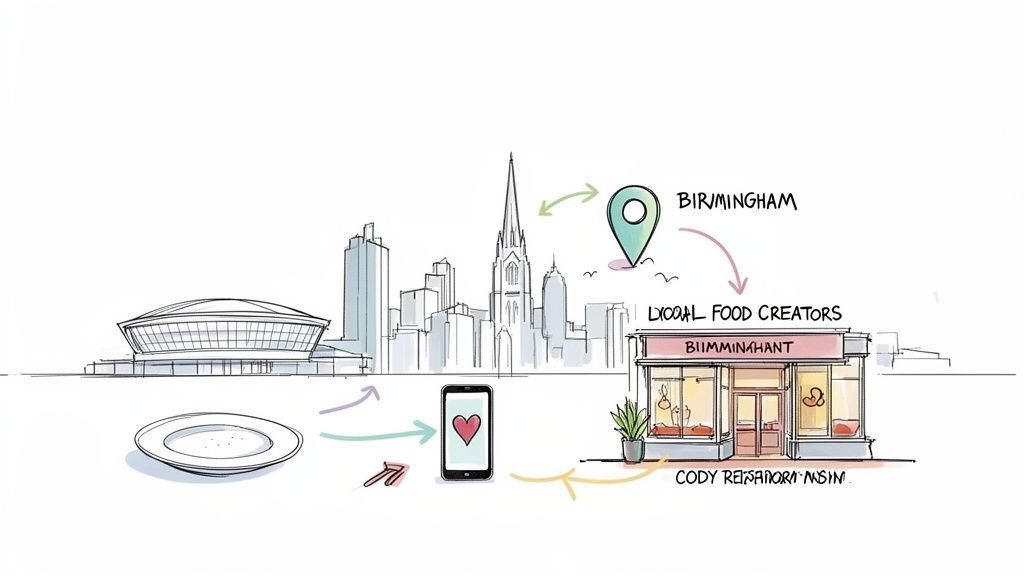
Birmingham's food scene is electric. It's not just about the big-name restaurants or trendy pop-ups, but the community of local creators who live and breathe this city's culinary world. These aren't distant celebrities; they're your neighbours, sharing their finds from a new cafe in Moseley or a legendary curry house in the Balti Triangle.
For a local restaurant or food business, a collaboration with one of these creators is one of the fastest ways to build trust. Their followers genuinely look to them for recommendations on where to eat next, making their word incredibly powerful.
It's All About That Local Authenticity
A national campaign just can't compete with local relevance. A glowing review from a Birmingham-based creator hits an audience that can actually walk into your restaurant that very evening. This is what turns online chatter into real-world action.
This local touch is especially potent in a city with such a proud and distinct identity. Think of someone like Trey Echols (@The_fedneck), a Brummie on a personal mission to find the city's best burger. His honest, straightforward reviews connect with locals because he gets it. He’s part of the fabric of the city's food culture, building a level of trust a generic ad could never replicate.
Local food creators aren’t just advertisers; they are storytellers for your community. They turn a meal into an experience people want to share, giving you the kind of authentic social proof that makes their followers want to try it for themselves.
Driving Real Growth with Nano and Micro-Influencers
And the opportunity is huge. Birmingham is buzzing with over 5,000 active food creators on platforms like Instagram and TikTok, all part of a UK influencer market now valued at a massive £2.9 billion.
The real sweet spot? Nano-influencers (those with 1k-10k followers). They're not just accessible; they're incredibly effective, boasting engagement rates as high as 15.2% on TikTok. They are perfectly primed for targeted, local campaigns. You can find more detail on these broader influencer marketing trends and their impact.
Tapping into this network gives you more than just a quick shout-out. You get:
- Real User-Generated Content (UGC): Authentic, high-quality photos and videos of your food that you can share across your own social media, website, and marketing materials.
- A Hyper-Targeted Audience: Your message gets placed directly in front of engaged local foodies who are actively searching for their next great meal.
- Cost-Effective Results: Working with nano and micro-influencers often delivers a much better return on your investment than partnering with huge creators. You get genuine passion without the celebrity price tag.
How to Find the Right Birmingham Foodies for Your Brand
Finding the perfect food creator in Birmingham can feel overwhelming, but it's far from impossible. The secret is to stop thinking like a marketer for a moment and start thinking like a local. If you want to find authentic partners who genuinely connect with your brand, you need to go where they are already sharing their experiences.
Forget casting a wide, generic net. Your first move should be to get hyperlocal on platforms like Instagram and TikTok. Dive into the location tagging features. Just opened a new brunch spot in the Jewellery Quarter? Pull up the app and search for posts tagged in that exact area. You’ll instantly see who is already eating, drinking, and posting right on your doorstep.
This isn’t just for small neighbourhoods, either. You can keep an eye on tags for major foodie hubs like the Bullring, Digbeth Dining Club, or sought-after suburbs like Moseley and Harborne. This shows you who is actively exploring Birmingham's food scene, not just someone with "foodie" in their bio.
Uncover Creators Through Competitor Collaborations
One of the smartest moves you can make is to see who your competitors are already working with. It's a goldmine of information that's hiding in plain sight. Head over to their social media profiles and check their tagged photos and mentions. This will give you a pre-vetted list of Birmingham food creators who are clearly open to brand partnerships.
But don't just copy and paste their list. Put on your detective hat. Did that collaboration post get a lot of genuine buzz? Were the comments from real, local people, or just other influencers? Digging into this tells you what actually works for a business like yours in Birmingham and which creators truly resonate with the city’s diners.
When you look at who your competitors are working with, you're getting more than just names. You're getting a direct look into their influencer strategy, seeing how the audience reacts, and spotting opportunities to partner with incredible creators they might have missed.
As you start to pull together a list of potential partners, it really helps to get inside their heads. Understanding their journey and what it takes to build a loyal following can make your outreach so much more personal and effective. If you’re curious, this guide on how to become an influencer offers some fantastic insights into the creator mindset.
Master Hashtag and Location-Based Searching
Once you've got a few names, you can get much more strategic with your hashtag and location searches. It's all about combining broad terms with more specific, niche ones. So, instead of just searching #birminghamfoodie, you'll want to try more targeted tags. We cover this in more detail in our complete guide to finding local food influencers in your city.
To give you a running start, I’ve put together a quick cheat sheet for tracking down creators around Birmingham's key food destinations. By monitoring these hashtags and location tags, you can spot active foodies in real-time.
Birmingham Foodie Hotspot Hashtag and Location Tag Guide
| Foodie Hotspot | Popular Hashtags to Track | Key Location Tags to Monitor |
|---|---|---|
| Digbeth | #digbethdiningclub, #digbeth, #custardfactory | Digbeth Dining Club, The Custard Factory |
| City Centre | #birminghamrestaurants, #bullring | Bullring & Grand Central, New Street |
| Jewellery Quarter | #jq, #jewelleryquarter, #stpaulsquare | Jewellery Quarter, St. Paul's Square |
| Moseley/Harborne | #moseley, #harborne, #birminghamindies | Moseley Village, Harborne High Street |
By working through these search methods, you'll build a strong, high-quality list of potential collaborators pretty quickly. Remember, the aim isn't to find every single food creator in the city. It’s to find the right ones who can become genuine, passionate advocates for your brand.
Vetting Influencers Beyond Their Follower Count
So, you’ve done your digging and now have a list of potential food creators in Birmingham. This is where the real detective work starts. It’s easy to be drawn in by a big follower number, but that can often be a classic vanity metric. A huge following means nothing if the audience isn't paying attention or, even worse, isn't made up of real people.
Getting this next part right (properly vetting a creator) is the difference between a campaign that flops and one that brings new customers through your door.
Think of it this way: would you rather have a creator with 50,000 followers whose comments are just a stream of fire emojis, or one with 5,000 followers whose comment section is full of genuine questions and conversations from local foodies? The answer is obvious. You're looking for real influence, not just a popular account.
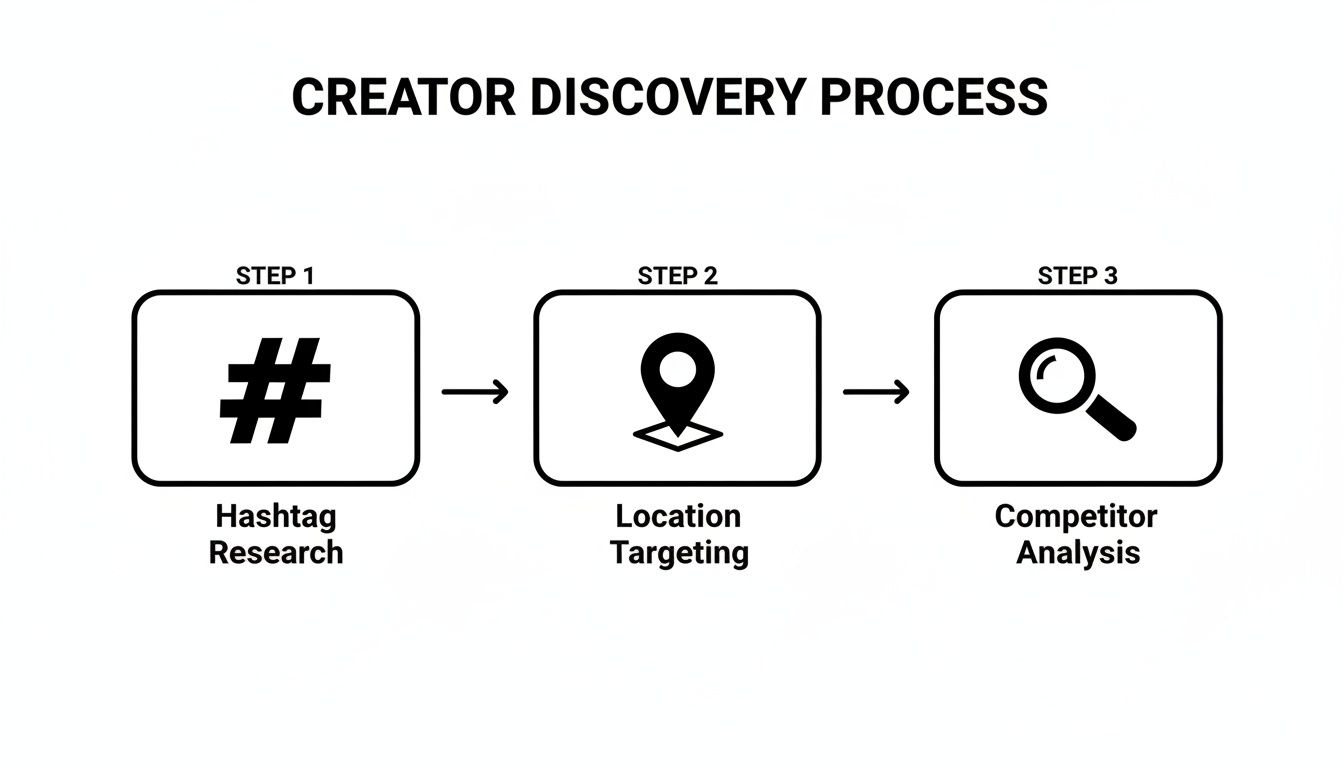
The discovery methods we've covered (like hashtag research and seeing who your competitors work with) are great for building that initial list. Now, it's time to sift through it.
Look for Real Engagement and Authenticity
A simple engagement rate calculation is a decent place to start. Just add up the likes and comments from their last 5-10 posts, divide by the number of posts, then divide that by their total follower count. For Instagram, a healthy rate is somewhere in the 3-6% range.
But numbers only tell half the story. You have to get your hands dirty and actually read the comments. Are they from genuine accounts that look like they live in or around Birmingham? Or are they bland, repetitive comments from other influencers?
Keep an eye out for these red flags:
- Generic comments: "Looks amazing!" or "Great shot!" repeated by the same people on every post is a bad sign. It often points to engagement pods where creators just trade empty interactions.
- Weird follower-to-following ratio: If a creator is following 7,000 accounts, they might be using an aggressive "follow/unfollow" strategy to inflate their numbers.
- Sudden follower jumps: A profile that gains thousands of followers overnight has likely bought them.
A creator's true value isn't measured by how many people see their content, but by how many people trust their opinion. That trust is built on authentic engagement.
Check for Content Quality and Brand Fit
Beyond the metrics, it's about the vibe. Does this person’s content actually fit with your brand? Take a good look at their grid. Are their photos sharp and appealing? Is their video content well-edited?
More importantly, does their style match yours? If you're a casual street food vendor, a creator who only posts about Michelin-star experiences probably isn't the right fit. Their tone of voice (whether it’s funny, informative, or adventurous) needs to feel like a natural extension of your own brand.
This matters more than ever. The UK influencer market is projected to hit £2.9 billion, and 49% of brands now say they prefer working with nano-influencers over huge celebrities. These smaller creators have built genuine communities by authentically sharing everything from gems in the Balti Triangle to fine dining in Edgbaston. Vetting for brand fit is how you tap into that power.
Finding these hyper-local, trusted voices is a game-changer. For a deeper dive into this strategy, our guide on micro-influencer marketing for small businesses breaks it down even further. Taking the time to do this vetting properly ensures your message lands with people who could become your next regulars.
Getting Your Outreach Message Right
You’ve done the hard work and put together a solid list of authentic Birmingham food creators. Now comes the part where so many brands stumble: the first message. It’s tempting to just copy and paste a template, but top-tier creators can spot a generic DM from a mile away, and they get dozens of them every single day.
To cut through that noise, your message needs to feel personal and professional. You're not just blasting out a request; you're starting a real conversation. A great pitch shows you’ve actually done your homework and genuinely believe there's a good fit, turning a cold outreach into a much warmer introduction.
Start with a Personal Touch
That first line is everything. It needs to prove, instantly, that this isn't just another mass email. The best way I've found to do this is to mention something specific about their recent work that you actually liked.
Instead of the tired "Hey, we love your content," give them something real:
- "That review you did of the new spot in the Jewellery Quarter was fantastic. I loved how you captured the atmosphere."
- "Saw you’re on a mission to find Birmingham's best burger. We might just have a contender for you."
Making a specific reference shows you see them as a creator with a unique perspective, not just a faceless promoter. It immediately puts the conversation on a footing of mutual respect, which is exactly where you want to start.
Get to the Point and Offer Real Value
Once you've broken the ice, don't waste their time. Creators are busy running their own businesses. You need to clearly explain who you are, why you’re reaching out, and, most importantly, answer the question that's always on their mind: "What's in it for me?"
Be completely upfront about what you're proposing. Vague offers get ignored. Are you inviting them for a complimentary meal? A paid feature? A longer-term brand ambassadorship? Spell it out so they can decide if it's the right fit for them.
A strong pitch is built on mutual benefit. It clearly communicates why the partnership makes sense for your brand and why it’s a valuable opportunity for the creator and their audience.
For instance, a solid, direct pitch could be: "We're launching a new seasonal menu at our restaurant in Moseley and think your followers would be really interested. We'd love to invite you and a guest for a complimentary three-course meal in exchange for an honest review post." It's direct, transparent, and gives them all the details they need. For a deeper dive on this, you can learn more about how to get food influencers to promote your restaurant in our detailed guide.
Yes, writing a thoughtful message takes a bit more effort than a generic blast. But your response rate will be leagues better. This is the first step in building a genuine relationship with the food influencers in Birmingham who can become true, passionate advocates for your brand.
Getting a Real Return From Your Influencer Campaign
A stunning collaboration with a Birmingham food creator is a great start, but it's only half the job. To really know if it was a success, you have to prove it worked. Tracking results is what shifts influencer marketing from a hopeful brand awareness play into a proper performance channel that justifies every pound you spend.
Without solid data, you're just guessing. How can you be sure that gifted meal brought in new customers? Which influencer's post actually drove bookings for your Sunday roast? This is where a simple, structured approach to tracking becomes your most valuable asset.
Tying Content to Customers
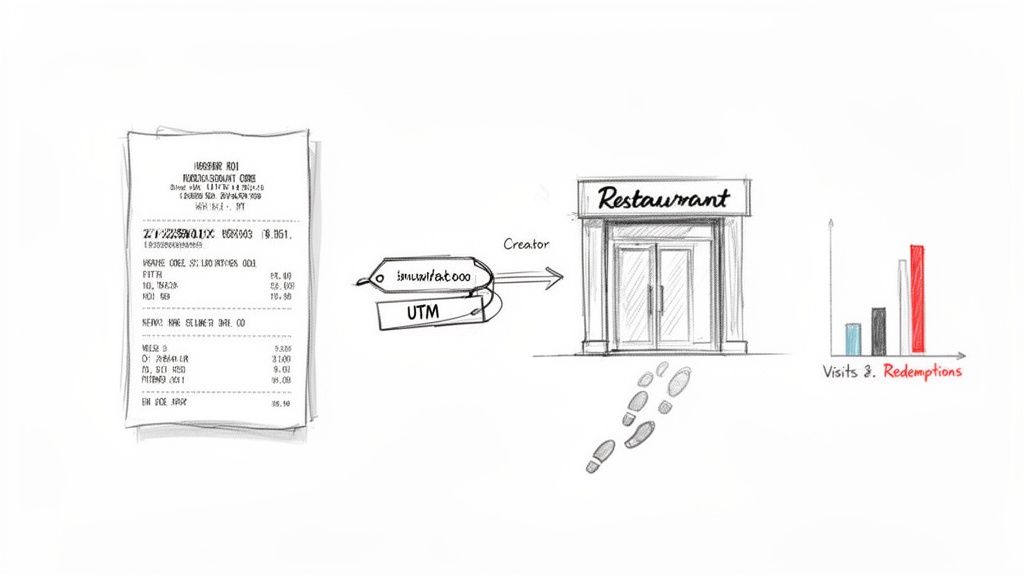
The secret is giving each influencer their own unique tracking tools. This is how you connect their content directly to real-world customer actions, whether it’s an online order or someone walking through your restaurant door. There are two straightforward, non-negotiable ways to do this.
- Unique Discount Codes: Give each creator a special code they can share, like "LAUREN15". When a customer uses that code at checkout or mentions it when booking, you know exactly who sent them. Simple.
- UTM Links: If you want to drive traffic online (say, to your booking page or a delivery menu), give each creator a custom URL with UTM parameters. These trackable links tell you precisely how many clicks and conversions came from their bio or Stories.
This kind of tracking takes all the guesswork out of the equation. You can clearly see which partnerships are delivering a real return and which aren't, allowing you to double down on what’s actually working. To properly get to grips with this, understanding how to measure social media ROI is essential.
A campaign without tracking is like a conversation without an outcome. By using unique codes and links, you're not just counting likes; you're measuring actual footfall and revenue.
Setting Expectations with a Simple Brief
To get the results you need, clear communication from the very beginning is absolutely vital. A simple campaign brief is the best way to do this. It doesn't have to be a long, formal document, but it must clearly lay out the arrangement.
Your brief should always include:
- The Offer: What are they getting? (e.g., A complimentary meal for two up to a £70 value).
- The Deliverables: What do you expect in return? (e.g., One Instagram grid post and three Story frames).
- Key Information: Your handle, their unique discount code, and the specific UTM link they must use.
This sets professional expectations right away and gives the creator everything they need to produce fantastic content that also hits your business goals.
This focus on measurable outcomes is fast becoming the industry standard. In fact, 74% of food brands are planning more creator collaborations for 2026, with the average ROI sitting at a very healthy £5.78 for every £1 spent. Platforms like Sup make this entire process incredibly easy, helping brands launch promo-coded campaigns in minutes and track redemptions at Birmingham spots from city-centre restaurants to local gems like the Sarehole Mill cafes. You can explore more data on UK food influencer trends to see how the industry is moving towards performance-based marketing.
Got Questions About Working With Birmingham Foodies? We've Got Answers.
Diving into creator collaborations can feel a bit like uncharted territory. If you’re wondering about the unwritten rules and best practices, you’re not alone. Getting a handle on a few key areas from the outset will make your campaigns run smoother and help you build genuine, long-lasting relationships with Birmingham’s top food influencers.
Let’s tackle some of the most common questions we hear from brands.
What's a Fair Rate for a Birmingham Creator?
This is always the million-dollar question, and the honest answer is: it varies. There’s no universal price list.
For creators just starting out or those in the nano-influencer tier (think 1,000-10,000 followers), a gifted experience is often a brilliant way to kick things off. Offering a complimentary meal for two in exchange for a post or a few stories is a widely accepted way to test the waters and build an initial connection.
However, once you start working with creators who have a larger, more dedicated following, or if you’re asking for specific, high-effort content like a polished Reel or a multi-post campaign, you should absolutely expect to pay. A fee acknowledges their skill, the time they put into shooting and editing, and the value of the audience they’ve worked so hard to build.
Don’t hesitate to ask a creator for their media kit or rate card. It's standard practice. This document gives you the full picture: their services, audience insights, and pricing, so you can quickly see if your budgets line up.
How Much Creative Control Should I Really Have?
The magic really happens when you trust the creator’s unique style. Remember, you chose them because their voice and aesthetic already appeal to the exact people you want to reach. If you try to micromanage the process, the final content can feel stiff, inauthentic, and just like another ad.
That being said, providing a clear brief is essential. Think of it less as a script and more as a set of guide rails. A good brief should cover:
- Your core messages: What are the one or two non-negotiable points you need them to mention?
- The vitals: Make sure they have your correct Instagram handle, location tag, and any campaign-specific hashtags.
- The call to action: What do you want people to do? Book a table? Try the new seasonal special? Make it clear.
This approach gives them the freedom to create something amazing while making sure your business goals are front and centre.
Can I Ask for Guaranteed Results?
It's crucial to set clear goals, but it’s unrealistic to expect a creator to guarantee a specific number of sales or bookings from a single collaboration. The real power of influencer marketing lies in building consistent brand awareness, credibility, and social proof over time. It’s a marathon, not a sprint.
What you can and should do is track everything. By giving each creator a unique discount code (e.g., ‘FOODIE15’) or a trackable UTM link for your booking page, you can see exactly who is driving real business.
Discuss this with them beforehand so they know why it’s important and how to share it with their audience. This simple step shifts the conversation away from fuzzy metrics and focuses everyone on tangible, measurable results.
Ready to stop guessing and start launching campaigns that actually drive footfall? Sup helps you find the perfect Birmingham food creators, handles all the outreach, and gives you a real-time dashboard to track every discount code and sale. Find out how Sup can save you 95% of your time and scale your influencer marketing.
More on recruitment
See how many creators post about you and your competitors
Type in your brand's Instagram handle and we count the creators who post about you and about your five closest competitors. It takes about a minute and it is free. Or request a demo and we will show you the creators in your niche and walk you through the dashboard.
 Book a call