6 March 2026
Creator Marketing for Beauty Brands: Finding Your Perfect Creators - Quick Guide
Let’s be honest, the days of relying solely on glossy magazine ads and A-list celebrity endorsements to sell beauty products are long gone. Today's beauty marketing is built on something far more powerful: authentic partnerships with creators whose audiences hang on their every word. It’s a move away from chasing follower counts and towards building real connections with smaller, niche creators who actually drive sales.
Why Creator Partnerships Are Reshaping Beauty Marketing
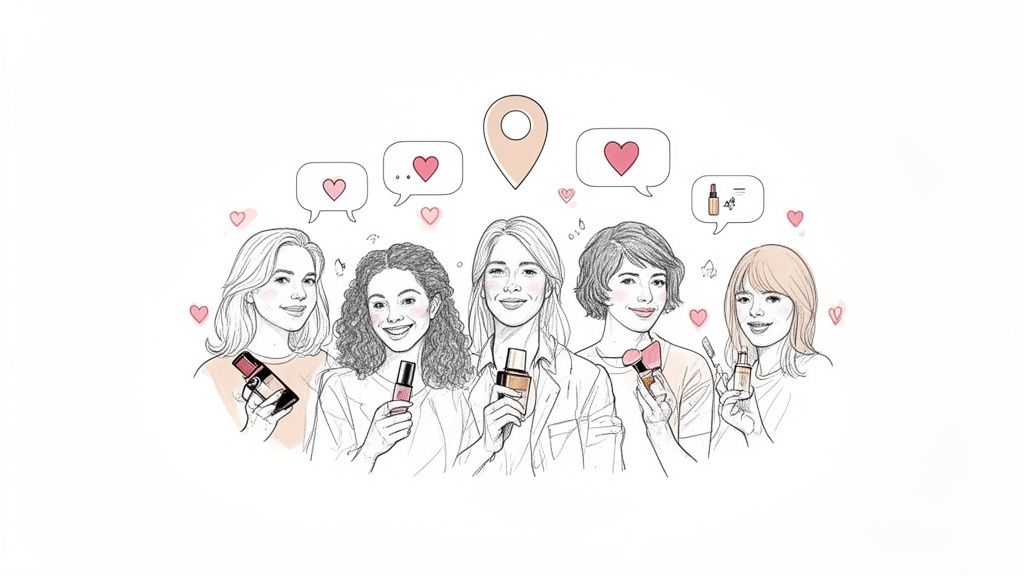
The rulebook for beauty marketing has been completely rewritten. The industry no longer runs on perfectly polished campaigns; it thrives on the unfiltered, honest recommendations of real people. This isn't a fleeting trend. It’s a deep shift in how people discover, trust, and ultimately purchase beauty products.
Modern shoppers, especially younger ones, have become incredibly savvy. They can spot a sales pitch from a mile away and crave genuine connection, something traditional advertising just can't offer. This is precisely where collaborating with micro and nano-creators can give your beauty brand a serious edge.
The Power of Relatable Voices
Creators aren't just broadcasting to followers; they're nurturing communities. Their recommendations land with the weight of a tip from a trusted friend, not a sponsored post. When a creator they genuinely follow shares their experience with a new serum or foundation, that endorsement is gold.
The numbers back this up. An incredible 69% of UK consumers have bought a product after seeing it featured in a creator's content. That's the power of authentic influence at work. These partnerships are effective because they are built on a foundation of trust.
The most impactful creator collaborations don't feel like ads at all. They come across as genuine discoveries shared within a community, which is why they convert so well and build real brand loyalty.
This trust is particularly potent in the beauty world, where personal experience and visible results mean everything. Seeing a creator with a similar skin type or beauty philosophy get amazing results with a product is far more compelling than any airbrushed ad ever could be.
A Goldmine for UK Beauty Brands
The opportunity for beauty brands here in the United Kingdom is massive and growing fast. To put it in perspective, here’s a quick look at the market.
UK Creator Marketing Snapshot for Beauty Brands
The data below highlights the projected landscape for 2026, showing why now is the time for beauty brands to refine their creator strategies.
| Metric | Statistic | Implication for Beauty Brands |
|---|---|---|
| Projected Market Value | £4 billion by 2026 | A rapidly expanding market means more competition, but also a huge pool of potential revenue for brands who get it right. |
| Top Platform for Brands | Instagram (used by 89% of UK brands) | Still the core platform for beauty, essential for visual storytelling and building aesthetic alignment with creators. |
| Fastest-Growing Platform | TikTok | The key to capturing Gen Z and younger millennial audiences with authentic, short-form video content. |
| Consumer Purchase Trigger | 69% of UK consumers buy based on creator posts | Creator content is not just for awareness; it is a direct and powerful sales driver for beauty products. |
| Most Trusted Voices | Nano and Micro-Creators | Smaller creators deliver higher engagement and trust, making them ideal for driving conversions and building community. |
These figures show a clear path forward. The challenge isn't whether to participate, but how to do it smartly. It means getting past the endless, manual scrolling on social media and building a system that works.
That’s what this guide is all about. We’re giving you a practical playbook to navigate this new terrain. We’ll show you how to find creators who align perfectly with your brand's values, build scalable processes for outreach and management, and, most importantly, prove a clear return on your investment.
By focusing on smaller creators with highly engaged communities, you can achieve remarkable results. Our breakdown of why nano-influencers often drive bigger ROI is a great place to start. Finding your perfect creator partners is the first step, and we're here to show you exactly how it's done.
How to Define Your Ideal Creator Persona
Finding the right creators for your beauty brand feels a lot like matchmaking. It’s tempting to get dazzled by big follower counts, but that rarely leads to a partnership with real chemistry. To find a true collaborator whose personal brand feels like a natural extension of your own, you first need to build a detailed creator persona.
This isn't about creating some rigid, cookie-cutter mould that creators must fit into. Think of it more like a compass for your search. It guides you towards partnerships that feel genuine and authentic, not just another paid transaction. A well-defined persona helps you look past the surface-level metrics and get to the heart of what makes a collaboration truly work.
Moving Beyond Follower Counts
First things first: you need to completely shift your mindset away from follower numbers and towards genuine alignment. It’s a simple truth I’ve seen play out time and time again.
A creator with 15,000 highly engaged followers who hang on their every word about vegan skincare is infinitely more valuable for a vegan brand than a general lifestyle influencer with 500,000 followers who couldn’t care less.
When building your persona, think about these core elements:
- Values Alignment: Does this person’s brand DNA actually match yours? If you pride yourself on being cruelty-free, partnering with someone who regularly features brands that test on animals creates a jarring disconnect for their audience, and yours.
- Aesthetic and Content Style: Take a look at their grid or feed. Does the visual style feel like it belongs in the same world as your products? A brand with a minimalist, clean vibe should be looking for creators with a similar visual language, not someone known for loud, saturated edits.
- Niche Expertise: How deep does their knowledge go? A general "beauty" creator is fine, but a creator who focuses exclusively on "skincare for sensitive, acne-prone skin" is a goldmine if you're about to launch a new calming serum. That’s targeted authority.
Constructing Your Persona Framework
Now, let's get specific. The more detail you can add to your persona, the easier it will be to spot the perfect creator in a sea of profiles. Start by asking some hard questions about who you’re really looking for.
Your Creator Persona Checklist:
- Their Niche: What specific corner of the beauty world do they own?
- For example: Not just "makeup," but "soft glam makeup for mature skin."
- For example: Not just "skincare," but "pro-ageing routines using science-backed ingredients."
- Their Audience: Who is actually listening to them?
- Are their followers your ideal customers? You need to look at their audience demographics to be sure.
- For example: A UK-based creator whose audience is 85% female, aged 25-40, and concentrated in London and Manchester.
- Their Content Vibe: What does their content feel like?
- Is it educational and informative, or more inspirational and aspirational?
- Do they use raw, unfiltered video, or do they produce polished, cinematic shots?
Once you answer these, you're no longer searching for "a beauty influencer." You’re searching for an "acne-positive advocate who creates unfiltered, educational TikToks for Gen Z followers in the UK." See the difference? That clarity is everything.
A detailed creator persona acts as your filter. It instantly tells you who to pursue and, just as importantly, who to pass on, saving you countless hours in the sourcing process.
This focused approach is a game-changer, especially for brands working with a lean budget. If you want to dive deeper into getting the most from every pound spent, our guide on how micro-influencer marketing for small businesses breaks down how to get exceptional results. By finding the right creators who speak directly to a pre-qualified audience, you unlock real ROI and turn your partnerships into a growth engine you can truly count on.
Sourcing and Vetting High-Impact Creators
Okay, you’ve defined your ideal creator persona. Now for the exciting part: actually finding them. This is where your strategy gets real, and you start searching for the authentic voices that will become genuine fans of your products. It's less about chasing huge follower counts and much more about discovering the right partners.
The search can feel like looking for a needle in a haystack. You could spend days manually scrolling through hashtags on Instagram or TikTok, and while it feels productive, it’s usually a slow, frustrating slog. It's all too easy to waste hours on creators who have fake followers, poor engagement, or an audience that isn't even in the right country.
Why Micro-Creators Are Your Secret Weapon
Forget the big-name influencers for a second. For most beauty brands, particularly in the UK, the real magic happens with micro-creators (those with 10k-50k followers) and even the smaller nano-creators. These are the people who have built incredibly loyal communities based on trust and shared interests. That makes their recommendations seriously powerful.
This isn’t just a hunch; the numbers tell the story. A massive 93% of UK beauty brands are already working with these 10K-50K gems, a figure that easily beats the 66% working with macro-influencers. And it’s easy to see why. These smaller creators can deliver engagement rates as high as 15.2% on TikTok, leaving the bigger accounts in the dust. They’re also perfect for targeting specific niches, like curly hair routines or anti-ageing skincare.
Ultimately, consumers trust this authenticity. Up to 79% of UK shoppers make purchases based on recommendations, with 69% pointing directly to a creator's influence.
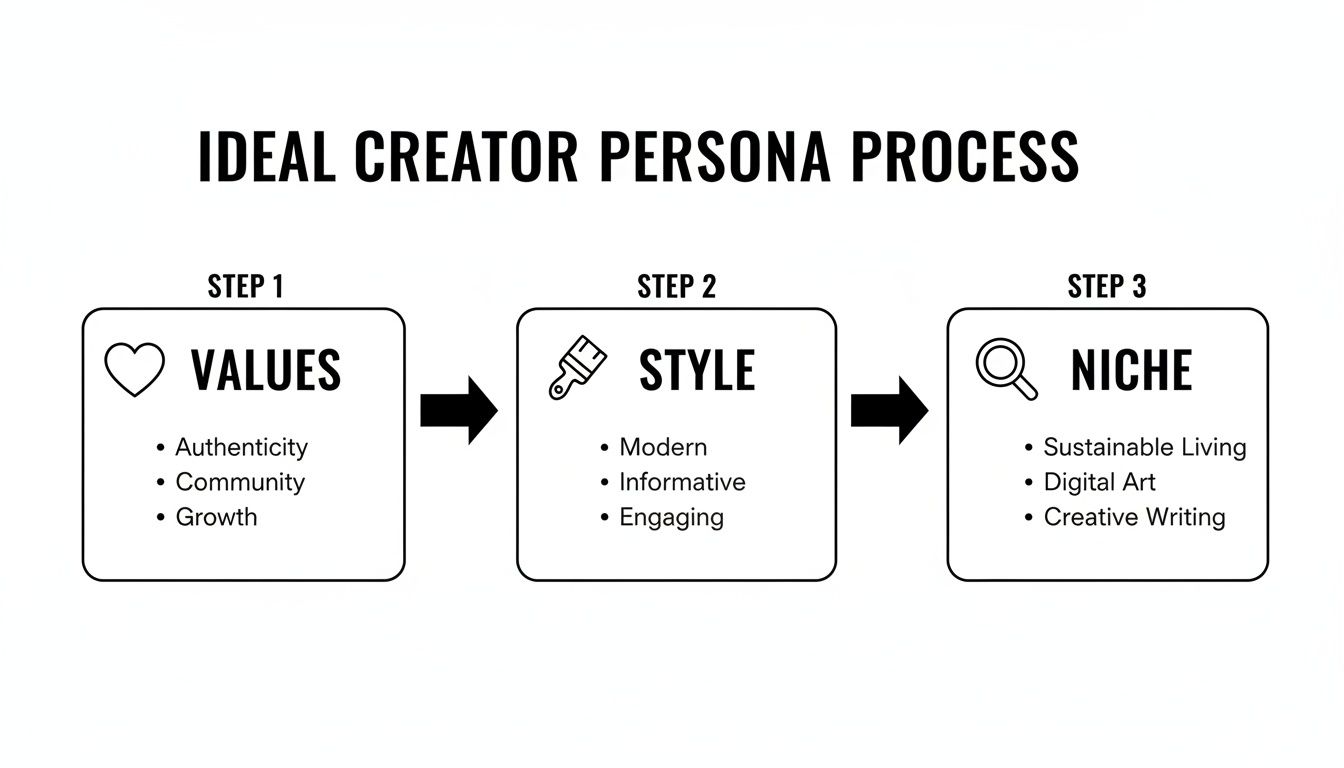
When you're crystal clear on your ideal partner's values, content style, and niche, the whole process of finding and vetting them becomes faster and far more effective.
Streamlining Your Search with Discovery Platforms
Manually searching is out; modern creator discovery platforms are in. They are an absolute game-changer. Instead of endless scrolling and guesswork, these tools let you filter creators by incredibly specific criteria, serving up a pre-vetted list of potential partners in minutes.
Imagine you're a vegan makeup brand in London planning a local launch. Using a platform, you could instantly find creators who:
- Are based in Greater London.
- Specialise in "cruelty-free beauty" or "vegan makeup."
- Have a mostly UK-based audience aged 20-35.
- Boast an average engagement rate over 4%.
This is the power of a systemised approach. You can get a better sense of what's out there by exploring different influencer marketing platforms and what they offer. It saves countless hours and puts you in direct contact with creators who are a perfect match.
The Critical Vetting Process
Once you’ve got a shortlist, the real work begins. This is where you dig deeper to confirm authenticity and ensure total brand safety. Remember, a creator’s ability to drive results is what matters most. To get this right, it helps to understand the strategies for making UGC that converts, ensuring your partners can deliver a real return.
Here's what to look for:
- Analyse Engagement Quality: Go beyond the raw numbers. Dive into the comments. Are followers having real conversations and asking questions about the products featured? Or is it just a wall of "Love this!" and fire emojis? Genuine discussion is the hallmark of a healthy, engaged community.
- Audit Audience Authenticity: Fake followers are a huge red flag. Use an audience analysis tool (many platforms have this built-in) to check for suspicious follower growth spikes or a high percentage of bot accounts. A creator with 15,000 real, engaged followers is infinitely more valuable than one with 50,000 fakes.
- Ensure Brand Safety and Alignment: Do a proper deep dive into their past content. Does their tone and personal brand genuinely align with your company's values? Scour their feed for any posts that could be seen as controversial or off-brand. You’re looking for a partner whose entire presence reinforces your message.
A rigorous vetting process is your best defence against a poor partnership. Taking the time to check engagement quality, audience health, and brand alignment ensures your investment will generate authentic content and a positive ROI.
By combining the speed of discovery platforms with a meticulous, human-led vetting process, you can build a solid roster of high-impact micro-creators who are the perfect fit for your beauty brand.
Crafting Your Outreach and Onboarding Process
So, you’ve done the hard work and put together a solid shortlist of creators who feel like a perfect match for your brand. Now for the crucial part: making contact. This first impression is everything.
Let’s be honest, the generic "Hey, love your page, let's collab!" DM isn’t going to fly. High-quality creators get dozens of those messages every single day, and they’ve learned to spot a copy-paste job from a mile away. To actually get a reply, your outreach has to feel personal, professional, and straight to the point about the value you're bringing.
Your initial message, whether it’s an email or a carefully worded DM, is your pitch. It needs to prove you’ve actually looked at their work. Mention a specific post you genuinely enjoyed and explain why it made you think of them. This one simple act of personalisation immediately sets you apart from the crowd. It’s not about flattery; it's about showing you see them as a creative partner, not just another number on a spreadsheet.
Nailing the First Impression
Think of your first message as a compelling invitation to an exclusive event, not a mass mail-out. You're starting a conversation with someone you hope will become a genuine advocate for your brand.
Here’s what I’ve found works best for that initial message:
- Make it personal. Don't just say you like their feed. Get specific. For instance, "I absolutely loved your recent tutorial on achieving that dewy skin finish. The way you explained layering hydration is exactly how we think about our new Hyaluronic Acid Serum."
- Introduce yourself clearly. Briefly explain who you are and what your brand stands for. "We're a UK-based, cruelty-free brand that focuses on minimalist skincare for sensitive skin."
- Share the vision. Give them a taste of what you have in mind for the partnership. "We're launching our new serum next month and are looking for a handful of authentic partners to share their honest experiences with their audience."
- Talk about what’s in it for them. Be upfront about the compensation. Whether it’s product gifting, a flat fee, a commission structure, or a mix of everything, transparency builds trust from the very first interaction.
The goal of your first message isn't to get a signature on a contract; it's to spark a real conversation. Personalisation, clarity, and a respectful offer are what will get you an enthusiastic "Yes, tell me more!"
Once a creator shows they’re interested, it's time to guide them into a proper onboarding process. This is where you lay the groundwork for a smooth and successful campaign, making sure everyone is completely on the same page.
Building a Seamless Onboarding Experience
A messy, disorganised onboarding process is a recipe for disaster. It leads to confusion, off-brand content, and frustration for both you and the creator. A seamless process, on the other hand, empowers creators to produce their best work. The absolute cornerstone of this is your campaign brief.
The brief is the single source of truth for the entire collaboration. It's the document that spells out everything the creator needs to know, from key messages to the exact content you're looking for. Once you’ve found potential collaborators, making sure they grasp your brand's vision is paramount. For some brilliant, in-depth advice on this, check out Your Ultimate Guide to the Perfect UGC Creator Brief.
Your brief needs to be detailed but not so restrictive that it stifles their creativity. You're providing guardrails, not a straitjacket.
Key things to include in your campaign brief:
- Campaign Goals: What are you actually trying to achieve? Is it driving sales for a new launch, boosting brand awareness, or generating a library of high-quality UGC for your ads? Be specific.
- Key Messages: What are the 2-3 core points you need them to get across? This could be about unique ingredients, product benefits, or your brand’s sustainability mission.
- Content Deliverables: Spell out precisely what you expect. For example: one Instagram Reel, three static story frames, and two high-resolution photos for your own use.
- Creative Guidelines: Give them some simple do's and don'ts. For example, "Do show the product's texture on your skin," and "Don't use filters that change the product's true colour."
- ASA Disclosure Rules: This is non-negotiable in the UK. Give clear instructions on how to properly disclose the partnership, such as using #ad at the beginning of the caption.
- Timelines and Compensation: Include firm deadlines for content drafts and final posts, and clearly outline the payment schedule and terms.
Setting these expectations clearly from the start saves a ton of back-and-forth later. It empowers creators to get it right the first time, setting the stage for a fantastic, and hopefully long-term, partnership.
Measuring Success and Proving Your ROI
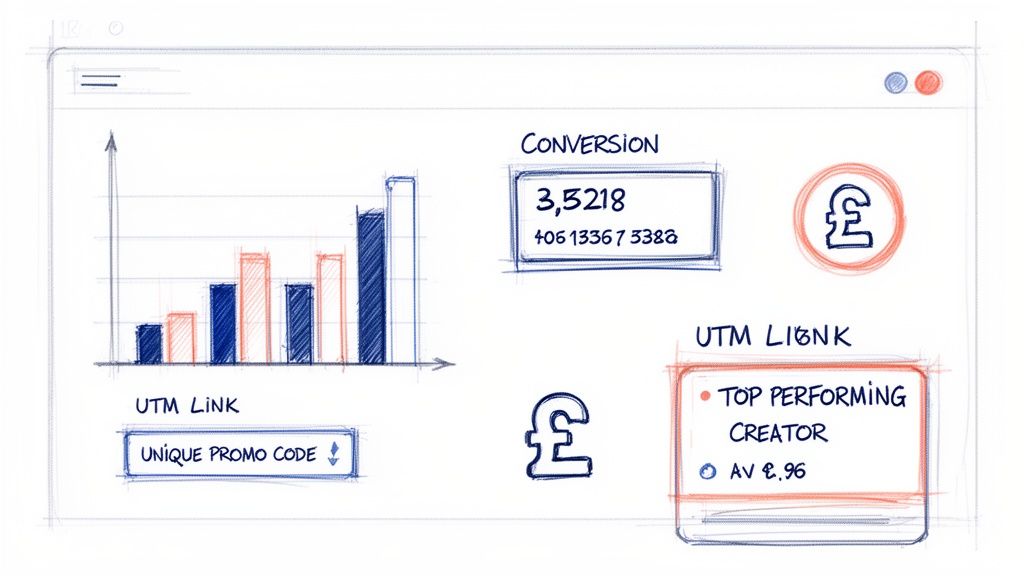
This is where we connect your creator marketing efforts to what really matters: business results. For too long, brands got stuck chasing ‘vanity metrics’ like likes and comments. While nice to see, they don’t pay the bills. The real goal is proving a tangible return on investment (ROI), and the good news is, it’s not the black box it used to be.
By looking beyond surface-level stats, you can draw a straight line from creator content to clicks, conversions, and revenue. This is how you turn your creator programme from a hopeful experiment into a predictable, measurable growth channel for your beauty brand.
Beyond Vanity Metrics: Tracking What Truly Matters
The first step is a mindset shift. Let's stop obsessing over follower counts and post likes as the be-all and end-all. Instead, we need to focus on actions that directly impact your bottom line. Did that creator’s post lead to website visits? Did their audience actually buy your new foundation? Answering these questions is how you prove your programme’s worth.
To do this right, you need a simple but solid tracking system. This is where two things become your best friends: unique promotional codes and UTM-tagged links.
Giving each creator their own discount code (like "CHLOE15") and a unique, trackable URL lets you see exactly who is driving traffic and, more importantly, who is making sales. It’s a clean, direct approach that solves the attribution headache and gives you undeniable proof of performance.
The Metrics That Drive Your Creator Programme
Once you have your tracking set up, you can start monitoring the key performance indicators (KPIs) that actually mean something. Modern creator platforms, like Sup, pull all this data into one place, giving you a real-time view of your campaign’s health without having to wrestle with a dozen spreadsheets.
To help you get started, here’s a breakdown of the essential metrics you should be tracking to measure the ROI of your creator campaigns.
| Key Metrics for Measuring Creator Campaign ROI |
| :--- | :--- | :--- |
| Metric | How to Track It | Why It Matters | | Conversion Rate | (Purchases ÷ Clicks) x 100. Tracked via UTM links and e-commerce analytics. | The ultimate test of how persuasive a creator's content was. A high rate means their audience was truly inspired to buy. | | Promo Code Redemptions | A simple count of how many times each creator's unique code was used at checkout. | This is your most direct link to sales. It’s clean, undeniable proof of revenue generated. | | Revenue Generated | The total sales value attributed to a specific creator through their code or link. | Moves beyond vague "awareness" to show the direct financial impact of each partnership. | | Cost Per Acquisition (CPA) | (Total Spend on Creator ÷ New Customers Acquired). Total spend includes fees, product costs, and shipping. | Tells you how efficiently you're acquiring customers. A low CPA means your programme is highly effective. | | Click-Through Rate (CTR) | (Clicks on Link ÷ Post Views) x 100. Tracked via platform analytics and UTM data. | Measures how compelling a creator’s call-to-action was. Did they successfully get their audience to take the next step? |
Monitoring these KPIs moves you beyond guesswork. You can now confidently answer questions like, "Which creator generated the most sales for our new lipstick launch?" or "What was our average return on investment across our nano-creator partners last quarter?"
Proving ROI is no longer an abstract goal; it’s a standard operating procedure. By equipping every creator with unique tracking tools, you turn each collaboration into a clear-cut performance report.
This data-driven approach is a game-changer for UK beauty brands. On average, creator marketing here delivers an impressive return of £5.78 for every £1 invested. High-performing e-commerce campaigns can even see a 10x return. These results are often powered by promo-code-focused campaigns on Instagram, which 57% of brands find to be the most effective platform. With paid creator ad spend forecast to hit £930 million in 2024, having a crystal-clear attribution system isn't just a nice-to-have. It's essential. You can explore more about these powerful UK market statistics to see the full picture.
Analysing and Optimising Your Campaigns
Collecting the data is only half the job. The real magic happens when you use those insights to make smarter decisions for your next campaign. Think of your dashboard as a treasure map.
Start looking for patterns in your top-performing collaborations:
- Content Formats: Are short, snappy TikTok videos outperforming polished Instagram Reels?
- Content Style: Do tutorials showing the product in use generate more sales than simple unboxing posts?
- Creator Niche: Are creators in a specific niche, like "skincare for sensitive skin," delivering a higher ROI than general beauty creators?
This kind of analysis lets you continuously refine your strategy. You can double down on what works, giving more specific guidance in your future briefs. For instance, if you notice "get ready with me" videos are your top converters, you can make that a core request for your next round of creator partners.
This feedback loop of measure, analyse, and optimise is what turns a series of one-off collaborations into a scalable and predictable growth engine. You’re no longer just hoping for results; you're systematically engineering them.
A Few Common Questions We Hear All the Time
Even the best-laid plans can leave you with a few lingering questions. When you're new to the world of creator marketing, it's natural to have them. Let's tackle some of the most common queries we get from beauty brand managers, so you can move forward with total confidence.
How Much Should I Be Paying a UK Micro-Creator?
This is the million-dollar question, isn't it? The honest answer is: it varies. For micro-creators in the UK (those with 10k-50k followers), there’s no fixed price list. It all comes down to their engagement, how much work is involved in the content you’re asking for, and what usage rights you need.
For nano-creators (1k-10k followers), who are often just building their community, a product-gifting collaboration is a fantastic, low-risk way for both of you to start. Once you get into the micro-creator tier, you could be looking at anything from £250 to over £1,000 for a single dedicated post or video. The goal is always to offer fair value that respects their work and influence.
A quick tip from experience: Don't get stuck in a back-and-forth negotiation black hole. Platforms that use a creator's performance data to generate standardised offers will save you a world of time and make sure you’re always paying fair market rates.
This approach lets you build out scalable programmes without haggling over every single partnership. It keeps things consistent and, frankly, lets you get on with the more important strategic work.
What Are the Biggest Mistakes to Avoid?
So many brands make the same rookie errors. If you know what they are ahead of time, you can sidestep them and get your programme on the right track from day one.
Based on what we see in the field, here are the most common pitfalls:
- Chasing follower counts: A huge audience means nothing if they aren't engaged or don't care about your product. Genuine connection always wins.
- Sending generic DMs: Creators can spot a copy-paste message a mile away. They get ignored. Show them you've actually looked at their profile and value what they do.
- A vague creative brief: If you don't give clear instructions, you can't be surprised when you get off-brand content. A solid, detailed brief is your best friend.
- No way to track ROI: You must use unique promo codes or UTM links. If you can't prove the value of your campaigns, you'll have a hard time getting budget next quarter.
- Forgetting ASA guidelines: Failing to ensure creators use proper ad disclosures (like #ad) is a huge risk to your brand’s reputation and can land you in hot water.
Building a structured process from the start is the simplest way to avoid falling into these traps.
How Do I Scale a Creator Programme for Multiple Launches?
If you’re trying to manage multiple product launches or support different retail locations with spreadsheets and Instagram DMs, you’re on a fast track to burnout. It just doesn't work at scale.
To grow your programme without losing your mind, you need a system. This is where having a proper creator marketing engine becomes a non-negotiable. It's designed to automate the repetitive, manual tasks, freeing you up to focus on strategy and relationships.
The right platform handles the entire process for you, from finding verified creators in your exact niche to managing all the communication and tracking performance across hundreds of partnerships at once.
Think about it: you could manage campaigns for your skincare, makeup, and haircare lines from a single dashboard. All that amazing user-generated content would be collected in one library, ready to repurpose, and you could see your total ROI without ever opening a spreadsheet. This is how you transform creator marketing from a chaotic time-sink into a repeatable, scalable growth channel.
Ready to stop drowning in spreadsheets and start building a scalable creator programme that drives real results? Sup is your all-in-one growth engine, handling everything from creator sourcing and outreach to performance tracking and ROI measurement. Find out how Sup can save you 95% of your time and help you build a profitable, repeatable creator marketing channel at https://sup.co.
More on industries
See how many creators post about you and your competitors
Type in your brand's Instagram handle and we count the creators who post about you and about your five closest competitors. It takes about a minute and it is free. Or request a demo and we will show you the creators in your niche and walk you through the dashboard.
 Book a call