18 April 2026
In Post Promo Code: A Guide to Measurable Influencer ROI

You launch a creator campaign. The posts look strong. Comments are active. Screenshots from the social team make it feel like momentum is building.
Then the finance question lands. What did it sell?
That’s where most influencer programmes break. The content is visible, but the path from post to checkout is fuzzy. Sales come through Shopify, WooCommerce, POS systems, email flows, branded search, and increasingly through fulfilment journeys that include parcel lockers. If your setup stops at likes, views, and a shared discount code, you don’t have attribution. You have activity.
An in post promo code fixes that when it’s built properly. Not as a generic discount floating around the internet, but as a creator-specific identifier tied to a creator-specific link, tracked through checkout, and reconciled after the campaign ends. That’s how you turn influencer work into a channel you can budget for with confidence.
Beyond Likes Why Your Influencer Strategy Needs In Post Promo Codes
A creator post goes live on Friday. Traffic spikes. Orders come in over the weekend. By Monday, the social team points to reach, the paid team claims branded search picked up the demand, and finance asks for revenue by creator. If every creator used the same discount and every link sent people to the homepage, nobody can answer with confidence.
That is why an in post promo code matters. It turns a piece of content into a measurable sales input. A creator-specific code, paired with a creator-specific URL and disciplined UTM tagging, gives your team a way to trace intent from the post through checkout instead of guessing after the fact.
The transaction path now extends beyond the click. A customer might see a Reel, ignore the link, search the brand later, redeem the code on desktop, then choose locker delivery through a final-mile option such as InPost. If your reporting only captures last-click traffic or only looks at platform metrics, that sale often gets credited to the wrong channel or disappears into a generic conversion bucket.
I have seen this happen repeatedly. The brand assumes one creator underperformed because tracked clicks were weak. The promo code data shows that creator drove high-intent buyers who converted later, often on another device. Another creator can show the opposite pattern. Strong engagement, weak code usage, little downstream revenue. Without both signals, teams back the wrong partners.
Practical rule: If a creator can influence a sale, that creator needs a unique code, a unique link, and a defined reporting window.
Codes also solve a common attribution gap that links alone cannot. Links capture the session. Codes capture the purchase decision when the path gets messy. Used together, they let you separate three things that usually get blended together: creator influence, offer strength, and channel assist. That distinction is what turns influencer marketing from a reporting debate into a budgetable acquisition channel.
There is also a customer behavior angle here. People do not always buy in one session, and they do not always use the exact path marketers planned. A memorable creator code acts like a lightweight referral code at the point of purchase, especially when the customer comes back through email, direct traffic, or branded search. That gives the brand one more reliable identifier to reconcile against order data and fulfilment records.
Brands that treat promo codes as campaign infrastructure make better decisions. They can compare creators on revenue, conversion rate, average order value, and assisted sales. They can spot code leakage, tighten expiry windows, and see whether parcel-locker or other fulfilment choices correlate with specific creator audiences. That is how influencer marketing stops being a visibility exercise and starts operating like a measurable growth channel.
Crafting Unique Promo Codes for Every Creator
The code itself needs to do two jobs at once. It has to be easy for a customer to remember and enter, and it has to be useful for your reporting.
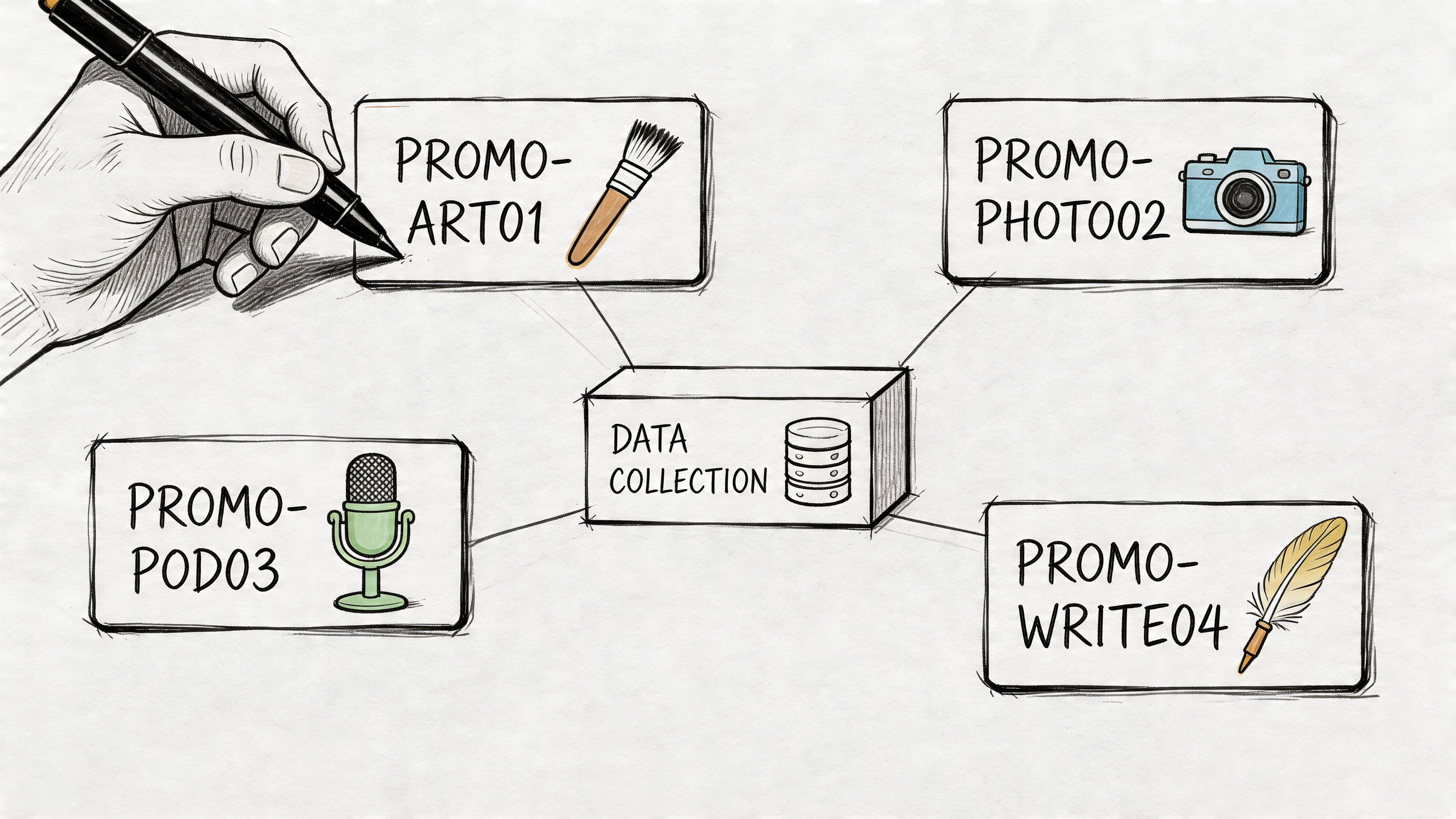
Start with the offer, not the code text
A common practice involves jumping straight to naming conventions. That’s backwards. The first decision is the offer type.
A few common options work well:
- Percentage off suits first-purchase conversion pushes because the value is obvious in-feed.
- Free shipping often works better when product prices are tight and you don’t want to train customers to wait for discounts.
- Fixed-value discounts can be easier to understand for lower-priced products.
- Free gift offers can preserve margin if the gift has a high perceived value and low operational cost.
The wrong offer can damage attribution. If the incentive is too weak, redemptions understate creator impact. If it’s too generous, the code may convert buyers who were already going to purchase, which muddies incremental lift.
Build codes people can actually use
Customers don’t redeem what they can’t remember. Good codes are short, legible, and tied to the creator identity in a way followers recognise.
A practical format usually looks like this:
| Code style | Why it works | Risk |
|---|---|---|
| CREATOR10 | Easy to recall from caption or spoken mention | Can spread widely if not controlled |
| FIRSTNAMEVIP | Feels creator-led and exclusive | Harder to standardise at scale |
| HANDLEUK | Useful for regional campaigns | Can look awkward if handles are long |
Avoid codes with confusing characters, extra punctuation, or random strings. If a creator says the code aloud in a Reel or TikTok, the audience should be able to type it without guessing.
A lot of marketers also blur the difference between a creator promo code and a broader referral code. The distinction matters. Referral mechanics are often designed around customer-to-customer sharing. Creator codes are designed around channel attribution, campaign controls, and partner-level performance analysis.
Unique per creator is non-negotiable
One campaign-wide code makes reporting easier for the ops team in the short term and worse for everyone else afterwards. You lose creator-level attribution immediately.
Use one code per creator, and keep the structure consistent across the campaign. That consistency makes your exports easier to audit and your naming easier to reconcile against content, links, invoices, and reporting dashboards.
A clean naming system usually includes:
- Creator identifier such as handle or surname
- Offer marker such as 10 or SHIP
- Campaign label if you’re running overlapping bursts
- Validity rules in your backend, not inside the visible code
Don’t put operational complexity into the customer-facing code. Put it into your campaign setup.
Match code design to real trade-offs
There isn’t one perfect format. Vanity codes improve recall but are easier to share outside the intended audience. More controlled codes reduce abuse but often convert worse because they feel impersonal.
That’s the trade-off. If the campaign goal is discovery and efficient conversion, favour readability. If the goal is tightly controlled attribution, add redemption limits, validation rules, and creator-specific terms in the backend rather than making the visible code ugly.
The best in post promo code is the one customers remember, creators can say naturally, and your team can trace without ambiguity.
The Complete Workflow for Code Distribution and Attribution
A creator post goes live, traffic lands, orders come in, and the team still cannot answer a basic question: which creator drove the sale, which click path assisted it, and whether the order held value after fulfilment. That gap usually comes from workflow, not effort.
Attribution starts before publishing. The code, the link, the checkout setup, and the order data all need to be tied together from the start. If one part is loose, reporting turns into spreadsheet cleanup and disputed performance calls.
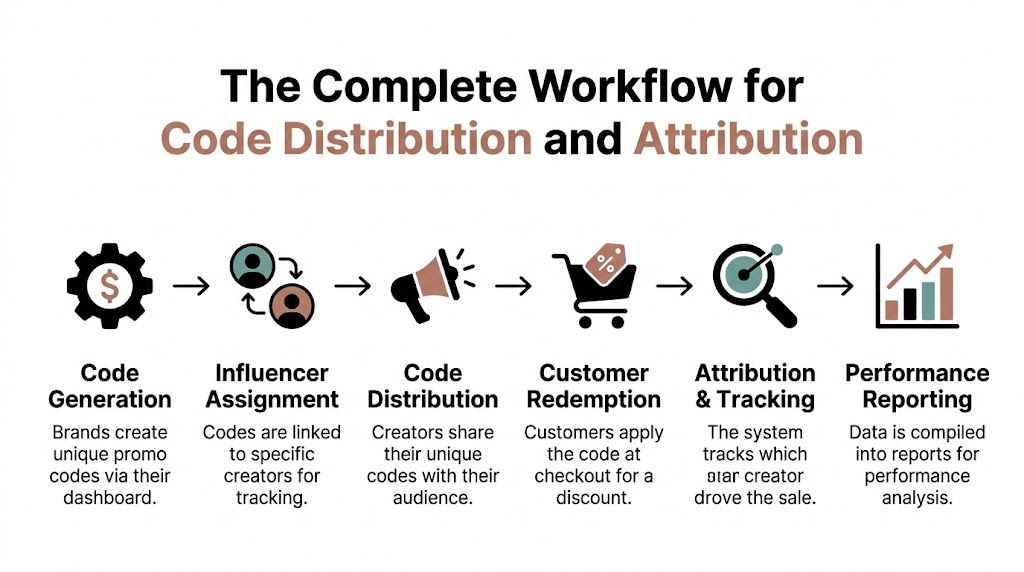
The operational sequence
Run the workflow in a fixed order:
- Create the creator-specific code in your ecommerce or discount engine.
- Create the matching creator-specific UTM URL with consistent campaign parameters.
- Store both against the creator record in your campaign tracker, platform, or CRM.
- Send the creator one approved asset pack with the exact code, link, placement rules, and offer dates.
- Test the full conversion path from content click to checkout to order confirmation before the post goes live.
- Pass campaign metadata into the order record so finance, ops, and marketing are looking at the same source of truth.
- Export results on a schedule instead of waiting until the campaign ends.
The order matters. If the creator receives the code before the link is built, or the link is live before checkout has been tested, small setup errors become attribution loss.
Where distribution usually breaks
The failure point is rarely code creation. It is handoff.
A creator gets the right code in WhatsApp, an old link in email, a revised caption in the platform brief, and a verbal update in a call. Now there are four sources of truth. One post later, the wrong URL is live, the code still works, and your reporting splits performance across direct, paid social assists, and unattributed checkout redemptions.
Use one approved delivery format per creator. Include:
- Final code
- Final destination URL with UTM parameters
- Approved caption language
- Required code placement
- Offer start and end date
- Contact for last-minute fixes
That is what keeps campaign ops clean at scale.
Why the UTM link matters as much as the code
The code records checkout behaviour. The UTM records pre-purchase behaviour. You need both if you want to explain revenue, not just count redemptions.
For example, a customer might tap a Story link, browse, leave, come back two days later through branded search, and still use the creator code at checkout. Without the UTM, you miss the assisted visit. Without the code, you miss the delayed conversion. Combined, they give you a usable attribution trail.
If you want a practical walkthrough of the setup, this guide on tracking influencer marketing attribution with promo codes covers the mechanics in detail.
A clean division of labour looks like this:
| Tracking element | What it captures | What it misses |
|---|---|---|
| Promo code | Completed orders that used the creator offer | Shoppers influenced by the post who never entered the code |
| UTM link | Click source, session path, and landing-page behaviour | Buyers who return later through another channel |
| Order record with campaign metadata | Revenue, refund status, fulfilment method, and downstream value | Upper-funnel influence without a tracked visit or redemption |
That third layer is where better teams separate themselves. They do not stop at click reports or code usage. They connect campaign inputs to operational outcomes.
A short explainer can help creators and internal teams stay aligned:
Final-mile attribution through InPost
If the customer selects InPost or another locker-based delivery method, fulfilment should stay attached to the same order-level attribution record. The sale was influenced upstream, converted at checkout, and completed through a delivery choice that may affect margin, speed, and repeat purchase behaviour. That matters when you are judging creator quality.
The reporting structure should connect:
- creator ID
- UTM parameters
- session or click timestamp
- order ID
- promo code used
- fulfilment method
- net revenue after discounts
- refund or cancellation status
This is how brands move from channel reporting to profit reporting. A creator who drives high redemption but low-margin orders to expensive fulfilment options may rank differently from a creator who generates fewer orders with stronger contribution.
Teams trying to tighten this model should also study broader frameworks for how to measure social media ROI, then adapt them to creator-specific code and order data.
When the code, UTM, and final order record are connected, influencer performance becomes much harder to dispute. That is the standard required if you want creator campaigns to behave like a measurable sales channel, not a visibility bet.
From Redemptions to Revenue Proving Influencer ROI
A creator campaign can look strong in-platform and still fail the finance test. The usual pattern is familiar. Redemptions come in, screenshots get shared in Slack, then someone asks how much net revenue those codes produced after discounts, fulfilment, refunds, and late cancellations. If your team cannot answer that cleanly, you do not have attribution. You have activity.
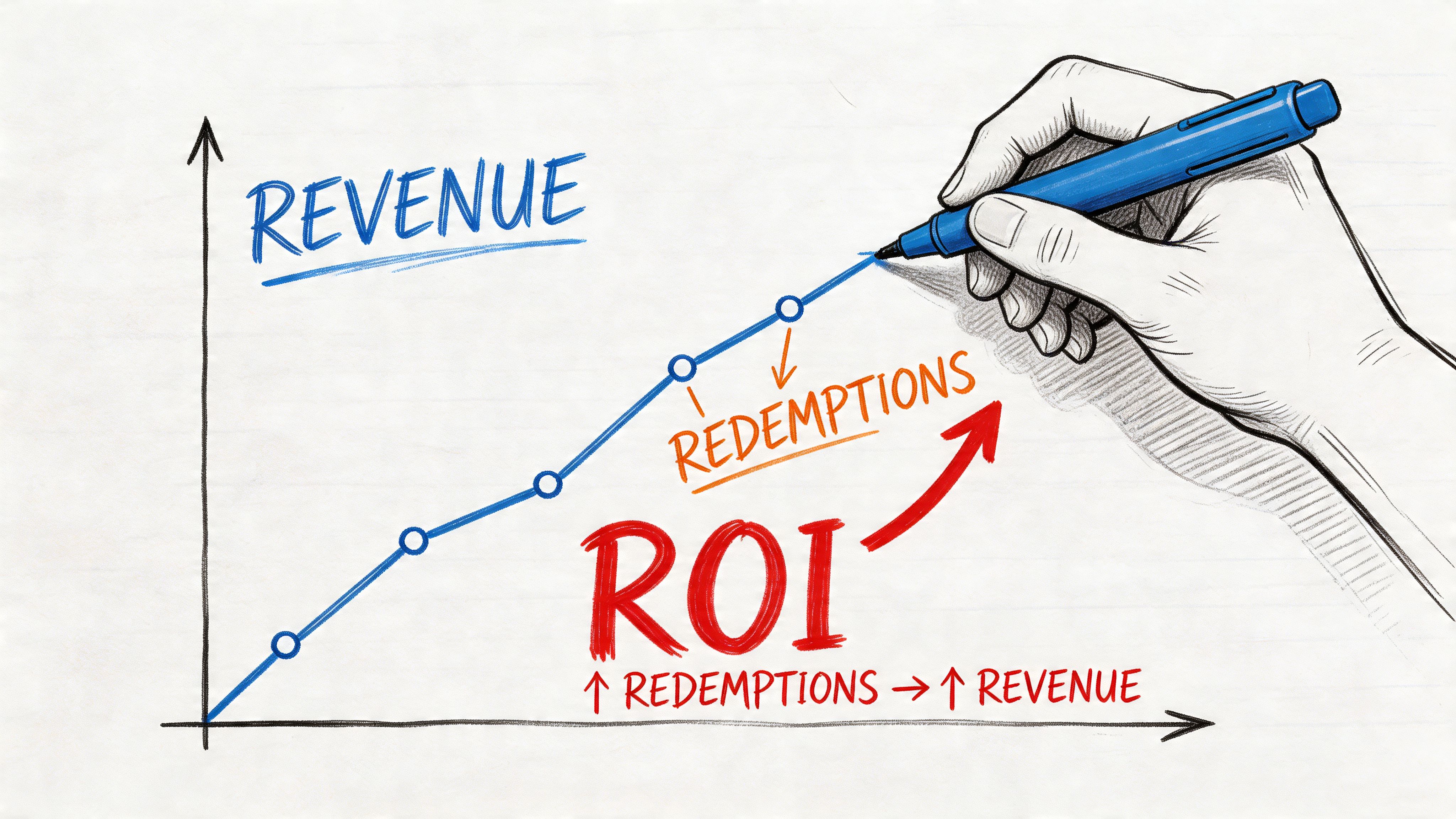
The first metric to calculate
Start with promo code redemption rate. Calculate it as redeemed codes divided by total issued, multiplied by one hundred. In ecommerce, digital coupon redemption rates often sit in the 4% to 10% range, and 7% is commonly treated as a strong result, according to this redemption-rate methodology reference.
Use that number carefully.
A healthy redemption rate only means something when the underlying tracking is clean. If a creator says one code in the video and the caption shows another, if checkout hides the promo field, or if a generic code leaks into affiliate sites, the percentage stops being a reliable read on creator performance.
Interpret the result in context:
- Low redemption with strong click volume usually points to friction after the click.
- High redemption with weak average order value or margin usually points to an offer problem.
- Large gaps between creators often come from audience and offer fit, not content quality alone.
Convert code usage into attributable revenue
Redemptions are a midpoint metric. Revenue proof comes from joining code usage to order outcomes.
That means reconciling creator links, promo codes, ecommerce orders, and post-purchase events in one reporting view. The teams that do this well are not guessing from platform dashboards. They are matching each order back to the creator touchpoint, then adjusting for discounts, fulfilment choice, returns, and cancellations before they call it ROI.
A practical workflow looks like this:
- Pull creator-level inputs such as spend, posting dates, links, and assigned codes.
- Join traffic and order data using UTMs, session timing, code redemption, and order ID.
- Separate gross from net revenue so discounts, refunds, and failed deliveries do not inflate performance.
- Compare campaign periods against a baseline to understand whether the creator drove incremental sales or just captured demand already in market.
- Flag exceptions such as leaked codes, cross-channel reuse, and orders attributed to the right code but the wrong creator link.
This is also where final-mile attribution matters. If an order closes with InPost or another locker-based delivery option, that fulfilment choice still belongs in the same performance record. It affects margin and can change how valuable the order was, even when top-line revenue looks fine.
What strong ROI reporting includes
The board does not need another creator leaderboard built on views and coupon uses. It needs a commercial read on who produced profitable demand.
For each creator, report at least these fields:
| Metric | Why it matters |
|---|---|
| Attributed revenue | Shows direct sales contribution |
| Net revenue after discount | Prevents overstating the value of heavily discounted orders |
| Cost per acquisition | Compares creators on efficiency |
| Attributed ROI | Shows which partnerships justify more budget |
| Refund and cancellation rate | Catches weak order quality after purchase |
| Fulfilment-adjusted outcome | Accounts for delivery choices that change margin |
This is the point where many programs mature. They stop treating promo codes as a vanity proof point and start treating them as one layer in an attribution model.
If you want a broader framework for connecting campaign outputs to commercial outcomes, this guide on how to measure social media ROI is worth reviewing alongside creator-specific reporting.
For a sharper view on creator economics, attribution windows, and reporting structure, see this breakdown of influencer marketing ROI and what works.
The difference is operational discipline. Clear code governance, clean UTM structure, and order-level reconciliation are what turn redemptions into revenue proof.
Advanced Strategies to Maximise Promo Code Performance
Once the basics work, optimisation becomes a margin game. At this stage, strong teams separate creator activity from creator efficiency.
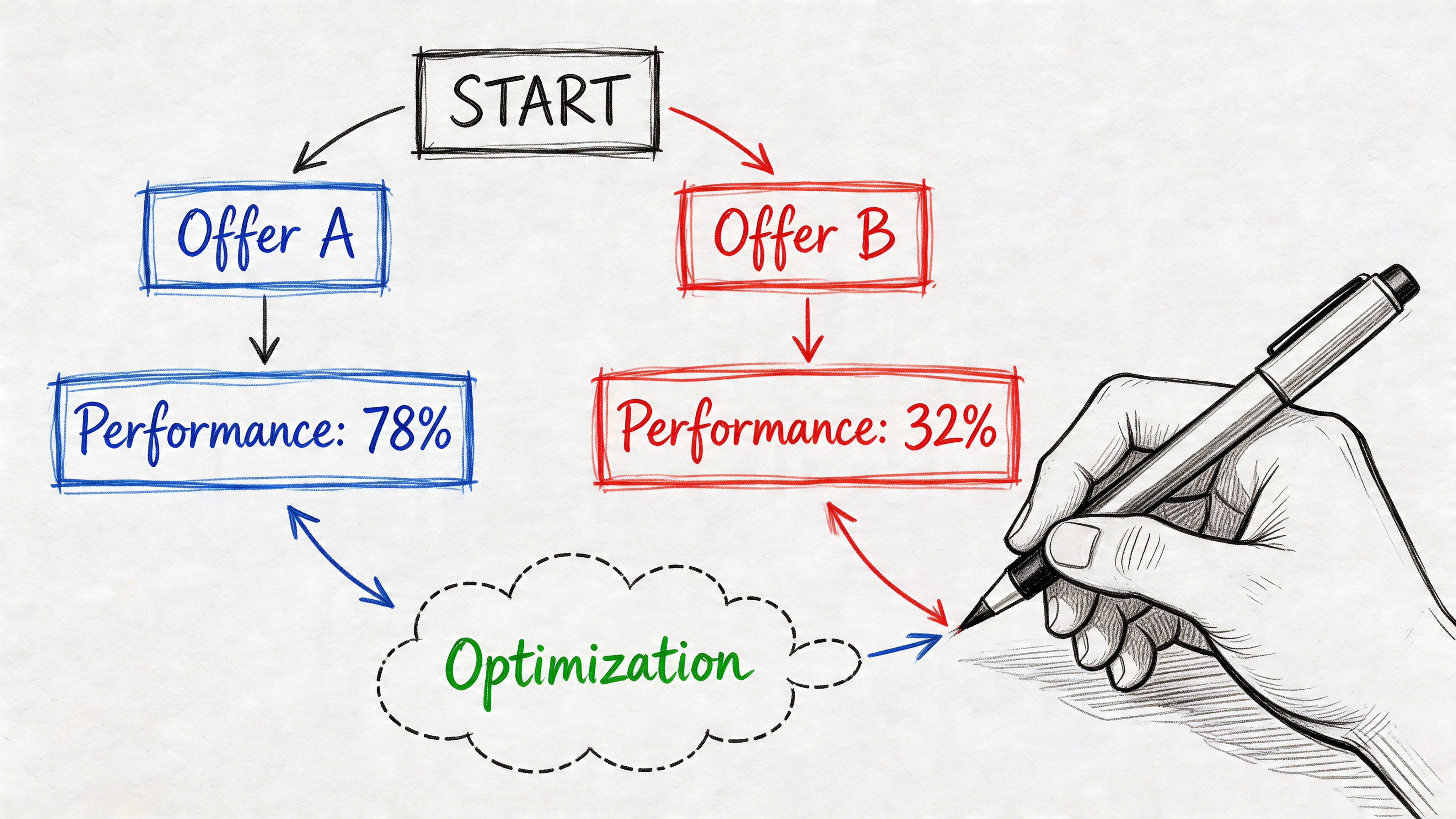
Test the offer, not just the creator
Many brands assume one creator underperformed when the actual issue was the offer design. A cleaner approach is to test different incentives across similar creator segments while holding the rest of the brief steady.
Good variables to test include:
- Discount versus free shipping
- Evergreen code versus limited-time code
- Visible code in first frame versus later in the video
- Caption-first CTA versus spoken CTA
The point isn’t to run endless experiments. It’s to remove obvious friction and find the offer structure that fits the audience.
Use control without killing conversion
The more widely a code spreads, the less useful it becomes for attribution. But hard locks can also hurt performance if they create unnecessary checkout friction.
The practical answer is controlled flexibility:
- set redemption caps per creator in the backend
- validate codes server-side
- limit stacking where margin is sensitive
- keep the front-end experience simple
That balance matters even more when campaigns scale across lots of creators and locations. If you’re building a larger programme, this guide on scaling influencer marketing from 5 to 500 creators is useful because operational problems appear before budget problems do.
Use urgency carefully
Urgency can lift action, but only when it feels credible. A creator saying “use my code this week” works better when the landing page and checkout reflect the same reality. If the code still works long after the stated window, customers learn to ignore future prompts.
The same goes for “exclusive” language. If five creators all use near-identical language and the same offer mechanics, exclusivity disappears. Audiences notice that quickly.
If you want urgency to convert, the campaign has to behave as urgently as the caption sounds.
Treat UGC as a second asset stream
Every creator campaign produces more than redemptions. It produces content you can reuse.
The best teams collect:
- raw video files
- usage rights terms
- top-performing hooks
- comment themes and objections
- visual variants by location, product, or audience
That library becomes useful across paid social, email, landing pages, and retail support. Even when a creator’s direct code performance is average, their content can still outperform brand-made assets in downstream channels.
A mature in post promo code programme doesn’t judge campaigns on one signal. It measures sales cleanly, then captures the creative value as a separate return.
Turning Influencer Marketing into a Repeatable Growth Channel
A workable creator programme doesn’t depend on hoping one post goes viral. It depends on systems.
The strongest setup is straightforward. Give every creator a unique in post promo code. Pair it with a unique UTM link. Define where the code appears, where the link points, how checkout captures the data, and how post-campaign analysis assigns revenue. Then keep the reporting standard the same every time.
That’s the difference between content marketing theatre and channel management. One gives you screenshots and anecdotes. The other gives you attributable sales, performance rankings, and a reliable way to decide where the next pound of budget goes.
The detail often overlooked by teams is the final mile. Attribution shouldn’t stop at the click or even the checkout screen. If your customer journey includes systems like InPost, the campaign metadata needs to stay attached all the way through the order record so finance, ops, and marketing are reading from the same source of truth.
That’s when influencer marketing becomes easier to defend internally. You’re no longer asking stakeholders to believe in vague influence. You’re showing them a repeatable path from creator content to measurable revenue.
If you want help building that workflow without juggling spreadsheets, DMs, code setup, creator follow-ups, and post-campaign reconciliation manually, Sup gives brands a done-with-you way to launch creator campaigns with unique promo codes, UTM tracking, and clear attribution from content to conversions.
More on tracking
See how many creators post about you and your competitors
Type in your brand's Instagram handle and we count the creators who post about you and about your five closest competitors. It takes about a minute and it is free. Or request a demo and we will show you the creators in your niche and walk you through the dashboard.
 Book a call